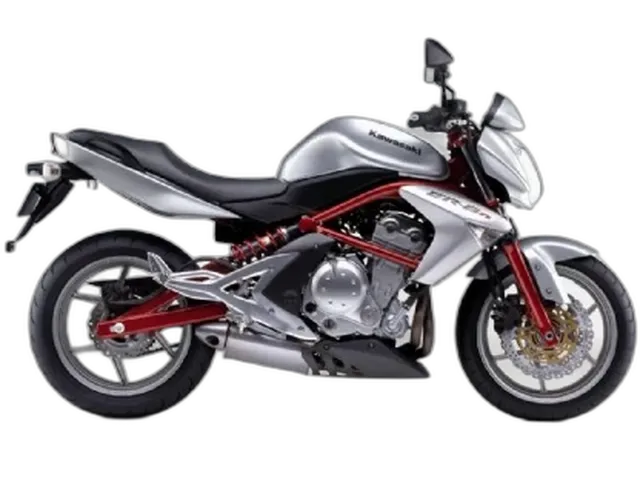
By NastyNils·
Motorcycle comparison · Naked Bike
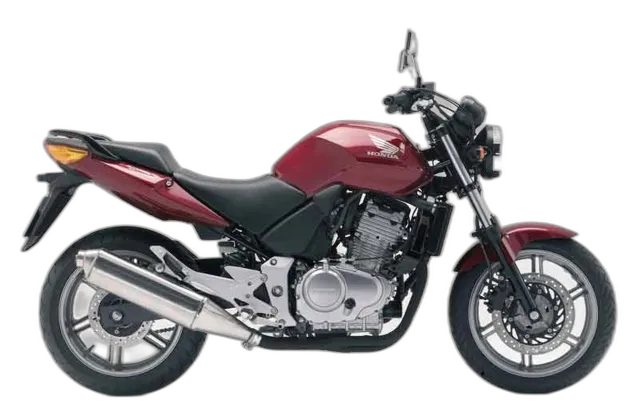
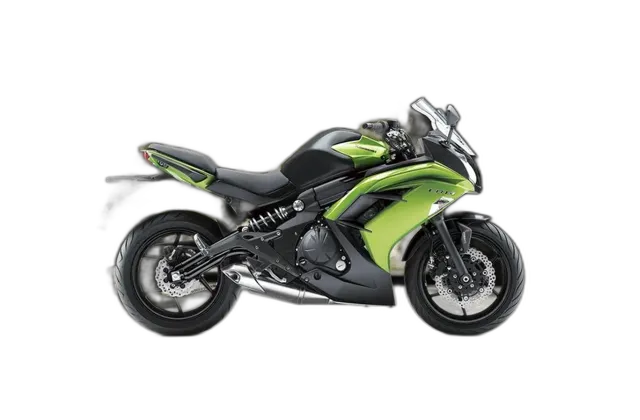
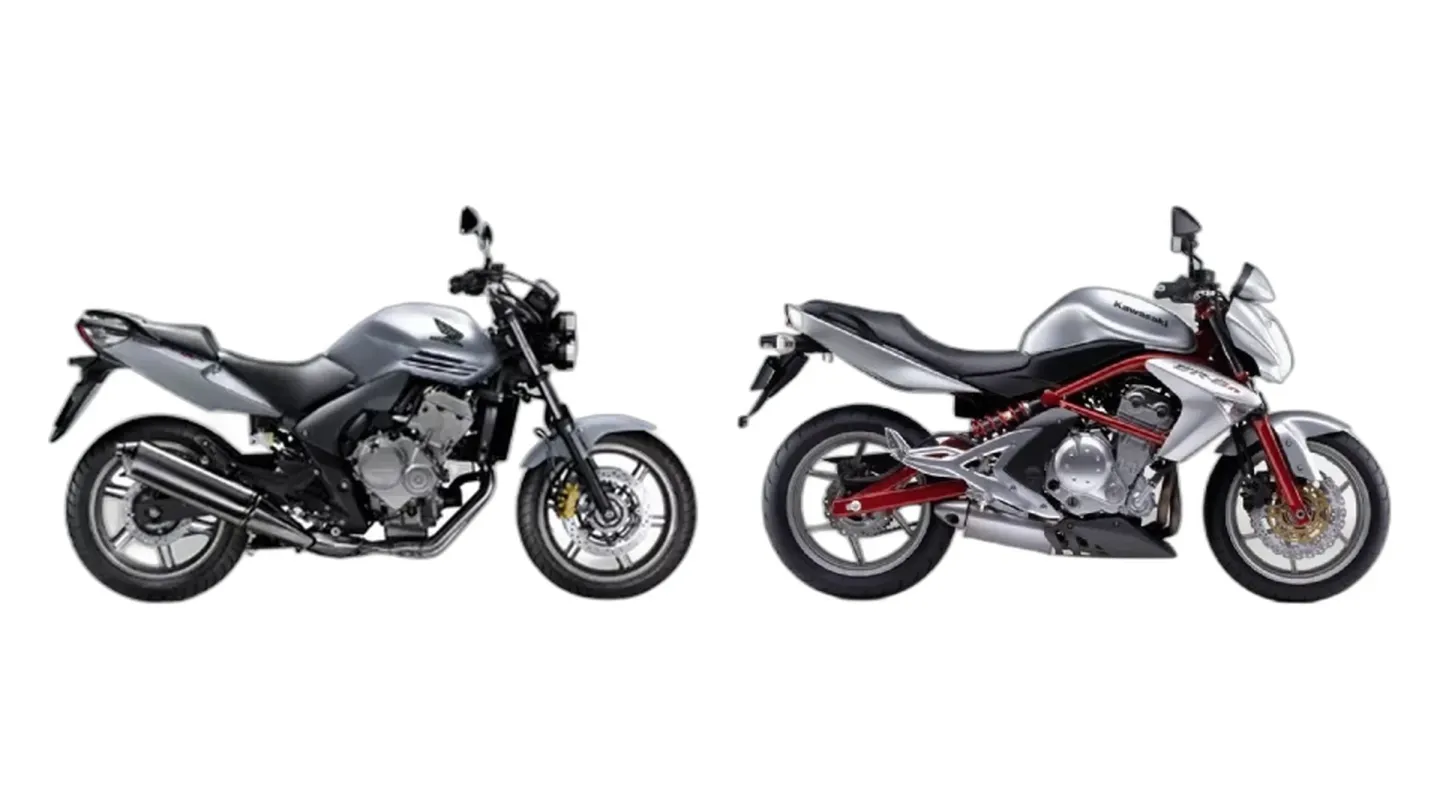
Honda CBF 600 (PC 38) vs Kawasaki ER-6n (ER650 A)
Honda CBF 600 vs Kawasaki ER-6n: no fairing, no excuses. Here's how to pick.
You'll notice the Honda CBF 600's riding position first: a low seat, high wide bars, and your body sitting down in the bike. The Kawasaki ER-6n nearly turns around inside a parking space.
So which one do you buy?
The ER-6n has the edge if…
Sporty riding on twisty roads
Nose ahead: ER-6n
Back-road fun leans slightly toward the ER-6n. The reason: stronger brakes and harder acceleration. It's a narrow call, so trust your test ride.
Daily commuting & city riding
Small edge: ER-6n
The ER-6n makes slightly more sense as a commuter. Don't read much into a gap this small.
What makes each one tick
CBF 600
The CBF 600's inline-four pulls evenly from low revs and won't punish a clumsy throttle, but there's no top-end rush to chase. At corner entry, the steel tube frame and 474 lb (215 kg) of wet weight hold the bike to a steady line instead of a quick turn-in. The compliant suspension starts to wallow as the pace climbs.
ER-6n
The ER-6n's twin doesn't lurch or protest when the throttle snaps shut and cracks back open. The engine just follows. The light chassis holds its line over a bump on a winding back road. Its front lever firms up instantly and bites hard.
The Voice of Experience

What actually separates them
- The ER-6n has the lower wet weight: 432 lb (196 kg) vs 474 lb (215 kg).
- The CBF 600 makes more peak power: 78 hp (57 kW) vs 72 hp (53 kW).
- The ER-6n makes more peak torque: 49 lb-ft (66 Nm) vs 43 lb-ft (58 Nm).
Which one for the way you ride
Comfortable long-distance riding
Not built for this
Hours in the saddle won't flatter either of these. They're happier on shorter runs.
There's no real gap on a first bike and trips with luggage. Sit on both and let fit and price decide.
Who each one is built for
What's good, and what you'll live with
CBF 600
What owners say
Strengths
- Comfortable, upright riding position
ER-6n
From Nils' own saddle time
Strengths
- Exhaust note above its size
- Both feet flat at stops
- Spins around in its length
- Vibration you barely notice
- Slim enough to wear
Trade-offs
- Stock handlebar runs narrow
- Engine mount welds can crack
- Wiring loom is vulnerable
- Cooling fan struggles in traffic
Known problems to check before you buy
CBF 600
No confirmed faults on file yet. That's not the same as fault-free.
ER-6n
- Engine mount weld cracking The welds around the right-hand engine mount can crack, potentially causing structural failure. Kawasaki initially attributed this to incorrectly fitted crash bobbins, but it is a known weak point on early models.
What they share
- Seat height
- 30.9 in (785 mm)
- Cooling
- Liquid-cooled
- Gearbox
- 6-speed
- Front tire
- 120/70-17
- Rear tire
- 160/60-17
Where the spec sheets split
| CBF 600 | ER-6n | |
|---|---|---|
| Wet weight | 474 lb (215 kg) | 432 lb (196 kg) |
| CBF 600 | ER-6n | |
|---|---|---|
| Displacement | 599 cc | 649 cc |
| Engine | Inline-four | Parallel twin |
| Power | 78 hp (57 kW) | 72 hp (53 kW) |
| Peak power at | 10,500 rpm | 8,500 rpm |
| Torque | 43 lb-ft (58 Nm) | 49 lb-ft (66 Nm) |
| Peak torque at | 8,000 rpm | 7,000 rpm |
| Top speed | 134 mph (216 km/h) | 130 mph (209 km/h) |
| CBF 600 | ER-6n | |
|---|---|---|
| Fuel capacity | 5.0 US gal (19 L) | 4.1 US gal (15.5 L) |
| CBF 600 | ER-6n | |
|---|---|---|
| Front brake | 296 mm | 300 mm |
Head to head, area by area
Both bikes on the same scale, one area at a time.