By NastyNils·
Motorcycle comparison · Enduro
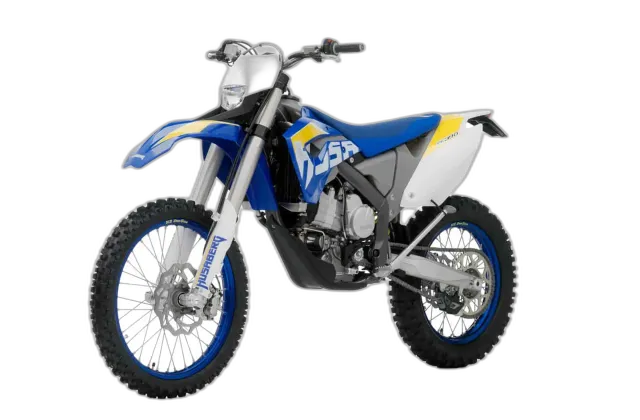
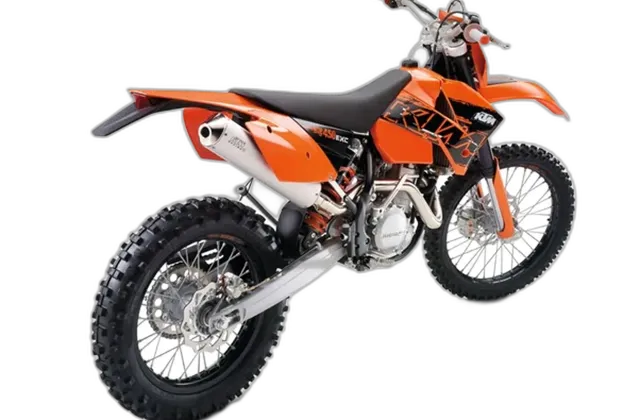
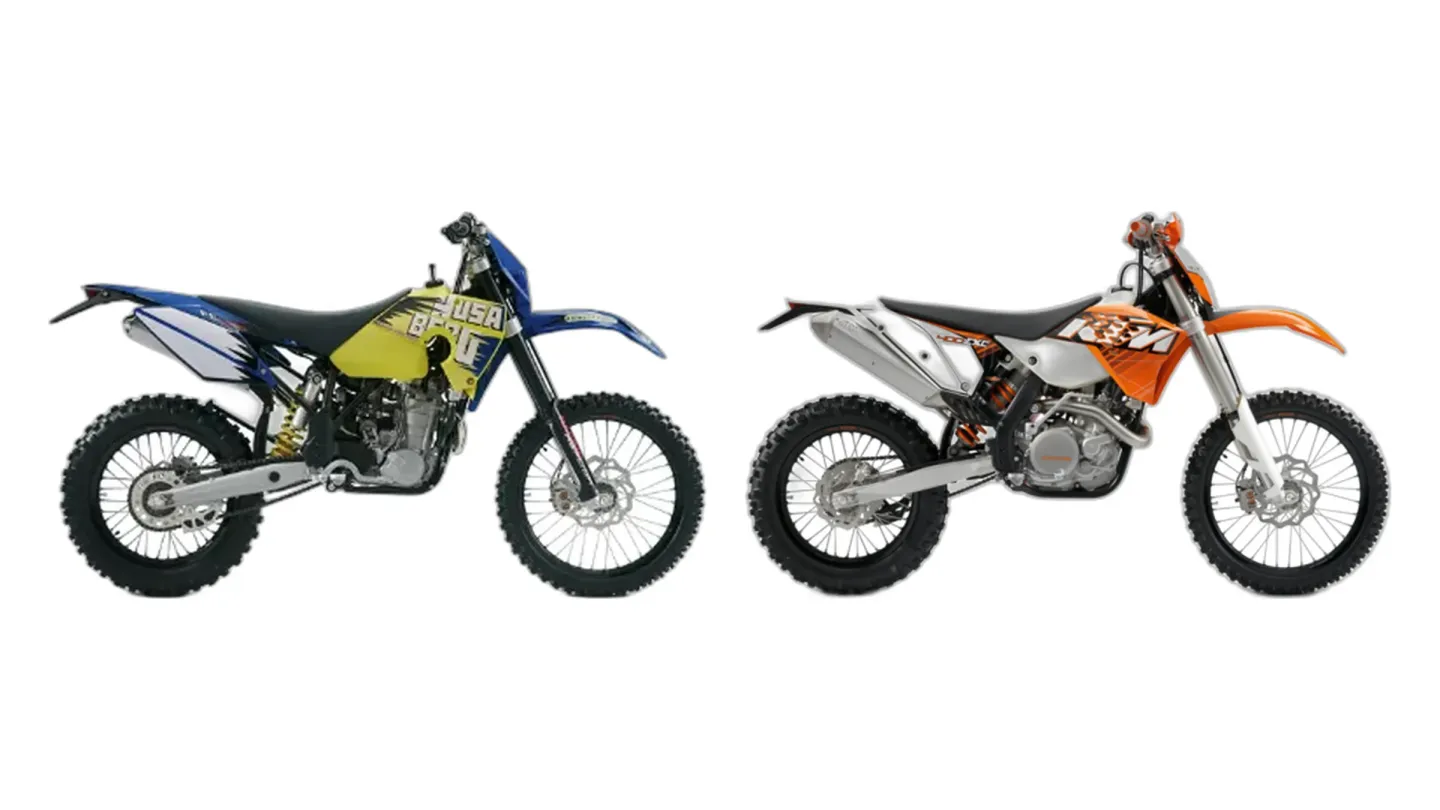
Husaberg FE 450 (MY2008) vs KTM 400 EXC (MY2010)
Husaberg FE 450 vs KTM 400 EXC: which one to buy for the riding you do.
On a greasy climb, the Husaberg FE 450 picks up crisply but doesn't snap, and the rear tire hooks up. The KTM 400 EXC's pull builds steadily through the roll-on.
So which one do you buy?
The FE 450 has the edge if…
Sporty riding on twisty roads
Slight edge: FE 450
On a twisty road, the FE 450 edges ahead. Not by enough to settle it alone.
The 400 EXC has the edge if…
Daily commuting & city riding
Inches ahead: 400 EXC
On the way to work, the 400 EXC asks a little less of you. The difference is simpler maintenance. Close enough that the test ride should settle it.
Keeping running costs low
A touch ahead: 400 EXC
Over a year of riding, the 400 EXC noses ahead on running costs. A neglected example would wipe that out.
What makes each one tick
FE 450
The FE 450 flicks through tight singletrack the way a motocross bike does, its steep steering head and short wheelbase swinging the front wheel around in a hurry. At speed, bumps and ruts can't knock the chassis off its line. The throttle doesn't jolt the bike on loose ground, and the single feeds in power the knobby can grip with. Revved out, the single shoves hard.
Nils rode the FE 450 in Austria and Hungary in 2005, and in Greece in 2008 (1000PS test reports).
400 EXC
On a light chromoly frame, the 400 EXC threads technical terrain, and its power swells in a smooth line that's easy to ride. On Kane Creek, the front wheel's turned into each corner before you've finished leaning. Fed fresh oil and given its valve checks on schedule, the engine logs long hours without a major failure. The single keeps thumping on.
The Voice of Experience

What actually separates them
- The FE 450 has the lower seat: 36.6 in (930 mm) vs 38.8 in (985 mm).
- The FE 450 makes more peak power: 50 hp (37 kW) vs 45 hp (33 kW).
- The FE 450 makes more peak torque: 35 lb-ft (48 Nm) vs 29 lb-ft (39 Nm).
Which one for the way you ride
On the dirt and a first bike, these two are a wash. That's where your budget and your inseam get the final say.
Who each one is built for
What's good, and what you'll live with
FE 450
What owners say
Strengths
- Exceptionally lightweight and agile
- Smooth and accessible power delivery
- Rock‑steady straight‑line stability
400 EXC
What owners say
Strengths
- Linear, controllable power delivery
- Lightweight and agile chassis
- Proven reliability with proper maintenance
Known problems to check before you buy
FE 450
No confirmed faults on file yet. That's not the same as fault-free.
400 EXC
- Carburetor bogging/stalling Dirt or stale fuel can clog the pilot jet, leading to off-idle hesitation, stalling, and poor throttle response. Regular cleaning and an O-ring mod on the accelerator pump help resolve this.
What they share
- Engine
- Single-cylinder
- Cooling
- Liquid-cooled
- Gearbox
- 6-speed
- Final drive
- Chain
- Fork
- Upside-down (USD)
- Front tire
- 90/90-21
- Rear tire
- 140/80-18
- Ground clearance
- 15.0 in (380 mm)
Where the spec sheets split
| FE 450 | 400 EXC | |
|---|---|---|
| Seat height | 36.6 in (930 mm) | 38.8 in (985 mm) |
| FE 450 | 400 EXC | |
|---|---|---|
| Displacement | 449 cc | 393 cc |
| Power | 50 hp (37 kW) | 45 hp (33 kW) |
| Torque | 35 lb-ft (48 Nm) | 29 lb-ft (39 Nm) |
| FE 450 | 400 EXC | |
|---|---|---|
| Fuel capacity | 2.8 US gal (10.5 L) | 2.5 US gal (9.5 L) |
| FE 450 | 400 EXC | |
|---|---|---|
| Front travel | 11.6 in (295 mm) | 11.8 in (300 mm) |
| Rear travel | 12.6 in (320 mm) | 13.2 in (335 mm) |
Head to head, area by area
Both bikes on the same scale, one area at a time.