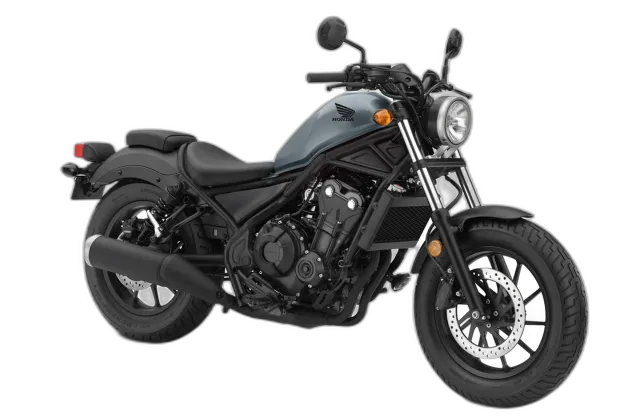
By NastyNils·
Motorcycle comparison · Cruiser
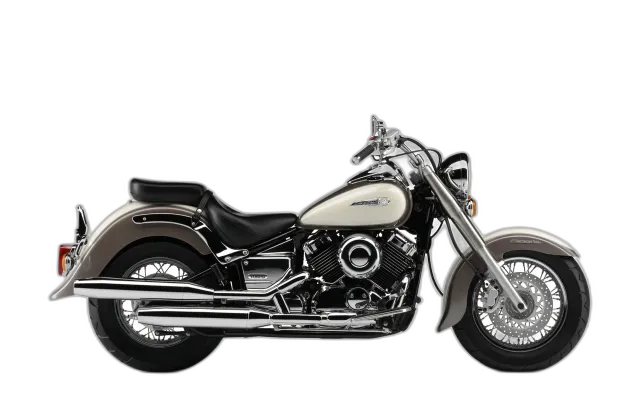
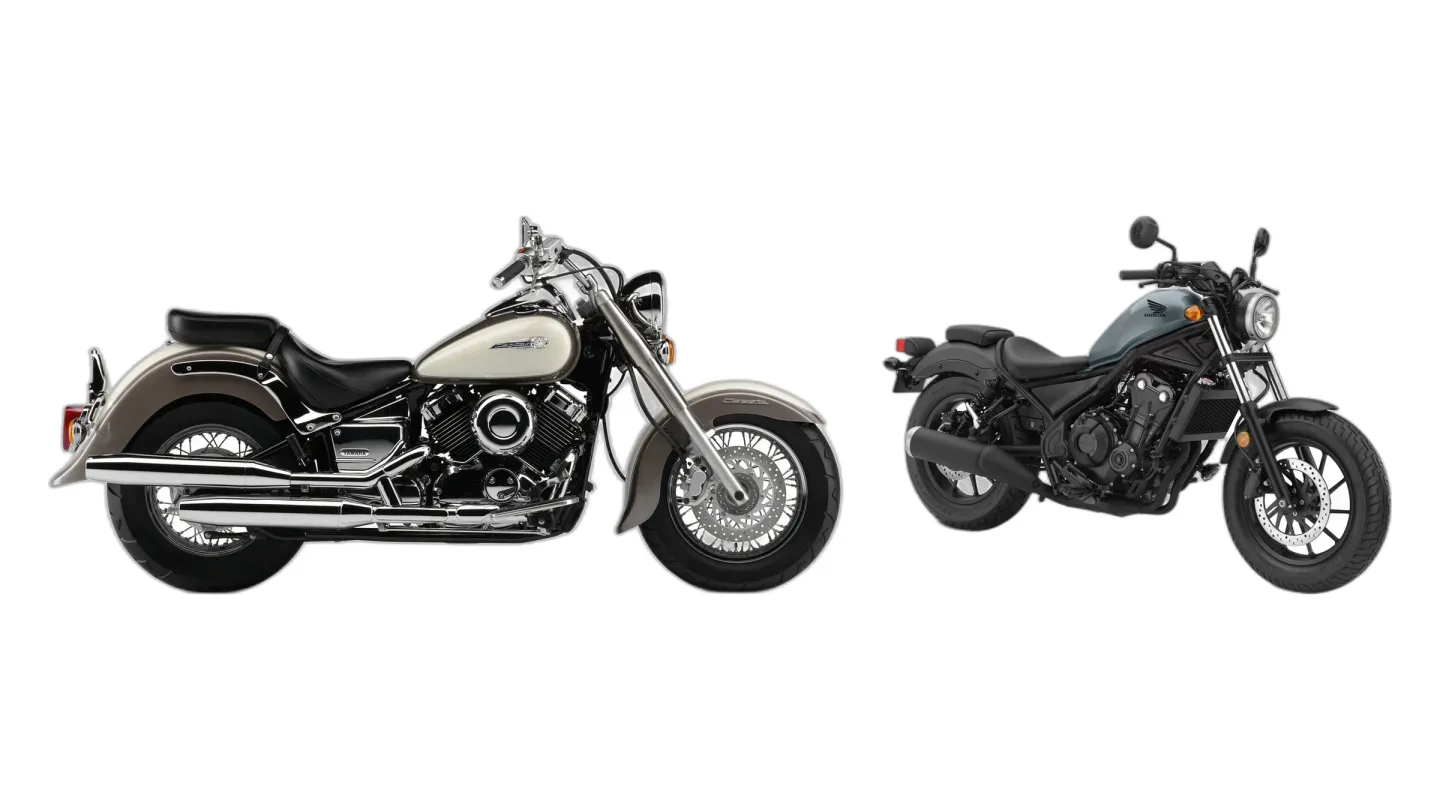
Yamaha XVS 650 Drag Star Classic (XVS650A) vs Honda CMX500 Rebel (PC 56)
Years into ownership, the Yamaha XVS 650 Drag Star Classic's shaft drive and air-cooled engine still don't ask for much at the service bench. The Honda CMX500 Rebel's wide bars and low center of gravity are what you'll feel on the ride itself. It's flicking through slow turns and settling into corners.
So which one do you buy?
The XVS 650 Drag Star Classic has the edge if…
Character, looks and sound
Slight edge: XVS 650 Drag Star Classic
For presence, the XVS 650 Drag Star Classic noses ahead. The reason: more retro style. Taste is personal, so don't let a small gap decide for you.
The CMX500 Rebel has the edge if…
Daily commuting & city riding
A touch ahead: CMX500 Rebel
On the way to work, the CMX500 Rebel asks a little less of you. The difference is lighter steering and a smaller footprint. Close enough that the test ride should settle it.
What makes each one tick
XVS 650 Drag Star Classic
The Drag Star's V-twin pulls hardest down low and never hurries the bike along. Its seat sits at 28.0 in (710 mm), and the weight rides low enough that a stop at a light isn't a balancing act. A bump doesn't hurry its stride.
CMX500 Rebel
Light enough to toss around at walking pace, the Rebel doesn't fight a tight U-turn. Its parallel twin answers the throttle by revving on toward 8,500 rpm, where it's strongest. Rough pavement comes through the fork with a firm jolt.
The Voice of Experience

What actually separates them
- The CMX500 Rebel has the lower seat: 27.2 in (690 mm) vs 28.0 in (710 mm).
- The CMX500 Rebel has the lower wet weight: 419 lb (190 kg) vs 545 lb (247 kg).
- The CMX500 Rebel makes more peak power: 46 hp (34 kW) vs 40 hp (29 kW).
Which one for the way you ride
Comfortable long-distance riding
Not their thing
Neither one is built for long-haul comfort. For big miles, look at a proper tourer or sport tourer.
A confidence-building first motorcycle
Not its job: XVS 650 Drag Star Classic
Too much motor for a beginner: the XVS 650 Drag Star Classic sits this one out.
Sporty riding on twisty roads
Neither one fits
If corners are your thing, keep looking. Neither one comes alive when the road gets tight.
Who each one is built for
What's good, and what you'll live with
XVS 650 Drag Star Classic
What owners say
Strengths
- Excellent reliability and low maintenance
CMX500 Rebel
What owners say
Strengths
- Lightweight and easy handling
- Approachable seat height
- Unique bobber styling
What they share
- Fork
- Telescopic
- Front tire
- 130/90-16
Where the spec sheets split
| XVS 650 Drag Star Classic | CMX500 Rebel | |
|---|---|---|
| Seat height | 28.0 in (710 mm) | 27.2 in (690 mm) |
| Wet weight | 545 lb (247 kg) | 419 lb (190 kg) |
| XVS 650 Drag Star Classic | CMX500 Rebel | |
|---|---|---|
| Displacement | 649 cc | 471 cc |
| Engine | 70° V-twin | Parallel twin |
| Cooling | Air-cooled | Liquid-cooled |
| Power | 40 hp (29 kW) | 46 hp (34 kW) |
| Peak power at | 6,500 rpm | 8,500 rpm |
| Torque | 38 lb-ft (52 Nm) | 33 lb-ft (45 Nm) |
| Peak torque at | 3,000 rpm | 6,000 rpm |
| Top speed | 96 mph (154 km/h) | 99 mph (160 km/h) |
| XVS 650 Drag Star Classic | CMX500 Rebel | |
|---|---|---|
| Fuel economy | 39 mpg (US) / 6.01 L/100 km | 61 mpg (US) / 3.85 L/100 km |
| Fuel capacity | 4.2 US gal (16 L) | 2.9 US gal (11 L) |
| XVS 650 Drag Star Classic | CMX500 Rebel | |
|---|---|---|
| Gearbox | 5-speed | 6-speed |
| Final drive | Shaft | Chain |
| Front brake | 298 mm | 296 mm |
| Rear tire | 170/80-15 | 150/80-16 |
What comes fitted, what costs extra
| XVS 650 Drag Star Classic | CMX500 Rebel | |
|---|---|---|
| ABS | Not offered | Option |
Head to head, area by area
Both bikes on the same scale, one area at a time.