By NastyNils·
Motorcycle comparison · Cruiser vs Supersport
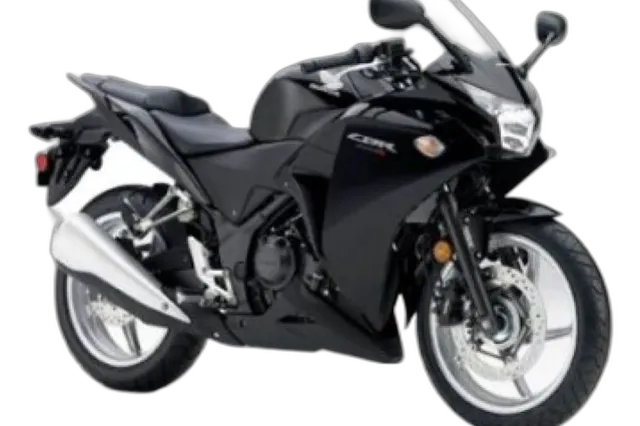
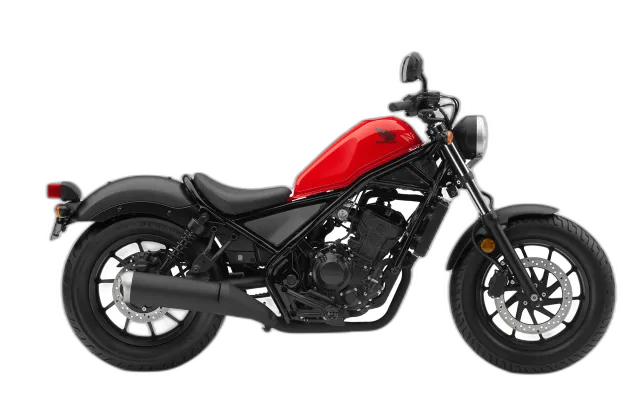
Honda Rebel 300 (CMX300) vs CBR 300 R (CBR300R)
Honda Rebel 300 vs CBR 300 R: where they split, and which one to buy.
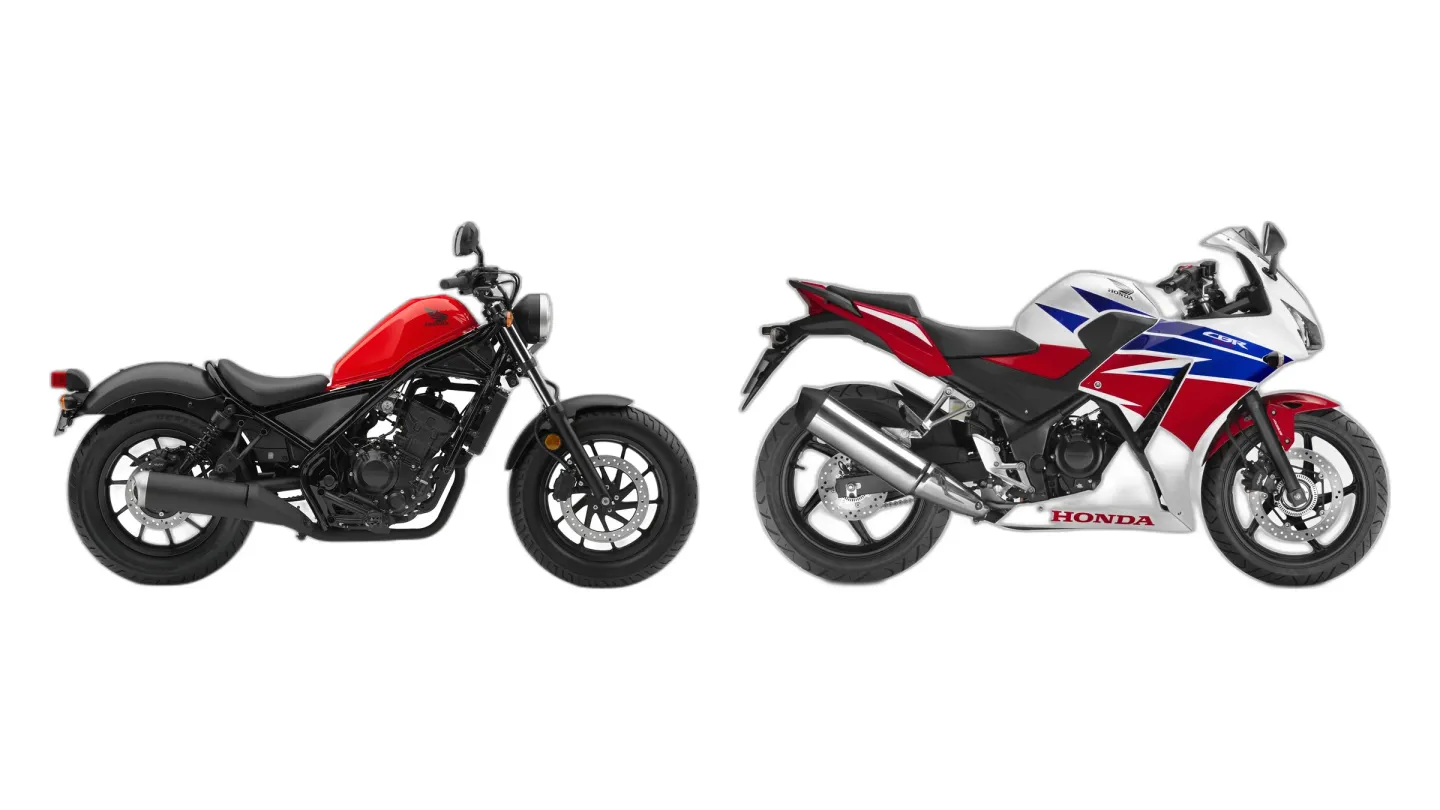
You'll feel the Honda Rebel 300 tip into a tight turn low and unhurried, and it doesn't fight the bar. The Honda CBR 300 R flicks in at a nudge.
So which one do you buy?
The CBR 300 R has the edge if…
Sporty riding on twisty roads
A touch ahead: CBR 300 R
On a winding road, the CBR 300 R comes out a touch ahead. The reason: lighter steering and a sportier chassis. You wouldn't bet much on a gap like that.
Daily commuting & city riding
Nose ahead: CBR 300 R
On the way to work, the CBR 300 R asks a little less of you. Credit a smaller footprint and easier maneuvering in tight spots. Close enough that the test ride should settle it.
A confidence-building first motorcycle
By a nose: CBR 300 R
Fresh off the training course, the CBR 300 R feels a bit more forgiving. Most of that is more comfort and easier controls. Only by a small margin, though.
What makes each one tick
Rebel 300
The Rebel's seat sits just 27.2 in (690 mm) off the pavement, and the upright bar doesn't make you stretch at a stoplight. Its low center of gravity means it's easy to thread through stalled downtown traffic. Pushed hard through a bend, the soft fork and shocks wallow until the pegs scrape. Potholes sink into the plush shocks.
CBR 300 R
The CBR's chassis darts between lane gaps and swaps sides in a bend with barely any effort at the bar. At highway speed it'll hold its line, and there's only a faint buzz coming through. The single doesn't spring surprises.
The Voice of Experience

What actually separates them
- The Rebel 300 has the lower seat: 27.2 in (690 mm) vs 30.7 in (780 mm).
- The CBR 300 R makes more peak power: 31 hp (23 kW) vs 27 hp (20 kW).
- The CBR 300 R has the larger fuel tank: 3.4 US gal (13 L) vs 3.0 US gal (11.2 L).
Which one for the way you ride
Comfortable long-distance riding
Both fall short
Both of these get tiring on a long day. A proper tourer will treat you better on big miles.
Call it even on running costs. Choose on fit, price and the one that makes you grin.
Who each one is built for
What's good, and what you'll live with
Rebel 300
What owners say
Strengths
- Approachable for all riders
- Customizable, modern bobber style
- Low maintenance, Honda reliability
- Peppy, fuel-efficient engine
Trade-offs
- Seat becomes uncomfortable on longer rides
- Underwhelming highway performance
- Soft suspension limits cornering
CBR 300 R
What owners say
Strengths
- Nimble and lightweight chassis
- Forgiving and manageable power delivery
- Surprisingly stable at highway speeds
Known problems to check before you buy
Rebel 300
- Right crankcase cover plug may leak (recall 23V-261) Recall 23V261000 On certain 2023 models, improper painting of the press-fit plug hole can cause the plug to dislodge when the engine heats up, leading to oil spraying onto the exhaust or rear tire.
- Honda accessory tank pads peeling The adhesive-backed accessory tank pads can lift or peel from the fuel tank in hot weather.
CBR 300 R
- Crankshaft bearing retainer failure (recall) Recall 16V528000 A manufacturing defect in the crankshaft can cause the connecting rod bearing retainer plating to wear prematurely, leading to corrosion and potential engine stall. Honda recalled all 2015–2016 models (NHTSA 16V-528) to replace the crankshaft assembly. Symptoms include abnormal noise, sudden power loss, and inability to restart.
What they cost used
These prices compare a 9-year-old Rebel 300 with a 9-year-old CBR 300 R.
- Rebel 300
- $3,600
- CBR 300 R
- $3,500
At nine years old, the Honda Rebel 300 sits around $3,600 while the Honda CBR 300 R lands near $3,500. The CBR 300 R runs about $100 cheaper. These figures come from earlier US market records, not live listings.
What they share
- Displacement
- 286 cc
- Engine
- Single-cylinder
- Cooling
- Liquid-cooled
- Torque
- 20 lb-ft (27 Nm)
- Gearbox
- 6-speed
- Final drive
- Chain
- Fork
- Telescopic
- Front brake
- 296 mm
Where the spec sheets split
| Rebel 300 | CBR 300 R | |
|---|---|---|
| Seat height | 27.2 in (690 mm) | 30.7 in (780 mm) |
| Wet weight | 364 lb (165 kg) | 357 lb (162 kg) |
| Rebel 300 | CBR 300 R | |
|---|---|---|
| Power | 27 hp (20 kW) | 31 hp (23 kW) |
| Peak power at | 8,000 rpm | 8,500 rpm |
| Peak torque at | 6,000 rpm | 7,250 rpm |
| Rebel 300 | CBR 300 R | |
|---|---|---|
| Fuel capacity | 3.0 US gal (11.2 L) | 3.4 US gal (13 L) |
| Rebel 300 | CBR 300 R | |
|---|---|---|
| Front tire | 130/90-16 | 110/70-17 |
| Rear tire | 150/80-16 | 140/70-17 |
| Wheelbase | 58.7 in (1491 mm) | 54.3 in (1380 mm) |
Head to head, area by area
Both bikes on the same scale, one area at a time.