By NastyNils·
Motorcycle comparison · Adventure
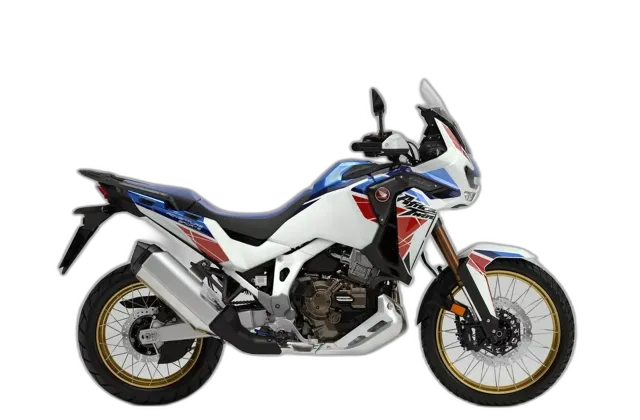
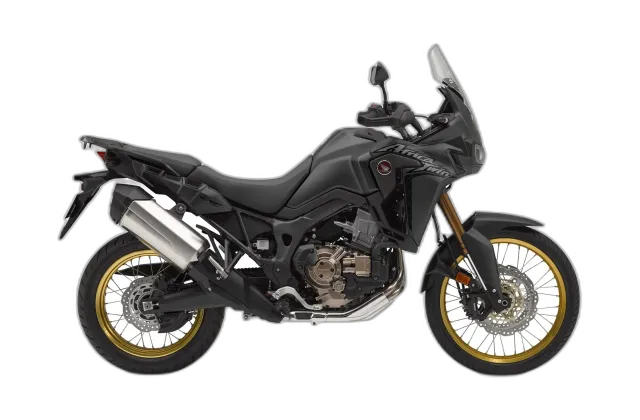
Honda CRF1100L Africa Twin (SD 08-AdventureSportsDCT) vs CRF1000L Africa Twin (SD 04-DCT)
Open the Honda CRF1100L Africa Twin's throttle in Tour and it's eager to move, though its softest mode stays calm enough for gridlock. The Honda CRF1000L Africa Twin rumbles through one broad pull.
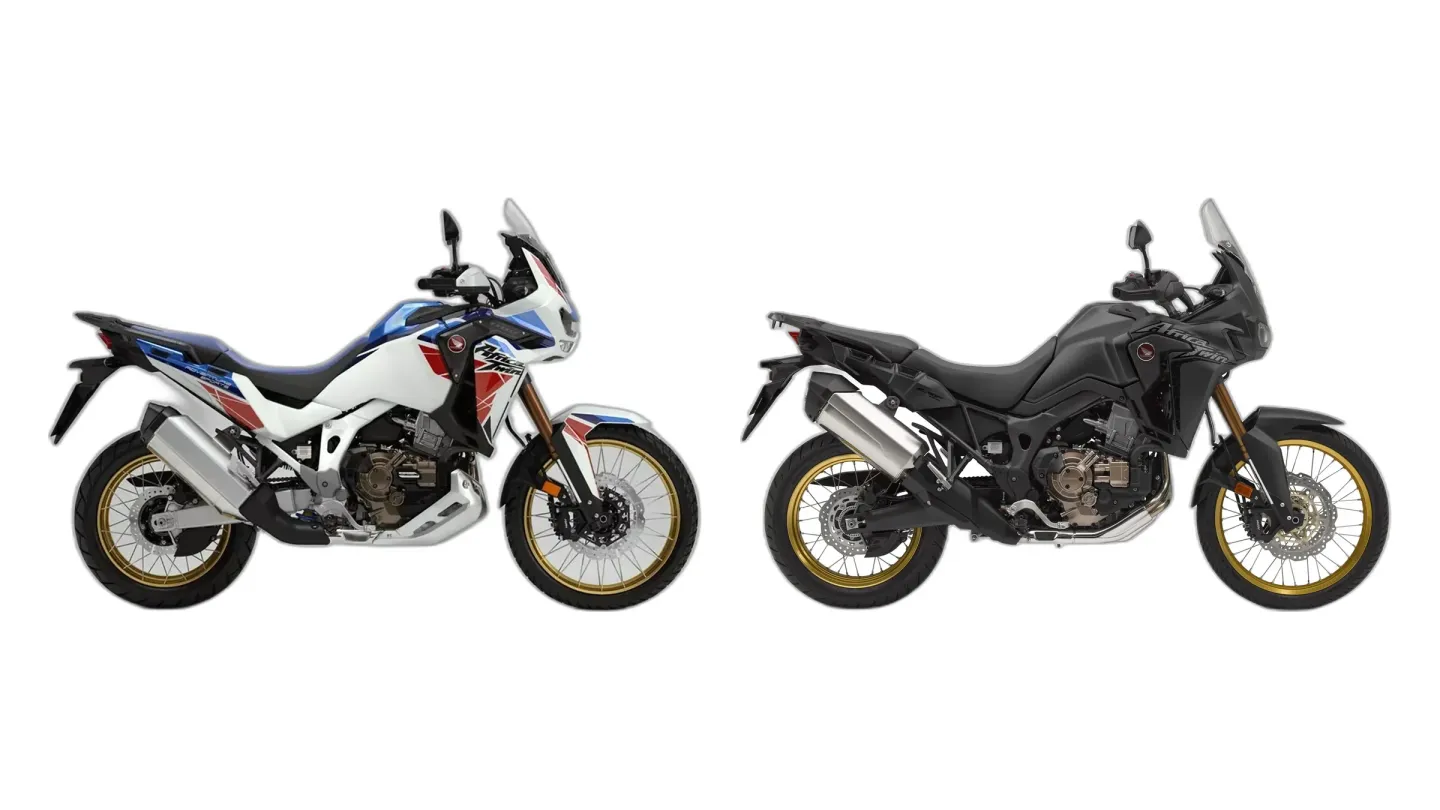
So which one do you buy?
The CRF1100L Africa Twin has the edge if…
Comfortable long-distance riding
Nose ahead: CRF1100L Africa Twin
On a long day in the saddle, the CRF1100L Africa Twin comes out a little ahead. Thank more range per tank and better wind protection for that. Ride both before you decide.
Real off-road capability
Small edge: CRF1100L Africa Twin
On a washboard dirt road, the CRF1100L Africa Twin edges in front. Credit more suspension adjustment and more low-end pull. It's close, so ride both on gravel if you can.
Sporty riding on twisty roads
By a nose: CRF1100L Africa Twin
The CRF1100L Africa Twin nudges ahead once the pavement starts to wiggle. Most of that is better suspension and more feel through the bars. Don't expect a night-and-day difference.
Daily commuting & city riding
Edges it: CRF1100L Africa Twin
The CRF1100L Africa Twin makes slightly more sense as a commuter. Don't read much into a gap this small.
What makes each one tick
CRF1100L Africa Twin
Behind the wider fairing and taller screen of the CRF1100L, highway wind fades into a quiet pocket that doesn't wear you down over a long stretch. The front dips a touch at turn-in, and the bike swaps direction cleanly. The electronics hide all that mass so well that you'll carry too much speed into a bend, where the brake lever has 547 lb (248 kg) to haul down once they step aside. Its exhaust still sounds like real displacement.
CRF1000L Africa Twin
Dirt is home ground for the CRF1000L, and the slim, rally-style chassis doesn't feel heavy getting there. Corner entry on pavement stays composed. Along Kane Creek, the long-travel suspension and tall front wheel don't flinch at loose ground. The roomy seat holds you upright all day.
Nils rode the CRF1000L Africa Twin in Styria in 2019 (NastyNils Testride).
The Voice of Experience

What actually separates them
- The CRF1100L Africa Twin has the lower seat: 33.5 in (850 mm) vs 34.3 in (870 mm).
- The CRF1000L Africa Twin has the lower wet weight: 534 lb (242 kg) vs 547 lb (248 kg).
- The CRF1100L Africa Twin makes more peak power: 102 hp (75 kW) vs 95 hp (70 kW).
Which one for the way you ride
Nothing splits them on running costs. Ride both back to back and the decision usually makes itself.
Who each one is built for
What's good, and what you'll live with
CRF1100L Africa Twin
Strengths
- Quiet pocket at highway speed
- Rock-steady at serious speed
- Off-road modes that earn their keep
- DCT picks the right gear
- Screen doubles as your map
Trade-offs
- Electronics hide the mass
- Left switchgear reads like a cockpit
- TFT screen has a history
- Weave when loaded heavy
- Expensive compared to rivals
CRF1000L Africa Twin
What owners say
Strengths
- Excellent off-road capability
- Smooth, characterful parallel-twin engine
Known problems to check before you buy
CRF1100L Africa Twin
- TFT display fragility and glitches Some displays are prone to cracking even without impact, and electronic glitches cause freezing or rebooting. Honda extended warranty on TFT to 2033.
CRF1000L Africa Twin
- Intermittent cold start difficulty Some owners report that the engine struggles to start or turns over slowly when cold, particularly after being ridden for over 19,000 mi (30,000 km). The cause is often linked to the starter switch or fuel system.
- Switchgear corrosion causing electrical faults Moisture ingress into the handlebar switch clusters leads to corrosion, resulting in intermittent DCT shifting errors, headlight malfunctions, and starting issues. Cleaning and treating with anti-corrosion spray often fixes it.
- DCT transmission can stick in neutral or fail to shift Some owners report the dual-clutch transmission occasionally refusing to shift, holding a single gear, or dropping into neutral with a flashing neutral indicator and a fault warning. The cause is usually traced to the electronic shift control system, such as the shift actuator motor, the gear position or shift spindle angle sensors, or their wiring connectors, rather than internal gearbox wear. A dealer diagnostic check and a software reset or sensor replacement usually resolves it.
- Corrosion on spokes and fasteners Nickel-plated spokes and various steel fasteners are prone to rust, especially when exposed to wet conditions or salted roads. Some owners have had wheels replaced under warranty, but the issue persists.
What they share
- Engine
- Parallel twin
- Cooling
- Liquid-cooled
- Gearbox
- 6-speed
- Final drive
- Chain
- Front tire
- 90/90-21
- Rear tire
- 150/70-18
- Ground clearance
- 9.8 in (250 mm)
- Front travel
- 9.1 in (230 mm)
- Rear travel
- 8.7 in (220 mm)
Where the spec sheets split
| CRF1100L Africa Twin | CRF1000L Africa Twin | |
|---|---|---|
| Seat height | 33.5 in (850 mm) | 34.3 in (870 mm) |
| Wet weight | 547 lb (248 kg) | 534 lb (242 kg) |
| CRF1100L Africa Twin | CRF1000L Africa Twin | |
|---|---|---|
| Displacement | 1084 cc | 998 cc |
| Power | 102 hp (75 kW) | 95 hp (70 kW) |
| Torque | 77 lb-ft (105 Nm) | 72 lb-ft (98 Nm) |
| CRF1100L Africa Twin | CRF1000L Africa Twin | |
|---|---|---|
| Fuel capacity | 6.6 US gal (25 L) | 5.0 US gal (18.8 L) |
What comes fitted, what costs extra
| CRF1100L Africa Twin | CRF1000L Africa Twin | |
|---|---|---|
| Electronic Suspension | Standard | Not offered |
| Cruise Control | Standard | Not offered |
| Quickshifter | Not offered | Option |
| Smartphone Connectivity | Standard | Not offered |
| USB Charging Port | Standard | Not offered |
| Heated Grips | Standard | Option |
| Luggage System | Not offered | Option |
Head to head, area by area
Both bikes on the same scale, one area at a time.