By NastyNils·
Motorcycle comparison · Adventure
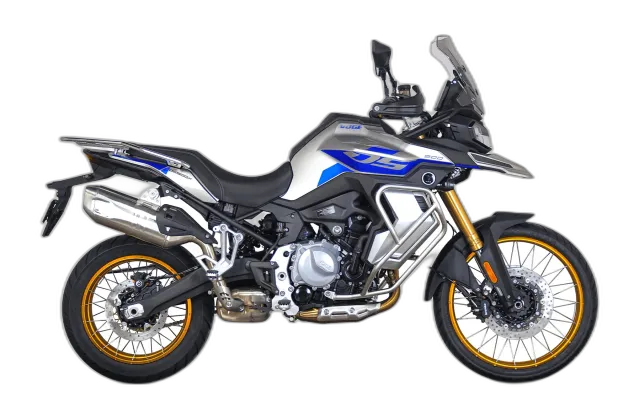
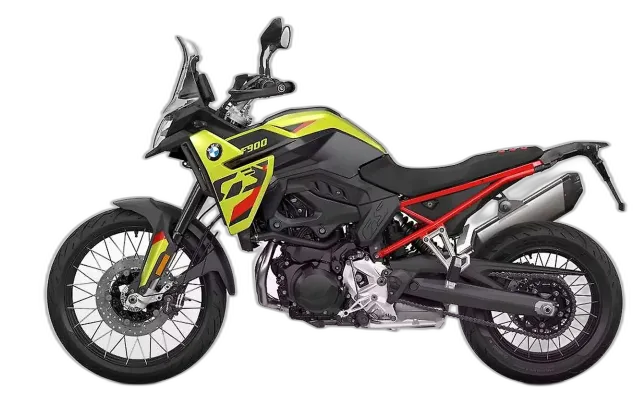
BMW F 900 GS (K81) vs Triumph Tiger 900 (C080)
BMW F 900 GS vs Triumph Tiger 900: long days, loaded bags, one choice to make.
Off a stoplight, the BMW F 900 GS's throttle brings in power that's right there and easy to use. Roll on the Triumph Tiger 900's throttle and its triple pulls clean from low revs, then keeps building toward a strong surge at the top. The bars don't buzz at any revs.
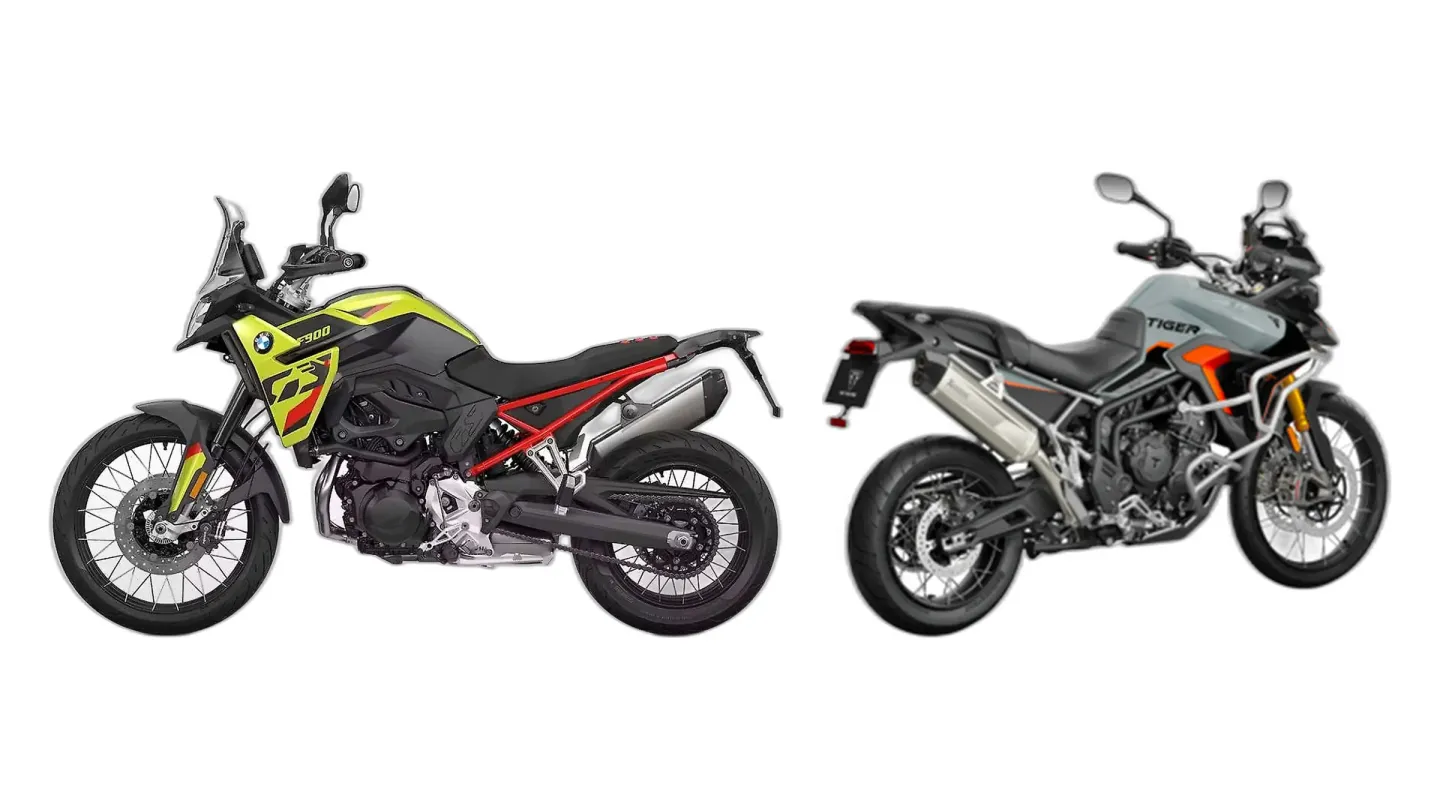
So which one do you buy?
The F 900 GS has the edge if…
Real off-road capability
Nose ahead: F 900 GS
In the dirt, the F 900 GS edges ahead. Most of that is more low-end pull. Not enough to decide it alone.
Sporty riding on twisty roads
A touch ahead: F 900 GS
In the twisties, the F 900 GS asks a bit less of you to go quickly. The difference is a sportier chassis and more feel through the bars. Call it a modest edge.
Keeping running costs low
Edges it: F 900 GS
Over a year of riding, the F 900 GS noses ahead on running costs. A neglected example would wipe that out.
The Tiger 900 has the edge if…
Comfortable long-distance riding
By a nose: Tiger 900
The Tiger 900 should leave you a bit fresher after a long day. Credit more range per tank and better wind protection. Should, not will: the margin is small.
Which one's the smarter buy
Nothing in it on value
The price gap is too small to decide the value question. Neither bike is the clear better buy for the money.
What makes each one tick
F 900 GS
From the first mile, the F 900 GS's wide handlebar and tidy controls feel like they've been yours for a season. The quickshifter works cleanly, the electronics don't intrude, and nothing in the throttle response catches you off guard at corner exit. The Serra da Estrela loop threw steep elevation change and badly broken pavement at the bike. Broken asphalt doesn't push it off line. At the brake lever, each stop runs through a 305 mm front brake. The Akrapovic silencer's deep note follows you off every corner.
Nils rode the F 900 GS in Portugal in 2024, and in the Canary Islands in 2025 (NastyNils Testride).
Tiger 900
The Tiger 900's fork and shock soak up rough patches without letting the chassis wallow. Corner entry doesn't unsettle the fork. The Brembo Stylema calipers haul it down hard, yet there's fine feel at the lever. Hours into the Blue Ridge Parkway, the cockpit still feels roomy.
The Voice of Experience
What actually separates them
- The Tiger 900 has the lower seat: 32.3 in (820 mm) vs 34.3 in (870 mm).
- The Tiger 900 has the larger fuel tank: 5.3 US gal (20 L) vs 3.8 US gal (14.5 L).
- Cruise Control: standard on the Tiger 900, option on the F 900 GS.
Which one for the way you ride
They come out level on commuting. The better-kept used example is the smarter money.
Who each one is built for
What's good, and what you'll live with
F 900 GS
Strengths
- Planted on rough tarmac
- Easy to live with daily
- Controls fall right to hand
- Livelier than the Adventure version
- Genuine off-road capability
Trade-offs
- Stock suspension folds off-road
- Enduro Pro Package near-mandatory
- Buzzy across the rev range
- Tall seat height limits accessibility
- Expensive when configured with packages
Tiger 900
What owners say
Strengths
- Smooth, broad-shouldered T-plane triple
- Phenomenal Brembo Stylema brakes
Known problems to check before you buy
F 900 GS
No confirmed faults on file yet. That's not the same as fault-free.
Tiger 900
- Transmission Fault and engine shutdown A transmission fault warning can appear on the display accompanied by engine shutdown and traction control errors. The issue is linked to sensor reference voltage drops and throttle sensor faults, which can lead to starting failure and instrument cluster blackouts.
What they cost used
These prices compare a 2-year-old F 900 GS with a 2-year-old Tiger 900.
- F 900 GS
- about $12,000
- Tiger 900
- about $12,900
What they share
- Cooling
- Liquid-cooled
- Gearbox
- 6-speed
- Final drive
- Chain
- Fork
- Upside-down (USD)
- Rear tire
- 150/70-17
Where the spec sheets split
| F 900 GS | Tiger 900 | |
|---|---|---|
| Seat height | 34.3 in (870 mm) | 32.3 in (820 mm) |
| Wet weight | 483 lb (219 kg) | 489 lb (222 kg) |
| F 900 GS | Tiger 900 | |
|---|---|---|
| Displacement | 895 cc | 888 cc |
| Engine | Parallel twin | Inline-three |
| Power | 105 hp (77 kW) | 106 hp (79 kW) |
| Peak power at | 8,500 rpm | 9,500 rpm |
| Torque | 69 lb-ft (93 Nm) | 66 lb-ft (90 Nm) |
| Peak torque at | 6,750 rpm | 6,850 rpm |
| F 900 GS | Tiger 900 | |
|---|---|---|
| Fuel economy | 55 mpg (US) / 4.3 L/100 km | 50 mpg (US) / 4.7 L/100 km |
| Fuel capacity | 3.8 US gal (14.5 L) | 5.3 US gal (20 L) |
| F 900 GS | Tiger 900 | |
|---|---|---|
| Front brake | 305 mm | 320 mm |
| Front tire | 90/90-21 | 100/90-19 |
| Wheelbase | 62.7 in (1593 mm) | 61.3 in (1556 mm) |
| Ground clearance | 9.8 in (250 mm) | 7.9 in (200 mm) |
| Front travel | 9.1 in (230 mm) | 7.1 in (180 mm) |
| Rear travel | 8.5 in (215 mm) | 6.7 in (170 mm) |
What comes fitted, what costs extra
| F 900 GS | Tiger 900 | |
|---|---|---|
| Cruise Control | Option | Standard |
| Quickshifter | Option | Not offered |
| Navigation | Not offered | Standard |
| Adjustable Windscreen | Not offered | Standard |
| Adjustable Seat Height | Not offered | Standard |
Head to head, area by area
Both bikes on the same scale, one area at a time.