Harley-Davidson Touring Street Glide ST (MY2022) — Tourer
NastyNils / Harley-Davidson press archive

2022–2023 · Tourer · Buyer's Guide

Touring Street Glide ST (MY2022)

Big Torque, Serious Electronics

The Machine's Character

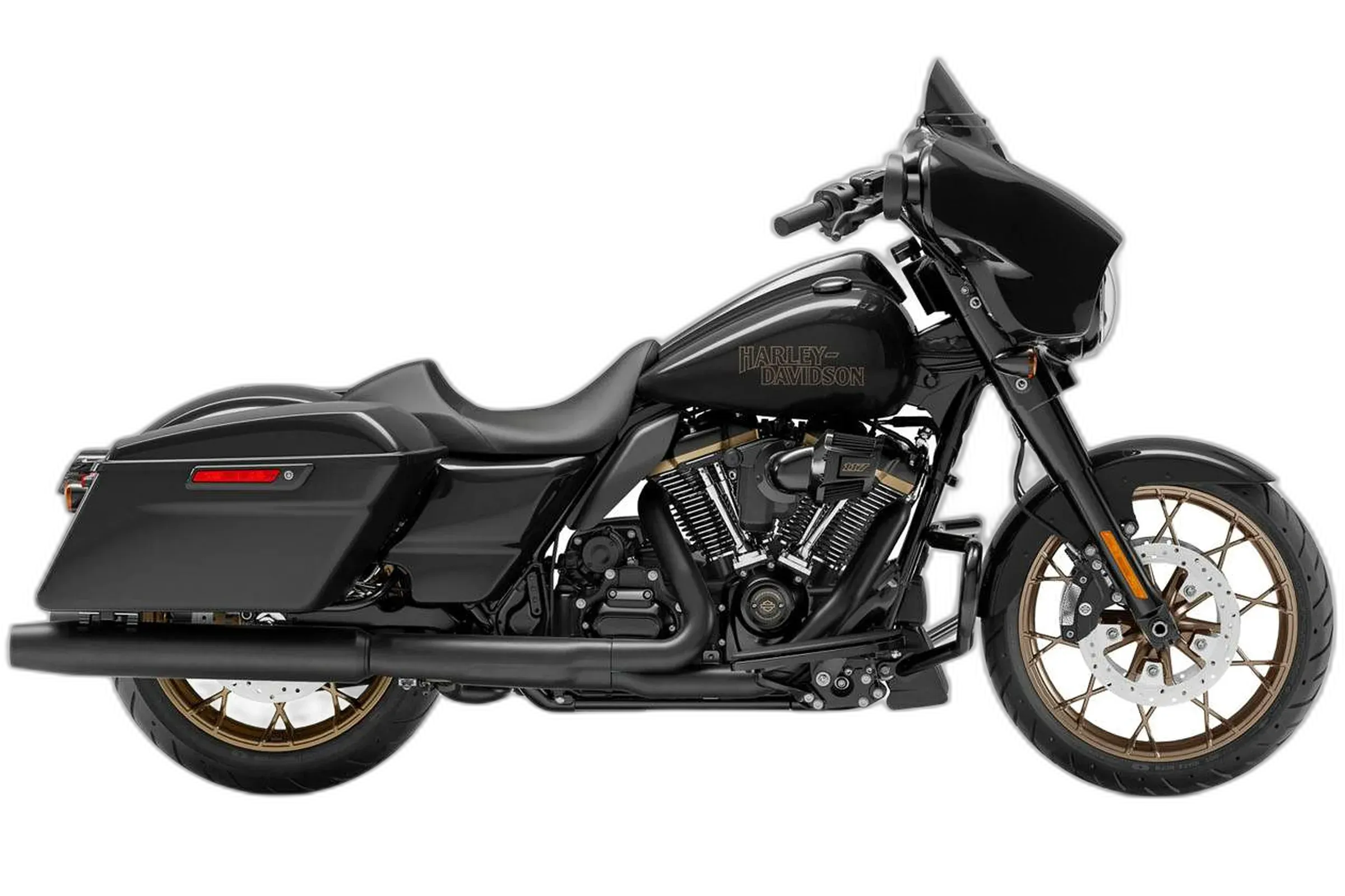
The Street Glide ST reads as a complete statement before the engine turns over: blacked-out finishes, that exposed air filter, the low fairing profile. Underneath sits a 1926 cc, 45° air/oil-cooled V-twin making 103 hp and a thick 127 lb-ft, fed through a six-speed box and a belt to the rear wheel. For a machine this heavy and this ornate, it moves with real decisiveness off a roll. The available lean-sensitive electronics show genuine engineering thought rather than box-ticking, and standard ABS anchors a package built to cover ground, not just to pose in a parking lot.

On the road it splits its life cleanly between the boulevard and the long haul, and it makes a convincing case for both. High-speed stability is a genuine strength, so interstate miles pile up without drama, and strong Harley resale means a used example holds its money better than almost anything you can park next to it. The honest caveats are physical. The saddle runs firmer than most touring riders expect, and the 842 lb (382 kg) demands respect at walking pace. This is not a bike to grow into. You want to be confident on it from day one.

Hard Numbers

Spec sheets don't ride bikes, but they set the baseline.

Show full specs & equipment Hide specs & equipment
Key specifications
Power 103 hp (76 kW)
Torque 127 lb-ft (172 Nm)
Displacement 1926 cc
Engine 45° V-twin
Cooling Air/oil-cooled
Gearbox 6-speed
Final drive Belt
Fork Telescopic
Front brake 300 mm
Front tire 130/60-19
Rear tire 180/55-18
Wheelbase 64.0 in (1625 mm)
Seat height 28.0 in (710 mm)
Wet weight 842 lb (382 kg)
Fuel capacity 6.0 gal (22.7 L)

Equipment check

Chassis

  • Rear Suspension Adjustable Standard
  • Cruise Control Standard

Comfort

  • Heated Grips Optional
  • Luggage System Standard

Connectivity

  • TFT Display Standard
  • Keyless System Standard
  • Tire Pressure Monitoring (TPMS) Optional

Lighting

  • LED Headlight Standard

Safety

  • ABS Standard
  • Cornering ABS Optional
  • Traction Control Optional

The Voice of Experience

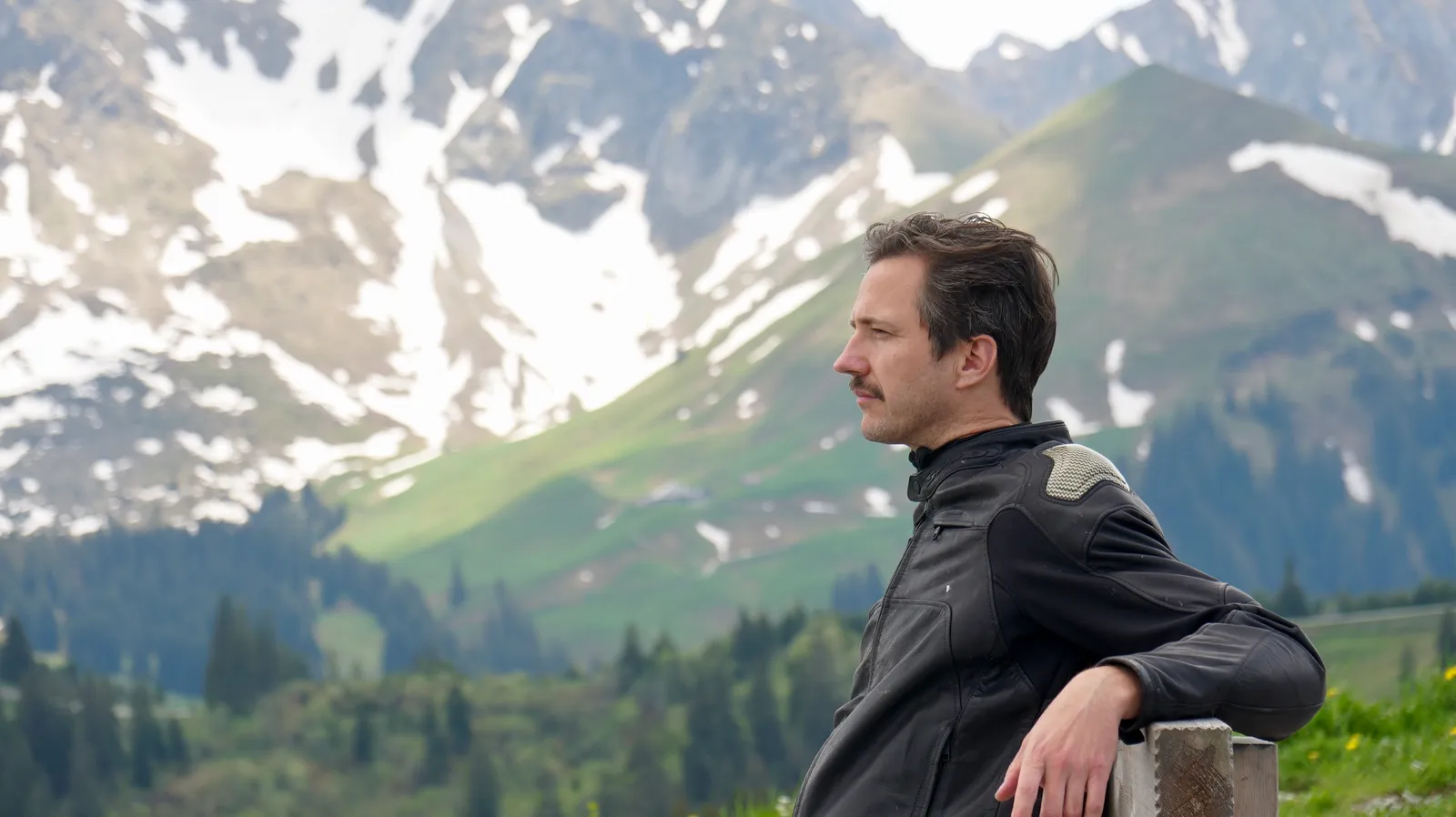
Portrait of NastyNils

The test ride

Settle in and the first thing you register is sound. That big exposed air filter puts the intake right in your ear, so every throttle input comes back as a close, pressurized mechanical note instead of a distant rumble behind you. The shake low in the rev range isn't harshness; it fits the bike's texture so naturally that it reads as communication rather than complaint. The cockpit sits you upright and organized, with the fairing cut low enough for a clean view down the road and navigation built cleanly into the layout instead of bolted on. Push to sustained highway pace and wind finds the bars before the fairing fully shields you, so steering feel goes slightly vague. Thread a very tight radius and the wide bar asks for reach; shorter-armed riders will feel the stretch.

Rated point by point — where it earns its keep

My own 0–100 score for this bike against the class, area by area — the marker on each bar is the class average.

Here's where the ST asks something of you. The saddle comes first: it's firmer than anyone stepping off a typical touring Harley will be braced for, and while an hour is no trouble, a full day has me hunting for a new position by afternoon. The heft is the other honest cost. Rolling, it carries itself beautifully, but paddling through a parking lot or lining up a U-turn wants a confident hand, and a rider unsure of themselves at a crawl will feel every pound of it. At a fast highway pace the wind reaches the bars ahead of the fairing, so the front goes slightly numb in the hands. The upright, arms-out stance suits me nearly everywhere, though a genuinely tight bend asks for reach shorter arms won't love. Against all that, the cockpit stays clean in the head: everything falls where I expect, and the low-rpm shudder reads as texture I'd miss if it vanished.

What impressed me is how settled it stays when I brake mid-corner. Grab a real handful while the bike is already tracking through a bend and it holds its line instead of standing up or getting nervous. Engine braking, brake force, and bias all stay managed as the lean angle builds, so the stop feels predictable and reachable rather than something you have to tiptoe around. For a machine this size, that composure under load is what lets me lean on the brakes with confidence.

The nuance that stuck with me sits down at the bottom of the throttle. Riders with real miles on older Milwaukee iron may find the low-end response a shade too civilized for what the big-bore hardware promises. Coming off almost anything else, though, it still lands raw and alive, convincingly Harley, just without the hair-trigger snap the looks lead you to expect. What it does deliver is drive that shrugs off the bike's bulk and a close, pressurized intake note that sits right in the saddle with you rather than trailing behind.

My read on ownership here comes down to what these bikes do on the used market. They simply don't get cheap. Anyone shopping secondhand feels the premium the moment they start comparing asking prices, and from an owner's seat that stubborn value is real protection: when trade-in day arrives, the ST gives back far more of its purchase price than most of what you could have parked beside it.

Fit the optional lean-sensitive setup and the electronics earn their place. The traction control reads lean angle and stays out of the way, no nagging, no showy cut-ins, just cleaner and more trustworthy drive out of a corner. It's clearly been calibrated by people who ride rather than bolted on to pad a brochure, and on a heavy machine like this that quiet competence counts for a lot in how willing I am to commit to a bend.

This is the trait I rate most confidently. The ST works on two fronts at once and shortchanges neither. On a slow afternoon I want to be out purely to be seen aboard something this deliberate, and the same machine will happily be pointed at a state line a long way off and asked to just go. The look does real work too: parked and silent, it lands as one considered piece rather than a pile of accessories, and that pulls at you before you've thrown a leg over.

The built-in navigation is the standout for daily use. It sits inside the cockpit layout as though it was planned there from the start, not wedged in as a late addition, and reading it on the move takes no hunting. Plenty of touring brands ship a nav setup that feels like an accessory catalog item; the way this one is folded into the dash is something a few of them could stand to study.

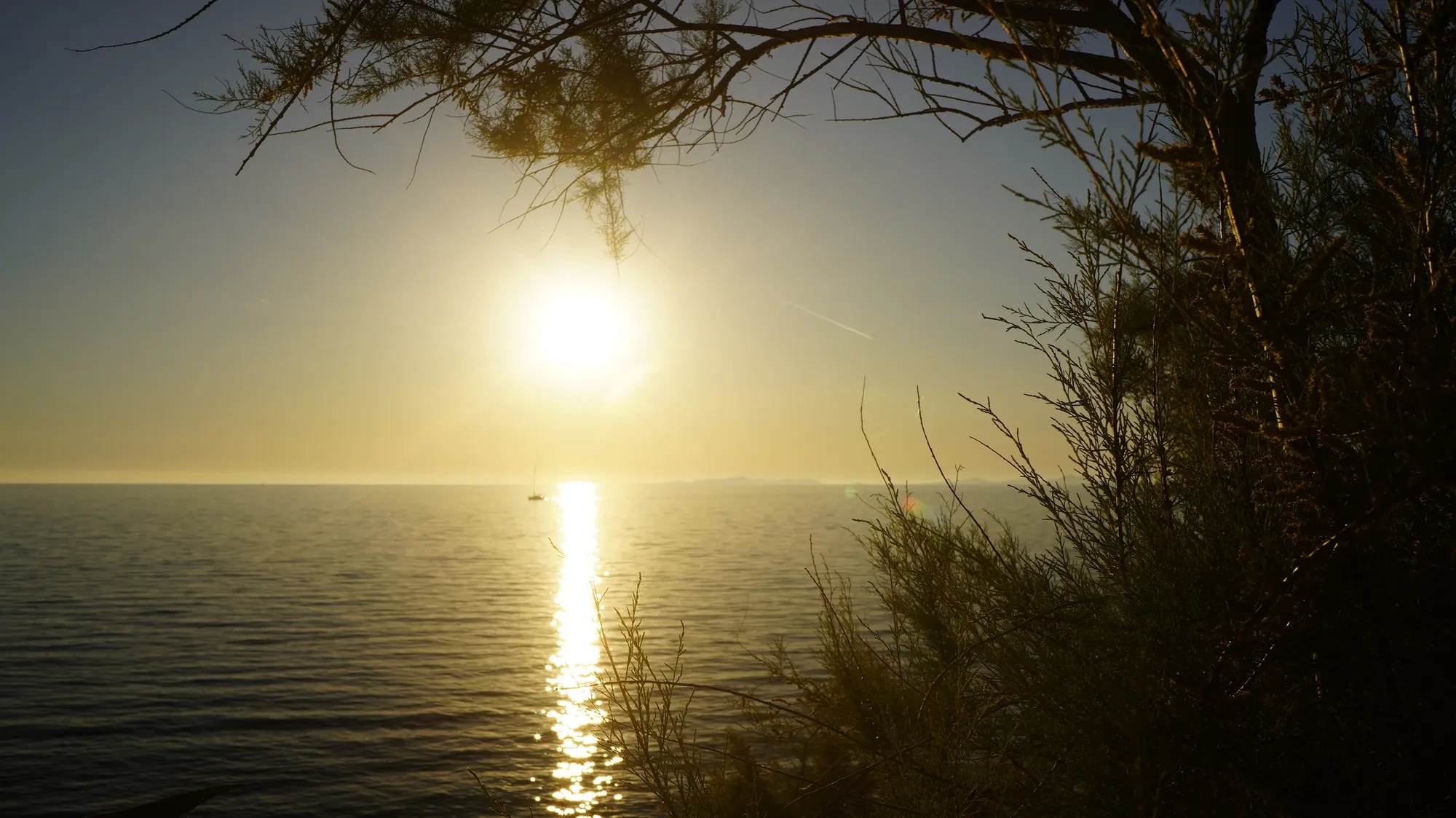
Sunset over the Adriatic Sea near Primosten, Croatia. Golden hour light bathes calm water in warm tones, with a small sailboat on the distant horizon. Rocky vegetation frames the right foreground. Clear skies and gentle conditions.

The Truth on the Street

This comes from years of listening to the people who ride these bikes: long forum threads, paddock conversations, and the steady stream of emails and messages riders send me directly. On the ST the pattern is consistent. Owners describe a bike that hits hard and looks the part, then split on the comfort they traded to get there.

Grunt, agility, and the factory-custom look

The engine leads every conversation. Riders consistently describe huge low-end torque that pulls the bike forward from any speed and turns passing into a non-event. Close behind is the handling, and the recurring surprise is how willing the ST feels in corners for its size, with the lowered stance and revised geometry credited for sharper steering and more clearance than owners expected. The look earns just as much praise: blacked-out finishes, dark wheels, and a slammed stance that reads as a factory hot-rod.

Where the comfort gripes gather

The gripes gather around comfort. The most common is what's missing, the solo seat with no passenger pegs or backrest, which two-up riders raise often. Several owners also call the ride firm, even harsh over rough pavement next to standard Touring models. And the price comes up regularly, since the ST asks a clear premium over a base Street Glide.

Known issues

  • Rear brake system malfunction (recall)

    brakesrareRecall

    Select 2022 models were recalled for a potential rear brake master cylinder issue that could lead to loss of rear braking.

  • M8 lifter noise and potential failure

    engineoccasional

    Milwaukee-Eight engines can develop noisy or failed lifters, particularly in early 117ci batches, requiring warranty replacement.

  • Electrical glitches causing limp mode

    electricsoccasional

    Some owners report intermittent ECU faults that trigger limp-home mode, often traced to loose battery terminals or software bugs.

The Expert Benchmark

Where this Harley-Davidson Touring Street Glide ST pulls ahead of — or falls behind — its rivals on the numbers, and the typical bike in its class on character.

What kind of bike this is — character vs. the class

This bike Class average

The shape of the Harley-Davidson Touring Street Glide ST — numbers and character vs. the average Tourer

Head-to-head: Harley-Davidson Touring Street Glide ST vs. its rivals

The Long-Haul Verdict

Forget spec-sheet bragging. Here's who the Touring Street Glide ST is actually built for.

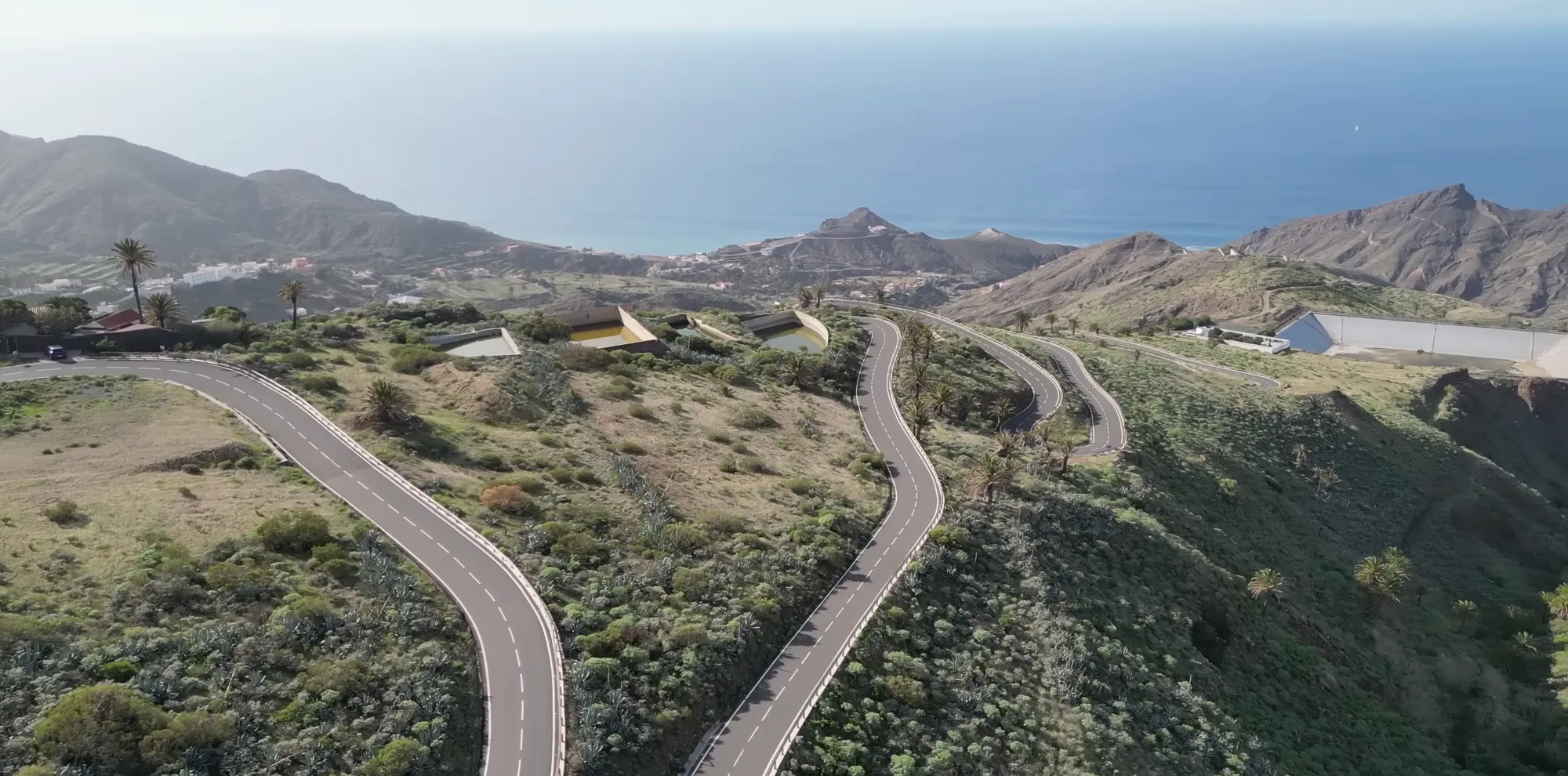
Aerial view of a winding asphalt road cutting through volcanic terrain on La Gomera, Canary Islands. The road curves through sparse green vegetation with rocky volcanic peaks visible in the background and a settled valley to the left. Clear lane markings, dry climate, partly cloudy sky.

Best cruiser for Sturgis?

This is your bike. Sound, presence, and brand mythology are exactly what it trades on, and it delivers the statement you're after, whether you're rolling into a rally or just being seen on Main Street.

Made for A1A — Florida Atlantic Coast · Black Hills / Sturgis Rally Hub · Daytona Main Street / Bike Week

Best touring motorcycle for long distance?

It'll cover the big routes and stay planted at interstate pace all day. Just know the saddle runs firm, so a long schedule two-up means planning your stops and expecting to shift around for comfort.

Made for Beartooth Highway · Blue Ridge Parkway · Going-to-the-Sun Road

Best motorcycle for Highway 1?

You can link the good roads on it, and it moves with more decisiveness than the bulk suggests. But it's heavy, the bars want reach in tight corners, and it's happiest at a flowing pace rather than a genuinely technical day.

Made for Black Hills · Blue Ridge Parkway · Cherohala Skyway