BMW K 1600 GTL (K48) — Tourer
NastyNils / BMW Press

2011–2026 · Tourer · Buyer's Guide

K 1600 GTL (K48)

Six Cylinders, Zero Compromises

The Machine's Character

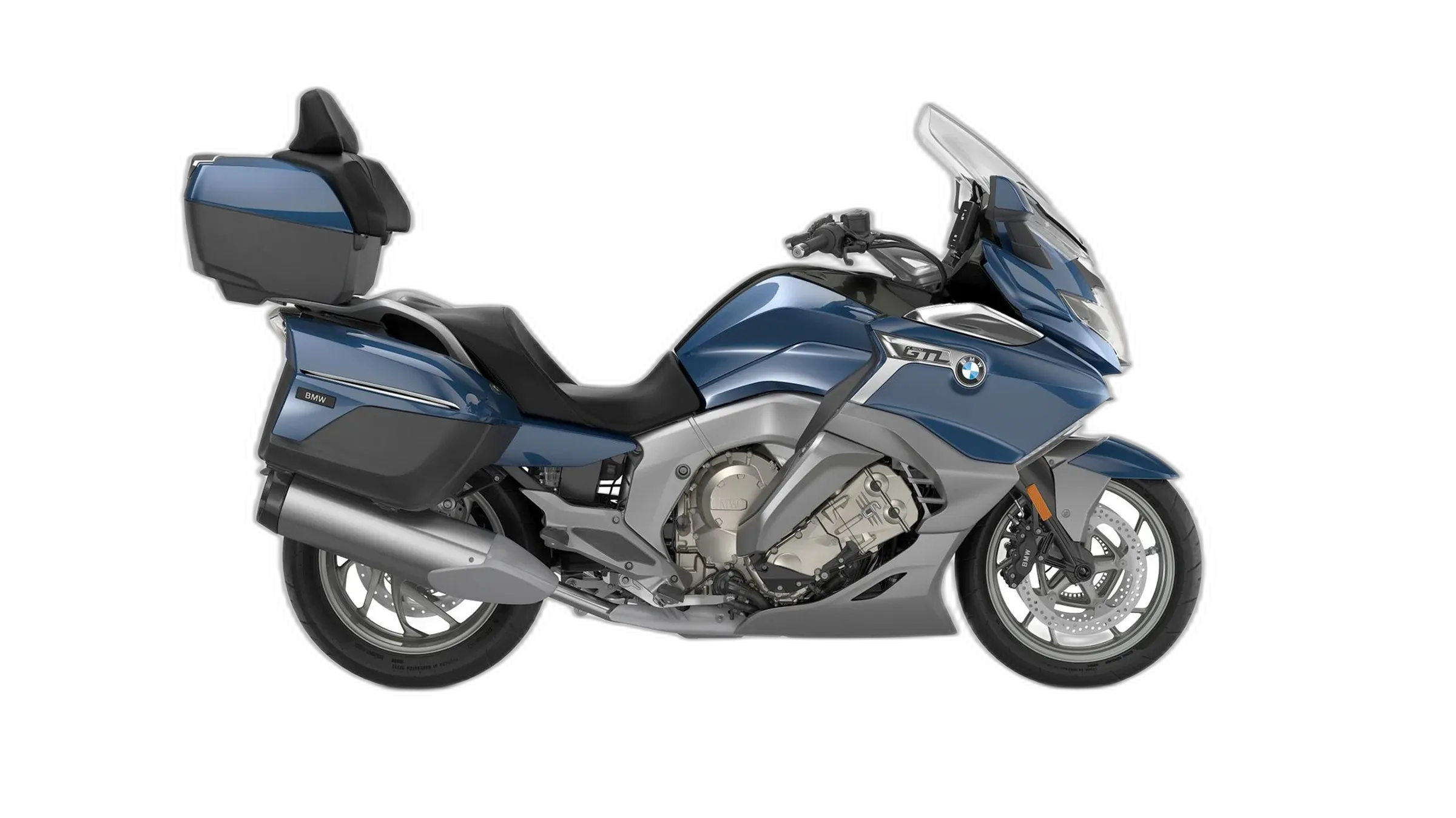
The K 1600 GTL is built around a 1649cc inline-six, and that engine is the whole argument. It makes 160 hp and 129 lb-ft, runs almost completely free of vibration, and carries enough midrange that this heavy machine moves with real authority without ever sounding strained. Around it sits a full luxury-touring package: electronically adjustable suspension, deep luggage, adaptive cornering lights, and one of the most complete digital cockpits on two wheels. This is the top of the touring class, where the last ten percent of comfort actually lives.

What surprises you is how it carries the bulk. Once it's rolling the weight recedes, and on a tight mountain road it leans far enough to drag the floorboards. It's a genuine riding machine, not just a prestige object parked outside a hotel. Think big distances, two-up, fully loaded, where comfort outranks everything. The caveats are honest ones. At walking pace the mass is always with you, taller riders lose the relaxed seating, and most of what the bike offers lives behind menus rather than dedicated buttons.

Hard Numbers

Spec sheets don't ride bikes, but they set the baseline.

Show full specs & equipment Hide specs & equipment
Key specifications
Power 160 hp (118 kW) @ 7,750 rpm
Torque 129 lb-ft (175 Nm) @ 5,250 rpm
Displacement 1649 cc
Engine Inline-six
Bore × stroke 72 × 67.5 mm
Compression 12.2:1
Cooling Liquid-cooled
Fuel system Fuel injection
Gearbox 6-speed
Final drive Shaft
Frame Aluminum twin-spar
Fork Duolever
Front brake 320 mm
Rear brake 320 mm
Front tire 120/70 ZR 17
Rear tire 190/55 ZR 17
Wheelbase 63.7 in (1618 mm)
Seat height 29.5 in (750 mm)
Wet weight 767 lb (348 kg)
Fuel capacity 7.0 gal (26.5 L)

Equipment check

Chassis

  • Electronic Suspension Standard
  • Front Suspension Adjustable Standard
  • Rear Suspension Adjustable Standard
  • Cruise Control Standard

Comfort

  • Heated Grips Standard
  • Electrically Adjustable Windscreen Standard
  • Adjustable Seat Height Optional
  • Luggage System Standard

Connectivity

  • TFT Display Standard
  • Smartphone Connectivity Standard
  • Navigation Optional
  • USB Charging Port Standard
  • Keyless System Optional
  • Tire Pressure Monitoring (TPMS) Standard

Lighting

  • LED Headlight Standard

Safety

  • ABS BMW Motorrad Integral ABS (Generation I) Stronger consistent braking Standard
  • Cornering ABS Standard
  • Traction Control Standard
  • Ride Modes Standard

Signature Tech

The named systems that set this bike apart — and what each one does for you.

Drivetrain

  • BMW ParaleverStandard
    • Acceleration stability
    • Brake dive control
    • High speed stability
    • Reduced unsprung rotating mass

The Voice of Experience

Portrait of NastyNils

The test ride

Settle in and the riding position does the first selling. You sit deep in the bike, pegs low and set forward, the bars falling to your hands closer to a recliner than a motorcycle, and for an average-height rider it's genuinely comfortable over long days. Raise the screen all the way and wind from the front simply stops; at highway speed the stereo comes through clean with nothing fighting it. Behind you it's a different story, a steady draft off the back that no screen height fully closes off. What reaches the grips isn't engine buzz but the road itself, clear enough that you trust the front and ride faster for it. The left-bar dial swaps chassis modes in seconds, the cornering lights pour real light into dark tunnels, and only the gearbox breaks the spell, never quite as polished as everything around it.

Rated point by point — where it earns its keep

My own 0–100 score for this bike against the class, area by area — the marker on each bar is the class average.

This is where the GTL spends its real budget, and for a rider of average build it pays off. I can sit on it from breakfast until dark and climb off without the usual aches, because the seat drops you down into the machine and the controls land exactly where your hands and feet already rest. With the screen up, the front of you goes still and stays that way at speed. Two honest limits keep it short of perfect. A thread of moving air always works off the tail, so you never feel fully shut in, and once a rider runs tall the legroom closes up until that easy posture starts working against him. The standing irritation is simply operating the thing: far too much of it lives inside a turn-dial and a display rather than under a thumb, and you memorize menus long before you stop reaching for buttons that were never fitted.

Here the detail that wins me over isn't the headline pull, it's how the power lands once you're already committed to the corner. Open the throttle just past the apex and there's a single brief jolt through the chassis, the traction light blinks, the rear tire sends one quick pulse, and then the drive arrives clean and unbroken. The spread underneath is wide enough to make gear choice nearly optional. In almost any mountain situation I could leave it anywhere from second to fifth and the engine sorted the rest, pulling without complaint and without needing a downshift to wake up. Sixth is nothing but highway overdrive, dead weight on a tight pass, so it sat unused for days at a time. That flexibility is the quiet luxury of this motor: you stop managing it and start simply riding behind it.

The piece that shows the thinking here is what happens when you walk away. Shut it down and the navigation locks itself while the screen folds flat to keep the detachable unit out of reach. Fire it back up and the windshield climbs straight back to the exact height you left it, held through every stop, right down to a long coffee break. It's a small thing you notice precisely because you never have to think about it.

What sells the handling to me is how much the electronics do without being asked. On greasy Alpine passes the traction control was earning its keep in nearly every corner, and given how much low-end the motor carries, riding those surfaces without it would mean a slower, far more cautious approach. There's a technique reward too. Pick a gear higher than instinct says and the engine braking softens on the way in, so you carry speed through the corner instead of scrubbing it off, and the drive still hauls you out the far side. The honest catch is clearance. A machine built for this duty gives some up, and a rider who likes to press hard on a corner will find the limit sooner than he wants. None of that undoes the basic surprise, which is how little the chassis asks of you while the electronics quietly hold everything in line.

What stayed with me from the Tyrolean passes was the company I was keeping. Much lighter machines ran alongside, the kind that should have walked clear on tight switchbacks, and the GTL never once made the group wait. The mass is real and I won't pretend otherwise, but the technology closes the gap so completely that on a moving road it simply stops being the heavy one in the pack.

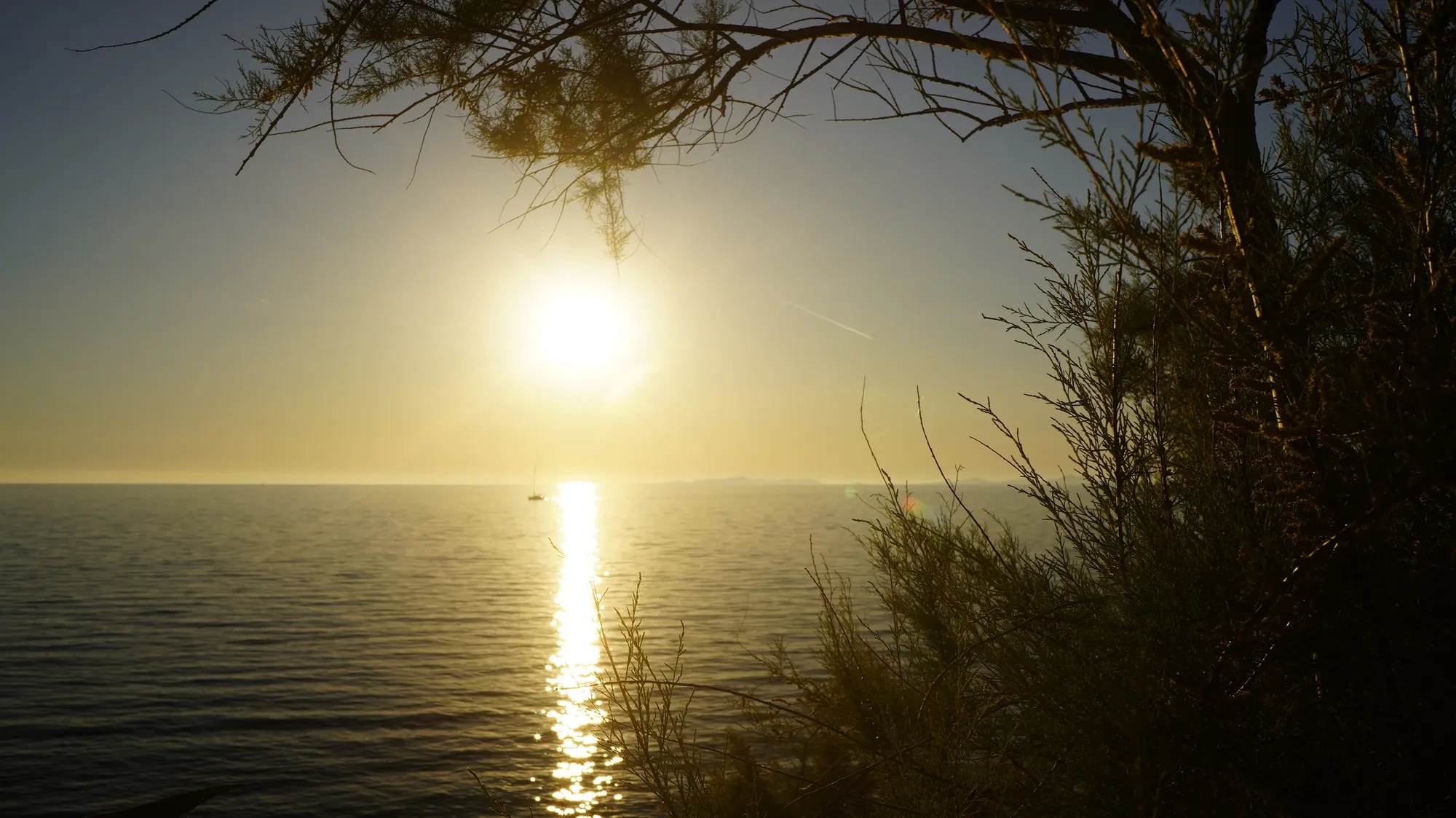
Sunset over the Adriatic Sea near Primosten, Croatia. Golden hour light bathes calm water in warm tones, with a small sailboat on the distant horizon. Rocky vegetation frames the right foreground. Clear skies and gentle conditions.

The Truth on the Street

I've spent years reading what owners send my way: long message threads, conversations in parking lots and at fuel stops, the notes that land once someone has lived with a bike through a full season. For the K 1600 GTL the chatter settles into a clear shape. Near-universal love for how it travels, set against a short list of ownership headaches that keep resurfacing.

What keeps owners loyal

On the praise side the community is remarkably consistent. Riders come back again and again to the all-day comfort, two-up and fully loaded, and to the inline-six that handles the heavy lifting without ever feeling strained. Those two themes carry the bulk of what people tell me, and they show up across owners of every model year.

The gripes that keep surfacing

The complaints cluster just as tightly. Owners of the earliest bikes report a run of teething trouble: water pump leaks, switchgear that quits, and assorted electrical gremlins, most of it cleaned up on later years. The factory Bluetooth draws steady frustration, dated and unreliable enough that many give up and fit their own setup. Running costs get mentioned plainly too, with the scheduled valve-clearance check and a few quick-wearing parts making service bills sting.

Known issues

  • Reverse Gear Control Unit Overheat (Recall 26V214)

    electricsrareRecall

    On 2017-2025 models, the reverse gear control unit seal may deteriorate, allowing moisture ingress and causing overheating. BMW issued a safety recall for unit replacement.

  • Throttle Malfunction (Recall for 2012 models)

    fuel systemrareRecall

    A recall was issued for approximately 2,475 2012 K1600 models due to a malfunctioning throttle that could cause unintended acceleration.

  • Water Pump and Ignition Coil Failures on Early Models

    engineoccasional

    On 2011-2012 models, the water pump can leak and ignition coils may fail, leading to misfires. Most have been addressed under warranty.

  • Switchgear Failures

    electricsoccasional

    The left and right handlebar switch clusters can fail due to corrosion or electronic faults, causing loss of turn signals or cruise control. Affects all model years to some extent.

  • Fast-Wearing Rear Brake Pads

    brakescommon

    The rear brake pads wear quickly, often needing replacement every 10,000-15,000 km.

  • Wheel Bearing and Duolever Play

    chassisoccasional

    Wheel bearings require frequent replacement, and the Duolever front end may develop play around 48,000 km.

The Expert Benchmark

Where this BMW K 1600 GTL pulls ahead of — or falls behind — its rivals on the numbers, and the typical bike in its class on character.

What kind of bike this is — character vs. the class

This bike Class average

The shape of the BMW K 1600 GTL — numbers and character vs. the average Tourer

Head-to-head: BMW K 1600 GTL vs. its rivals

The Long-Haul Verdict

Forget spec-sheet bragging. Here's who the K 1600 GTL is actually built for.

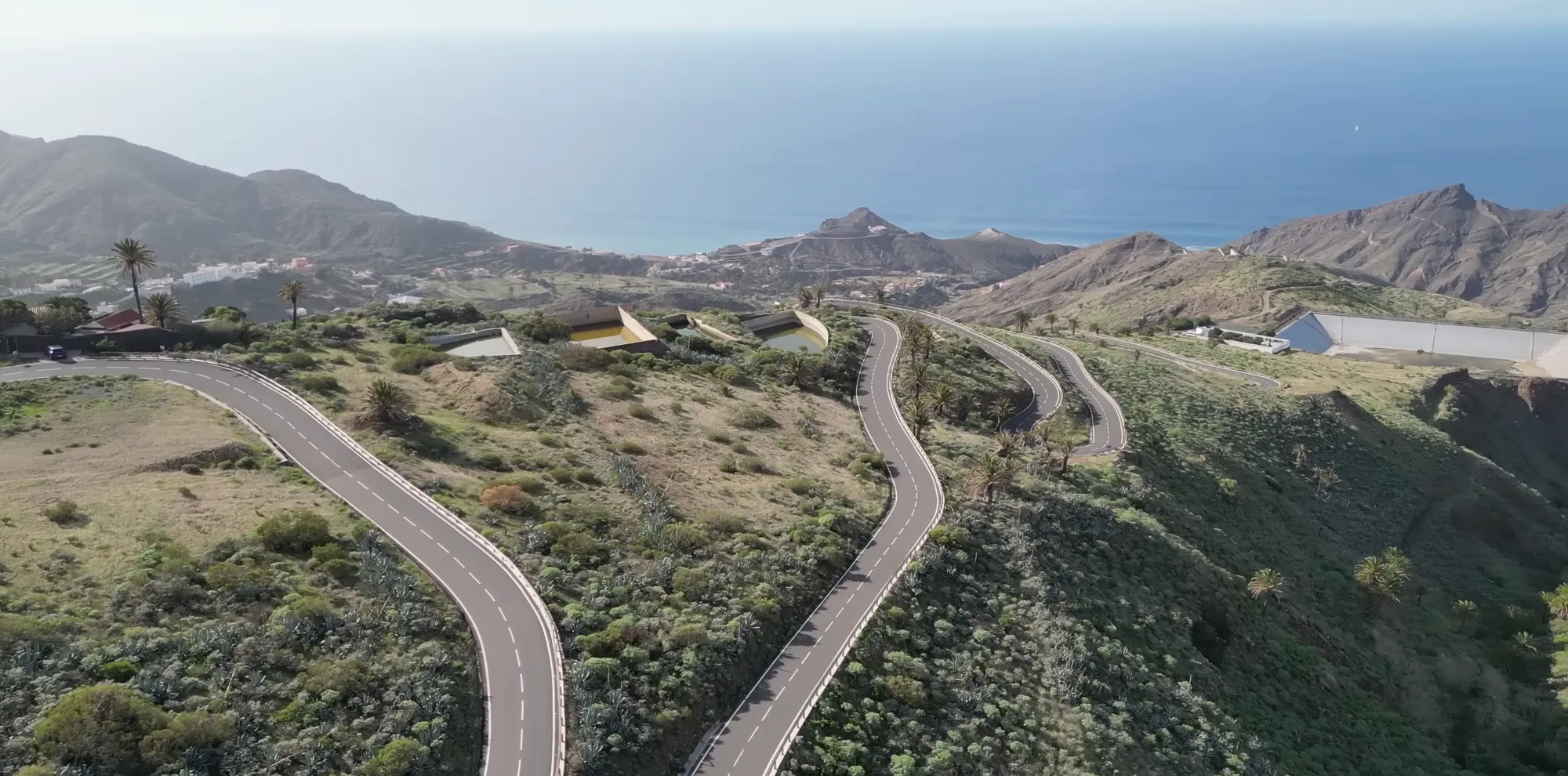
Aerial view of a winding asphalt road cutting through volcanic terrain on La Gomera, Canary Islands. The road curves through sparse green vegetation with rocky volcanic peaks visible in the background and a settled valley to the left. Clear lane markings, dry climate, partly cloudy sky.

Best touring motorcycle for long distance?

This is exactly your bike. Two-up, fully loaded, crossing states to reach Going-to-the-Sun, the GTL gives you the comfort, range, and weather protection to ride all day and not arrive wrecked.

Made for Beartooth Highway · Blue Ridge Parkway · Going-to-the-Sun Road
Best motorcycle for Highway 1?

You want twisties with comfort, and the GTL bends further than its size suggests. It won't be the lightest thing on Blue Ridge, but it keeps pace and leaves you fresh after a 300-mile day.

Made for Black Hills · Blue Ridge Parkway · Cherohala Skyway

Best cruiser for Sturgis?

Honest answer: this isn't built for the Sturgis ritual. If your ride is about sound, identity, and cruiser culture, the quiet six and touring focus sit outside that world, even if it out-tours the field.

Made for A1A — Florida Atlantic Coast · Black Hills / Sturgis Rally Hub · Daytona Main Street / Bike Week

Alternatives to the BMW K 1600 GTL

If this one isn't quite the fit, these are the bikes worth riding back-to-back against it.

Any price note compares both bikes at the same age — the youngest age both have on the used market — against this BMW K 1600 GTL. “cheaper/pricier” is what that bike costs second-hand, not how worn it is.