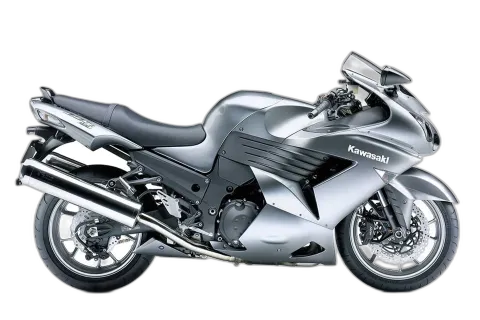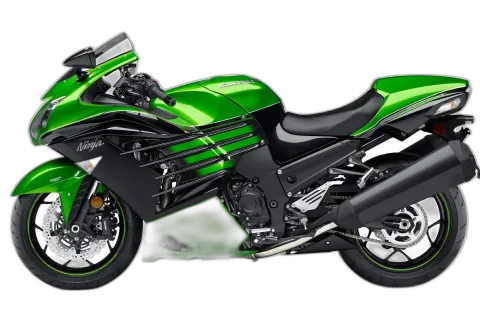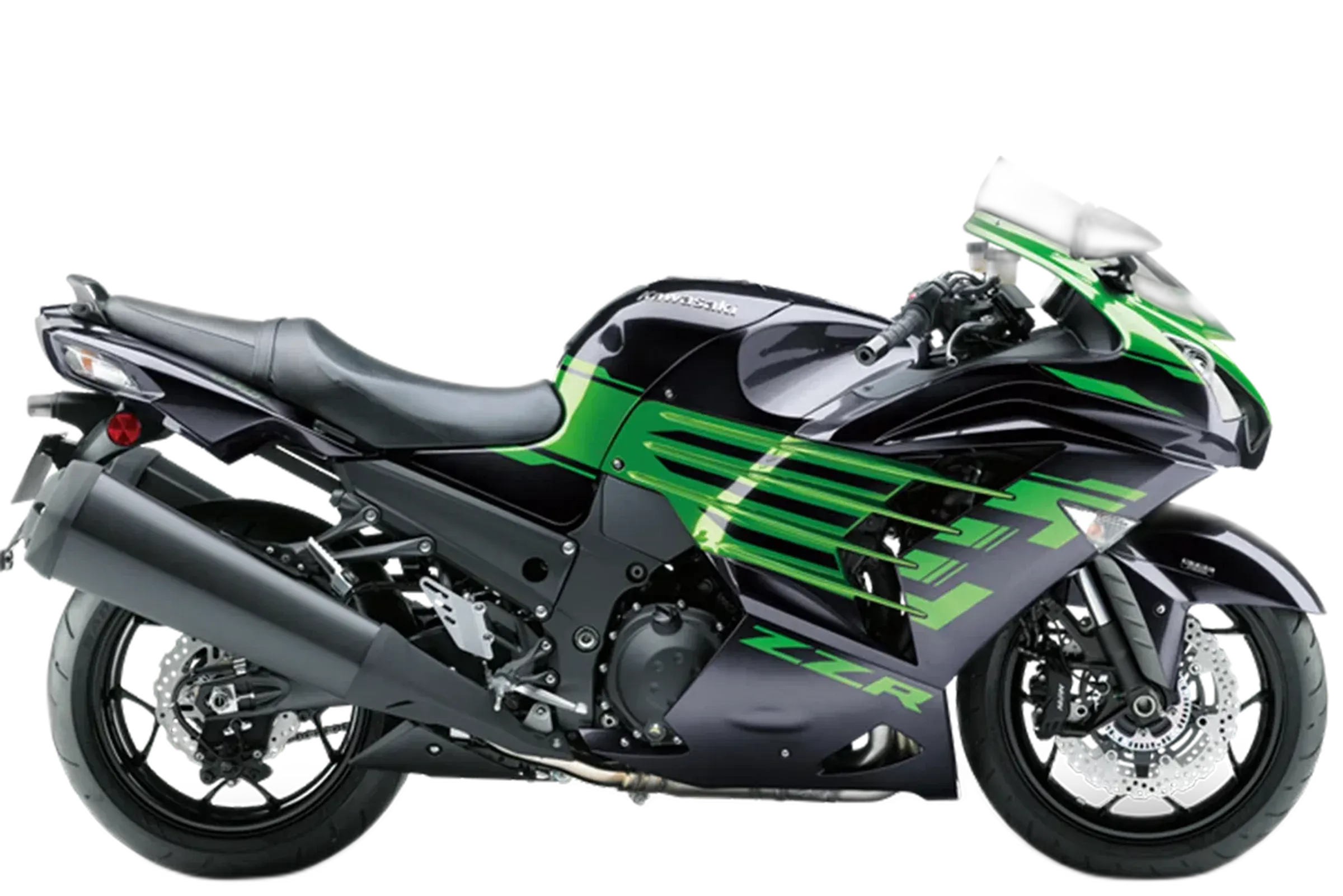
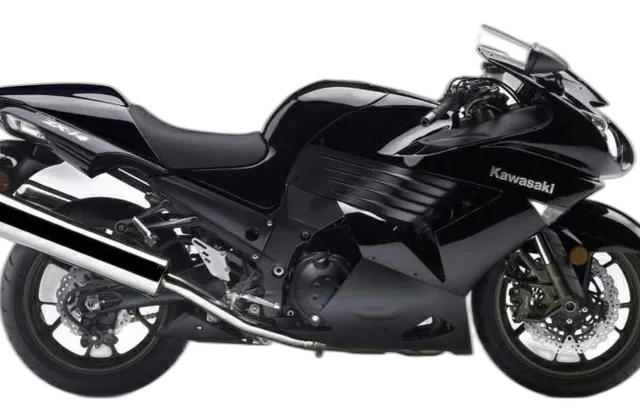
Kawasaki ZZR 1400 (ZX14-MY2009) — Supersport
Kawasaki press archive

2009 · Supersport · Buyer's Guide

ZZR 1400 (ZX14-MY2009)

186 mph, All Day Long

The Machine's Character

1352 cc of inline-four, 193 hp at 9,500 rpm, 113 lb-ft at 7,500, and a 186 mph ceiling that arrives with a gear still in hand. This generation of the ZZR1400 exists to make big speed feel ordinary. Drive is there from just off idle and it simply keeps building, without the peaky, wait-for-it delivery this class usually asks you to live with. The chassis is sized to match: 57.5 in of wheelbase, an upside-down fork, adjustable damping front and rear, and 567 lb that all work toward the same thing, which is holding a line at speed without asking anything of you.

It ages well. Build quality and reliability are both genuinely strong here, and parts support is deep enough that you can set the bike up exactly the way you want it. Rider aids are the honest gap: no traction control, no ride modes, no IMU watching over you, and ABS was an option rather than standard equipment, so check the specific bike in front of you. That leaves the throttle entirely on your right wrist. This one is for the rider who wants enormous, usable thrust on open roads and big sweepers, and who accepts that 567 lb has to be steered, not flicked.

Hard Numbers

Spec sheets don't ride bikes, but they set the baseline.

Show full specs & equipment Hide specs & equipment
Key specifications
Power 193 hp (142 kW) @ 9,500 rpm
Torque 113 lb-ft (153 Nm) @ 7,500 rpm
Displacement 1352 cc
Engine Inline-four
Cooling Liquid-cooled
Gearbox 6-speed
Final drive Chain
Fork Upside-down (USD)
Front brake 310 mm
Front tire 120/70-17
Rear tire 190/50-17
Wheelbase 57.5 in (1460 mm)
Seat height 31.5 in (800 mm)
Wet weight 567 lb (257 kg)
Fuel capacity 5.8 gal (22 L)
Top speed 186 mph (299 km/h)

Equipment check

Chassis

  • Front Suspension Adjustable Standard
  • Rear Suspension Adjustable Standard

Safety

  • ABS Optional

The Voice of Experience

Portrait of NastyNils

The test ride

Thumb the starter cold and the engine clatters for a couple of seconds while the cam chain tensioner comes up to pressure. Then it settles, and after that the thing is uncannily civil. At a steady 70 the inline-four is a low hum underneath you and the bars stay clean, so your hands aren't buzzing an hour later. The riding position is roomier than the numbers suggest: 31.5 in to the seat, a broad tank you lock onto with your knees, a lean over the bars that's firm without folding you up. All 567 lb are obvious while you walk it out of the garage and forgotten by the end of the driveway. Tuck in behind the screen at real road pace and the world goes quiet and long. With 5.8 gal on board, you stop when you feel like stopping.

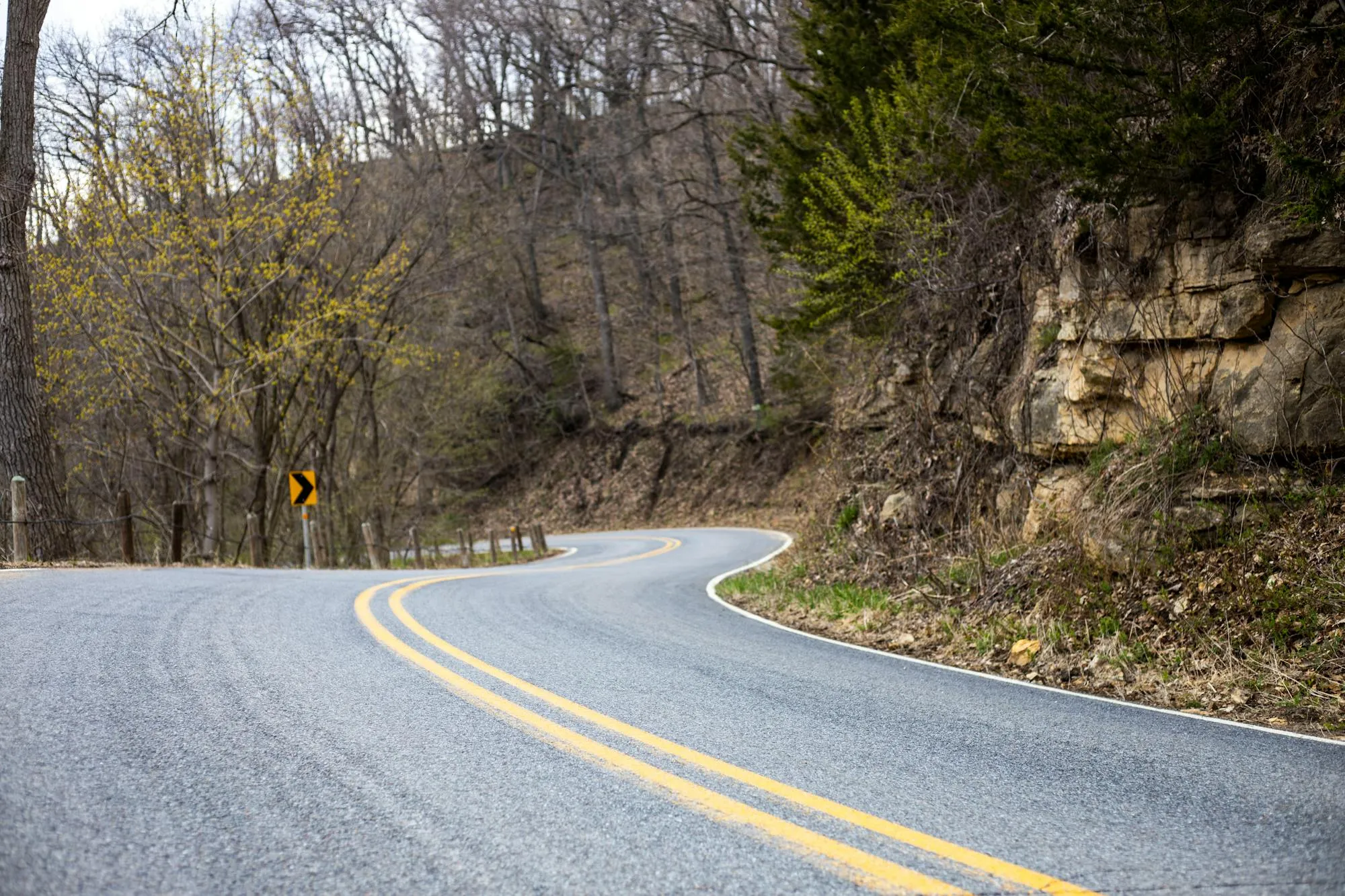
A winding two-lane asphalt road in the Appalachian mountains, photographed in dry daylight. Yellow double-center line markings guide through a series of tight left-hand curves. Dense deciduous and evergreen forest flanks both sides; a rock cut is visible on the right. The road surface and geometry suggest a technical, high-traffic riding corridor popular with motorcyclists.
Chris Flaten / Pexels

The Truth on the Street

This one isn't my own seat time. It's what I've picked up from owners over the years: paddock conversations, talk at club nights, and the messages riders send me after living with the bike. The pattern is consistent. Praise for the way it eats distance, and a short list of mechanical gripes that keep resurfacing.

What Owners Come Back To

Owners describe a distance machine above all. The riders racking up miles say it stays settled and untroubled at speed, and that the seating position, suspension and weather protection let them stay out all day without paying for it. The engine draws the same word from almost everyone: unstressed. Those running healthy front rotors also rate the brakes for both bite and feel.

The Gripes That Keep Repeating

One complaint outweighs the rest: front brake pulsation from warped discs. Owners report it returning even after new rotors go on, and it comes up more than anything else. The cold-start rattle from the cam chain tensioner is close behind, usually filed as an irritation rather than a worry, though plenty fit a manual tensioner to be done with it. The weight is the third constant, showing up whenever the pace drops. Tight turns and slow maneuvering take deliberate effort.

Known issues

  • Front brake disc warping

    brakes common

    Premature warping of front brake rotors causes pronounced pulsing under braking. The issue can appear with as little as a few thousand miles and often recurs even after dealer rotor/pad replacements. Regular cleaning and upgrading to aftermarket discs is a common workaround.

  • Undergreased suspension linkage bearings

    chassis common

    Factory assembly often skimps on grease for swingarm pivots, linkage bearings, and head bearings. This can lead to premature wear and notchiness as early as the first major service interval (roughly 15,000 miles). Pre-emptive stripping and re-greasing is highly recommended.

  • Cold-start cam chain tensioner noise

    engine occasional

    A pronounced mechanical rattle/clatter from the engine for a few seconds after a cold start as the automatic tensioner builds oil pressure. While rarely a sign of imminent failure, it causes concern for many owners. The issue persists across 2006-2011 models, though late models (2009+) had revised tensioners.

The Expert Benchmark

Where this Kawasaki ZZR 1400 pulls ahead of — or falls behind — its rivals on the numbers, and the typical bike in its class on character.

What kind of bike this is — character vs. the class

This bike Class average

The shape of the Kawasaki ZZR 1400 — numbers and character vs. the average Supersport

Head-to-head: Kawasaki ZZR 1400 vs. its rivals

The Handshake Score

Forget spec-sheet bragging. Here's who the ZZR 1400 is actually built for.

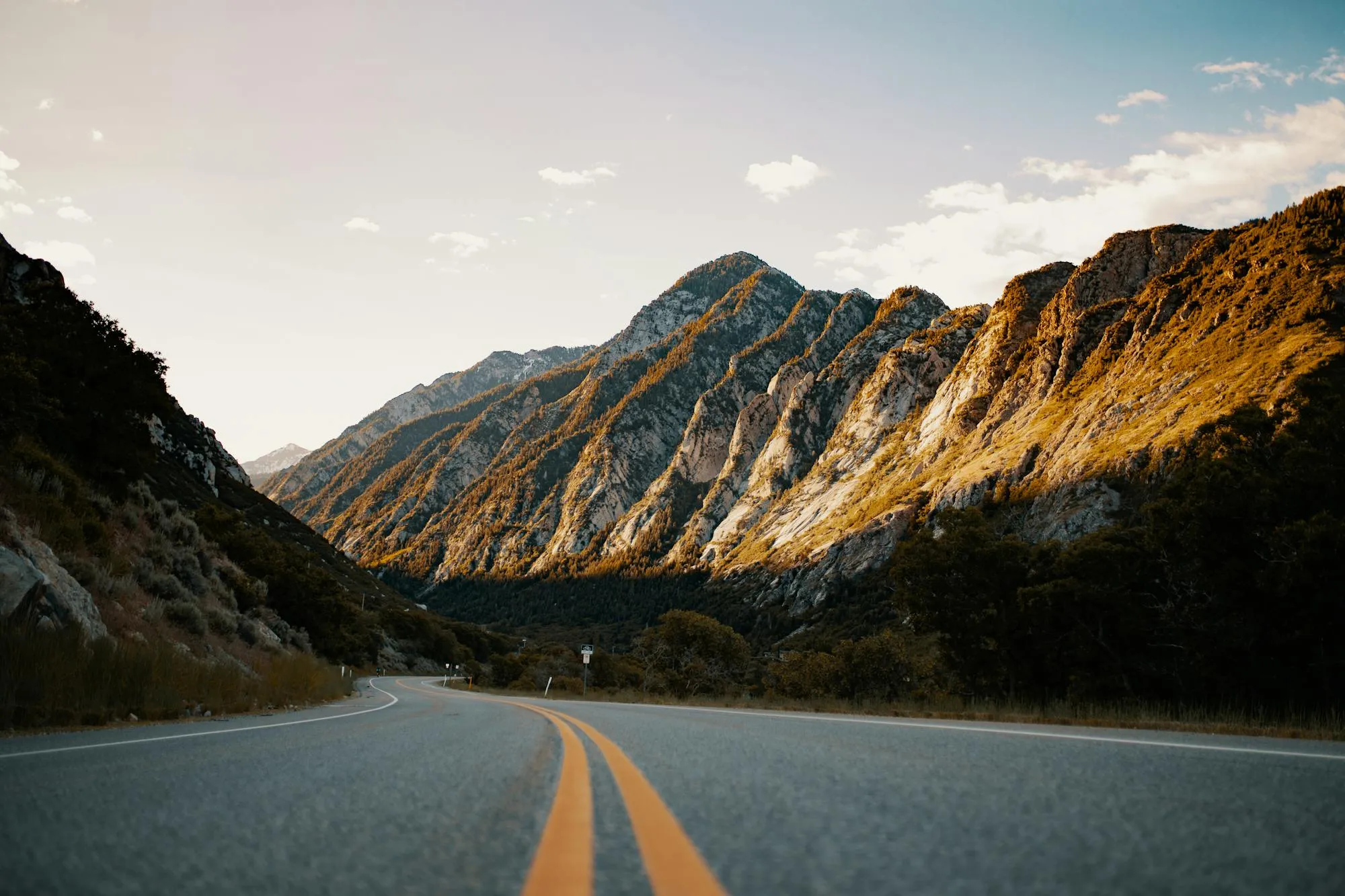
A scenic view of Angeles Crest Highway winding through rugged Southern California canyon terrain. Rocky mountainsides with golden earth tones frame the asphalt road with tight sweeping curves. Double yellow center line visible, sparse vegetation along the shoulders, clear blue sky with white clouds. Daylight, dry conditions. Iconic location for canyon-road enthusiasts.
Josh Sorenson / Pexels

Best motorcycle for Angeles Crest?

You'll love the drive out of the open Angeles Crest sweepers. In the tight, low-speed stuff it asks for muscle and planning, and you'll be using a small fraction of what it has.

Made for Angeles Crest Highway · Coronado Trail / US 191 · Highway 1 / Big Sur
Best motorcycle for Tail of the Dragon?

The Dragon is the wrong road for this one. It'll get through, and it'll feel big doing it. Save the ZZR for fast Blue Ridge sweepers, where the long wheelbase pays you back.

Made for Back of the Dragon · Blue Ridge Parkway · Cherohala Skyway

What's new versus the previous generation

If you're cross-shopping the older generation, here's what changed.

Kawasaki ZZR 1400 (ZX14-MY2006)

Previous generation · 2006–2008

Kawasaki ZZR 1400 (ZX14-MY2006)

Nonchalant Speed, Absolute Composure

Compare to the previous model →

Alternatives to the Kawasaki ZZR 1400

If this one isn't quite the fit, these are the bikes worth riding back-to-back against it.