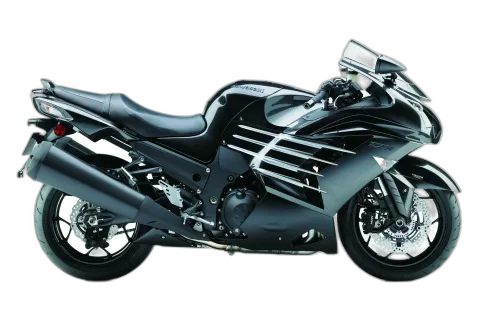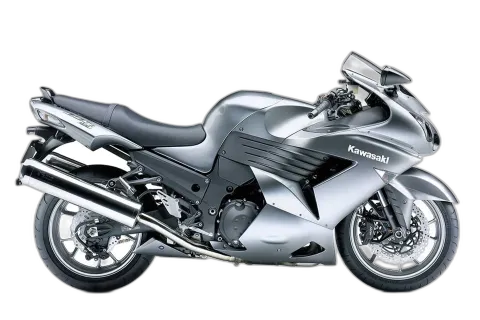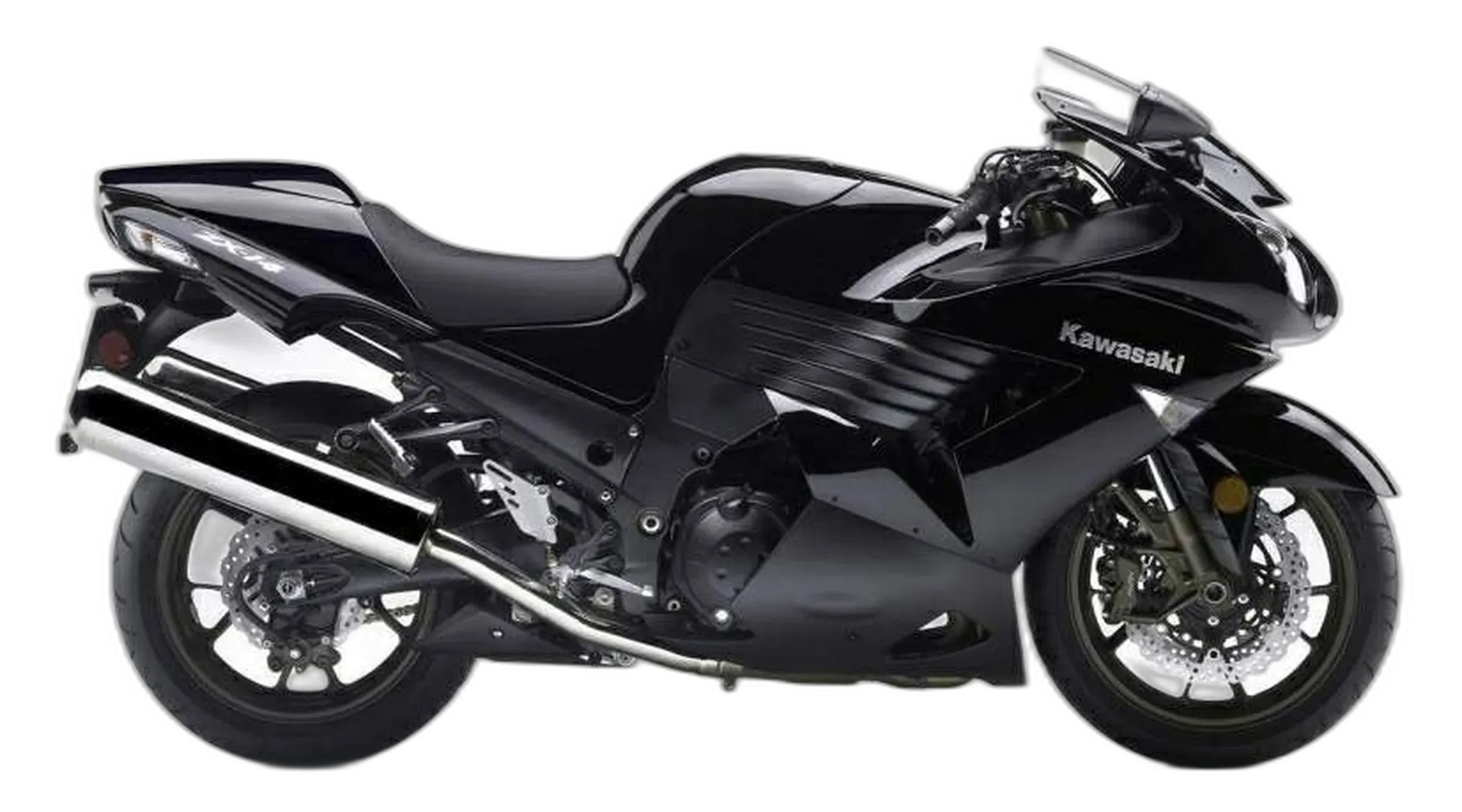
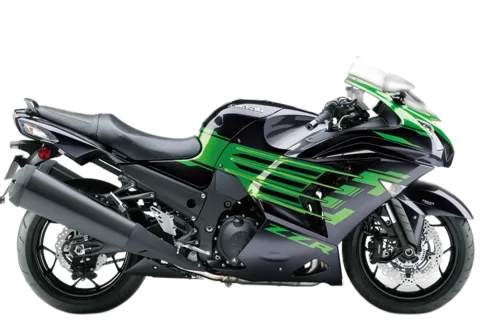
Kawasaki ZZR 1400 (ZX14-MY2006) — Supersport
NastyNils / Kawasaki press archive

2006–2008 · Supersport · Buyer's Guide

ZZR 1400 (ZX14-MY2006)

Nonchalant Speed, Absolute Composure

The Machine's Character

The ZZR 1400 is built around a 1352 cc inline-four making 192 hp and 108 lb-ft, and the real story isn't those numbers, it's how quietly they arrive. Two counterbalancers scrub out nearly all the vibration, so the motor pulls hard while feeling almost idle. Kawasaki left the throttle calm because the displacement does the shouting for it, and response stays smooth from anywhere in the rev range. Out on open highway and long-radius corners the bike plants itself with a kind of solidity that makes the speed feel like almost nothing at all.

This is a machine for the rider who covers big distances at a serious pace and wants it to feel unbothered doing so. It ages honestly if you shop carefully. Reliability is solid, but check any candidate for the frame crossmember recall on 2006 to 2007 examples, listen for the early con-rod bearing trouble at high rpm, and look behind the fairing for hidden corrosion. The honest caveat is ergonomic. The flat screen pushes you into a tuck at speed, and the high pegs paired with a low seat make for a sharp knee angle. Sit on one before you buy.

Hard Numbers

Spec sheets don't ride bikes, but they set the baseline.

Show full specs & equipment Hide specs & equipment
Key specifications
Power 192 hp (141 kW) @ 9,500 rpm
Torque 108 lb-ft (146 Nm)
Displacement 1352 cc
Engine Inline-four
Cooling Liquid-cooled
Gearbox 6-speed
Fork Upside-down (USD)
Front tire 120/70-17
Rear tire 190/50-17
Seat height 31.5 in (800 mm)
Wet weight 567 lb (257 kg)
Fuel capacity 5.8 gal (22 L)
Top speed 186 mph (300 km/h)
Fuel economy 38 mpg (US)

Equipment check

Chassis

  • Steering Damper Standard

Safety

  • ABS Optional

The Voice of Experience

Portrait of NastyNils

The test ride

Swing a leg over and the first surprise is how little the bike asks of your left hand. The clutch pull is feather-light for something making this much torque, and engagement is precise enough that crawling through traffic never turns into a wrestling match. The suspension keeps its composure over broken pavement instead of going vague, so a rough back road doesn't knock you off your line. Where the ZZR quietly rewrites the experience is after dark, when its four headlights throw genuine coverage down the road and a fast night pace stops feeling like a gamble. Load a passenger and it settles into an easy, unhurried rhythm, carrying two people without complaint. You do sit in a firm crouch throughout, with that low screen and those high pegs deciding your posture more than you do.

Rated point by point — where it earns its keep

My own 0–100 score for this bike against the class, area by area — the marker on each bar is the class average.

The trick here is range. Roll it back and I have an honest long-distance companion that never nags at me. Wind it fully open and the nose lifts slow and stable, tracking dead straight whether one wheel or two are touching the ground. Neither end of that spread feels borrowed from a different motorcycle. The same composed chassis holds both, and I never once sense the two personalities squabbling over who is in charge.

On fast, open bends the ZZR sits down with a heft that quietly erases how quick I'm actually traveling. Ask for a tighter line and it wants a deliberate shove at the bars, but that effort buys real predictability. It never goes nervous or ill-tempered on me, so I can lean on it harder and trust where it lands. The suspension is the clever part. Broken tarmac doesn't tip it into a loose, undefined feeling at pace, yet it isn't punishingly stiff either. Kawasaki found a genuine middle between plush and sharp.

What strikes me first is how little the ZZR asks of my left hand for a motorcycle making this kind of grunt. The clutch is easy to pull and, more useful, easy to meter, so I can feed power in with real precision instead of guessing. Two-up, it turns genuinely calm. Keep your requests modest and the bike carries a passenger without ever pressing itself on either of you, holding a quiet, unhurried pace that never reads as work. The honest trouble is the seating position. That low, nearly level windscreen decides where my torso goes long before I get a vote, tipping me into the fairing once the pace climbs. Behind it, the pegs sit high for cornering room and the seat sits low, and together they fold my knees tighter than a machine built for distance has any business doing. Try one on for size before any money changes hands.

There is one thing I keep circling back to. Drop it into top gear, hand it the throttle, and the acceleration simply arrives with none of the strain you would expect from it. At the speeds where plenty of machines have run out of ideas, this one is still gathering pace and still perfectly settled, with no sense that it is reaching for anything. It doesn't feel like the bike is working. It just keeps going.

Practicality here comes down to one thing that caught me off guard: the lights. Four of them up front, and they actually earn their keep instead of just filling out the fairing. Push the pace after dark and the road stays lit far enough ahead that a quick night rhythm stops feeling like a bet against what I can't see. That is the sort of coverage that changes how I approach riding once the sun is gone, not a line that only looks good written down.

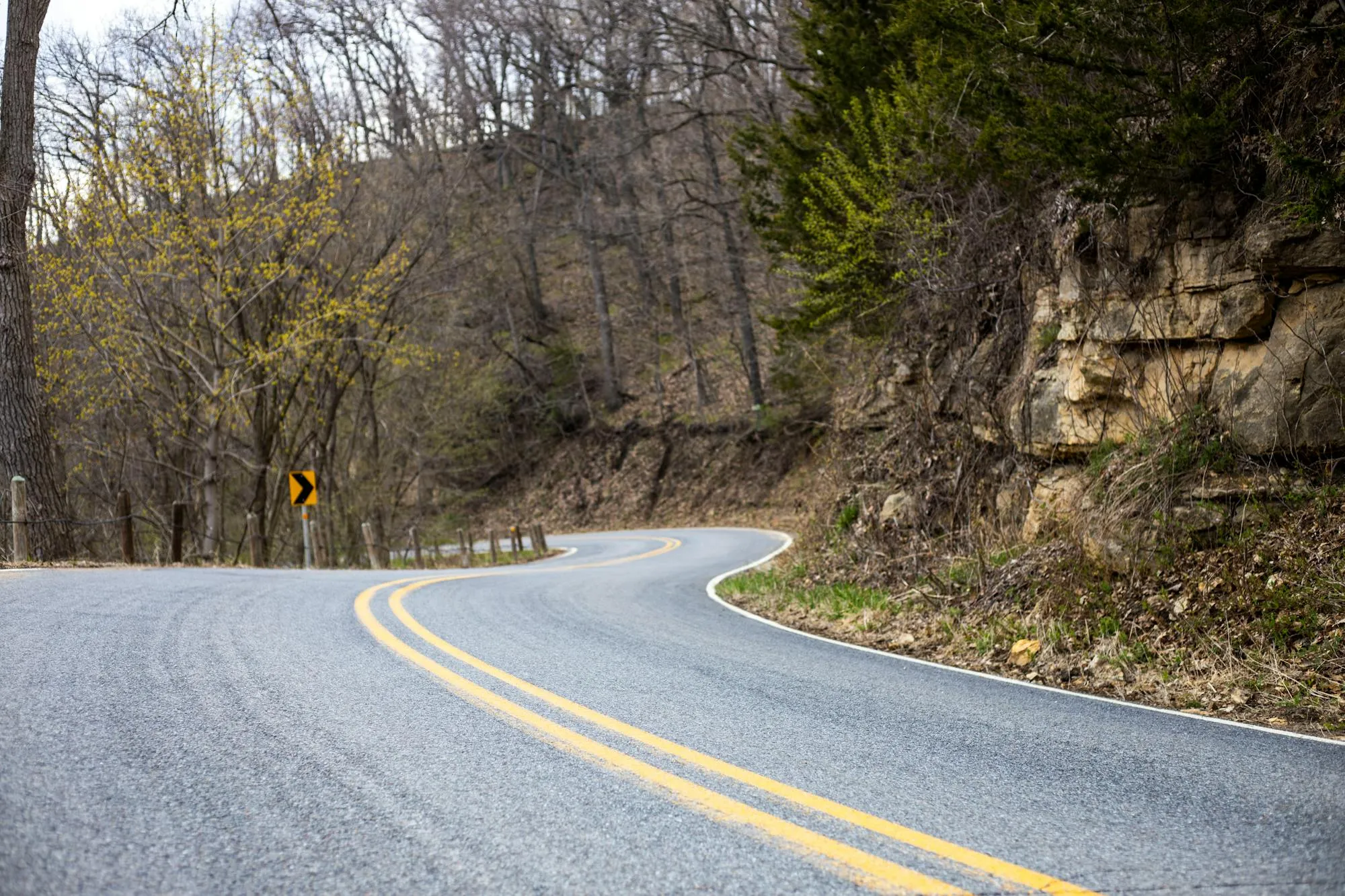
A winding two-lane asphalt road in the Appalachian mountains, photographed in dry daylight. Yellow double-center line markings guide through a series of tight left-hand curves. Dense deciduous and evergreen forest flanks both sides; a rock cut is visible on the right. The road surface and geometry suggest a technical, high-traffic riding corridor popular with motorcyclists.
Chris Flaten / Pexels

The Truth on the Street

The picture here comes from years of listening to the people who actually live with this bike: paddock chatter, owner conversations, and the steady stream of messages and emails riders send my way. Put it all together and the ZZR 1400 reads as a big, comfortable mile-eater that riders trust at speed, with a short list of ownership quirks that surface again and again.

What it costs to keep

For a machine of this size and pace, riders are consistently surprised by how little fuel it drinks. A gentle tour can return around 38 mpg (6.3 L/100km), which gives it honest range. The recurring gripe on the cost side is the major valve-clearance service. Owners point to the tight chassis packaging that makes the job labor-intensive, and the dealer bills that follow.

The quirks owners flag

The most common complaint is the brakes. They do the job in isolation, but riders say they feel overworked hauling this much weight down from real speed. That mass turns up again at walking pace, where the bike wants deliberate effort to place in tight spots. A practical annoyance also comes up often: there is almost nothing under the seat, so even a small disc lock has to ride somewhere else.

Known issues

  • Frame crossmember separation (recall)

    chassiscommonRecall

    On certain 2006‑2007 models, the rear suspension crossmember could separate from the frame, potentially leading to a collapse. Kawasaki issued a recall (NHTSA 08V222000) to inspect and possibly replace the frame.

  • Connecting rod bearing failure (Gen1)

    enginerare

    Early examples of the first‑generation engine have been known to suffer from connecting rod bearing failure due to perceived lubrication shortcomings at high rpm. Most bikes that were susceptible have either failed or been repaired by now, but the issue is part of the first‑year ownership history.

  • Hidden corrosion behind bodywork

    bodyworkoccasional

    Road debris and moisture can accumulate behind the fairing, causing corrosion on brackets, fasteners and the radiator. Often overlooked during casual inspections, leading to bigger repair bills.

The Expert Benchmark

Where this Kawasaki ZZR 1400 pulls ahead of — or falls behind — its rivals on the numbers, and the typical bike in its class on character.

What kind of bike this is — character vs. the class

This bike Class average

The shape of the Kawasaki ZZR 1400 — numbers and character vs. the average Supersport

Head-to-head: Kawasaki ZZR 1400 vs. its rivals

The Handshake Score

Forget spec-sheet bragging. Here's who the ZZR 1400 is actually built for.

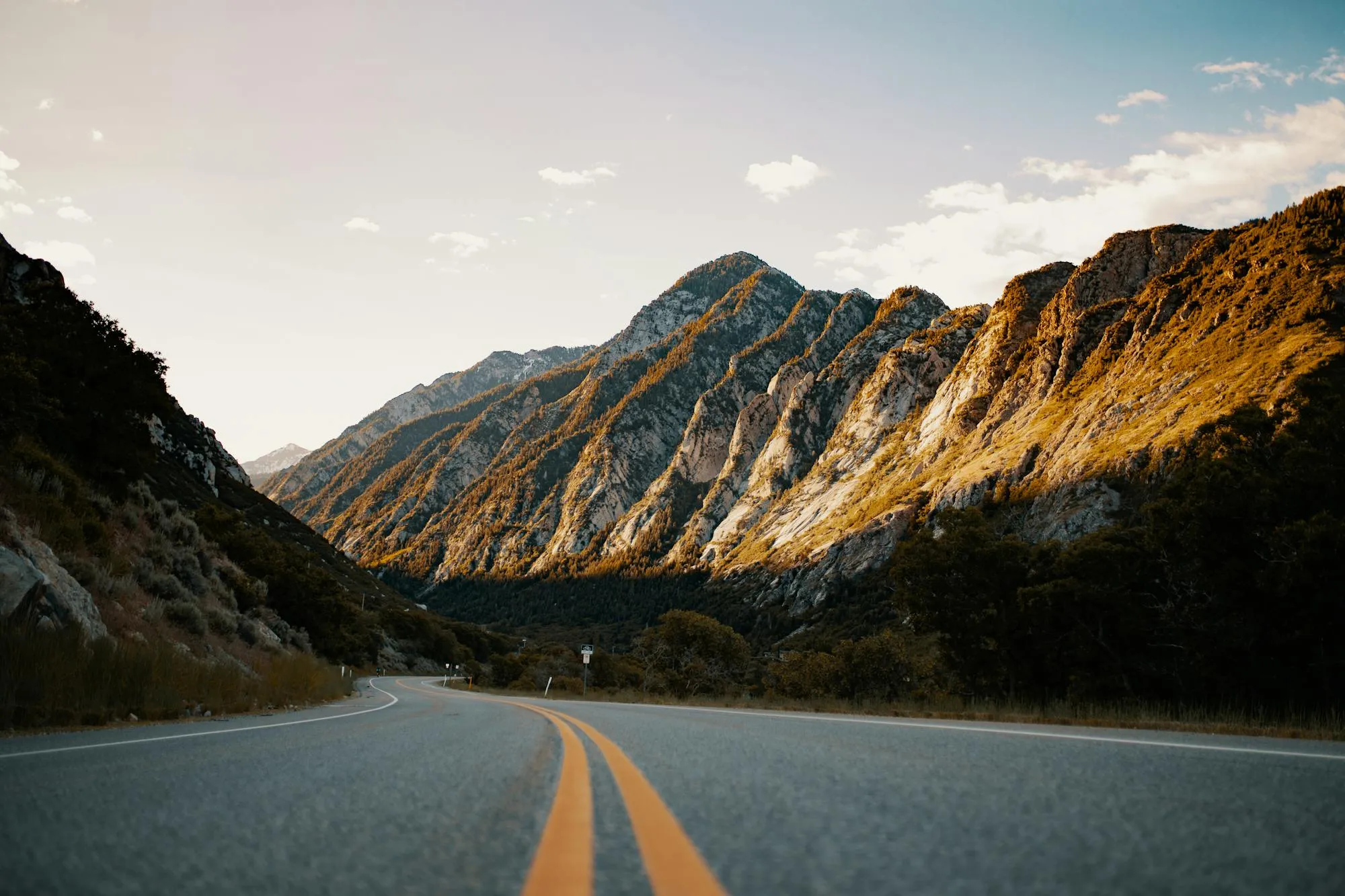
A scenic view of Angeles Crest Highway winding through rugged Southern California canyon terrain. Rocky mountainsides with golden earth tones frame the asphalt road with tight sweeping curves. Double yellow center line visible, sparse vegetation along the shoulders, clear blue sky with white clouds. Daylight, dry conditions. Iconic location for canyon-road enthusiasts.
Josh Sorenson / Pexels

Best motorcycle for Angeles Crest?

The ZZR is glorious on the fast, open sweepers where its stability shines, but the tight, low-speed switchbacks up Angeles Crest make its weight work you harder than a lighter bike would.

Made for Angeles Crest Highway · Coronado Trail / US 191 · Highway 1 / Big Sur
Best motorcycle for Tail of the Dragon?

Tail of the Dragon is all slow, stacked corners, and that's this bike's weak spot. It'll do them, but you'll be muscling 567 lb through every apex when a lighter machine would flick in for free.

Made for Back of the Dragon · Blue Ridge Parkway · Cherohala Skyway

Best motorcycle for Laguna Seca?

On track the straights and fast stuff are a joy, but at 567 lb with real effort needed to tighten a line, this isn't an apex weapon. Buy it for high-speed confidence, not lap-time precision.

Made for Barber Motorsports Park · WeatherTech Raceway Laguna Seca · Circuit of the Americas

Alternatives to the Kawasaki ZZR 1400

If this one isn't quite the fit, these are the bikes worth riding back-to-back against it.

Any price note compares both bikes at the same age — the youngest age both have on the used market — against this Kawasaki ZZR 1400. “cheaper/pricier” is what that bike costs second-hand, not how worn it is.