Best scooter for NYC?
If your day is short hops, tight parking and low running costs, this is the best fit here: an automatic, 51 mpg and a steel body that still looks right at every curb.
Made for New York City · Austin · Los Angeles

·
2007–2013 · Scooter · Buyer's Guide
Iconic Steel, Surprisingly Capable City
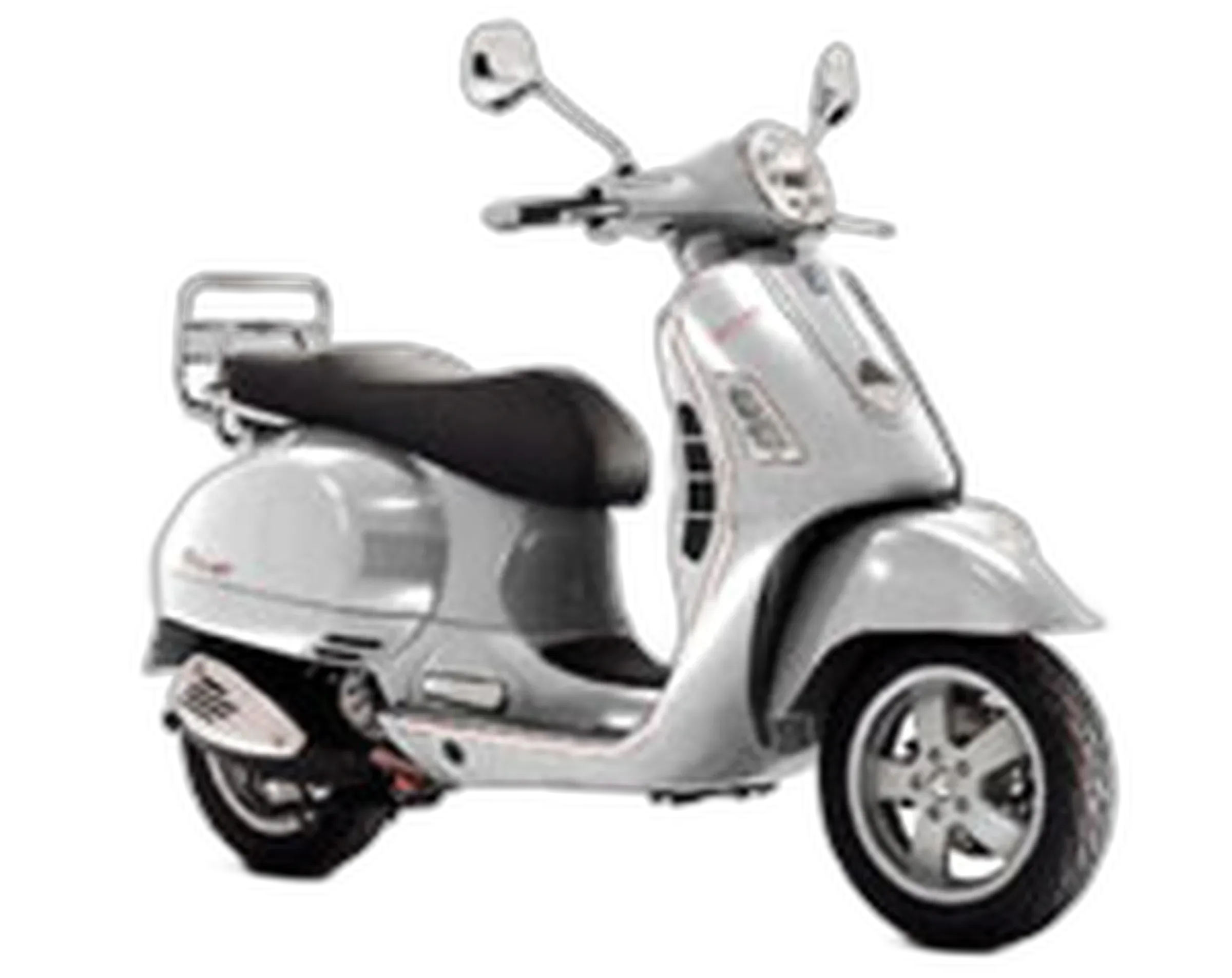
This generation of the GTS 125 wraps Vespa's best-known trait, a pressed steel monocoque body, around a modern core: a liquid-cooled, four-valve 124 cc single making 14 hp at 9,500 rpm and 9 lb-ft at 6,750 rpm. The steel shell carries the design and the cultural weight of the name. The automatic belt drive keeps your daily routine simple. Twelve-inch wheels on 120/70 and 130/70 tires, a factory center stand and preload-adjustable rear suspension complete a package that reads as classic Italian form over sensible scooter hardware. It's style first, but there's substance underneath.
On paper, this is a city tool. It weighs 326 lb (148 kg) wet, the seat sits at 31.1 in (790 mm), and it's rated at 51 mpg from a 2.6 gal (10 L) tank. The 65 mph (105 km/h) top speed sets the boundaries: urban streets and suburban roads are the plan, and highway stretches are the exception. The hardware points to you if you want a Vespa for errands, short commutes and squeezing into tight parking, and you care as much about how it looks parked at the curb as about how quickly it gets you there. City first. Always.
Spec sheets don't ride bikes, but they set the baseline.
| Power | 14 hp (11 kW) @ 9,500 rpm |
|---|---|
| Torque | 9 lb-ft (12 Nm) @ 6,750 rpm |
| Displacement | 124 cc |
| Engine | Single-cylinder |
| Cooling | Liquid-cooled |
| Final drive | Belt |
| Front brake | 220 mm |
| Front tire | 120/70-12 |
| Rear tire | 130/70-12 |
| Seat height | 31.1 in (790 mm) |
| Wet weight | 326 lb (148 kg) |
| Fuel capacity | 2.6 gal (10 L) |
| Top speed | 65 mph (105 km/h) |
| Fuel economy | 51 mpg (US) |
Equipment check
Chassis
Comfort
Drivetrain

Over the years I've heard a lot about this GTS 125, in paddocks, at club nights, over coffee with owners and in the messages riders send me directly. The talk points the same way almost every time. Owners enjoy living with it and rate its comfort and staying power highly. Their complaints are about money, and about what happens once the road opens up.
Riders consistently mention the seat. It's wide and well padded, and with suspension that soaks up urban bumps, owners say it stays comfortable on longer trips too. Many report high mileage on their scooters, with one condition: regular servicing. Owners who keep up with it describe an engine that lasts and materials that hold up. On the road they call it stable and predictable, and more substantial than the typical scooter.
The gripes are fewer and come up less often. Some riders say acceleration tails off sharply once speed builds. That makes passing on open roads hard work, and they see it as a city machine. Others point to cost. It sells for more than comparable Japanese rivals, and owners mention that parts can be pricier as well.
Engine big-end bearing failure (rare)
In isolated cases, the big-end bearing can fail at relatively low mileage, requiring casing replacement.
Fuel pump premature failure
Some owners report premature fuel pump failure, often just after warranty expiration, requiring replacement.
Swinging arm bearing wear
Bearings in the rear swinging arm can fail on higher-mileage machines, causing clunks or poor handling. A repair kit is available.
Electrical quirks
Some older models exhibit intermittent electrical issues, such as sensor failures or poor wiring shielding.
Battery drain from short trips
Frequent short journeys can lead to battery discharge; a trickle charger is recommended for low-mileage riders.
Voltage regulator failure
Voltage regulator may fail, potentially leading to charging issues or battery drain.
Fuel pump failure
The fuel pump can fail, leaving the scooter stranded. Reportedly occurred after warranty expiry.
Underbody surface rust
Surface rust can develop on the underbody of the monocoque steel frame, particularly if ridden in winter conditions; periodic repainting is recommended.
Where this Vespa GTS 125 pulls ahead of — or falls behind — its rivals on the numbers, and the typical bike in its class on character.
Power
Torque
Displacement
Wet weight
Top speed
Seat height
Forget spec-sheet bragging. Here's who the GTS 125 is actually built for.

If your day is short hops, tight parking and low running costs, this is the best fit here: an automatic, 51 mpg and a steel body that still looks right at every curb.
Made for New York City · Austin · Los Angeles
It handles your city commute and looks great in photos. With 14 hp and a 65 mph top speed, though, the weekend ridge-road run will be a relaxed outing, not a quick one.
Made for Bay Area Ridge Roads · San Francisco / Bay Area · Skyline Boulevard / Alice's Restaurant
If this one isn't quite the fit, these are the bikes worth riding back-to-back against it.