
·

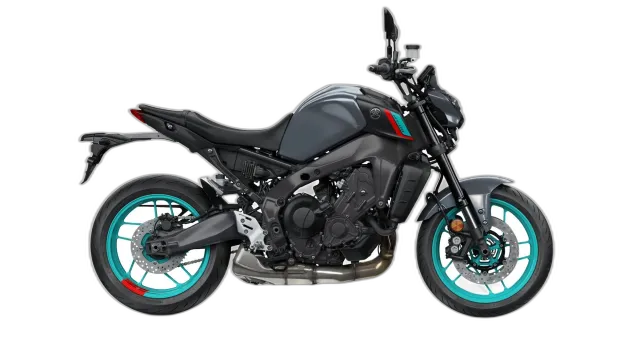
Yamaha MT-09 (RN87-SP) — Naked Bike
NastyNils / Yamaha press archive

2024 · Naked Bike · A variant of the MT-09

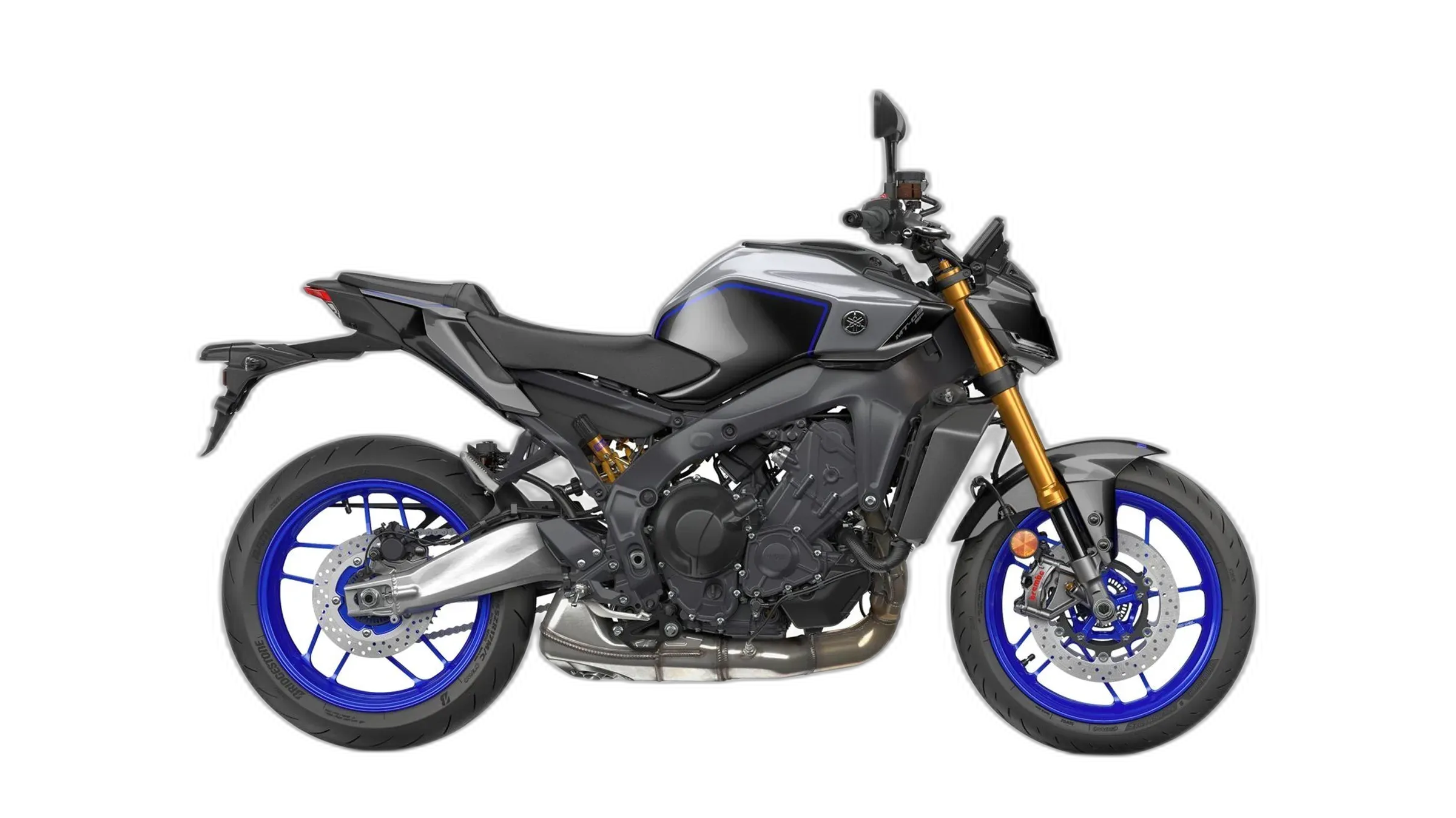
MT-09 SP (RN87-SP)

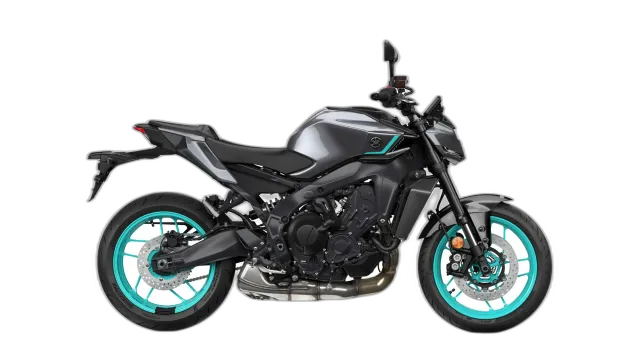
Differences between the standard MT-09 and the SP

The Triple With Real Soul

The Machine's Character

The MT-09 SP takes Yamaha's CP3 triple and wraps it in harder-working hardware. The 890 cc inline-three makes 119 hp and 69 lb-ft, and its real value isn't the headline number but the shape of the delivery: linear, characterful, and ready to pull from low in the rev range. Around it sits an aluminum twin-spar frame, a fully adjustable KYB fork, an Öhlins rear shock, and Brembo front brakes. This SP builds on the standard MT-09's electronics and adds a USB charging port on top. In the naked class it lands as the precise, composed option rather than the brute.

On the road it rewards a rider who likes to work the bike. The short wheelbase invites a supermoto line through tight corners, the chassis settles fast, and you sit inside the bike rather than perched on top of it. It should age well, too. Reliability runs high and aftermarket support is deep, so it takes upgrades easily. The honest caveat is that this is the grown-up MT-09, not the wildest naked in the room. Push into fast, open territory and the liveliness that makes it fun on tight roads gives up some stability. One fault worth knowing: a throttle position sensor wear issue carries a safety recall.

Hard Numbers

Spec sheets don't ride bikes, but they set the baseline.

Show full specs & equipment Hide specs & equipment
Key specifications
Power 119 hp (88 kW) @ 10,000 rpm
Torque 69 lb-ft (93 Nm) @ 7,000 rpm
Displacement 890 cc
Engine Inline-three
Bore × stroke 78 × 62.1 mm
Compression 11.5:1
Cooling Liquid-cooled
Fuel system Fuel injection
Gearbox 6-speed
Final drive Chain
Frame Aluminum twin-spar
Fork Upside-down (USD)
Front brake 298 mm
Rear brake 245 mm
Front tire 120/70 ZR17
Rear tire 180/55 ZR17
Wheelbase 56.3 in (1430 mm)
Seat height 32.5 in (825 mm)
Wet weight 428 lb (194 kg)
Fuel capacity 3.7 gal (14 L)
Fuel economy 47 mpg (US)

Equipment check

Chassis

  • Front Suspension Adjustable Standard
  • Rear Suspension Adjustable Standard

Connectivity

  • TFT Display Standard
  • Smartphone Connectivity Standard

Drivetrain

  • Quickshifter Standard
  • Slipper Clutch Standard

Lighting

  • LED Headlight Standard

Safety

  • ABS Standard
  • Traction Control Standard
  • Ride Modes Standard

The Voice of Experience

Portrait of NastyNils

The test ride

Thumb the starter and the triple speaks with a raw, mechanical voice, irregular and genuine rather than piped in through exhaust trickery. What surprises you is how little of that drama reaches your hands; the bars stay smooth where you expect buzz. The quickshifter is the standout tactile detail, slotting every upshift cleanly enough that you stop thinking about it after a few miles. The riding position is upright and roomy, the kind that lets you put in an hour without your wrists complaining, though anyone chasing a hard sport stance will want more weight over the front. The front Brembos read beautifully, big deceleration from a light pull, with ABS set to stay out of your way longer than most. It feels active and willing underneath you, always a little keen to play.

What the MT-09 SP Adds — Differences vs the Standard MT-09

The MT-09 SP (RN87-SP) builds on the standard MT-09: the upgraded hardware, the key spec changes and where its character shifts. The full ride, specs, scoring and verdict are all right here on this page.

Equipment the SP adds vs the standard MT-09

Now standard
USB Charging Port

Premium hardware the SP brings

  • Chassis & suspension Class-leading suspension and chassis balance The fully adjustable KYB fork with DLC coating and the Öhlins shock provide a transformative level of composure and feedback, allowing confident cornering and excellent composure over rough pavement. The chassis geometry inspires front-end trust absent in the base model.
  • Brakes Brembo master cylinder delivers premium brake feel The radial Brembo master cylinder gives the front brake immediate bite and excellent modulation, greatly improving confidence under hard braking compared to the standard model. It matches the SP's more aggressive intent perfectly.

How the SP shifts the character

Where the SP does more
  • More suspension adjustment to dial in

Rated point by point — where it earns its keep

My own 0–100 score for this bike against the class, area by area — the marker on each bar is the class average.

What strikes me is how much of the old supermoto character survives in this generation, only better governed. Set against the bikes that came before, Yamaha has trimmed back the wildest of the nervous energy, and to my mind the bike is better for it. It stays brisk, stays alert, and still begs to misbehave the moment I prod it, just with a tighter leash now. The personality wasn't sanded away in the process, it was simply aimed at something you can lean on more often.

This is a chassis that rewards you for being busy with it. The wheelbase is tight, so a hard, deliberate push on a switchback sends the bike around with no delay, and it takes to that aggressive, supermoto-flavored line without complaint. From the opening bend I felt planted, low in the machine rather than balanced above it, and that does most of the work in building trust early. Where I'd temper expectations is pace. The same eagerness that lights up a narrow road loosens off once the corners open and quicken, and a few of us noticed the front giving back some stability up high. I came in wanting razor reflexes and instead found a composed all-rounder, which will read as maturity or mild disappointment depending on your appetite. As for the SP's rear Öhlins, I only felt it justify itself loaded up or ridden hard; on an ordinary day the base hardware kept pace.

The Brembos up front are the standout for me. A gentle squeeze of the lever returns a surprising amount of stopping power, far more than the effort suggests, so scrubbing speed never asks much of you. I also rate how the ABS is tuned. It hangs back further than most systems I've sampled before it cuts in, which keeps the bulk of the brake's range in the rider's hands and rewards anyone who knows how to use it.

The CP3 is why this bike exists, and it ranks with the finest engines I've used for back-road work. Power arrives in a clean, progressive sweep with genuine personality underneath it, and there's enough low-end shove that I'd crack the throttle early off a turn and trust it to drive. The gearbox plays along beautifully; the latest quickshifter feeds in each ratio with zero balk and no clatter, to the point I quit noticing it after a handful of miles. I love the noise too, a coarse, uneven three-cylinder bark that owes nothing to exhaust theatrics, and it stunned me how little of that texture filters back to my grips. The one honest shortfall surfaces against the big inline fours. Lined up beside them the triple hasn't got the same top-end muscle, so if pure thrust is your measuring stick, look elsewhere.

Spend a real stretch in the saddle and the ergonomics justify themselves. The bars sit you tall and relaxed, open enough that I racked up hours at a time without the usual aches setting in. Riders set on a committed sport crouch will wish for more load on the wrists, but for the mixed roads most of us actually ride, this layout keeps you fresh and pays its way.

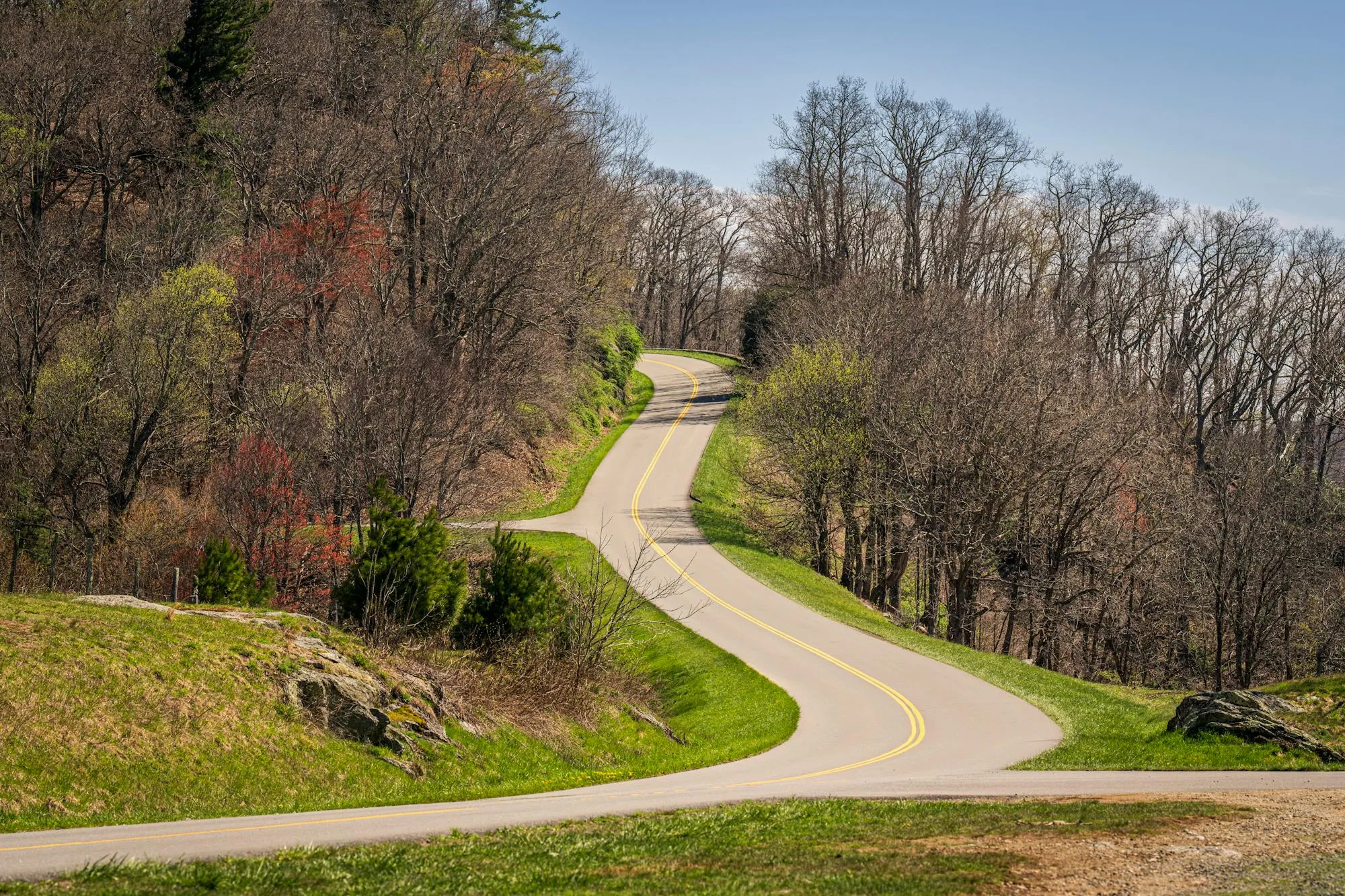
A winding asphalt road descending through the Appalachian Mountains, likely the famous Tail of the Dragon section in Tennessee and North Carolina. Multiple technical right-hand and left-hand curves are visible in this aerial perspective, surrounded by deciduous forest in spring foliage. Clear sunny conditions, well-maintained asphalt with yellow center lines marking the curves. No motorcycle or rider visible in the frame.
Mark Stebnicki / Pexels

The Truth on the Street

The read I have on this MT-09 comes from the same places it always does: years of YouTube comments stacked under the test clips, forum threads I keep half an eye on, conversations with owners whenever I run into them, and the steady run of emails and messages riders send me straight. Put all of it together and the picture leans heavily one way. Strong praise for how it runs, and gripes that sit almost entirely in comfort rather than anything about the ride.

What earns the loudest praise

Two things dominate the feedback. First is the inline-triple. Riders keep coming back to its torque low in the rev range and its willingness to spin all the way to the limiter, and more of them name the engine as the reason they bought the bike than point to anything else. They describe a character that stands well clear of most parallel twins. Second is the chassis. Owners call it quick to change direction and easy to read, light enough for town and just as happy being hustled down a back road. The ones who have run the adjustable fork and rear shock report a clear lift in composure over rough pavement and more trust from the front end, a step beyond what the standard setup gives them.

More kit than the price suggests

A second theme runs through nearly every message: how much hardware shows up as standard. Riders list the lean-aware traction control, the slide and wheelie control, cornering ABS, the ride modes and the up-and-down quickshifter, and they keep singling out the bigger color screen with phone pairing and navigation as the fix for a long-running complaint. The front brakes get their own steady drumbeat for the bite and feel they give when you pull hard. What ties the bundle together in riders' heads is the cost. They frame it as undercutting pricier competition by a wide margin, serious performance for middleweight money. A fair number also raise strong resale value and the reach of the dealer network as one less thing to worry about over the years.

Where the complaints settle

The grumbles are just as consistent, and they land in comfort rather than handling. Top of the list is the missing wind protection. With no screen out front, sustained highway running above roughly 80 mph (130 km/h) wears riders down, which they accept as the cost of a naked but raise often. The seat draws nearly as much heat. Owners say the thin, firm padding starts to bite after 95 to 125 miles (150 to 200 km), and the touring-minded tie that to the small tank and its modest 135 to 150 mile (220 to 240 km) range as reasons this one isn't their first pick for long days. A handful also flag a sharp throttle pickup in Sport mode at low rpm around town, though they add that Street mode mostly smooths it out.

Known issues

  • Throttle Position Sensor (TPS) wear causing unstable idle and stalling

    fuel systemoccasionalRecall

    An ECU programming flaw causes excessive sliding of the TPS brushes, generating abrasive particles that accumulate on contact points. This leads to unstable idling, potential engine stalling, and illumination of the check engine light with fault code P2135. Yamaha issued a safety recall to reprogram the ECU and replace the TPS at no cost for all affected 2021–2025 MT-09 SP models.

The Expert Benchmark

Where this Yamaha MT-09 pulls ahead of — or falls behind — its rivals on the numbers, and the typical bike in its class on character.

What kind of bike this is — character vs. the class

This bike Class average

The shape of the Yamaha MT-09 — numbers and character vs. the average Naked Bike

Head-to-head: Yamaha MT-09 vs. its rivals

The 'Should I Buy It?' Score

Forget spec-sheet bragging. Here's who the MT-09 is actually built for.

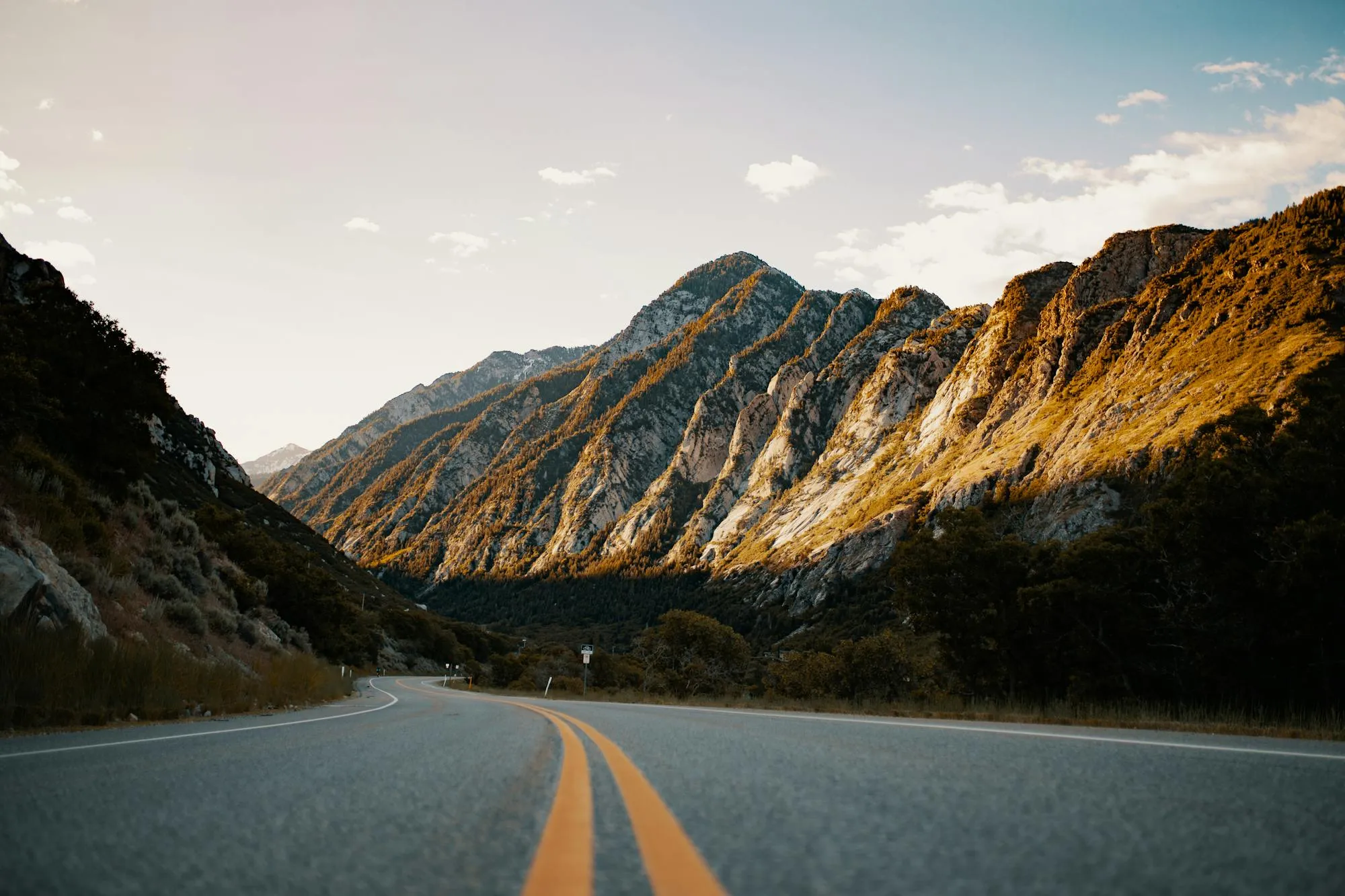
A scenic view of Angeles Crest Highway winding through rugged Southern California canyon terrain. Rocky mountainsides with golden earth tones frame the asphalt road with tight sweeping curves. Double yellow center line visible, sparse vegetation along the shoulders, clear blue sky with white clouds. Daylight, dry conditions. No motorcycle or rider visible. Iconic location for canyon-road enthusiasts.
Josh Sorenson / Pexels

Best motorcycle for Bay Area?

This is your bike for Skyline runs and the commute in between. It's smooth, easy to ride, photogenic, and willing in the corners without demanding race-pace commitment to feel good.

Made for Bay Area Ridge Roads · San Francisco / Bay Area · Skyline Boulevard / Alice's Restaurant
Best motorcycle for Angeles Crest?

It'll carve Angeles Crest happily, and the brakes and chassis reward skill. Go in expecting composed and settled rather than knife-edged, though. If you want the sharpest weapon, look harder.

Made for Angeles Crest Highway · Coronado Trail / US 191 · Highway 1 / Big Sur

Best motorcycle for Tail of the Dragon?

Built for the kind of corner work the Dragon demands. The short wheelbase and settled front end let you focus on lines and skill, though it stays a touch calmer than the wildest options.

Made for Back of the Dragon · Blue Ridge Parkway · Cherohala Skyway