KTM 990 Duke (MY2025) — Naked Bike
KTM press archive

2025 · Naked Bike · Buyer's Guide

990 Duke (MY2025)

Attack Mode, Lightweight Chassis

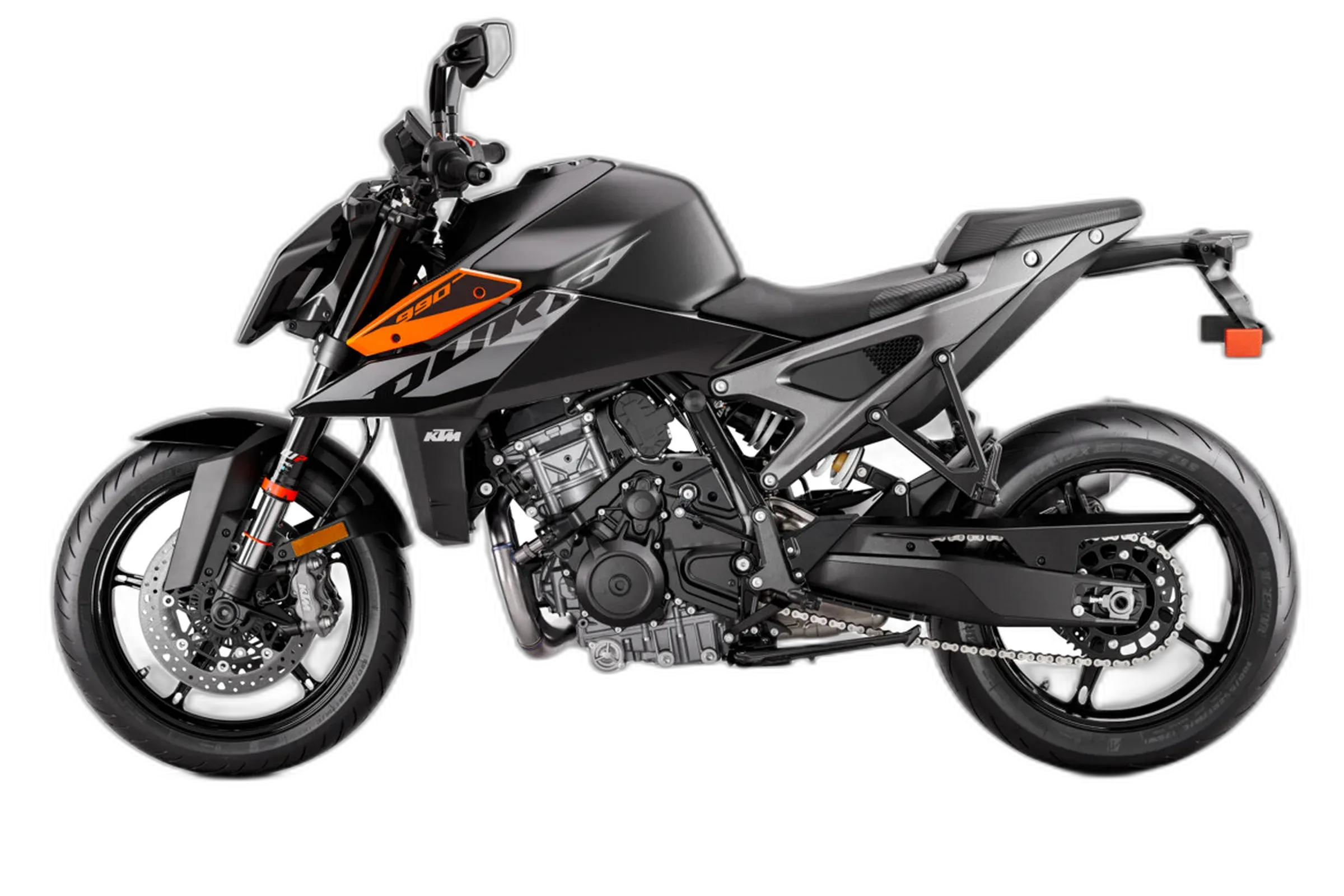
The Machine's Character

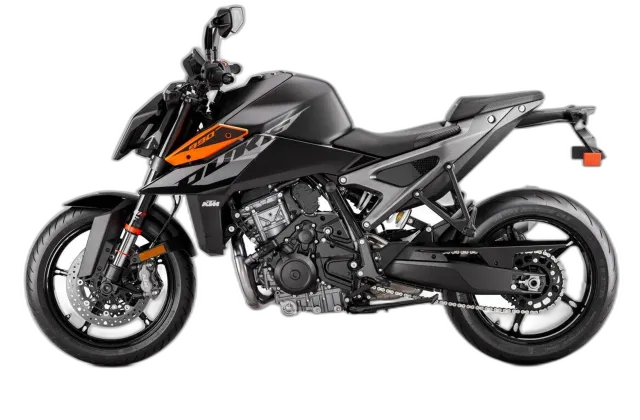
The 990 Duke is built around a 947 cc parallel twin with a 285-degree firing interval and a 75-degree crankpin offset, so it beats unevenly and sounds nothing like a sewing machine. 123 hp and 76 lb-ft arrive without ceremony: strong from low in the rev range, clean through a smooth midrange, howling at the top. First gear is short, deliberately, which concentrates the grunt where you actually use it. At 419 lb wet it sits on the light side of a class that keeps gaining pounds, and the chassis is the headline act. Direction changes are decisive, and it stays planted through fast corners.

ABS, cornering ABS and ride modes are standard, along with fully adjustable WP suspension, a TFT display and smartphone connectivity. The deeper electronics (traction control, wheelie control, quickshifter, cruise) have to be optioned at purchase, which changes the value math considerably, so configure carefully before you sign. This is a bike for riders who want the machine to stay switched on underneath them. It rewards smooth, deliberate inputs and it does not cover for sloppy ones. The honest caveat: it never really relaxes. Effortless cruising is not part of its vocabulary, and the suspension as delivered is firm for broken pavement.

Hard Numbers

Spec sheets don't ride bikes, but they set the baseline.

Show full specs & equipment Hide specs & equipment
Key specifications
Power 123 hp (90 kW) @ 9,500 rpm
Torque 76 lb-ft (103 Nm) @ 6,750 rpm
Displacement 947 cc
Engine Parallel twin
Cooling Liquid-cooled
Gearbox 6-speed
Final drive Chain
Fork Upside-down (USD)
Front brake 300 mm
Front tire 120/70-17
Rear tire 180/55-17
Wheelbase 58.1 in (1476 mm)
Seat height 32.5 in (825 mm)
Wet weight 419 lb (190 kg)
Fuel capacity 3.9 gal (14.8 L)

Equipment check

Chassis

  • Front Suspension Adjustable Standard
  • Rear Suspension Adjustable Standard

Connectivity

  • TFT Display Standard
  • Smartphone Connectivity Standard

Drivetrain

  • Quickshifter Optional

Lighting

  • LED Headlight Standard

Safety

  • ABS Standard
  • Traction Control Optional
  • Ride Modes Standard

The Voice of Experience

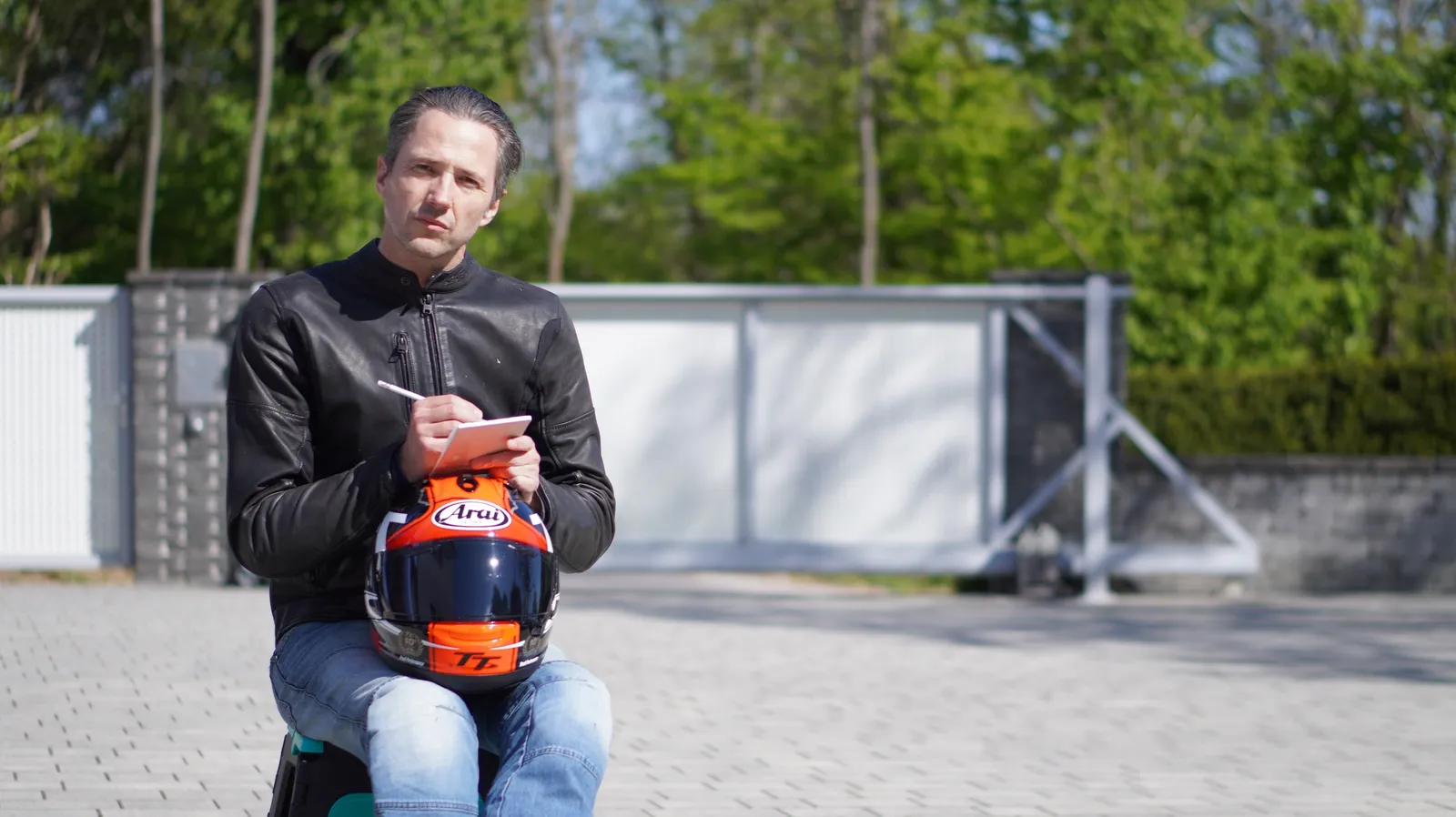
Portrait of NastyNils

The test ride

You lean into this bike rather than sit on it. The bars sit where your weight naturally wants to go, the tank widens toward you and fills the gap between rider and machine, and from the first mile there is no passive setting. The uneven beat comes up through the pegs and the tank as a hard, offbeat pulse you feel as much as hear. Ergonomics surprised me: taller testers rode full days without their backs complaining, which the aggressive stance does not advertise. The seat sits at 32.5 in, and the light weight is obvious the moment you push it backward out of a parking spot. At road pace the front comes up willingly on a crested rise, and the bars keep talking the whole time. Nothing about it asks you to switch off.

Rated point by point — where it earns its keep

My own 0–100 score for this bike against the class, area by area — the marker on each bar is the class average.

Most of this class has been quietly gaining weight. The Duke went the other way, and I notice it twice: rolling it backward out of a parking space, and again the instant I tip it into a corner. The WP setup is firm and sport-biased, and in tight stuff it never stops reporting on the tires. It does have a temper about steering input. Ask rudely and the line goes somewhere you didn't choose. Ride clean and it stays invisible.

Wheelies are not an accident on this thing. The mass is low and it carries it fairly high, so the front end lifts of its own accord as soon as you give it a reason. I didn't have to force anything or resort to tricks. Feed in throttle and the nose goes light, every time. Riders who want a machine that keeps both wheels down without being asked are looking at the wrong Duke.

I never had to hunt for the power. It is there from just above idle and it keeps building with the same conviction right up to the limiter, so there is no soft patch in the middle to plan around. First gear tells you what the engineers were after. It runs out sooner than you would expect, shorter than the competition, which stacks the strongest part of the delivery into the gears real road riding actually uses.

Comfort here means engagement, not insulation. The riding position pulls your weight forward onto the bars and the tank flares out to meet your legs, so you are always doing something. What surprised me is the range: I expected a bike this pointed to wear people down, and instead the tall riders in our group came back from full days without complaining about their backs. The honest limit is that easy, low-effort cruising never really arrives. Intensity is the setting.

My test bike had a clear pulsation coming back through the front lever every time I squeezed it with intent. I would put that down to the hard track sessions this unit went through earlier in the program rather than anything inherent to the model, but it isn't something I can wave away either. Get a fresh bike, brake hard on the test ride, and feel for it yourself before any money changes hands.

The electronics deserve credit for depth. There is real adjustment available rather than a token choice between two modes, and the pictogram menu is legible enough that I worked through it cold, without hunting for a manual. That counts on a bike you will actually fiddle with. The catch is at the dealership: the full package is an option you commit to when you order, and leaving it off puts a different motorcycle in the comparison.

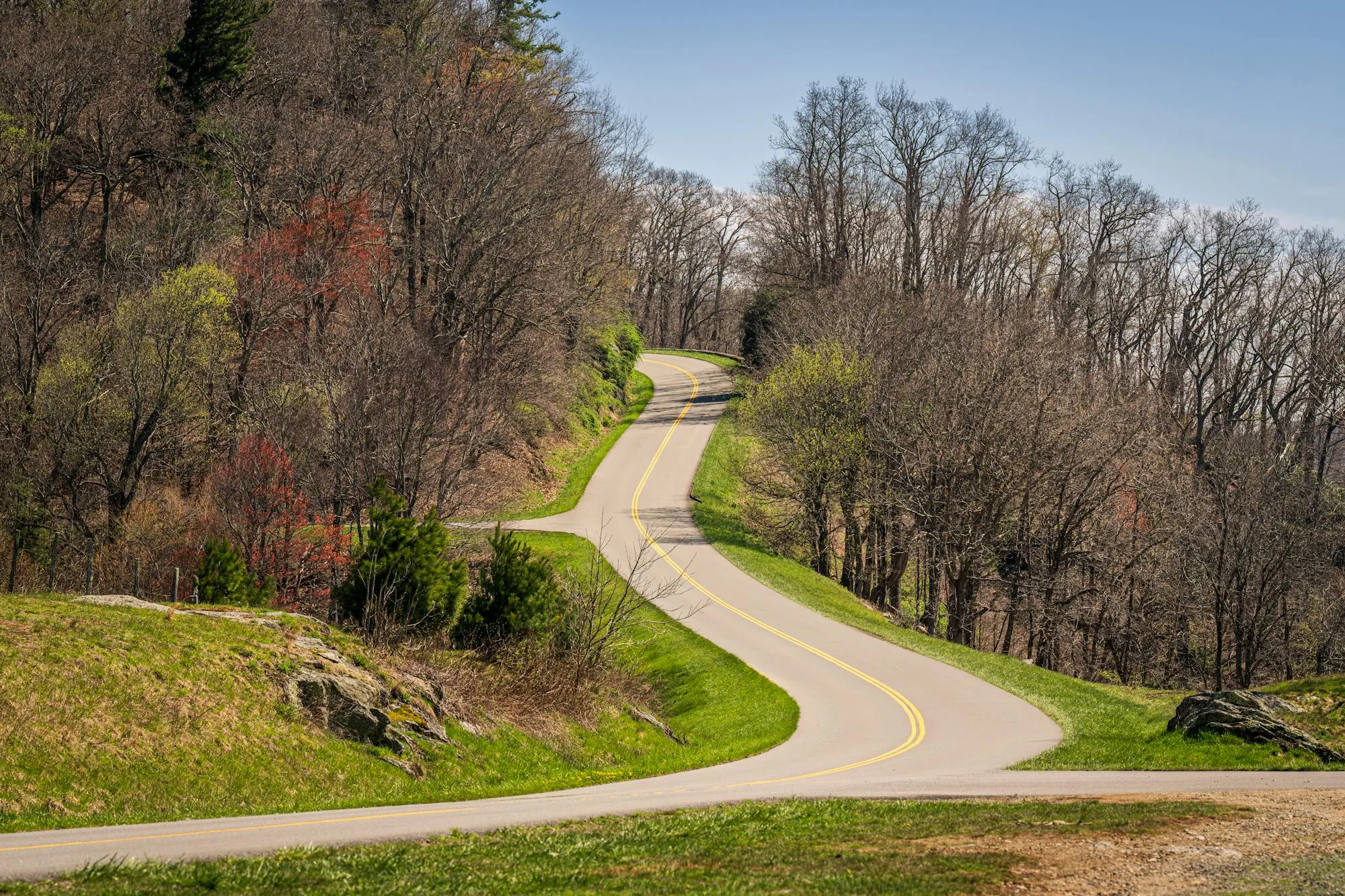
A winding asphalt road descending through the Appalachian Mountains, likely the famous Tail of the Dragon section in Tennessee and North Carolina. Multiple technical right-hand and left-hand curves are visible in this aerial perspective, surrounded by deciduous forest in spring foliage. Clear sunny conditions, well-maintained asphalt with yellow center lines marking the curves.
Mark Stebnicki / Pexels

The Truth on the Street

What follows comes from listening, not riding. Years of it: owners at events, questions over coffee at club nights, and the messages riders send me unprompted. The 990 Duke gets talked about plenty, and the sentiment sorts cleanly into praise for the way it moves and frustration with the way it is sold.

Where the praise lands

KTM pitched this one as a precision instrument, and the riders largely back the pitch. Direction changes come up first and loudest, described as instant and exact. The engine follows, with owners talking about torque that spreads wide and flat instead of spiking, usable from low revs. The surprise in the chatter is how many call it undemanding for errands and commuting.

The complaint that won't go away

The loudest one isn't about riding at all. Owners are blunt about cruise control and the sharper modes running only for a short introductory allowance, then going dark until the extra pack is bought. Brake feel is the other steady theme: enough power at the front, not the fine feedback riders want back through the lever. A smaller group brings up abrupt throttle at low speed in certain modes.

Known issues

No widely-reported issues on record.

The Expert Benchmark

Where this KTM 990 Duke pulls ahead of — or falls behind — its rivals on the numbers, and the typical bike in its class on character.

What kind of bike this is — character vs. the class

This bike Class average

The shape of the KTM 990 Duke — numbers and character vs. the average Naked Bike

Head-to-head: KTM 990 Duke vs. its rivals

The 'Should I Buy It?' Score

Forget spec-sheet bragging. Here's who the 990 Duke is actually built for.

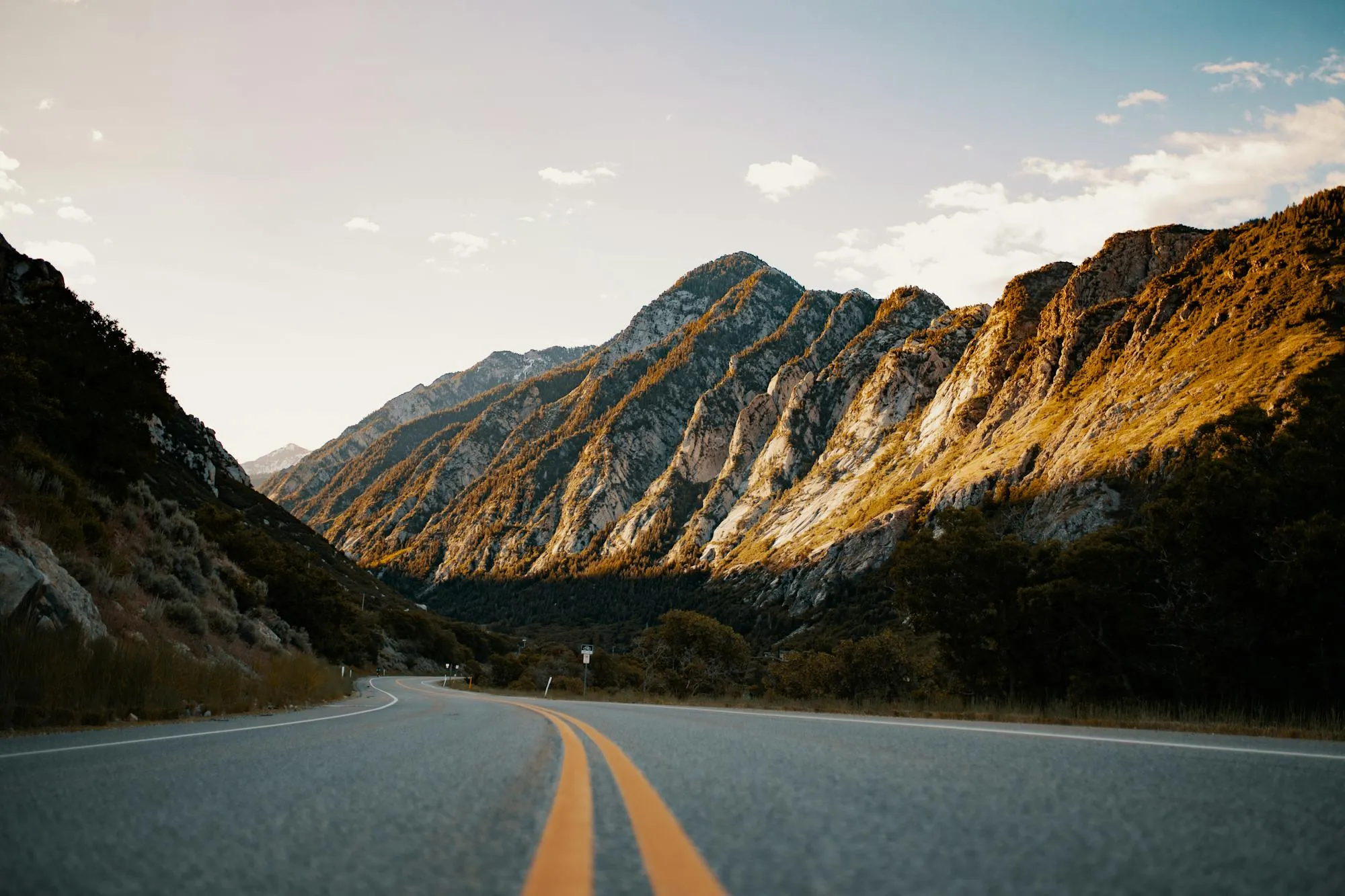
A scenic view of Angeles Crest Highway winding through rugged Southern California canyon terrain. Rocky mountainsides with golden earth tones frame the asphalt road with tight sweeping curves. Double yellow center line visible, sparse vegetation along the shoulders, clear blue sky with white clouds. Daylight, dry conditions. Iconic location for canyon-road enthusiasts.
Josh Sorenson / Pexels

Best motorcycle for Bay Area?

For Skyline runs and weekday city miles this fits, and the design and TFT do the job at the meetup. Just know it stays intense in traffic instead of relaxing with you.

Made for Bay Area Ridge Roads · San Francisco / Bay Area · Skyline Boulevard / Alice's Restaurant
Best motorcycle for Angeles Crest?

This is the bike's home ground. Light, sharp steering and a twin that pulls from the bottom suit tight canyon work, provided your bar inputs are already clean.

Made for Angeles Crest Highway · Coronado Trail / US 191 · Highway 1 / Big Sur

Best motorcycle for Tail of the Dragon?

Low weight and constant suspension feedback make it a strong tool for technical East Coast corners. The long slab ride to get there is the part you'll pay for.

Made for Back of the Dragon · Blue Ridge Parkway · Cherohala Skyway

What's new versus the previous generation

If you're cross-shopping the older generation, here's what changed.

KTM 990 Duke (MY2024)

Previous generation · 2024

KTM 990 Duke (MY2024)

Attack Mode, Street Legal

Compare to the previous model →

Alternatives to the KTM 990 Duke

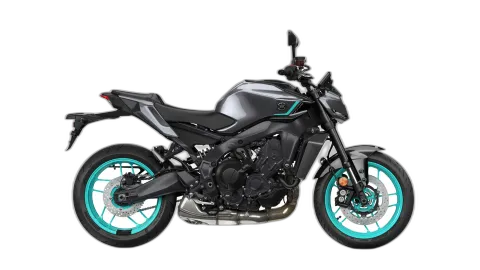
If this one isn't quite the fit, these are the bikes worth riding back-to-back against it.

Any price note compares both bikes at the same age — the youngest age both have on the used market — against this KTM 990 Duke. “cheaper/pricier” is what that bike costs second-hand, not how worn it is.