
·

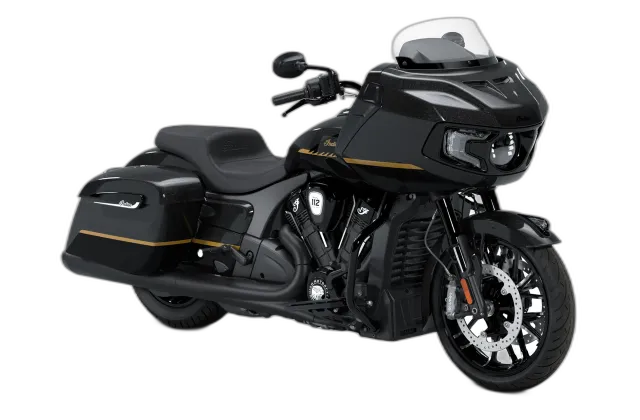
Indian Challenger (MY2020-DarkHorse) — Cruiser
Indian press archive

2021 · Cruiser · A variant of the Challenger

Challenger Dark Horse (MY2020-DarkHorse)

Differences between the standard Challenger and the Dark Horse

4 / 5 NastyNils Rating · against its class

The Blacked-Out Power Bagger

The Machine's Character

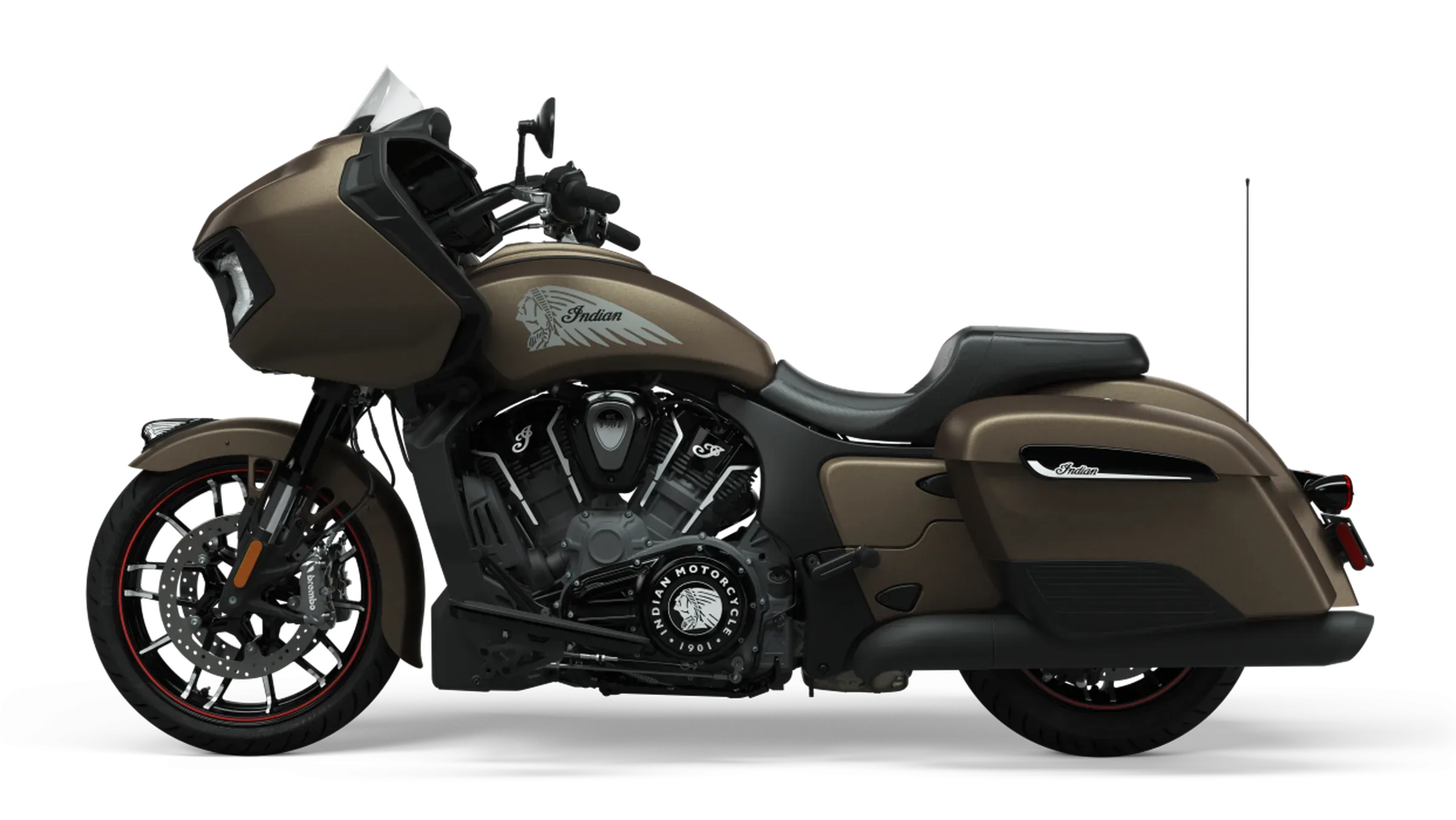
The Challenger Dark Horse is Indian's performance bagger in its blacked-out trim. At its center sits the liquid-cooled PowerPlus, a 60° V-twin with 1768 cc that makes 122 hp and 128 lb-ft at 3,800 rpm. The chassis reads more sport than tradition: an aluminum twin-spar frame, an upside-down fork and a 19-inch front wheel. Cornering ABS, traction control and ride modes are standard, and the 7-inch Ride Command touchscreen brings Apple CarPlay into the cockpit. The Dark Horse builds on the standard Challenger's equipment with navigation and tire pressure monitoring. That's a lot of motorcycle!

Read the spec sheet and the purpose is clear: this hardware is built for long, fast highway miles with attitude. A wet weight of 831 lb (377 kg) and a 65.7 in (1668 mm) wheelbase point to straight-line calm rather than city agility, and on paper the 26.5 in (673 mm) seat keeps that mass low and within reach. Cruise control, an electrically adjustable windscreen, a 6.0 gal (22.7 L) tank and belt final drive are touring tools, not decoration. The fork takes no adjustment; the rear shock offers preload. It points to you if you want American V-twin presence with modern electronics. Heritage, but no museum piece.

Hard Numbers

Spec sheets don't ride bikes, but they set the baseline.

Show full specs & equipment Hide specs & equipment
Key specifications
Power 122 hp (91 kW)
Torque 128 lb-ft (174 Nm) @ 3,800 rpm
Displacement 1768 cc
Engine 60° V-twin
Cooling Liquid-cooled
Gearbox 6-speed
Final drive Belt
Fork Upside-down (USD)
Front brake 320 mm
Front tire 130/60-19
Rear tire 180/60-16
Wheelbase 65.7 in (1668 mm)
Seat height 26.5 in (673 mm)
Wet weight 831 lb (377 kg)
Fuel capacity 6.0 gal (22.7 L)

Equipment check

Chassis

  • Rear Suspension Adjustable Standard
  • Cruise Control Standard

Comfort

  • Heated Grips Optional

Connectivity

  • Keyless System Standard

Lighting

  • LED Headlight Standard

Safety

  • ABS Standard

Signature Tech

The named systems that set this bike apart — and what each one does for you.

Connectivity

  • Indian Ride Command Standard
    • Integrated navigation
    • Handsfree phone integration
    • Live tire pressure alert

What the Challenger Dark Horse Adds — Differences vs the Standard Challenger

The Challenger Dark Horse (MY2020-DarkHorse) builds on the standard Challenger: the upgraded hardware, the key spec changes and where its character shifts. The full ride, specs, scoring and verdict are all right here on this page.

Equipment the Dark Horse adds vs the standard Challenger

Now standard
NavigationTire Pressure Monitoring (TPMS)

How the Dark Horse shifts the character

Where it does less
  • More demanding and less forgiving to ride
  • Lazier low-end that wants more revs
  • Heavier steering that takes more effort
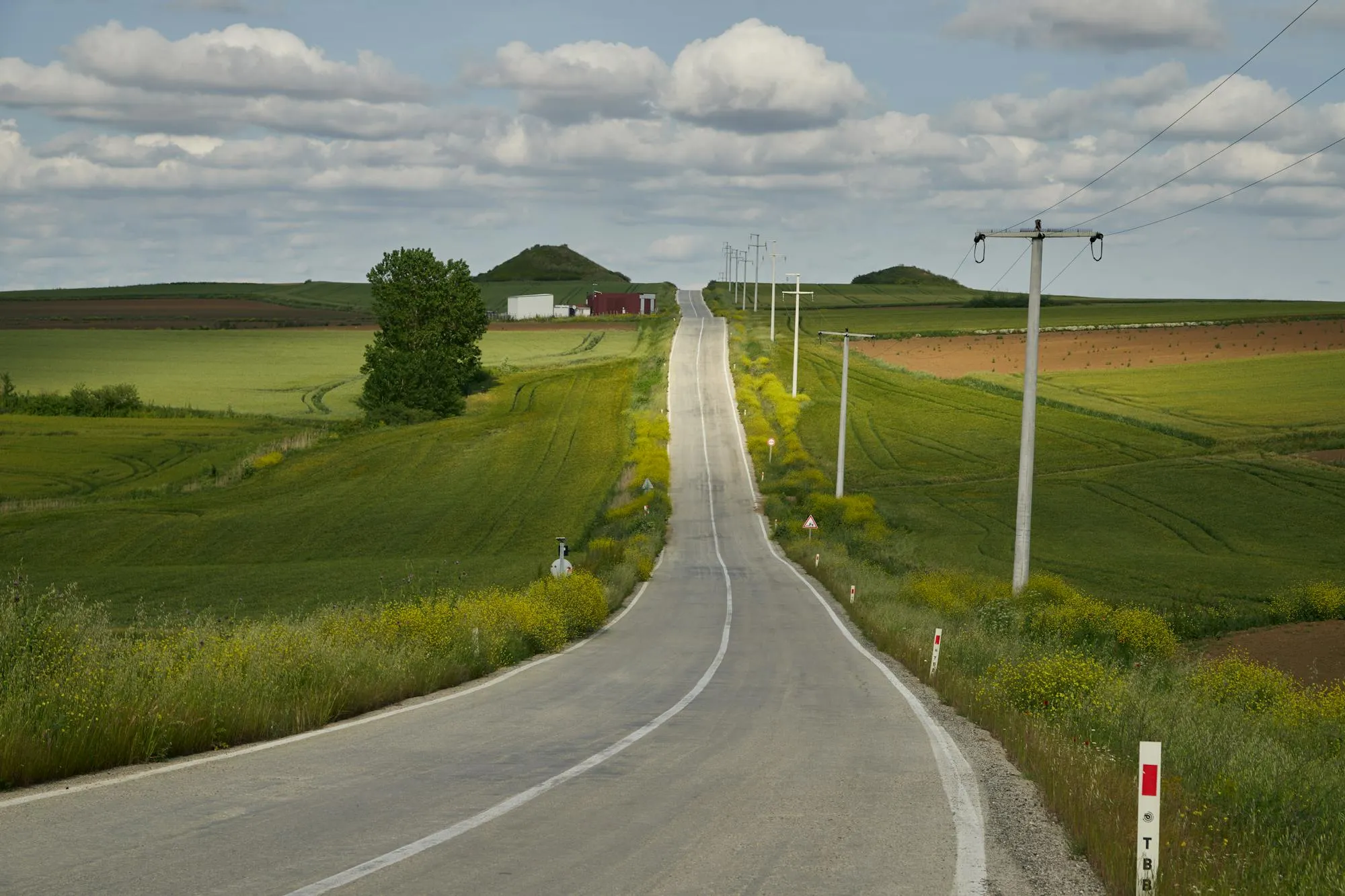
A long, straight paved road stretches toward the horizon through agricultural fields in Vermont. Power lines and a mailbox are visible along the roadside. Lush green vegetation, cumulus clouds, good daylight conditions. The landscape is flat to gently rolling. Asphalt pavement appears to be in good condition. Rural American setting.
Meric Tuna / Pexels

The Truth on the Street

None of this comes from my own seat time. It's what has come back to me over years of listening: talk in paddocks and parking lots, owners comparing notes at club nights, and the messages and emails riders send in once they've lived with a bike for a while. On the Challenger the chatter runs in one direction. Riders keep describing a big machine that stops behaving like one the moment it's rolling, and they keep putting their reservations at walking pace.

Torque That Skips The Downshift

The engine dominates every conversation. Riders describe thrust arriving from just off idle and building without a flat spot, and the line that comes up again and again is that a highway pass asks for nothing but a twist of the throttle. No downshift, no planning, no waiting for the motor to wake up. The brakes get the same kind of talk, if less of it. Owners report that the bike comes down from speed with authority and real feel at the lever, and that the ABS stays in the background rather than cutting in on top of the chassis.

It Shrinks Once You Turn

The second thing riders volunteer, usually with some surprise in the telling, is how it changes direction. For all its bulk they report it feeling lighter and more planted through corners than the size suggests, holding a line without protest when the road gets bent. Comfort draws steady mentions too: long days that don't leave you wrung out, buffeting kept down to almost nothing, and a quiet pocket the passenger appreciates as much as the rider. The electronics come up in passing, mostly the ride modes and traction control.

The Gripes Start At Walking Pace

The complaints are narrow, and they cluster in one spot. Once the bike stops rolling, riders say the mass is right there in your hands, balance takes care, and paddling it around for any length of time gets tiring. There's no reverse gear to lean on, so a sloped parking space is something you sort out before you roll into it. Past that, the styling splits the room. Some riders find the sharply creased fairing and the muscular lines more aggressive than they want, though that comes up far less often than the praise does.

Known issues

  • ABS module software error causing unintended brake light illumination

    brakes occasional Recall

    A manufacturing defect in the Bosch ABS module can cause the brake lights to flash or stay on when no braking occurs, potentially confusing other road users. Indian issued recall 24V-069/I-24-03 to reflash the ABS module.

  • Cold start cylinder misfire and engine code

    engine common

    During cold starts in cooler ambient temperatures, extended idling can cause erratic engine speed, triggering a cylinder misfire diagnostic trouble code and temporary cylinder deactivation. Restarting the motorcycle clears the fault code.

  • Clutch cable sleeve deterioration causing sticking

    drivetrain rare

    The clutch cable's plastic outer sleeve can crack and jam, preventing full clutch disengagement and leading to slipping under hard acceleration. Replacement of cable and clutch plates is the remedy.

  • Radiator weld defects causing slow coolant leak

    cooling rare

    A documented case of the radiator seeping from a bottom seam due to poor welds. Replaced under warranty. Limited reports, but noteworthy for a new model.

  • ECU/wiring harness limp mode

    electrics rare

    Low voltage codes (P16AD, P1227, P0916) can cause the bike to enter limp mode. An initial ECU replacement did not fix the issue, pointing to a possible wiring harness or connector problem.

  • Premature battery failure

    electrics occasional

    The OEM battery may develop a dead cell after the first full season, even when kept on a tender. The bike also struggles to start in very cold weather.

  • Display freezing and random glitches

    electrics occasional

    The digital display may freeze, enter a loading loop, reset ride data, or switch between day/night mode erratically. A restart usually resolves the issue.

The Expert Benchmark

Where this Indian Challenger pulls ahead of — or falls behind — its rivals on the numbers, and the typical bike in its class on character.

What kind of bike this is — character vs. the class

This bike Class average

The shape of the Indian Challenger — numbers and character vs. the average Cruiser

Head-to-head: Indian Challenger vs. its rivals

The 'Should I Buy It?' Score

Forget spec-sheet bragging. Here's who the Challenger is actually built for.

Aerial view of a winding asphalt road cutting through volcanic terrain on La Gomera, Canary Islands. The road curves through sparse green vegetation with rocky volcanic peaks visible in the background and a settled valley to the left. Clear lane markings, dry climate, partly cloudy sky.

Best cruiser for Sturgis?

This is the best fit of the three: a 1768 cc V-twin, blacked-out bagger looks and real presence for the ride to Sturgis or Daytona. You get brand identity with modern electronics on top.

Made for Black Hills / Sturgis Rally Hub · A1A — Florida Atlantic Coast · Daytona Main Street / Bike Week

Best touring motorcycle for long distance?

A solid match on paper: cruise control, an electric windscreen, navigation and a 6.0 gal (22.7 L) tank are built for long days between parks. The hardware is aimed at distance.

Made for Beartooth Highway · Blue Ridge Parkway · Going-to-the-Sun Road

Best retro motorcycle for road trips?

Only a partial fit. You get heritage and a V-twin, but this is a blacked-out 831 lb (377 kg) bagger with a touchscreen, not a simple classic for a quiet rhythm through small towns.

Made for Acadia National Park · Austin / Handbuilt Motorcycle Show · Blue Ridge Parkway