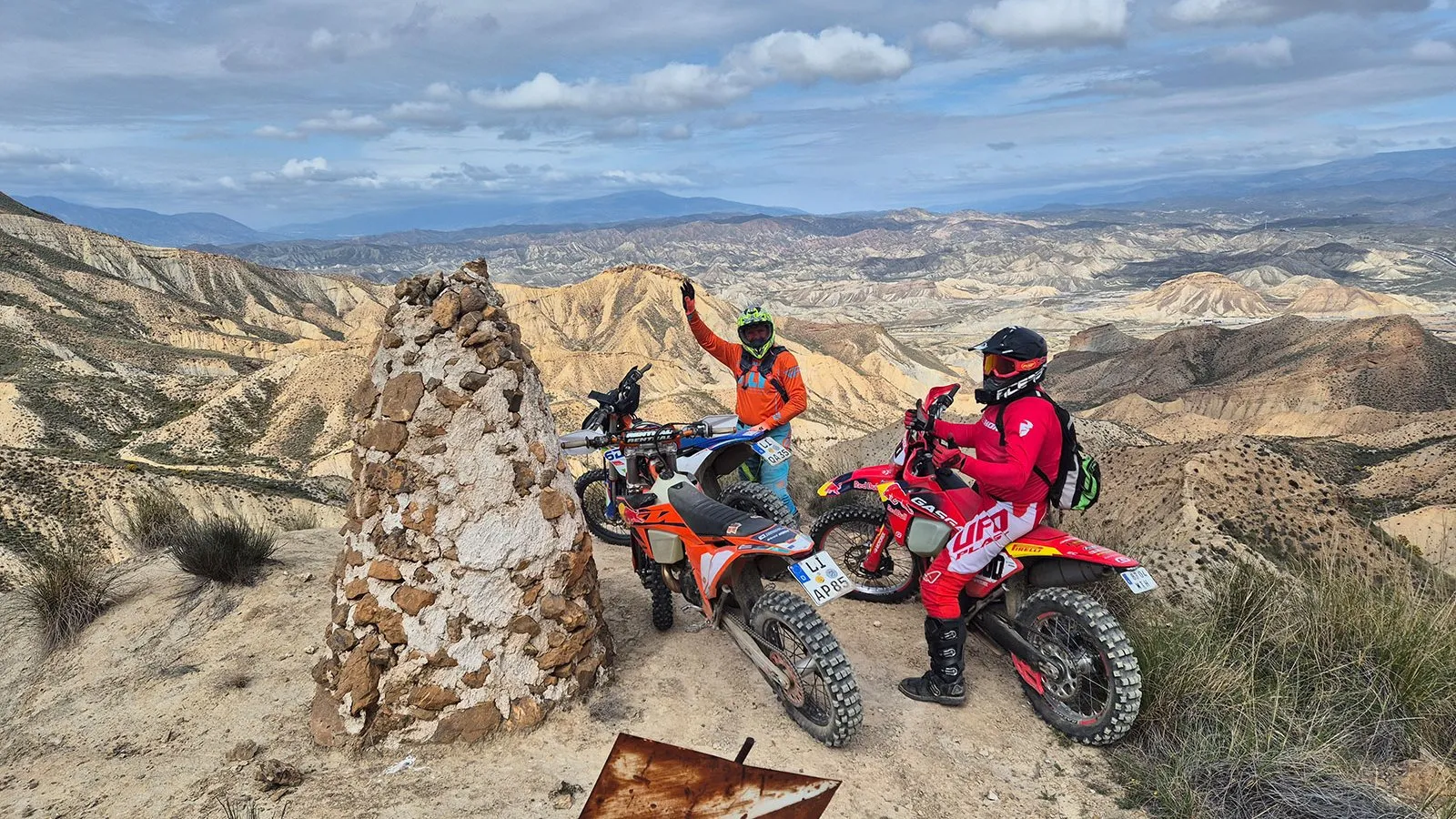
Picture the film set first. Bare, eroded hills, steep-walled gullies cut into them, a dried-out riverbed winding along the bottom like a road nobody finished. You’ve seen it before: Sergio Leone shot his Dollar trilogy in this landscape in the 1960s. It’s Tabernas, in the Spanish province of Almería, and it reminds visitors of the North American Wild West. Which leaves you, reading this on the far side of the Atlantic, with a fair question: why cross an ocean to ride something that looks like home? Hold that one. There’s a second question underneath, and it matters more. Do you have to be good at this to go?
Badlands Coast and High Country
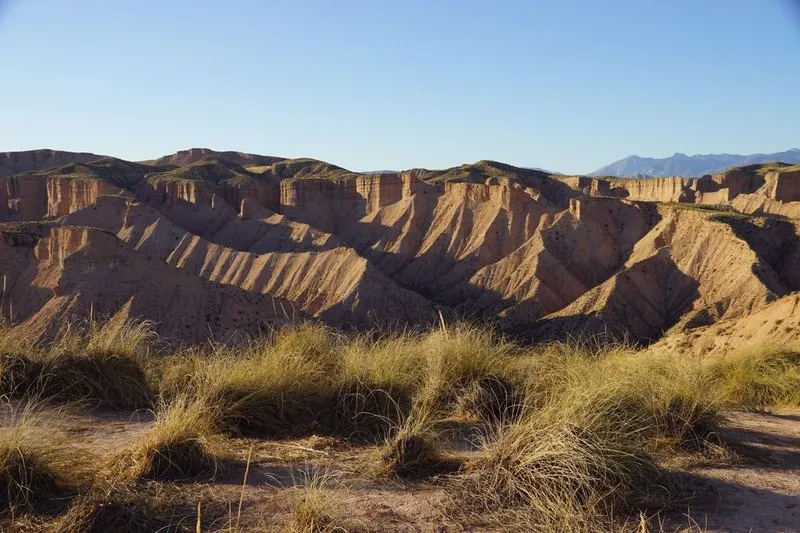
On the map, Andalusia is three riding countries stacked into one region. The Tabernas desert sits in Almería province between the Sierra de los Filabres to the north and the Sierra Alhamilla to the southeast, and it’s often called the only true desert in Europe. Whether that label survives a geographer isn’t my department. The shape of the place is what counts: badlands, eroded and gullied and dry. Over in Granada province the Gorafe desert is badlands too, with canyons, ravines, dry riverbeds and wide high plateaus. Then the ground goes up. The Sierra Nevada carries Mulhacén, the highest summit on the Iberian Peninsula. From the sea up to high alpine country in a single region: that’s how I put it in a 1000PS piece on Andalusia, and I’d print it on a T-shirt if anyone let me near the merchandise. The piece of it I daydream about most is the Costa del Sol. There the terrain climbs steeply right behind the shoreline, a few minutes from the water you’re riding mountain country with nobody in it, and from the trails in those coastal hills you look back down on the Mediterranean.
The DNA of this region is a double exposure. One layer is celluloid. The likeness to the American West is what pulled the filmmakers in, and since the 1950s more than 300 films have been shot in the Tabernas desert, which is regarded as the backdrop of the spaghetti western. The western towns from the film years still stand around Tabernas today, Fort Bravo, Oasys MiniHollywood and Western Leone, and motorcycle tours roll right past the sets. The other layer is far older. The Moorish heritage of al-Andalus marks Andalusia in plain sight, and the Alhambra in Granada, from the Nasrid period, is the example everybody reaches for. Between the two sit the whitewashed villages of the backcountry. On our trips down there we found places like Benahavís: white houses, cobblestones, cafés.
What the Ground Is Made Of
Now the part your tires care about. Enduro routes in Andalusia mix dry riverbeds, rocky singletrack, gravel and mountain tracks, and the guided tours run mostly off the pavement. Operators quote off-road shares from 70 to 80 percent at one outfit up to 90 at another. The easy stretches are wide, hard-packed dirt and clay tracks through the mountains, with ruts or loose ground in places. In the hills near the coast, the technical passages are a matter of loose slate, rock steps and rain gullies washed out deep. The demanding end looks like this once you’re out there: narrow goat paths across steep hillsides with rock steps and roots, creek beds full of slick round stones and smooth rock slabs, climbs and descents strewn with boulders. Tabernas is a different floor again. Out there the bikes run on hard sand and packed earth with rocks and rough tracks, and then there are the ramblas, the deep, sandy dry washes. Even the Andalucía Rally runs over fast, rocky, dusty, slippery tracks and not over sand dunes. We know this ground ourselves. On one beautifully chosen route from Málaga to Granada, roughly 60 percent of the day ran off the pavement, and around Almería we’ve taken a travel enduro down dusty tracks and up twisting mountain roads, with plenty of bad asphalt in between, which on knobbies is closer to a compliment. Our years-old advice to anyone who knows Andalusia only from the highway or the racetrack still stands: explore the country around Mojácar on an off-road tour. The whole spectrum goes from simple gravel roads to hard enduro level, and operators grade their routes by difficulty.
Two things about this ground deserve your respect before the first rock does. Unpaved tracks down here are rarely maintained, and they change after rain: ruts, holes and stones washed down onto the track are part of the deal. Last season’s ride report may describe a trail that has moved on since. The second thing is water, of all things, in a desert. It rarely rains in Tabernas, but when it does it mostly comes down in torrents, and in heavy rain the dry bed of a rambla can suddenly carry fast, violent water. The advice is short. You don’t ride through a flooded section.
How Good You Need to Be
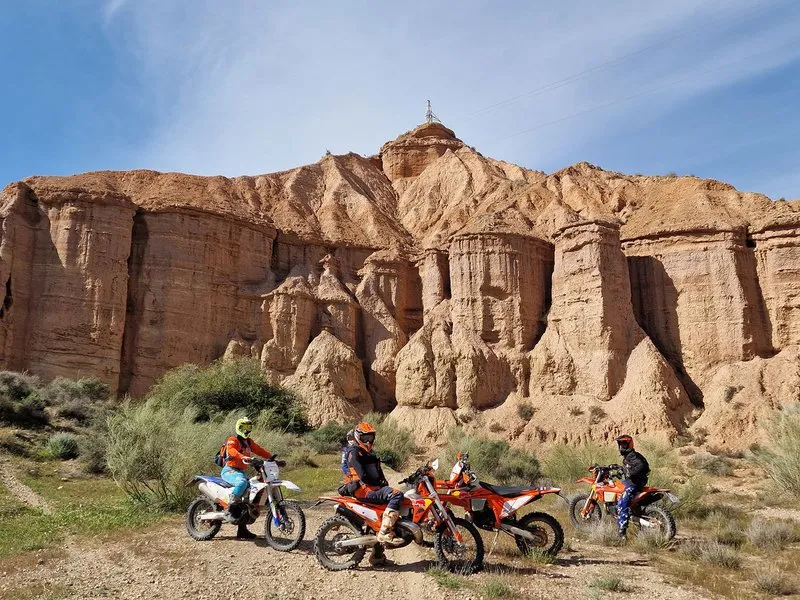
Here’s my honest read, and it’s more welcoming than the last few paragraphs suggest: the guided enduro tours in Andalusia work for beginners too. Plenty of local operators go after one-day guests. And yes, some passages have real bite. Beginner needs a definition, though: new to dirt, not new to motorcycles. Somebody who doesn’t ride at all yet won’t be taught by these operators, or gets pointed to a separate beginner course. If you’re new to dirt, basic off-road training on site comes before the tours. In the comments under our videos, road riders tell of getting loose ground under their wheels for the first time in Andalusia. Guides then size up your riding at the start of the day and offer easier and harder variants along the way, so newcomers stay on the wide tracks while the practiced riders peel off on detours.
The numbers need decoding. In the RIDE KTM program the two tours below are advertised for riding levels 2 to 4 (Enduro Andaluz) and 2 to 5 (Desert Western Enduro). KTM, for one, describes its off-road riding levels like this: levels 1 and 2 suit novices, and 2 already covers gravel roads with washouts and potholes, deep ruts in places, dry riverbeds, simple river crossings and singletrack without extreme grades. For level 3, off-road practice is recommended: tight switchbacks, extreme climbs and descents, demanding river crossings, with longer easy passages in between. Level 4 asks for regular off-road practice and lists rock steps, loose scree, deep sand, mud holes and a brisk pace. Level 5 is the hardest terrain, wet or in serious heat, with no long easy stretches in between. Whatever number you pick, pick it honestly.
Both tours can be booked through RIDE KTM, KTM’s official experience program. The operator calls itself an official KTM partner with more than 20 years of experience and says it sorts groups by ability and personal preference. In its description, Enduro Andaluz is gorges, mountains, rocky singletrack and riverbeds, led by local guides who also know the tapas bars, with a family-run country hotel among orange groves. Desert Western Enduro, near Tabernas, is long singletrack through dusty valleys, over stony hills and along rock formations. Each comes as a 6-day or 8-day tour, rental bike included: Ride KTM: dates, info and prices.
Winter Sun and the Evening Table
The season runs backwards from what you’d expect. Among enduro riders, Andalusia has a name as the winter escape, ridden in sunshine and mild temperatures, and at 1000PS, the magazine I founded, we list it in our off-season overview for November through February. Around Málaga the average daily high in January and February sits at 62 to 64°F, and Almería’s airport station logs just under 3,000 hours of sunshine a year on about 8 inches of rain. It isn’t all postcard weather: Málaga gets about 4 inches each in November and December against zero in July. Inland is another climate. Granada’s airport averages a January low of 32°F, and in July its average daily high is about 95°F. In extreme heat, Spain’s health ministry says to drink plenty and skip outdoor sport around midday. For off-road routes that climb into the high country, riders name spring and fall as the best time.
A guided day runs four to six hours with one operator and around seven with another, broken up by village stops or a sit-down lunch. Around Marbella you can book single riding days and be back at base by evening. Week tours with five riding days usually carry a rest day. Riders who’ve done it talk about fading stamina and unfamiliar sore muscles. Then the day winds down in company, over a beer on the hotel terrace or in a tapas bar. Tapas are everyday life here. The food I’d fly in for starts cold, with gazpacho or the thicker salmorejo from Córdoba, then pescaíto frito, fish fried in olive oil, and a plate of jamón. On the beaches of Málaga the tradition is espetos, and the entire recipe is roughly my level in the kitchen: sardines speared on a cane and grilled over olive-wood embers.
You don’t cross the ocean for the part that looks like a western. You cross it for what’s stacked around it: a trail with the Mediterranean underneath, a whitewashed village for the coffee stop, sardines over olive wood, all of it in the dead of winter. And you don’t have to be good at this to go. Tell the guide the truth on the first morning, and start on the wide tracks.