By NastyNils·
Motorcycle comparison · Supersport
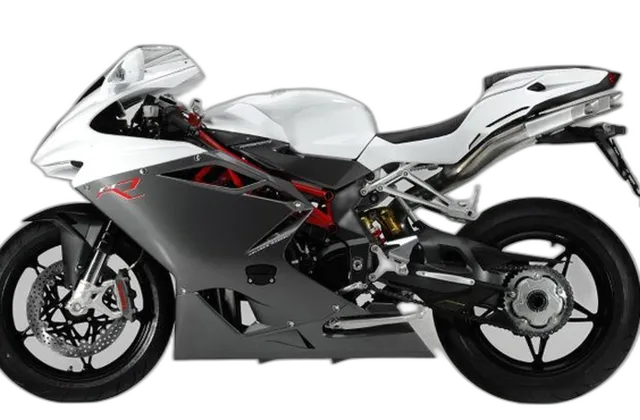
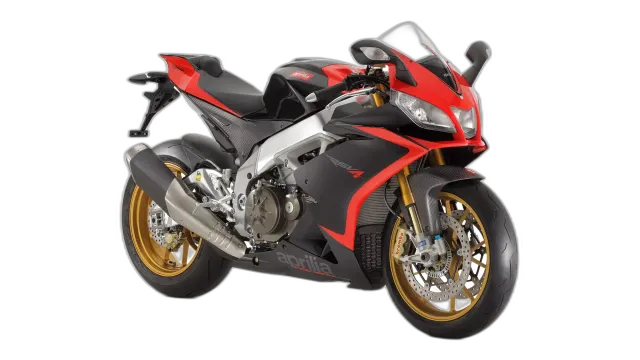
MV Agusta F4 1000 R (MY2012) vs Aprilia RSV4 Factory APRC ABS (MY2011)
Deep in the revs on an open stretch, the MV Agusta F4 1000 R's engine doesn't fade; it surges and howls the further you wind it. On the Aprilia RSV4 Factory APRC ABS, the line you've picked is exactly where the bike goes. A mid-corner correction doesn't upset it.
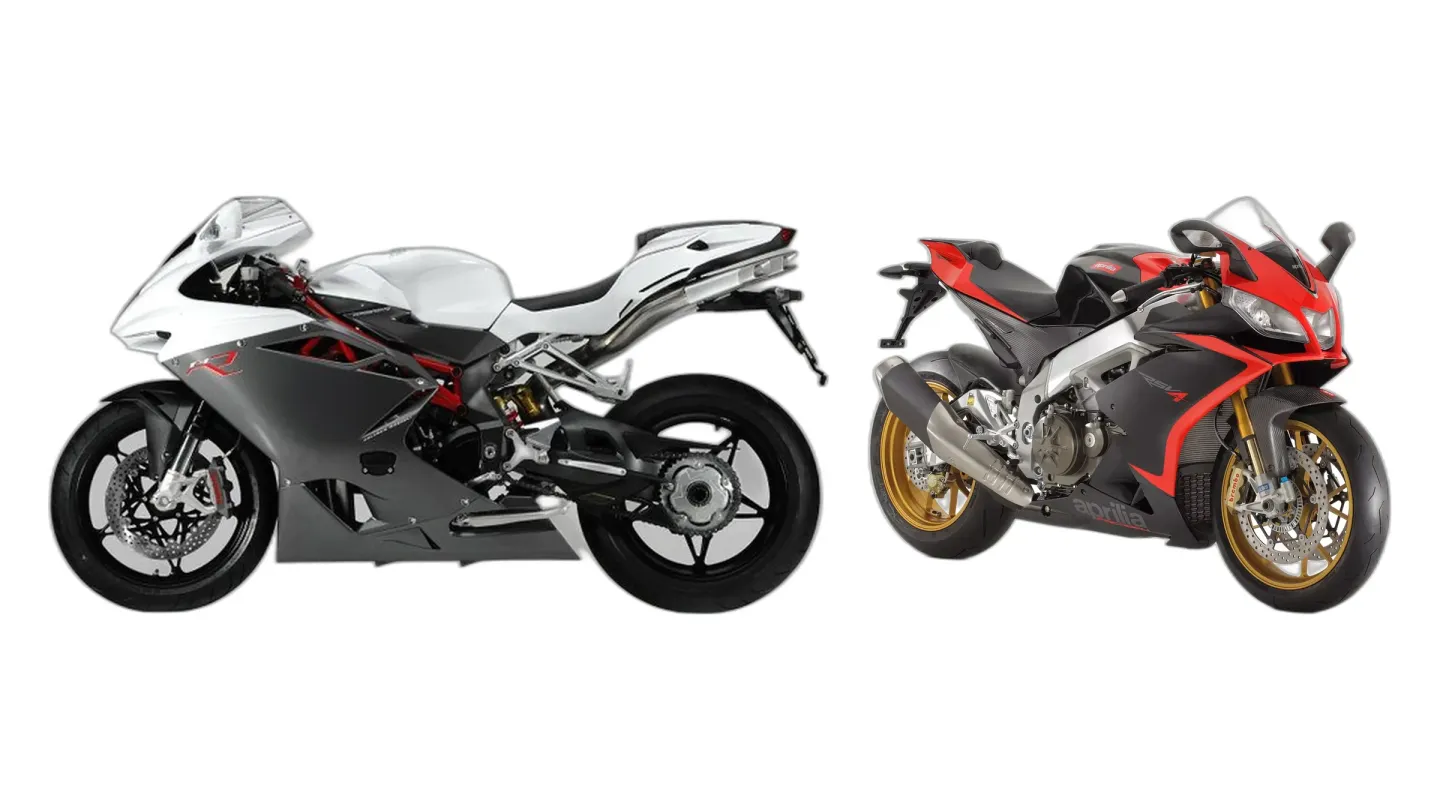
So which one do you buy?
The RSV4 Factory APRC ABS has the edge if…
Racetrack use
Nose ahead: RSV4 Factory APRC ABS
On a closed course, the RSV4 Factory APRC ABS edges ahead. That comes from better suspension and more lean clearance. Not by enough to settle it.
Sporty riding on twisty roads
By a nose: RSV4 Factory APRC ABS
The RSV4 Factory APRC ABS is a touch more fun when the road starts bending. It's down to lighter steering.
Daily commuting & city riding
Edges it: RSV4 Factory APRC ABS
Your daily ride leans slightly toward the RSV4 Factory APRC ABS. Fit and price can easily outweigh that.
Which one's the smarter buy
No clear advantage
The Aprilia RSV4 Factory APRC ABS costs less, but the better buy depends on what you want it for. Neither is the clear better buy for the money.
What makes each one tick
F4 1000 R
A light push on the bar is all the F4 1000 R needs to change direction, and the front doesn't drift off its mark. Hard on the brake lever, the chassis keeps reporting what the front tire's doing. It's the top of the tach where the short-stroke Corsa Corta four rips forward with a hard-edged shriek. Four pipes under the tail sing.
RSV4 Factory APRC ABS
The RSV4 Factory's bark and its physical shove back up everything its wild-looking bodywork promises. Into a bend, the compact frame turns in clean and doesn't argue with the bar. On the way out, there's a lag between twistgrip and rear tire, and the steering damper works hard to keep the bars in check. Its Brembos barely need a squeeze.
Nils rode the RSV4 Factory APRC ABS in 2012 (NastyNils Testride).
The Voice of Experience

What actually separates them
- The F4 1000 R has the lower seat: 32.7 in (830 mm) vs 33.3 in (845 mm).
- The RSV4 Factory APRC ABS has the lower wet weight: 450 lb (204 kg) vs 463 lb (210 kg).
- The F4 1000 R makes more peak power: 195 hp (143 kW) vs 180 hp (132 kW).
Which one for the way you ride
Comfortable long-distance riding
Wrong job for both
Big miles aren't where either one shines. You'll be watching for the next rest stop.
Don't look for a gap on running costs: there isn't one. Go by how each one fits you.
Who each one is built for
What's good, and what you'll live with
F4 1000 R
What owners say
Strengths
- Stunning, iconic Italian design
- Exhilarating top-end engine rush
- Superb, communicative handling
Trade-offs
- Poor heat management
RSV4 Factory APRC ABS
Strengths
- Turn-In You Can Trust
- Brutal Brakes, Light Lever
- Bottomless Setup Range
- No Corners Cut
- The Image Is Earned
Trade-offs
- Corner Exit Is Work
- Race Ergonomics, No Mercy
- Tall Riders, Buy The Screen
- Below-average reliability and high maintenance costs
Known problems to check before you buy
F4 1000 R
- Overheating in traffic The high-compression engine lacks sufficient cooling airflow at low speeds, causing temperatures to spike. Some owners fit aftermarket metal fan blades to improve cooling.
RSV4 Factory APRC ABS
No confirmed faults on file yet. That's not the same as fault-free.
What they cost used
These prices compare a 14-year-old F4 1000 R with a 14-year-old RSV4 Factory APRC ABS.
- F4 1000 R
- about $11,200
- RSV4 Factory APRC ABS
- about $9,900
At 14 years old, the MV Agusta F4 1000 R sits around $11,200 while the Aprilia RSV4 Factory APRC ABS lands near $9,900. That puts the Aprilia about $1,300 cheaper. These are US market estimates, not live listings.
What they share
- Cooling
- Liquid-cooled
- Torque
- 84 lb-ft (114 Nm)
- Fuel capacity
- 4.5 US gal (17 L)
- Gearbox
- 6-speed
- Final drive
- Chain
- Front tire
- 120/70-17
- Rear tire
- 190/55-17
Where the spec sheets split
| F4 1000 R | RSV4 Factory APRC ABS | |
|---|---|---|
| Seat height | 32.7 in (830 mm) | 33.3 in (845 mm) |
| Wet weight | 463 lb (210 kg) | 450 lb (204 kg) |
| F4 1000 R | RSV4 Factory APRC ABS | |
|---|---|---|
| Displacement | 998 cc | 999 cc |
| Engine | Inline-four | V4 |
| Power | 195 hp (143 kW) | 180 hp (132 kW) |
| Peak power at | 13,000 rpm | 12,500 rpm |
| Peak torque at | 9,100 rpm | 10,000 rpm |
What comes fitted, what costs extra
| F4 1000 R | RSV4 Factory APRC ABS | |
|---|---|---|
| ABS | Not offered | Standard (from 2013) |
| Ride Modes | Not offered | Standard |
| Quickshifter | Not offered | Standard |
Head to head, area by area
Both bikes on the same scale, one area at a time.