By NastyNils· ·
Motorcycle comparison · Supermoto vs Sport Tourer
Ducati Hyperstrada (MY2013) vs Multistrada 1200 (MY2010)
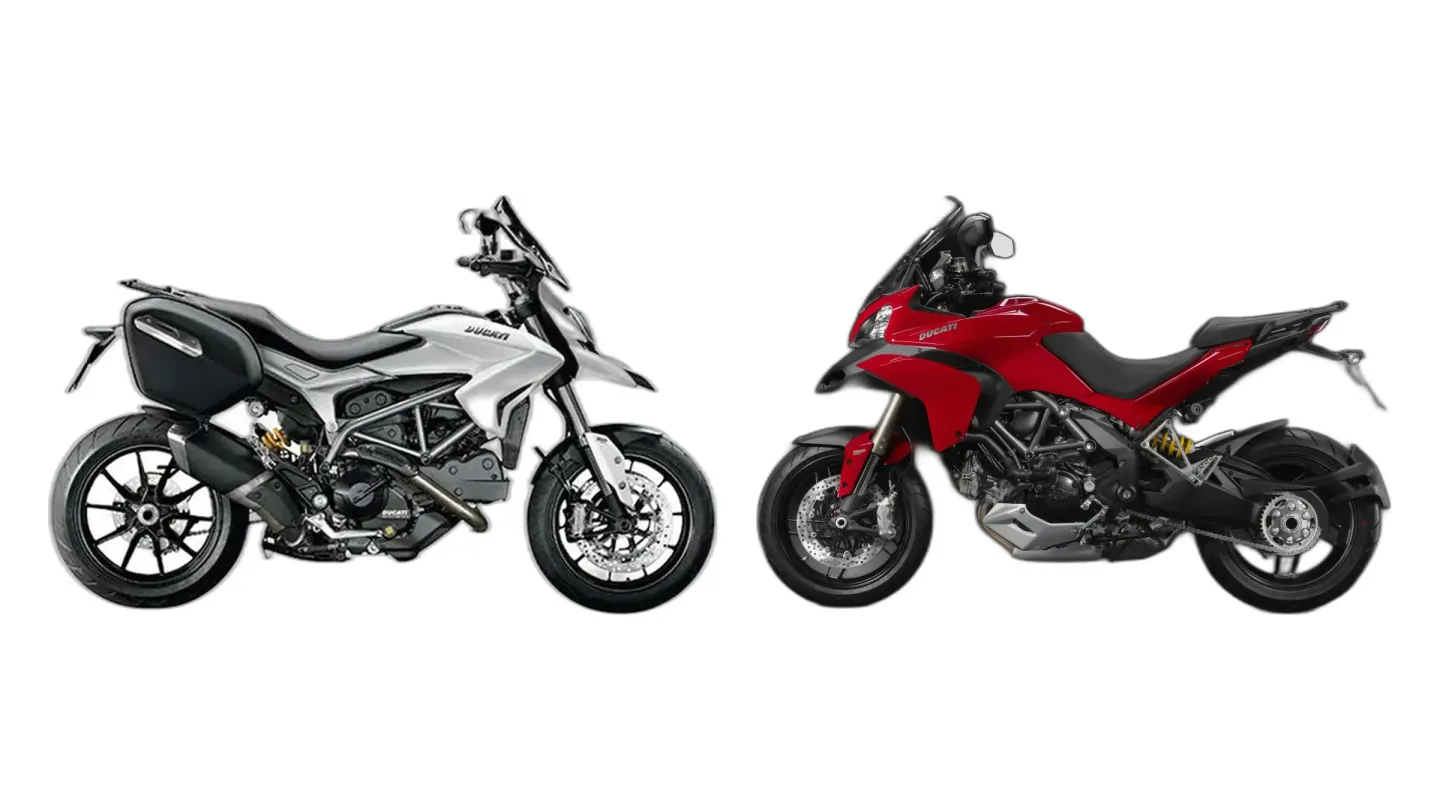
Ducati Hyperstrada vs Multistrada 1200: where they split, and which one to buy.
You'll flick the Ducati Hyperstrada into a bend off its wide bars, and it's itching for the next one. The Ducati Multistrada 1200 turns in wherever you aim the bars, and there's no pushback. Once leaned over, it settles and holds its line.
So which one do you buy?
The Hyperstrada has the edge if…
Daily commuting & city riding
Slight edge: Hyperstrada
Your daily ride leans slightly toward the Hyperstrada. Fit and price can easily outweigh that.
The Multistrada 1200 has the edge if…
Keeping running costs low
Inches ahead: Multistrada 1200
For the money you spend after the purchase, the Multistrada 1200 nudges ahead. The gap is too small to plan a budget around.
Sporty riding on twisty roads
Nose ahead: Multistrada 1200
Once the road starts to bend, the Multistrada 1200 noses ahead. Thank better suspension and a sportier chassis for that. Your own skill counts for more than a gap this size.
Which one's the smarter buy
Apples and oranges
The Hyperstrada and Multistrada 1200 do different jobs, so neither is the clear better buy for the money. You're picking between a supermoto and a sport tourer, not a price tag.
What makes each one tick
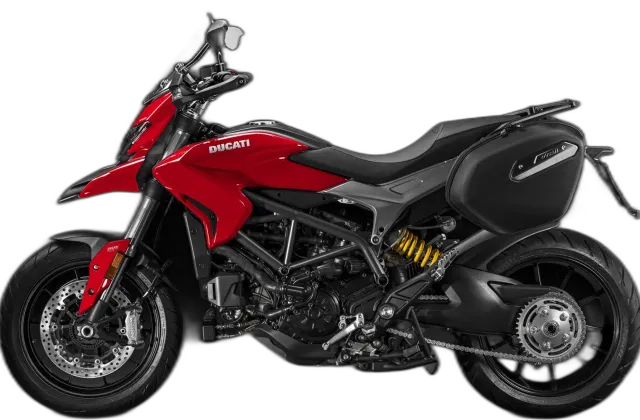
Hyperstrada
The Hyperstrada's supermoto roots show on the Angeles Crest Highway, where the trellis frame and upright stance keep it eager for every switchback. At small, steady throttle openings the twin surges and hunts, and smooth progress through town isn't easy. With a wider throttle, there's a clean pull from low revs and a free spin to the redline. Its exhaust note begs for revs.
Nils rode the Hyperstrada in 2013 (NastyNils Testride).
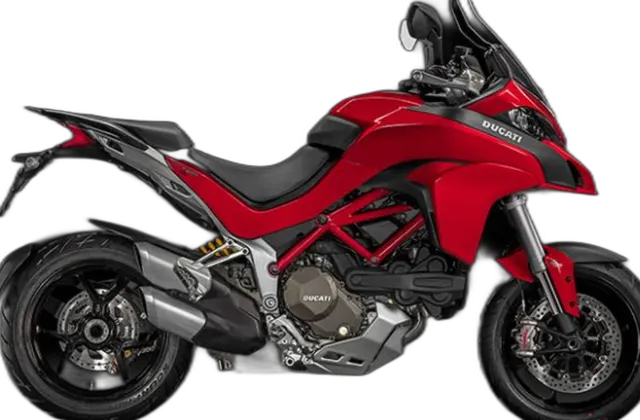
Multistrada 1200
Stop-and-go traffic doesn't wear you down on the Multistrada 1200. The self-servo wet clutch needs almost no effort. The brake lever bites with sport-bike force, and its radial master cylinder doesn't jump from nothing to everything. Trail-braking becomes a deliberate choice. The seat soaks up long days and keeps road feel.
Nils rode the Multistrada 1200 in Styria in 2010, and in 2011 (NastyNils Testride).
The Voice of Experience

What actually separates them
- The Multistrada 1200 has the lower wet weight: 423 lb (192 kg) vs 450 lb (204 kg).
- The Multistrada 1200 makes more peak power: 150 hp (110 kW) vs 110 hp (81 kW).
- The Multistrada 1200 makes more peak torque: 87 lb-ft (119 Nm) vs 66 lb-ft (89 Nm).
Which one for the way you ride
A confidence-building first motorcycle
Both fall short
As first bikes, both are a stretch. Starting smaller isn't a step down.
Who each one is built for
What's good, and what you'll live with
Hyperstrada
What owners say
Strengths
- Playful, accessible supermoto handling
- Smooth, characterful L-twin engine
- Well-equipped out of the box
Trade-offs
- Grabby, binary clutch in stock form
- Poor low-speed fuelling
- Underdamped front suspension
- Limited fuel range
- Tall seat height and tight ergonomics
Multistrada 1200
Strengths
- Turns In Like A Lightweight
- Brakes You Can Actually Modulate
- Wind Protection That Hides Speed
- Flexible and charismatic L-twin engine
Trade-offs
- ABS Trips Too Early
- Useless Fairing Pocket
- Center Stand Fouls Your Feet
- Corrosion vulnerability on engine cases and swingarm
Known problems to check before you buy
Hyperstrada
- Christmas Tree of Death – ECU failure Electromagnetic spikes from the ignition system can corrupt or fry the engine ECU, lighting up the dashboard like a Christmas tree and leaving the bike dead. A factory suppressor wiring upgrade or Aprilia coils may prevent it, but many bikes were sold without the fix.
- Rear brake goes mushy / ineffective The rear brake frequently loses pressure and feel, even after fluid changes. A badly bled system from the factory is suspected, but some owners report persistent air ingress.
- Front brake rotor warping / grabbing Some early bikes suffered from pulsating front brakes caused by warped rotors. Dealers replaced discs and pads under warranty, but the issue can reappear.
- Engine stalling when coasting to a stop At low revs and closed throttle, the engine often stalls when pulling in the clutch while decelerating. The cause is often the carbon canister (US models) or a TPS/throttle body sync issue. Removing the evap canister often cures it.
- Starter motor drag / hard starting Several owners reported slow cranking or a starter that seemed to struggle, especially when hot. A lithium battery upgrade often masks the problem.
Multistrada 1200
- Throttle cable can dislodge (safety recall) Recall 15V152000 The inner tube of the throttle-opening Bowden cable can partially dislodge and jam, potentially preventing throttle return. Ducati recalled all 2010-2014 models to replace the front half of the throttle control housing.
- Weak rear brake and brake hose problem Rear brake lacks power and feel, with excessive pedal travel. Many owners report weak rear braking performance; some have had the rear brake hose replaced in search of improvement, but results are mixed.
- Clutch slave cylinder leak The clutch slave cylinder seal can weep or fail, leading to clutch drag or complete loss of clutch operation. Replacement is often required.
- Fuel gauge sender failure The fuel level sender frequently fails, giving erratic or false readings. Some owners have replaced the sender multiple times.
- Corrosion on clutch cover and swingarm paint The paint on the magnesium clutch cover and the aluminum swingarm can bubble and flake, especially in damp environments. Some owners repaint or use Helicoil inserts for stripped threads in the swingarm.
What they cost used
These prices compare a 12-year-old Hyperstrada with a 12-year-old Multistrada 1200.
- Hyperstrada
- about $6,600
- Multistrada 1200
- about $7,000
At 12 years old, the Ducati Hyperstrada sits around $6,600 while the Ducati Multistrada 1200 lands near $7,000. That's no meaningful gap between the two. These are estimates from the used market, not live listings.
What they share
- Seat height
- 33.5 in (850 mm)
- Engine
- 90° V-twin
- Cooling
- Liquid-cooled
- Peak power at
- 9,250 rpm
- Gearbox
- 6-speed
- Final drive
- Chain
- Front brake
- 320 mm
- Front tire
- 120/70-17
Where the spec sheets split
| Hyperstrada | Multistrada 1200 | |
|---|---|---|
| Wet weight | 450 lb (204 kg) | 423 lb (192 kg) |
| Hyperstrada | Multistrada 1200 | |
|---|---|---|
| Displacement | 821 cc | 1198 cc |
| Power | 110 hp (81 kW) | 150 hp (110 kW) |
| Torque | 66 lb-ft (89 Nm) | 87 lb-ft (119 Nm) |
| Peak torque at | 7,750 rpm | 7,500 rpm |
| Hyperstrada | Multistrada 1200 | |
|---|---|---|
| Fuel economy | 45 mpg (US) / 5.2 L/100 km | 37 mpg (US) / 6.28 L/100 km |
| Fuel capacity | 4.2 US gal (16 L) | 5.3 US gal (20 L) |
| Hyperstrada | Multistrada 1200 | |
|---|---|---|
| Fork | Upside-down (USD) | Telescopic |
| Rear tire | 180/55-17 | 190/55-17 |
| Wheelbase | 58.7 in (1490 mm) | 60.2 in (1530 mm) |
What comes fitted, what costs extra
| Hyperstrada | Multistrada 1200 | |
|---|---|---|
| ABS | Standard | Option |
| Electronic Suspension | Not offered | Option |
| Adjustable Windscreen | Not offered | Standard |
| Luggage System | Standard | Option |
Head to head, area by area
Both bikes on the same scale, one area at a time.