By NastyNils·
Motorcycle comparison · Sport Tourer
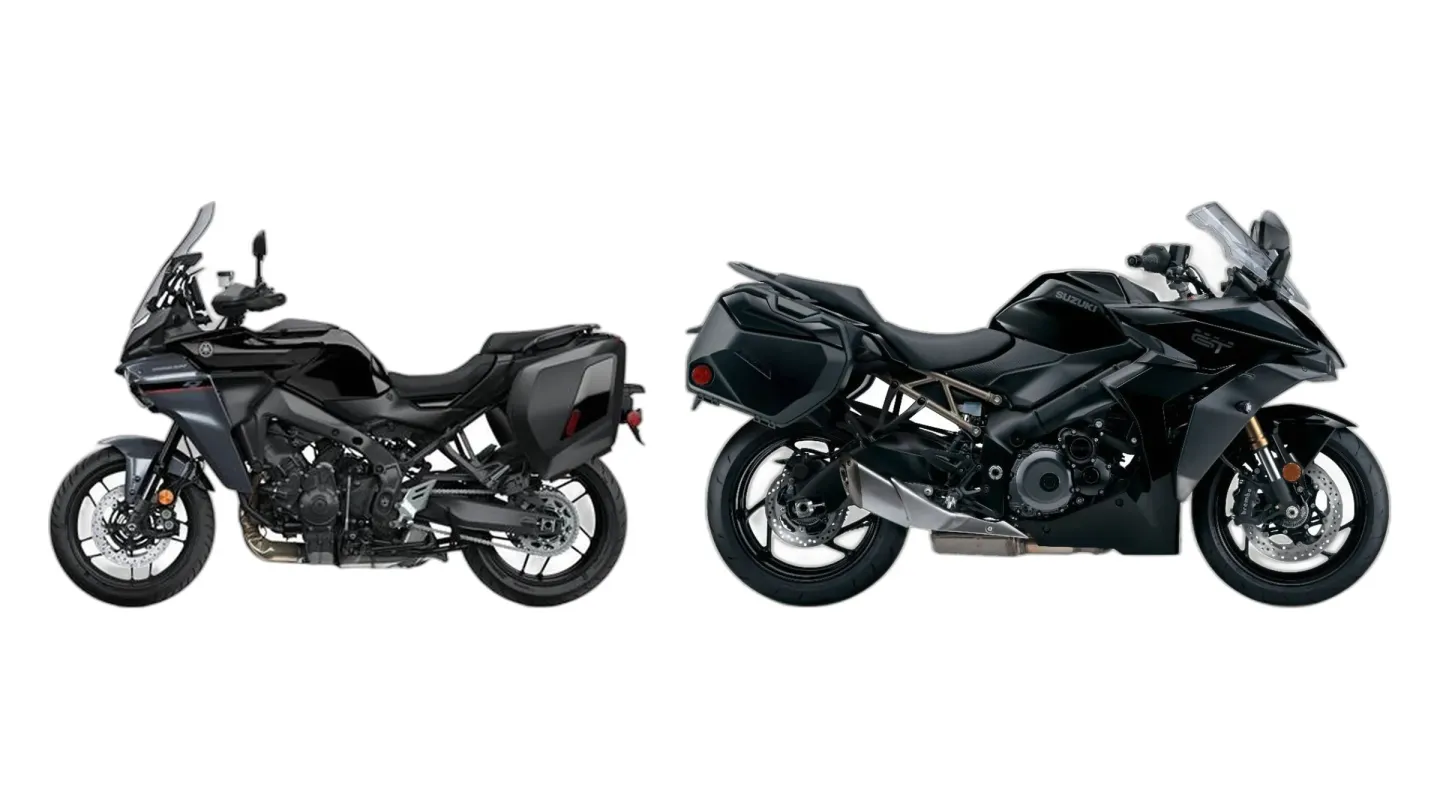
Yamaha Tracer 9 (MY2021) vs Suzuki GSX-S1000GT (MY2022)
Yamaha Tracer 9 vs Suzuki GSX-S1000GT: which one you'd rather spend the big miles on.
Rolling on from low revs, the Yamaha Tracer 9's triple digs in at once and doesn't ease off until it's howling through the intake near the top. The Suzuki GSX-S1000GT keeps more muscle waiting as revs climb.
So which one do you buy?
The Tracer 9 has the edge if…
Comfortable long-distance riding
Inches ahead: Tracer 9
On a long day in the saddle, the Tracer 9 comes out a little ahead. Ride both before you decide.
Which one's the smarter buy
Even on value
At these used prices, neither bike is the clear better buy for the money.
What makes each one tick
Tracer 9
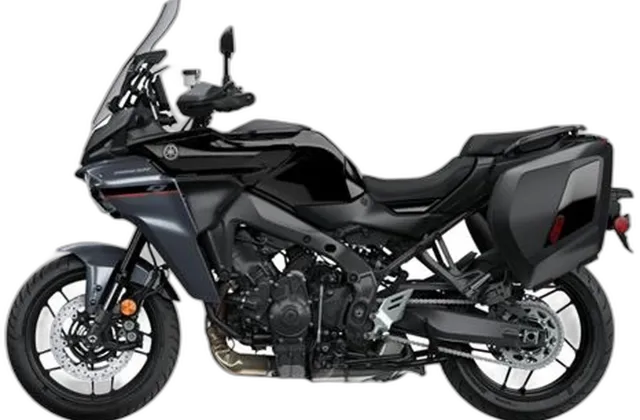
The Tracer 9 wears a full touring fairing, yet its 463 lb (210 kg) chassis doesn't fight a quick flick from one bend to the next. Corner entry doesn't take much bar. On the Blue Ridge Parkway, upright bars and a plush seat mean you'll still feel fresh at the end of a full day. The passenger seat's just as kind on long days.
GSX-S1000GT
The GSX-S1000GT seats its rider upright behind a wide bar, in a neutral posture that doesn't wear thin by evening. At a steady sixth-gear cruise, there's a buzz in the grips that blurs the mirrors. The stock screen's short, and taller riders can't dodge buffeting at highway speed. The low pegs leave nothing aching.
The Voice of Experience

What actually separates them
- The Tracer 9 has the lower wet weight: 463 lb (210 kg) vs 498 lb (226 kg).
- The GSX-S1000GT makes more peak power: 152 hp (112 kW) vs 119 hp (88 kW).
- The GSX-S1000GT makes more peak torque: 78 lb-ft (106 Nm) vs 69 lb-ft (93 Nm).
Which one for the way you ride
A confidence-building first motorcycle
Both miss here
Learning on either of these is the hard way. A gentler bike will make you a better rider sooner.
Call it even on commuting, twisty roads, and running costs. Choose on fit, price and the one that makes you grin.
Who each one is built for
What's good, and what you'll live with
Tracer 9
What owners say
Strengths
- Agile and lightweight handling
- Punchy CP3 triple engine
- All-day comfort for two
- Excellent value for money
GSX-S1000GT
What owners say
Strengths
- All-day touring comfort
- Comprehensive standard electronics
- Reliable engine reputation
Trade-offs
- Short, non-adjustable standard windscreen
- Mid-RPM vibration band
- Paint / fastener durability over winter
- Snatchy throttle on overrun
- Suspension limits when pushed
Known problems to check before you buy
Tracer 9
No confirmed faults on file yet. That's not the same as fault-free.
GSX-S1000GT
- Abrupt off-on throttle response on overrun The ECU cuts fuel 100 % on overrun for emissions compliance, then reapplies it abruptly when the rider re-opens the throttle. Most noticeable in city / low-gear riding and on corner exits. Owner-side workarounds include TPS reset, Booster Plug, O2 eliminators, and Woolich ECU reflash.
- Helmet-level turbulence above high speeds with the standard screen The windscreen's airflow sends turbulence to helmet level at sustained highway speeds, and taller riders feel it most. The Travel Edition comes from the factory with the taller touring screen and an adjustable windshield. This reduces the buffeting but does not fully remove it, so some riders still fit an aftermarket touring screen with a different profile.
- Buzzy mid-RPM vibration band at 6th-gear cruise speeds Vibration intensifies in a roughly 5,000–6,500 rpm band, which coincides with typical 6th-gear cruise speeds in the GT's short-geared final drive. Mirror blur is widely reported; comfort impact varies by rider. Owner-side workarounds: heavier bar-end weights, BB-fill, aftermarket pegs, or final-drive sprocket change (+1 front or −1 rear) to drop cruise rpm. Suzuki characterises the behaviour as "normal" — no formal action.
- mySPIN connectivity dropouts and pairing failures The Bosch mySPIN smartphone-mirroring link to the TFT display is unreliable. After the ignition is switched off and on, it can fail to reconnect, and pairing sometimes stalls before it completes, especially on some iPhones. While mirrored, the phone heats up and its battery drains quickly. Navigation and third-party apps can crash or lose audio when shown on the bike's screen. Once mySPIN takes over the connection, a paired Bluetooth helmet intercom may also need to be paired again.
- Pannier lock failures and inner-bag fitment / wear issues Multi-owner forum reports of locks failing or falling out of the OEM pannier housings, OEM inner bags fitting poorly (≈ 0.3" gap each side), and zipper / fabric wear within the first 1,000–2,000 miles. Pannier plastics scratch where dust collects between bag and case. Travel Edition–specific because the cases are factory-fitted on this trim.
- Cam-chain tensioner rattle on hot start Deep tapping / rattling for ≈ 3–5 seconds on hot starts, originating at the cam-chain-tensioner side of the cylinder head; subsides once oil pressure builds. Suzuki dealers have characterised the noise as "normal" while quietly replacing tensioners under warranty in some markets. The tensioner design was reportedly revised mid-cycle. No engine failures attributable to the rattle have been reported.
- Cruise control fails to set or drops out with dash icon blinking 2–3 times Cruise control refuses to set, or drops out after activation, with the dash icon blinking 2 or 3 times. Owner-side workarounds: only set cruise within the first few minutes of a ride; cycle the ignition off-on to reset. Some dealers have replaced the brake-light switch or adjusted clearance with mixed results. No formal TSB / recall identified as of 2026-05-06.
- Thin paint in places; fasteners and connectors corrode in winter without diligent cleaning Thin paint and fasteners/connectors that corrode quickly when the bike sees winter use without diligent washing. Tank-side paint wears where rider knees, belt, or boots rub — reflected in aftermarket tank-pad demand (Eazi-Grip, Motografix). Cosmetic, not structural.
What they cost used
These prices compare a 4-year-old Tracer 9 with a 4-year-old GSX-S1000GT.
- Tracer 9
- about $10,600
- GSX-S1000GT
- about $10,200
What they share
- Seat height
- 31.9 in (810 mm)
- Cooling
- Liquid-cooled
- Gearbox
- 6-speed
- Final drive
- Chain
- Front tire
- 120/70-17
Where the spec sheets split
| Tracer 9 | GSX-S1000GT | |
|---|---|---|
| Wet weight | 463 lb (210 kg) | 498 lb (226 kg) |
| Tracer 9 | GSX-S1000GT | |
|---|---|---|
| Displacement | 890 cc | 999 cc |
| Engine | Inline-three | Inline-four |
| Power | 119 hp (88 kW) | 152 hp (112 kW) |
| Peak power at | 10,000 rpm | 11,000 rpm |
| Torque | 69 lb-ft (93 Nm) | 78 lb-ft (106 Nm) |
| Peak torque at | 7,000 rpm | 9,250 rpm |
| Tracer 9 | GSX-S1000GT | |
|---|---|---|
| Fuel economy | 47 mpg (US) / 5 L/100 km | 39 mpg (US) / 6.1 L/100 km |
| Fuel capacity | 4.8 US gal (18 L) | 5.0 US gal (19 L) |
| Tracer 9 | GSX-S1000GT | |
|---|---|---|
| Rear tire | 180/55-17 | 190/50-17 |
| Wheelbase | 59.1 in (1500 mm) | 57.5 in (1460 mm) |
What comes fitted, what costs extra
| Tracer 9 | GSX-S1000GT | |
|---|---|---|
| Cornering ABS | Standard | Not offered |
| Electronic Suspension | Option | Not offered |
| Manually Adjustable Front Suspension | Not offered | Standard |
| Quickshifter | Option | Standard |
| Smartphone Connectivity | Option | Standard |
| Navigation | Not offered | Option |
| USB Charging Port | Not offered | Standard |
| Tire Pressure Monitoring (TPMS) | Option | Not offered |
| Luggage System | Option | Standard |
Head to head, area by area
Both bikes on the same scale, one area at a time.