By NastyNils·
Motorcycle comparison · Sport Tourer
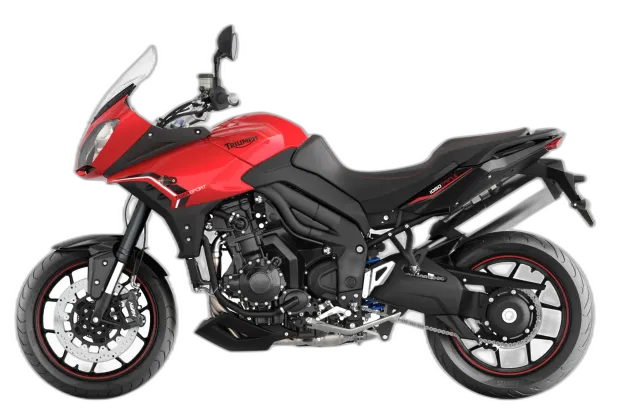
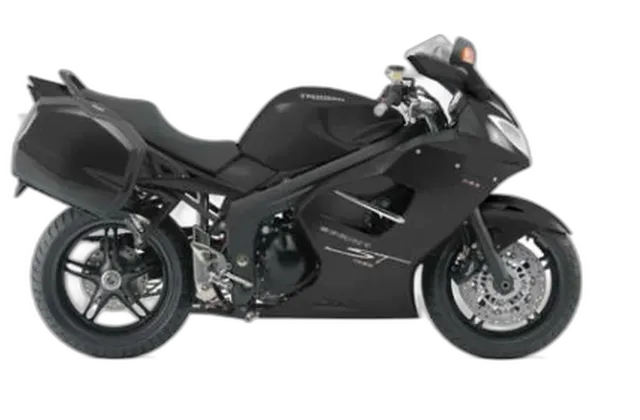
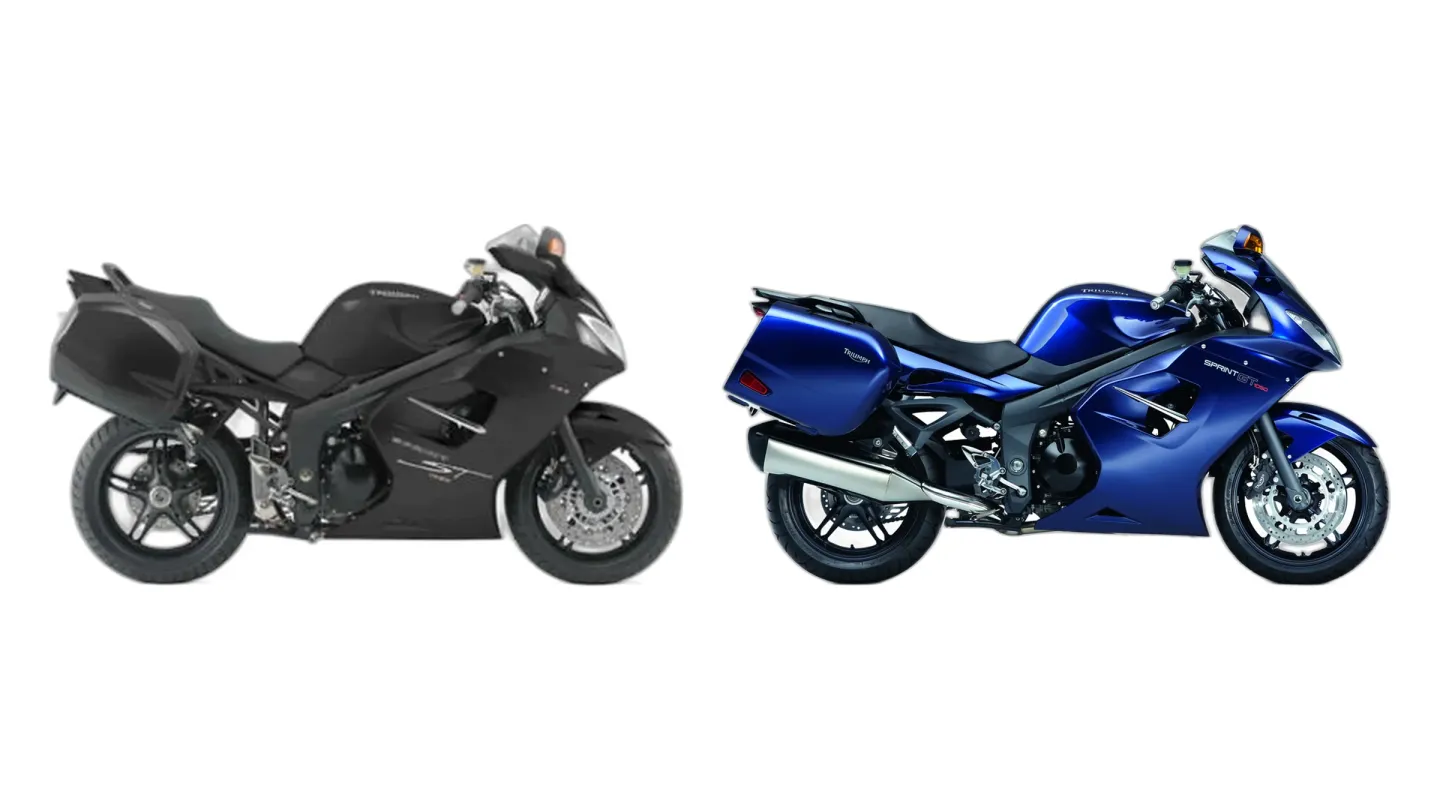
Triumph Sprint ST (MY2005) vs Sprint GT (MY2010)
Triumph Sprint ST vs Sprint GT: which one's easier to live with on a long trip.
You'll sink into the Triumph Sprint ST's padded seat, yet its chassis still hooks into a bend with appetite. The Triumph Sprint GT's saddle doesn't heat up, since the exhaust carries its warmth away from you. Your knees don't stiffen after a full day on it.
So which one do you buy?
The Sprint ST has the edge if…
Sporty riding on twisty roads
Inches ahead: Sprint ST
On a twisty road, the Sprint ST edges ahead. It's down to stronger brakes and a sportier chassis. Not by enough to settle it alone.
The Sprint GT has the edge if…
Comfortable long-distance riding
Narrow edge: Sprint GT
For a day of interstate and back roads, the Sprint GT makes a little more sense. Sit on both, because the gap is modest.
What makes each one tick
Sprint ST
The Sprint ST's triple pulls thick from the middle of the rev range, then there's more coming hard toward the top. Corner entry comes quick off the bars, and the bike carves through with real eagerness. The front won't drift on interstates. Up top, the pipe snarls like a race bike's.
Sprint GT
Hours of scenery slide past the Sprint GT's fairing, and the bike doesn't stir up drama along the way. The exhaust routes through a conventional layout that pulls heat away from the rider and passenger. The cases are connected by a rod that lets them flex at the mounting points rather than transmitting vibration hard into the chassis. Packed cases don't upset the tail. On the Blue Ridge Parkway, the triple answers each throttle opening straight away from its single map. The grip gets the same answer every time.
Nils rode the Sprint GT in Scotland in 2010 (1000PS test report).
The Voice of Experience

What actually separates them
- The Sprint ST has the lower wet weight: 525 lb (238 kg) vs 591 lb (268 kg).
- ABS: standard on the Sprint GT, option on the Sprint ST.
- Luggage System: standard on the Sprint GT, option on the Sprint ST.
Which one for the way you ride
A confidence-building first motorcycle
Not their thing
If this is your first motorcycle, keep looking. Neither one makes learning easy.
Look at commuting and running costs and you'll find two bikes doing the same job equally well. Fit is what breaks the tie.
Who each one is built for
What's good, and what you'll live with
Sprint ST
What owners say
Strengths
- Characterful and gutsy triple engine
- Superb long-distance comfort
- Well-balanced sport-touring handling
Sprint GT
Strengths
- One Map, No Menus
- All-Day Riding Triangle
- Panniers Built For Real Gear
- Wind Protection That Holds
- Torquey, characterful inline‑triple engine
Trade-offs
- Suspension Tops Out On Rough Roads
- Firm Pull For Hard Stops
- Grease The Chain Adjuster
- Linkage Pivots Corrode
- Sluggish, uninspiring handling
Known problems to check before you buy
Sprint ST
- Rear suspension drag link corrosion The drag link (dog bone) in the rear suspension is susceptible to corrosion, especially in wet climates, which can lead to failure if unchecked.
- Coolant hose leak (Recall: NHTSA 05V-276) Recall 05V276000 The coolant bypass hose on the left side can leak, causing engine overheating and potential serious damage. A recall was issued to replace the hose and add a securing clip to the rear brake hose.
- Charging system failure The regulator/rectifier is prone to failure, potentially leaving the rider stranded with a dead battery. Symptoms include dimming lights or no-start.
- Composite fuel tank swelling Ethanol in fuel can cause early composite tanks to swell, leading to paint cracking and fitment issues. Later steel tanks resolve this.
Sprint GT
- Regulator/rectifier failures (less common than on ST) Some owners report premature regulator‑rectifier failure causing charging system issues; the GT’s unit is improved over the ST, but occasional failures still occur.
What they share
- Seat height
- 32.1 in (815 mm)
- Displacement
- 1050 cc
- Engine
- Inline-three
- Cooling
- Liquid-cooled
- Fuel capacity
- 5.3 US gal (20 L)
- Gearbox
- 6-speed
- Fork
- Telescopic
- Front brake
- 320 mm
- Front tire
- 120/70-17
- Rear tire
- 180/55-17
Where the spec sheets split
| Sprint ST | Sprint GT | |
|---|---|---|
| Wet weight | 525 lb (238 kg) | 591 lb (268 kg) |
| Sprint ST | Sprint GT | |
|---|---|---|
| Power | 124 hp (93 kW) | 128 hp (96 kW) |
| Peak power at | 9,250 rpm | 9,200 rpm |
| Torque | 77 lb-ft (104 Nm) | 80 lb-ft (108 Nm) |
| Peak torque at | 5,000 rpm | 6,300 rpm |
What comes fitted, what costs extra
| Sprint ST | Sprint GT | |
|---|---|---|
| ABS | Option | Standard |
| Luggage System | Option | Standard |
Head to head, area by area
Both bikes on the same scale, one area at a time.