By NastyNils·
Motorcycle comparison · Sport Tourer
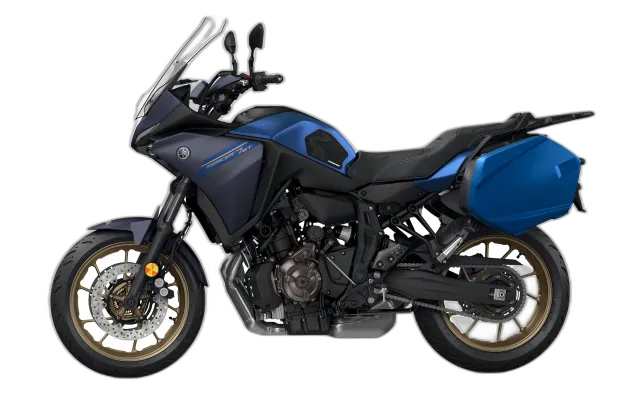
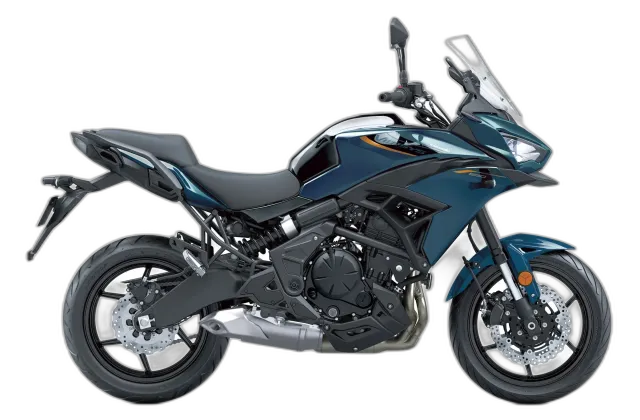
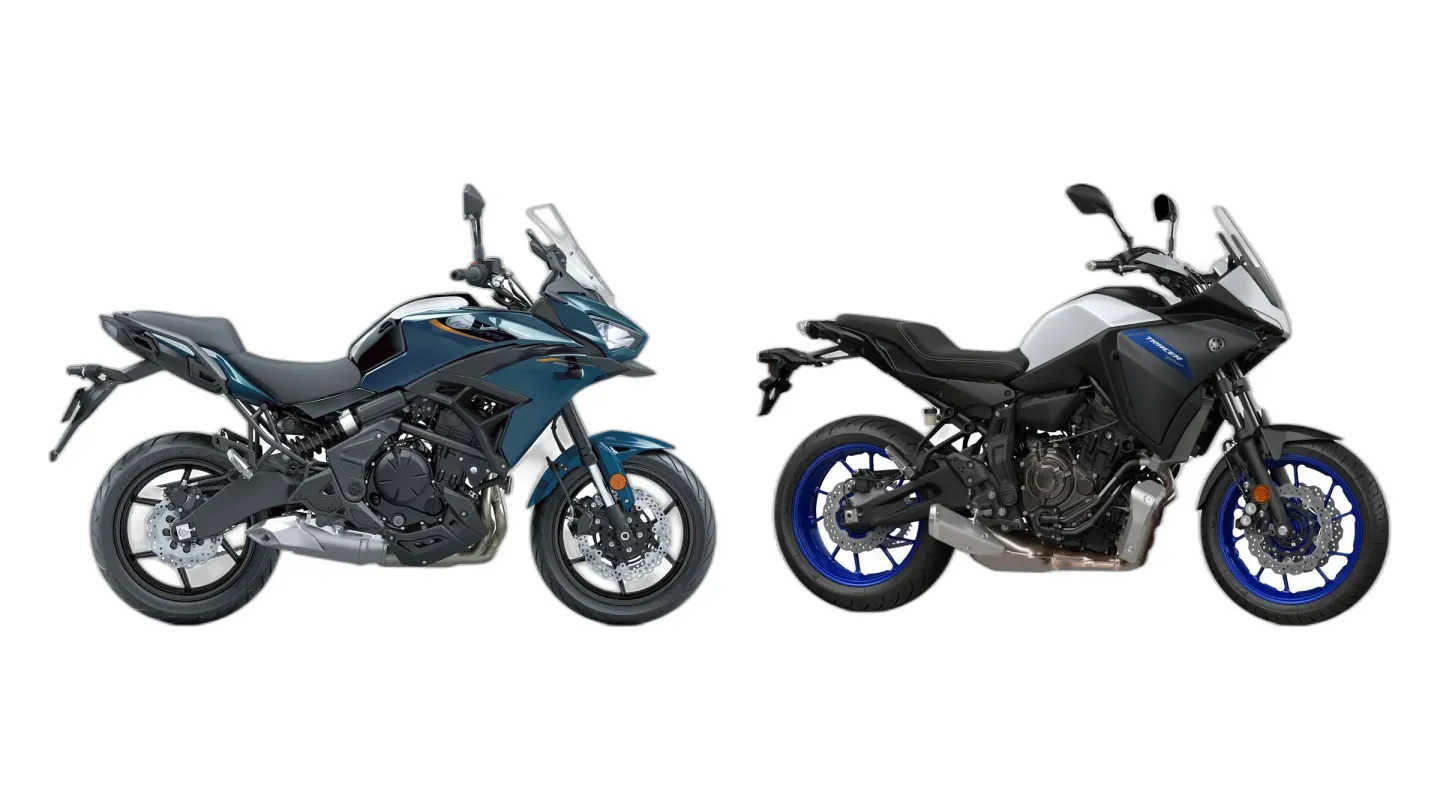
Kawasaki Versys 650 (LE E) vs Yamaha Tracer 700 (RM14B)
Kawasaki Versys 650 vs Yamaha Tracer 700: which one you'd rather spend the big miles on.
You'll feel the Kawasaki Versys 650's wide bars tip it into the bend off a light push, and it doesn't fall in or stand up. The Yamaha Tracer 700 turns in off a fingertip of steering input, and its nose drops toward the apex. It stays settled on its line once leaned over.
So which one do you buy?
The Versys 650 has the edge if…
Keeping running costs low
Narrow edge: Versys 650
Running costs lean slightly toward the Versys 650. A well-kept example of either matters more.
The Tracer 700 has the edge if…
Daily commuting & city riding
By a nose: Tracer 700
For the Monday-to-Friday grind, the Tracer 700 pulls a nose in front. Your own commute could easily flip it.
Sporty riding on twisty roads
Slight edge: Tracer 700
Through a string of corners, the Tracer 700 feels a little more eager. The gap is small, so ride both.
What makes each one tick
Versys 650
There's almost no buzz in the Versys 650's grips, and its twin spins clean from low revs right to the top. Broken pavement barely jolts the bike, because the suspension gives and soaks up each hit. The seat swallows cross-country days.
Nils rode the Versys 650 in the Canary Islands in 2020 (NastyNils Testride).
Tracer 700
Low in the revs, the Tracer 700's twin hits with real torque. The seat and the handlebar spread don't wear you out over a long day. Wound out, the twin keeps pulling.
Nils rode the Tracer 700 in the Canary Islands in 2020 (NastyNils Testride).
The Voice of Experience

What actually separates them
- The Tracer 700 has the lower wet weight: 432 lb (196 kg) vs 476 lb (216 kg).
- The Tracer 700 makes more peak power: 75 hp (55 kW) vs 69 hp (51 kW).
- The Tracer 700 makes more peak torque: 50 lb-ft (68 Nm) vs 47 lb-ft (64 Nm).
Which one for the way you ride
Look at long days and a first bike and you'll find two bikes doing the same job equally well. Fit is what breaks the tie.
Who each one is built for
What's good, and what you'll live with
Versys 650
What owners say
Strengths
- Agile, neutral handling
- Butter‑smooth power delivery
Tracer 700
What owners say
Strengths
- Playful and flexible CP2 engine
- Lightweight and agile handling
- Comfortable ergonomics and adjustable screen
- Outstanding value for money
Trade-offs
- Ineffective wind protection and buffeting
What they share
- Engine
- Parallel twin
- Cooling
- Liquid-cooled
- Gearbox
- 6-speed
- Final drive
- Chain
- Front tire
- 120/70-17
Where the spec sheets split
| Versys 650 | Tracer 700 | |
|---|---|---|
| Seat height | 33.1 in (840 mm) | 32.9 in (835 mm) |
| Wet weight | 476 lb (216 kg) | 432 lb (196 kg) |
| Versys 650 | Tracer 700 | |
|---|---|---|
| Displacement | 649 cc | 689 cc |
| Power | 69 hp (51 kW) | 75 hp (55 kW) |
| Torque | 47 lb-ft (64 Nm) | 50 lb-ft (68 Nm) |
| Versys 650 | Tracer 700 | |
|---|---|---|
| Fuel economy | 47 mpg (US) / 5.04 L/100 km | 50 mpg (US) / 4.7 L/100 km |
| Fuel capacity | 5.5 US gal (21 L) | 4.5 US gal (17 L) |
| Versys 650 | Tracer 700 | |
|---|---|---|
| Fork | Upside-down (USD) | Telescopic |
| Front brake | 300 mm | 282 mm |
| Rear tire | 160/60-17 | 180/55-17 |
What comes fitted, what costs extra
| Versys 650 | Tracer 700 | |
|---|---|---|
| LED Headlight | Not offered | Standard |
Head to head, area by area
Both bikes on the same scale, one area at a time.