By NastyNils·
Motorcycle comparison · Sport Tourer
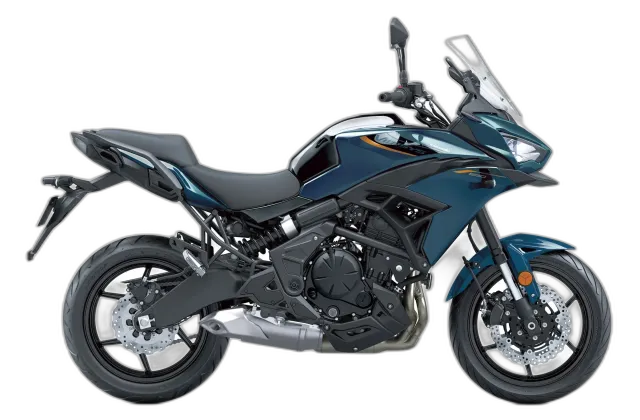
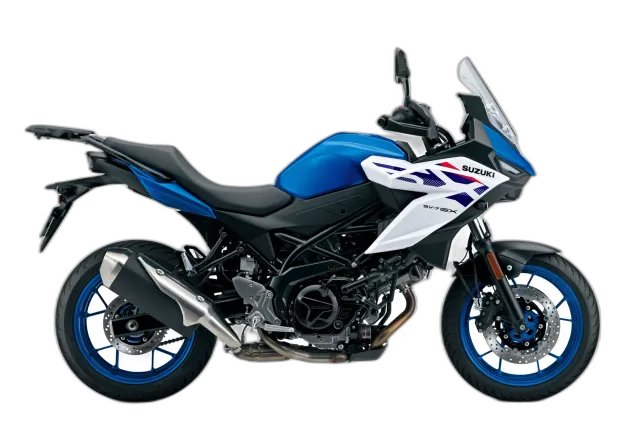
Kawasaki Versys 650 (LE E) vs Suzuki SV-7GX (MY2026)
Kawasaki Versys 650 vs Suzuki SV-7GX: long days, loaded bags, one choice to make.
You'll feel the Kawasaki Versys 650 spin up from low revs with barely a buzz reaching your hands. Roll on the Suzuki SV-7GX's throttle and there's a hearty shove right from the bottom. Its V-twin thumps and barks through every gear.
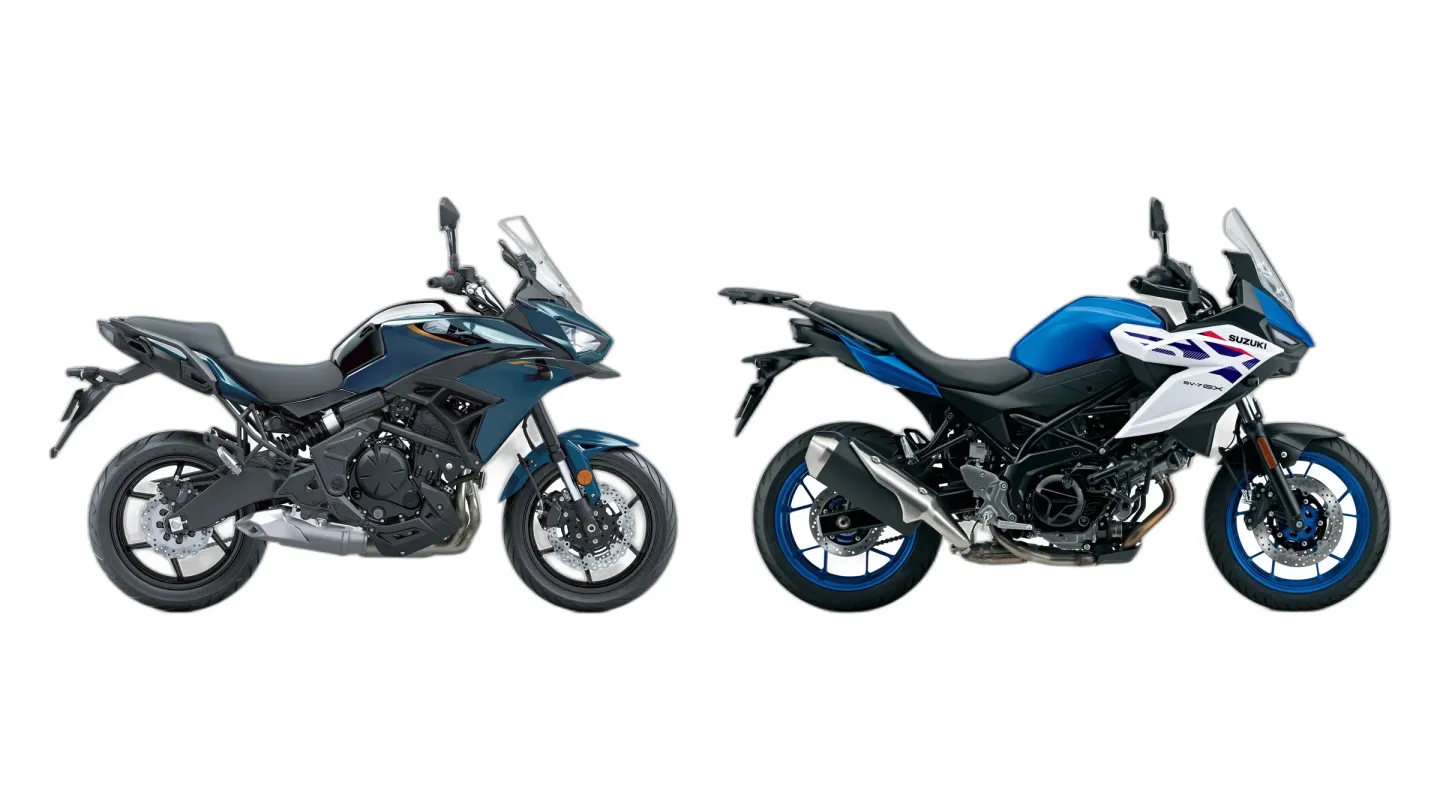
So which one do you buy?
The SV-7GX has the edge if…
Daily commuting & city riding
By a nose: SV-7GX
On the way to work, the SV-7GX asks a little less of you. Close enough that the test ride should settle it.
Sporty riding on twisty roads
A touch ahead: SV-7GX
On a winding road, the SV-7GX comes out a touch ahead. You wouldn't bet much on a gap like that.
A confidence-building first motorcycle
Small edge: SV-7GX
For your first season, the SV-7GX makes slightly more sense. Fit and confidence at a standstill still come first.
What makes each one tick
Versys 650
The Versys 650 keeps you upright on a padded seat while its suspension soaks up broken pavement mile after mile. On the Blue Ridge Parkway, it doesn't resist corner entry, and the front tips in and holds a neutral line. At highway speed, it tracks straight. The wide bar flicks it through town traffic.
Nils rode the Versys 650 in the Canary Islands in 2020 (NastyNils Testride).
SV-7GX
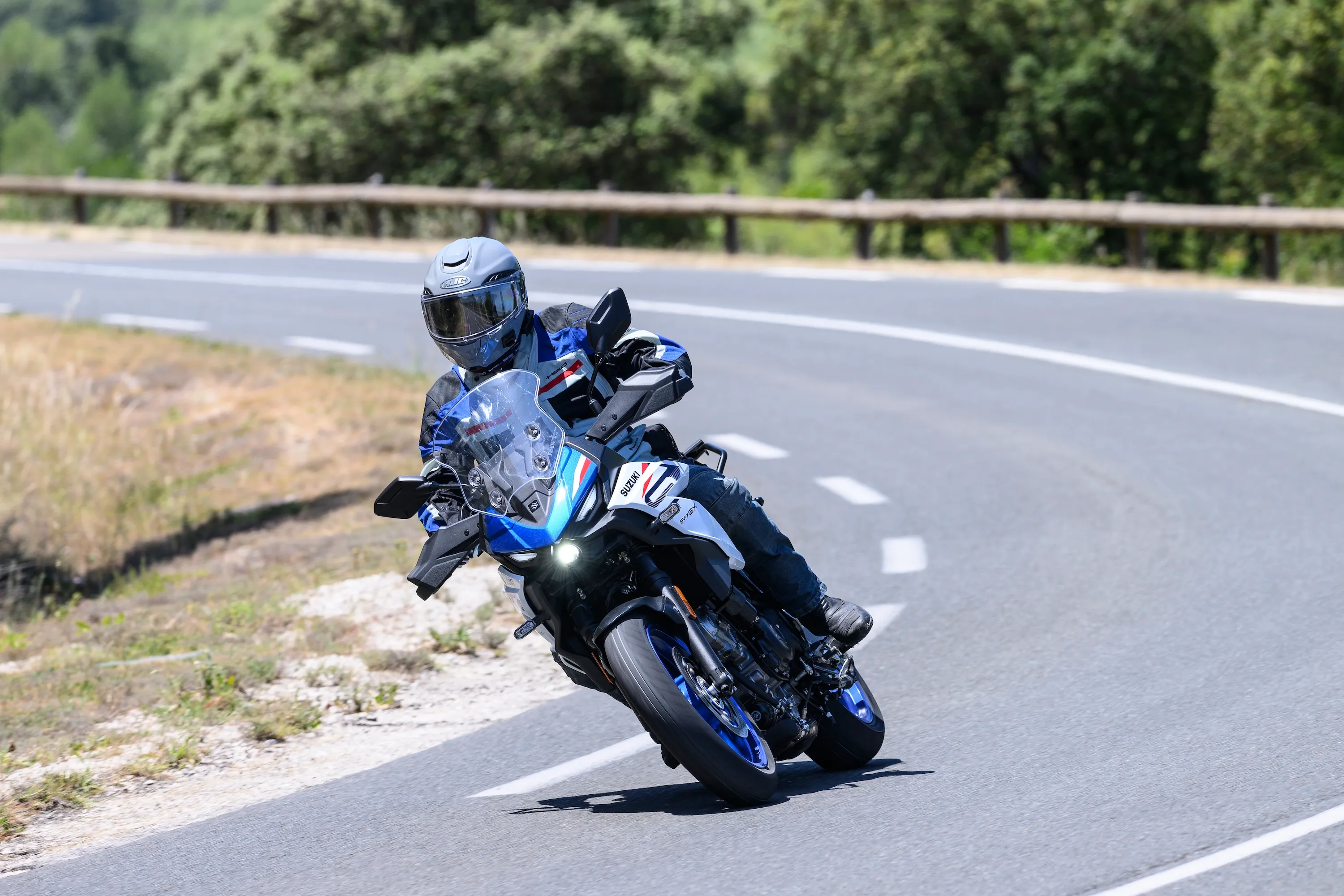
Highway wind parts around the SV-7GX's fairing, and its hand guards fend off cold rain. There's little stretch down from its 31.3 in (795 mm) seat at a stop. The rider finishes long stages fresh.
Nils rode the SV-7GX in 2026 (NastyNils Testride).
The Voice of Experience

What actually separates them
- The SV-7GX has the lower seat: 31.3 in (795 mm) vs 33.1 in (840 mm).
- The SV-7GX has the lower wet weight: 465 lb (211 kg) vs 476 lb (216 kg).
- The SV-7GX makes more peak power: 73 hp (54 kW) vs 69 hp (51 kW).
Which one for the way you ride
These two run dead level on long days and running costs. Sit on both in the showroom and trust what your body says.
Who each one is built for
What's good, and what you'll live with
Versys 650
What owners say
Strengths
- Agile, neutral handling
- Butter‑smooth power delivery
SV-7GX
What owners say
Strengths
- Torquey, characterful V-twin engine
- Compact, unintimidating dimensions
Trade-offs
- No cruise control
What they share
- Cooling
- Liquid-cooled
- Torque
- 47 lb-ft (64 Nm)
- Gearbox
- 6-speed
- Final drive
- Chain
- Front tire
- 120/70-17
- Rear tire
- 160/60-17
Where the spec sheets split
| Versys 650 | SV-7GX | |
|---|---|---|
| Seat height | 33.1 in (840 mm) | 31.3 in (795 mm) |
| Wet weight | 476 lb (216 kg) | 465 lb (211 kg) |
| Versys 650 | SV-7GX | |
|---|---|---|
| Displacement | 649 cc | 645 cc |
| Engine | Parallel twin | 90° V-twin |
| Power | 69 hp (51 kW) | 73 hp (54 kW) |
| Versys 650 | SV-7GX | |
|---|---|---|
| Fuel capacity | 5.5 US gal (21 L) | 4.6 US gal (17.4 L) |
| Versys 650 | SV-7GX | |
|---|---|---|
| Fork | Upside-down (USD) | Telescopic |
| Front brake | 300 mm | 290 mm |
What comes fitted, what costs extra
| Versys 650 | SV-7GX | |
|---|---|---|
| Traction Control | Not offered | Standard |
| Ride Modes | Not offered | Standard |
| Manually Adjustable Front Suspension | Standard | Not offered |
| Quickshifter | Not offered | Standard |
| Slipper Clutch | Not offered | Standard |
| TFT Display | Not offered | Standard |
| Smartphone Connectivity | Not offered | Standard |
| Navigation | Not offered | Standard |
| USB Charging Port | Not offered | Standard |
| LED Headlight | Not offered | Standard |
Head to head, area by area
Both bikes on the same scale, one area at a time.