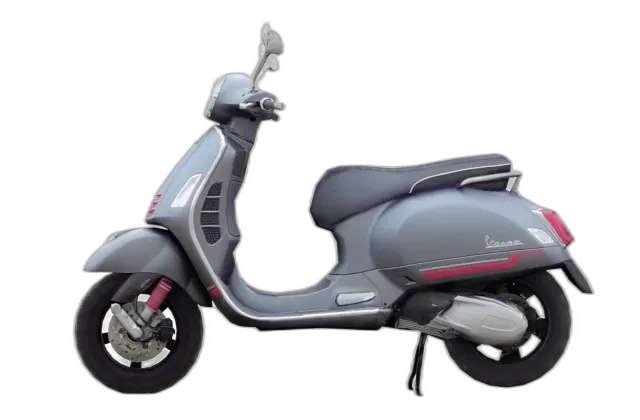
By NastyNils·
Motorcycle comparison · Scooter
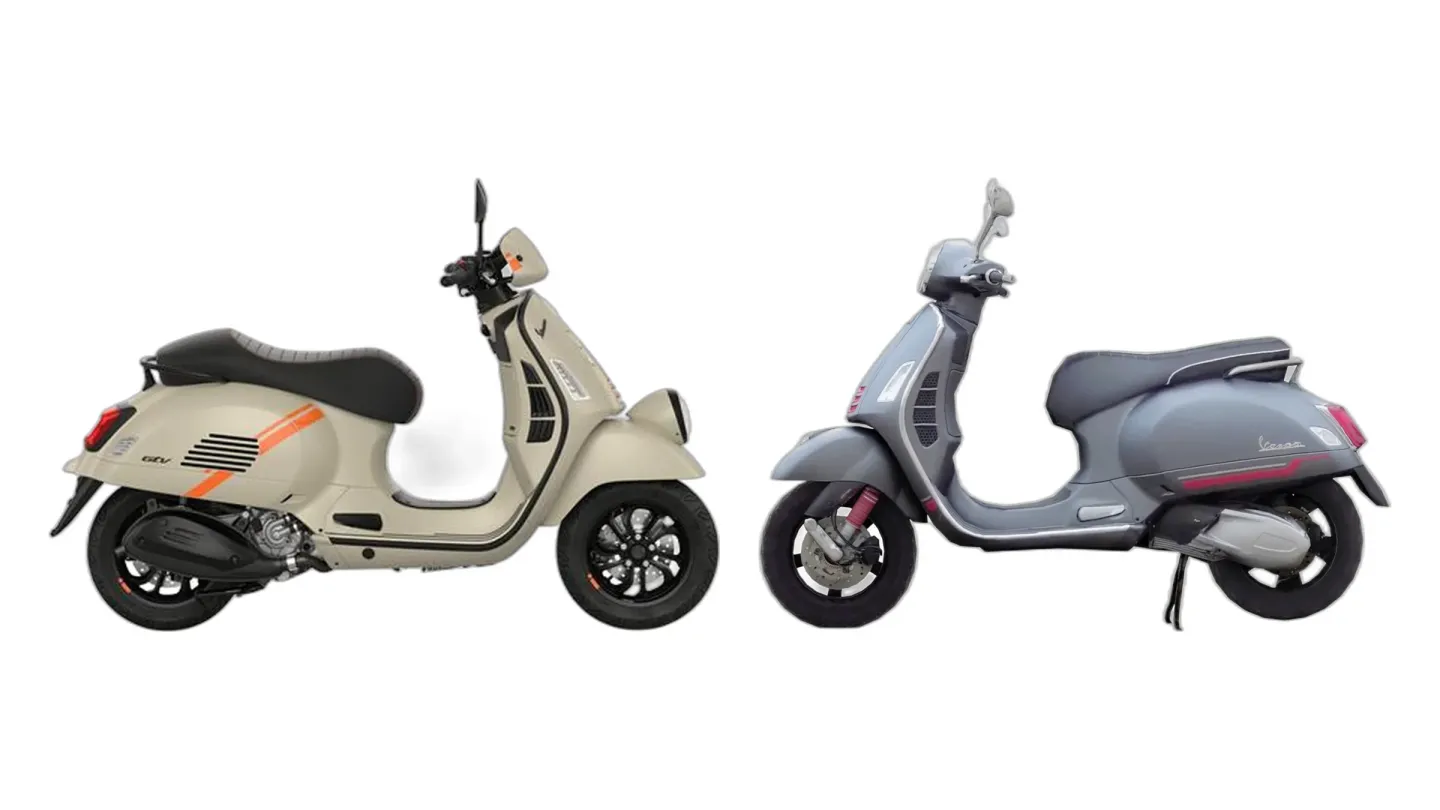
Vespa GTV 300 (MY2024) vs GTS 300 (MY2022)
Vespa GTV 300 vs GTS 300: which one's easier to live with every day.
At the first bend the Vespa GTV 300 leans in and doesn't budge from its line, even as the turns keep coming. On the Vespa GTS 300, the bars go light the instant you tip it in. It's flicking the other way on a fingertip's nudge.
So which one do you buy?
The GTS 300 has the edge if…
A confidence-building first motorcycle
By a nose: GTS 300
As a starter bike, the GTS 300 comes out a touch ahead. Small enough that a better fit on the other one would outweigh it.
Daily commuting & city riding
Inches ahead: GTS 300
The GTS 300 edges it for the daily grind. That comes from easier maneuvering in tight spots. It's a small gap, not a reason on its own.
Which one's the smarter buy
No clear advantage
The GTV 300 costs less, but that gap doesn't make it the clear better buy. Neither bike wins on value alone.
What makes each one tick
GTV 300
Through a run of twisties, the GTV 300's chassis stays settled and the fork doesn't wander. The throttle wakes the liquid-cooled single with a punchy pull that's happiest on city streets and backroads. In heavy stop-and-go traffic, its 353 lb (160 kg) heft swings around at walking pace. Its twin front discs bite hard.
GTS 300
On San Francisco's broken pavement, the GTS 300's suspension soaks up the hits, and the steering takes almost no effort through gaps in traffic. The single pulls hard from a standstill, and there's still enough speed left for highway cruising. The brake lever builds its bite progressively before strong stopping power takes over. The padded seat outlasts the city.
The Voice of Experience

What actually separates them
- The GTS 300 has the lower wet weight: 342 lb (155 kg) vs 353 lb (160 kg).
- TFT Display: option on the GTS 300, not offered on the GTV 300.
- Keyless System: standard on the GTV 300, not offered on the GTS 300.
Which one for the way you ride
Comfortable long-distance riding
Neither one fits
Big miles aren't where either one shines. You'll be watching for the next rest stop.
On twisty roads and running costs, these two are a wash. That's where your budget and your inseam get the final say.
Who each one is built for
What's good, and what you'll live with
GTV 300
What owners say
Strengths
- Peppy and enjoyable engine
- Planted and stable handling
- Comfortable and accessible seating
- Eye-catching retro design
Trade-offs
- Noticeable weight in traffic
GTS 300
What owners say
Strengths
- Agile and comfortable urban ride
- Lively and torquey engine
- Strong braking performance
- Timeless Italian style
What they cost used
These prices compare a 2-year-old GTV 300 with a 2-year-old GTS 300.
- GTV 300
- about $5,900
- GTS 300
- about $7,500
At two years old, the Vespa GTV 300 sits around $5,900 while the Vespa GTS 300 runs about $7,500. That's a $1,600 gap in the GTV 300's favor. These are US market estimates, not live listings.
What they share
- Seat height
- 31.1 in (790 mm)
- Displacement
- 278 cc
- Engine
- Single-cylinder
- Cooling
- Liquid-cooled
- Power
- 24 hp (18 kW)
- Peak power at
- 8,250 rpm
- Torque
- 19 lb-ft (26 Nm)
- Peak torque at
- 5,250 rpm
- Fuel capacity
- 2.2 US gal (8.5 L)
- Front tire
- 120/70-12
- Rear tire
- 130/70-12
Where the spec sheets split
| GTV 300 | GTS 300 | |
|---|---|---|
| Wet weight | 353 lb (160 kg) | 342 lb (155 kg) |
| GTV 300 | GTS 300 | |
|---|---|---|
| Fuel economy | 71 mpg (US) / 3.3 L/100 km | 74 mpg (US) / 3.2 L/100 km |
What comes fitted, what costs extra
| GTV 300 | GTS 300 | |
|---|---|---|
| TFT Display | Not offered | Option |
| Keyless System | Standard | Not offered |
Head to head, area by area
Both bikes on the same scale, one area at a time.