By NastyNils·
Motorcycle comparison · Retro Classic vs Hyper Naked
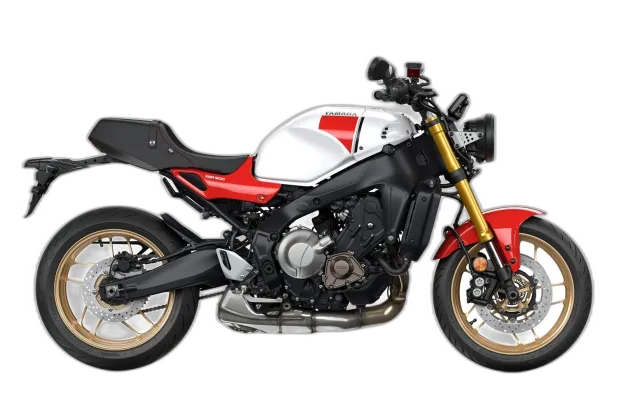
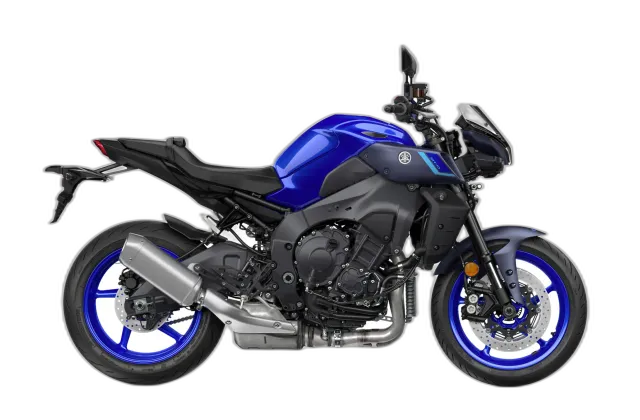
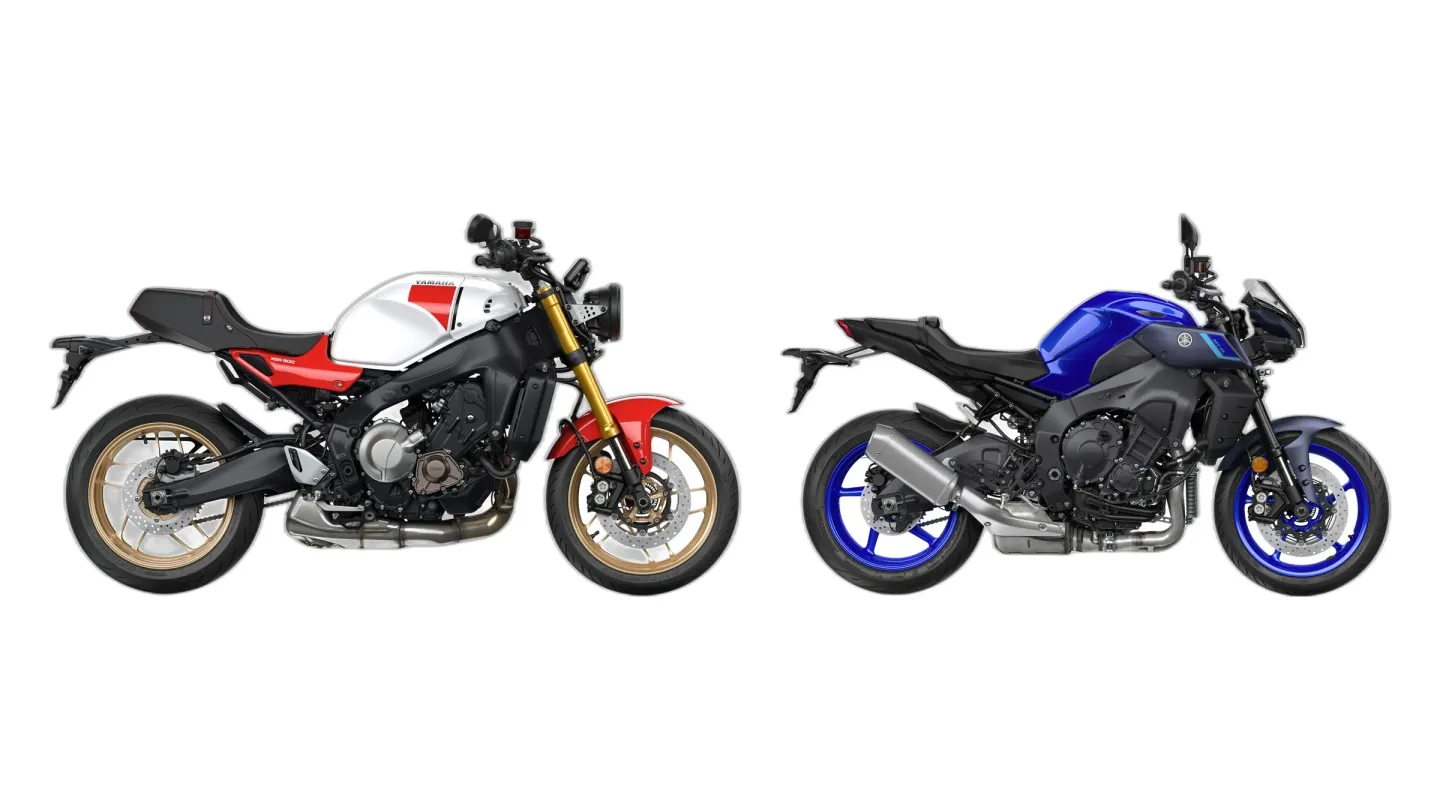
Yamaha XSR900 (RN80) vs MT-10 (RN78)
Yamaha XSR900 vs MT-10: where they split, and which one to buy.
You'll feel it first in the throttle, where the Yamaha XSR900's triple spins up with the polish of an engine that's had years of sorting. The Yamaha MT-10's crossplane four puts a big-twin shove under that same wrist from low revs. Its intake note growls deep and uneven.
So which one do you buy?
Buy the XSR900 if…
Keeping running costs low
Clear edge: XSR900
If every service bill hurts, the XSR900 is your bike. It's the easier one on your wallet.
Character, looks and sound
Clear winner: XSR900
For style and sound, the XSR900 comes out clearly ahead. That comes from more retro style and a purer look. Trust your eyes on this one.
The MT-10 has the edge if…
Sporty riding on twisty roads
By a nose: MT-10
The MT-10 is a touch more fun when the road starts bending. The difference is better suspension and harder acceleration.
Which one's the smarter buy
Apples and oranges
These bikes sit in different classes, so there's no clear better buy for the money. The XSR900 costs less, but that's a trade-off between a retro classic and a hyper naked.
What makes each one tick
XSR900
From stop-and-go traffic to a tight circuit, the XSR900's motor pulls hard wherever you're pointing it. Any crack of the throttle finds drive waiting, and there's no searching the gearbox for the right ratio. On the Twisted Sisters, the chassis strings one bend into the next. The bars hold straight at speed.
Nils rode the XSR900 in Austria and Montenegro in 2024 (NastyNils Testride).
MT-10
Short-shifting the MT-10 through town costs it nothing, since the crank hooks up and pulls from low rpm. The front brake doesn't bite hard at first. Its lever says little about grip. The fork swallows a sharp bump and settles.
The Voice of Experience

What actually separates them
- The XSR900 has the lower seat: 31.9 in (810 mm) vs 32.9 in (835 mm).
- The XSR900 has the lower wet weight: 425 lb (193 kg) vs 467 lb (212 kg).
- The MT-10 makes more peak power: 165 hp (121 kW) vs 119 hp (88 kW).
Which one for the way you ride
Traveling with luggage
Not their thing
For a week on the road with gear, both fall short. A proper tourer will carry it with far less fuss.
Nothing splits them on commuting. Ride both back to back and the decision usually makes itself.
Who each one is built for
What's good, and what you'll live with
XSR900
Strengths
- Triple pulls from anywhere
- Real sport rubber underneath
- One posture for both jobs
- Quickshifter you actually use
- Rider aids stay out of sight
Trade-offs
- Firm seat, firm chassis
- Rear tire goes off early
- Header heat on your right leg
- Early bikes idled badly
- Snatchy low-rpm fuelling in Sport mode
MT-10
What owners say
Strengths
- Strong, accessible mid-range from the CP4 crossplane inline-four
- Aggressive, distinctive intake/exhaust soundtrack
Trade-offs
- Front brake feel rated below class-leading rivals
- Wind protection is minimal
Known problems to check before you buy
XSR900
- Premature rear tire wear Owners frequently report the original-equipment Bridgestone rear tire wearing out well before the mileage they expect, the soft factory sport compound squaring off and reaching the wear bars early under normal road use; a running-cost annoyance rather than a mechanical failure.
- Stalling and rough idle linked to ECU mapping Some early MY2022 and MY2023 bikes exhibit stalling at low rpm during clutch-out from stops and rough idle when warm; addressed by dealer ECU reflash under Yamaha service campaigns in several markets.
- Heat from exhaust header onto right leg Pre-cat header routing transmits noticeable heat to the rider's right thigh in slow traffic and at standstill, especially in warm weather.
- Side-stand switch fault preventing start Reports of intermittent side-stand interlock switch failures causing no-start conditions; usually resolved by switch replacement under warranty.
MT-10
- Throttle response abruptness in Mode A / Sport (early MY2022 units) Several owners and reviewers reported snatchy on-off throttle transitions in the most aggressive ride mode on early 2022 production units; Yamaha addressed throttle mapping in later production and via dealer ECU updates.
What they cost used
These prices compare a 3-year-old XSR900 with a 3-year-old MT-10.
- XSR900
- $8,700
- MT-10
- $12,600
Three years on, the XSR900 sits around $8,700 while the MT-10 runs about $12,600. That's a $3,900 gap in the XSR900's favor. They're recorded from the used market, not live listings.
What they share
- Cooling
- Liquid-cooled
- Gearbox
- 6-speed
- Final drive
- Chain
- Fork
- Upside-down (USD)
- Front tire
- 120/70-17
Where the spec sheets split
| XSR900 | MT-10 | |
|---|---|---|
| Seat height | 31.9 in (810 mm) | 32.9 in (835 mm) |
| Wet weight | 425 lb (193 kg) | 467 lb (212 kg) |
| XSR900 | MT-10 | |
|---|---|---|
| Displacement | 890 cc | 998 cc |
| Engine | Inline-three | Inline-four |
| Power | 119 hp (88 kW) | 165 hp (121 kW) |
| Peak power at | 10,000 rpm | 11,500 rpm |
| Torque | 69 lb-ft (93 Nm) | 83 lb-ft (112 Nm) |
| Peak torque at | 7,000 rpm | 9,000 rpm |
| XSR900 | MT-10 | |
|---|---|---|
| Fuel economy | 47 mpg (US) / 5 L/100 km | 36 mpg (US) / 6.5 L/100 km |
| Fuel capacity | 3.7 US gal (14 L) | 4.5 US gal (17 L) |
| XSR900 | MT-10 | |
|---|---|---|
| Front brake | 298 mm | 320 mm |
| Rear tire | 180/55-17 | 190/55-17 |
| Wheelbase | 58.9 in (1495 mm) | 55.3 in (1405 mm) |
What comes fitted, what costs extra
| XSR900 | MT-10 | |
|---|---|---|
| Steering Damper | Not offered | Standard |
| Smartphone Connectivity | Standard (from 2025) | Not offered |
| Heated Grips | Not offered | Option |
Head to head, area by area
Both bikes on the same scale, one area at a time.