By NastyNils·
Motorcycle comparison · Retro Classic
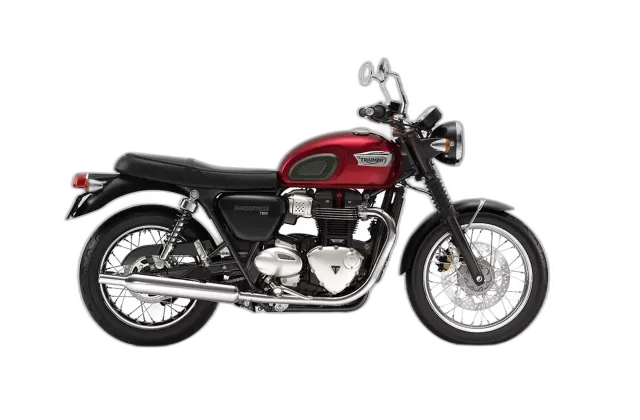
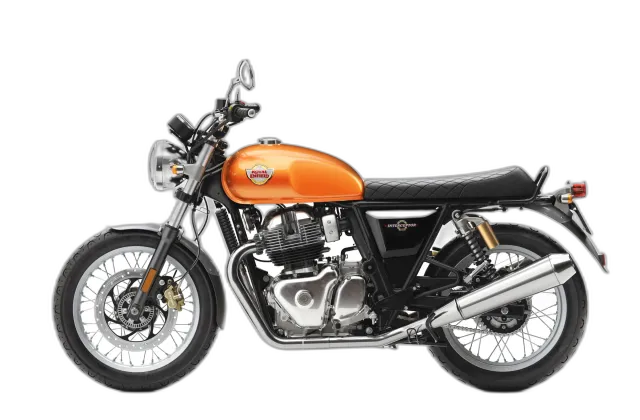
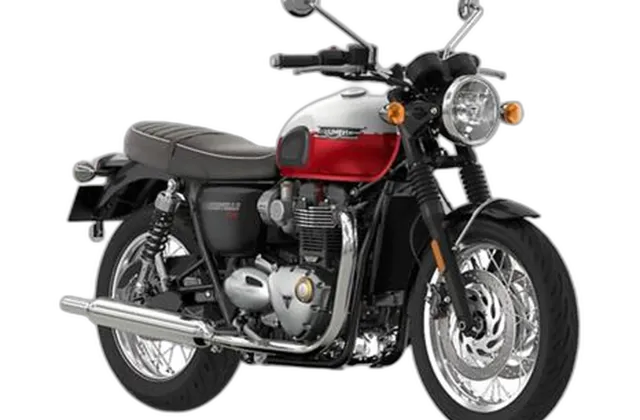
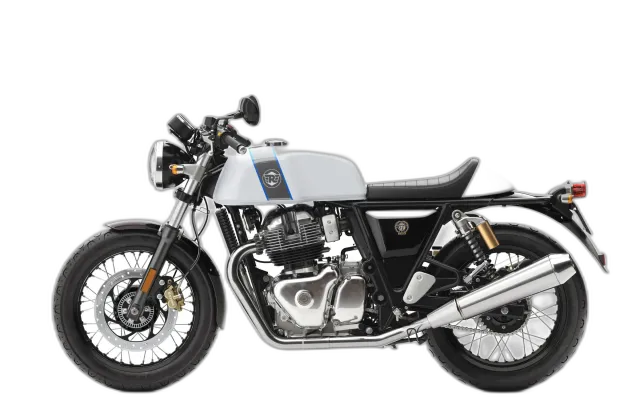
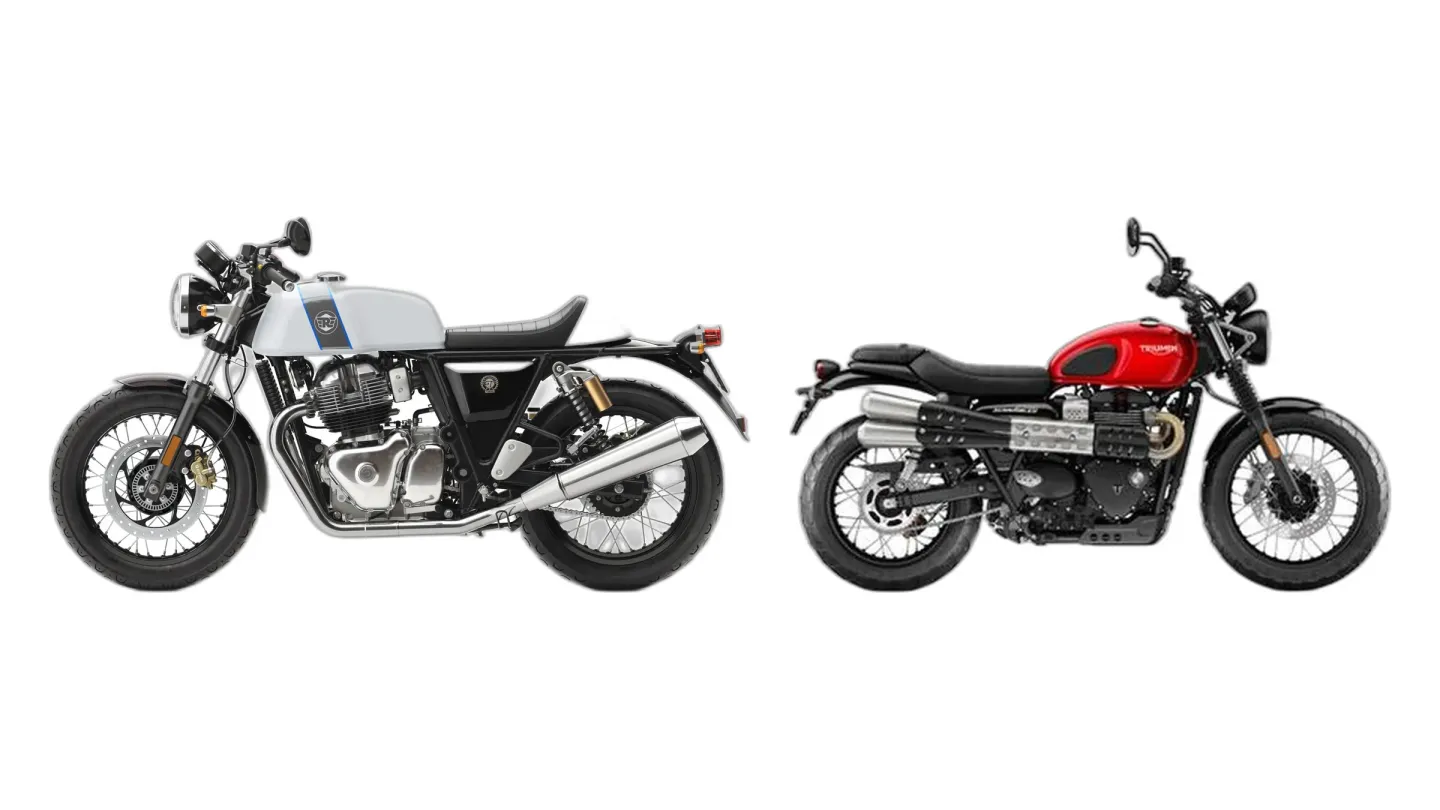
Royal Enfield Continental GT 650 (MY2018) vs Triumph Street Twin (DP03)
You'll feel the Royal Enfield Continental GT 650's twin thrum and egg you on the moment you roll the throttle open. On the Triumph Street Twin, the throttle doesn't need winding toward the redline. Its pull swells hard from the middle revs.
So which one do you buy?
The Street Twin has the edge if…
Sporty riding on twisty roads
Slight edge: Street Twin
The Street Twin nudges ahead once the pavement starts to wiggle. Put it down to harder acceleration and stronger brakes. Don't expect a night-and-day difference.
Daily commuting & city riding
Narrow edge: Street Twin
Through rush hour, the Street Twin is a little easier to live with. Most of that is easier everyday riding.
Character, looks and sound
Small edge: Street Twin
The Street Twin carries slightly more attitude. What tips it: a better engine note. A close call, and a personal one.
Keeping running costs low
A touch ahead: Street Twin
On running costs, the Street Twin edges it. Not by enough to bank on.
Which one's the smarter buy
No clear advantage
The price gap doesn't produce a clear winner. Neither is the clear better buy for the money.
What makes each one tick
Continental GT 650
Through stalled traffic, the Continental GT 650 darts from gap to gap, with only 445 lb (202 kg) to throw around. The clip-ons fold you over the long tank, and that crouch doesn't suit a full day. There's a fruity hum from the exhaust at every turn of the throttle. The tach needle keeps climbing.
Street Twin
The Street Twin sits you upright on a plush seat that's just 30.1 in (765 mm) off the pavement. The Brembo front caliper bites progressively. On the Blue Ridge Parkway, the bike tips into each bend on a neutral line, and there's no tug at the bar. Mid-corner, the front end holds its line.
The Voice of Experience

What actually separates them
- The Street Twin has the lower seat: 30.1 in (765 mm) vs 31.2 in (793 mm).
- The Continental GT 650 has the lower wet weight: 445 lb (202 kg) vs 476 lb (216 kg).
- The Street Twin makes more peak power: 64 hp (48 kW) vs 47 hp (35 kW).
Which one for the way you ride
Comfortable long-distance riding
Wrong job for both
Long days aren't what these two do best. Plan shorter legs and plenty of stops.
Who each one is built for
What's good, and what you'll live with
Continental GT 650
What owners say
Strengths
- Authentic café racer styling
- Excellent value for money
- Lively, characterful engine
- Lightweight and nimble handling
Trade-offs
- Budget‑grade switchgear and finish
- Compromised comfort for café racer ergonomics
Street Twin
What owners say
Strengths
- Significantly improved engine performance
- Excellent front brake feel and power
- Timeless retro styling with modern fit and finish
- Comfortable and commuter-friendly ergonomics
What they cost used
These prices compare a 7-year-old Continental GT 650 with a 7-year-old Street Twin.
- Continental GT 650
- about $3,800
- Street Twin
- about $5,900
At seven years old, the Royal Enfield Continental GT 650 sits around $3,800 while the Triumph Street Twin runs about $5,900. That's a $2,100 gap in the US market. These are estimates, not live listings.
What they share
- Engine
- Parallel twin
- Final drive
- Chain
- Fork
- Telescopic
- Front tire
- 100/90-18
Where the spec sheets split
| Continental GT 650 | Street Twin | |
|---|---|---|
| Seat height | 31.2 in (793 mm) | 30.1 in (765 mm) |
| Wet weight | 445 lb (202 kg) | 476 lb (216 kg) |
| Continental GT 650 | Street Twin | |
|---|---|---|
| Displacement | 648 cc | 900 cc |
| Cooling | Air/oil-cooled | Liquid-cooled |
| Power | 47 hp (35 kW) | 64 hp (48 kW) |
| Torque | 38 lb-ft (52 Nm) | 59 lb-ft (80 Nm) |
| Continental GT 650 | Street Twin | |
|---|---|---|
| Fuel capacity | 3.3 US gal (12.5 L) | 3.2 US gal (12 L) |
| Continental GT 650 | Street Twin | |
|---|---|---|
| Gearbox | 6-speed | 5-speed |
| Rear tire | 130/70-18 | 150/70-17 |
What comes fitted, what costs extra
| Continental GT 650 | Street Twin | |
|---|---|---|
| Ride Modes | Not offered | Standard |
Head to head, area by area
Both bikes on the same scale, one area at a time.