By NastyNils·
Motorcycle comparison · Retro Classic
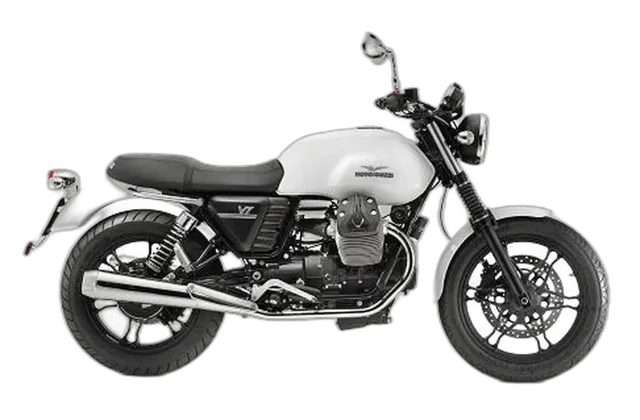
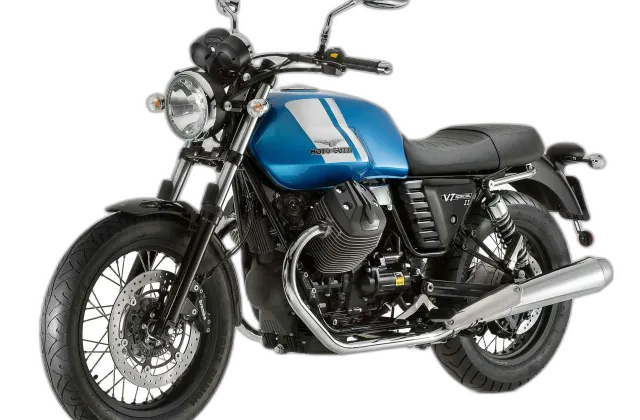
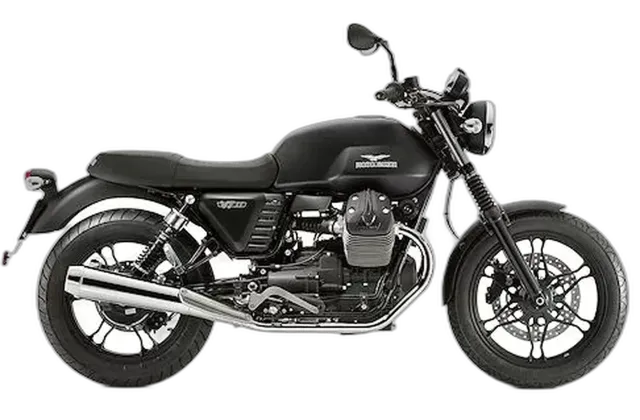
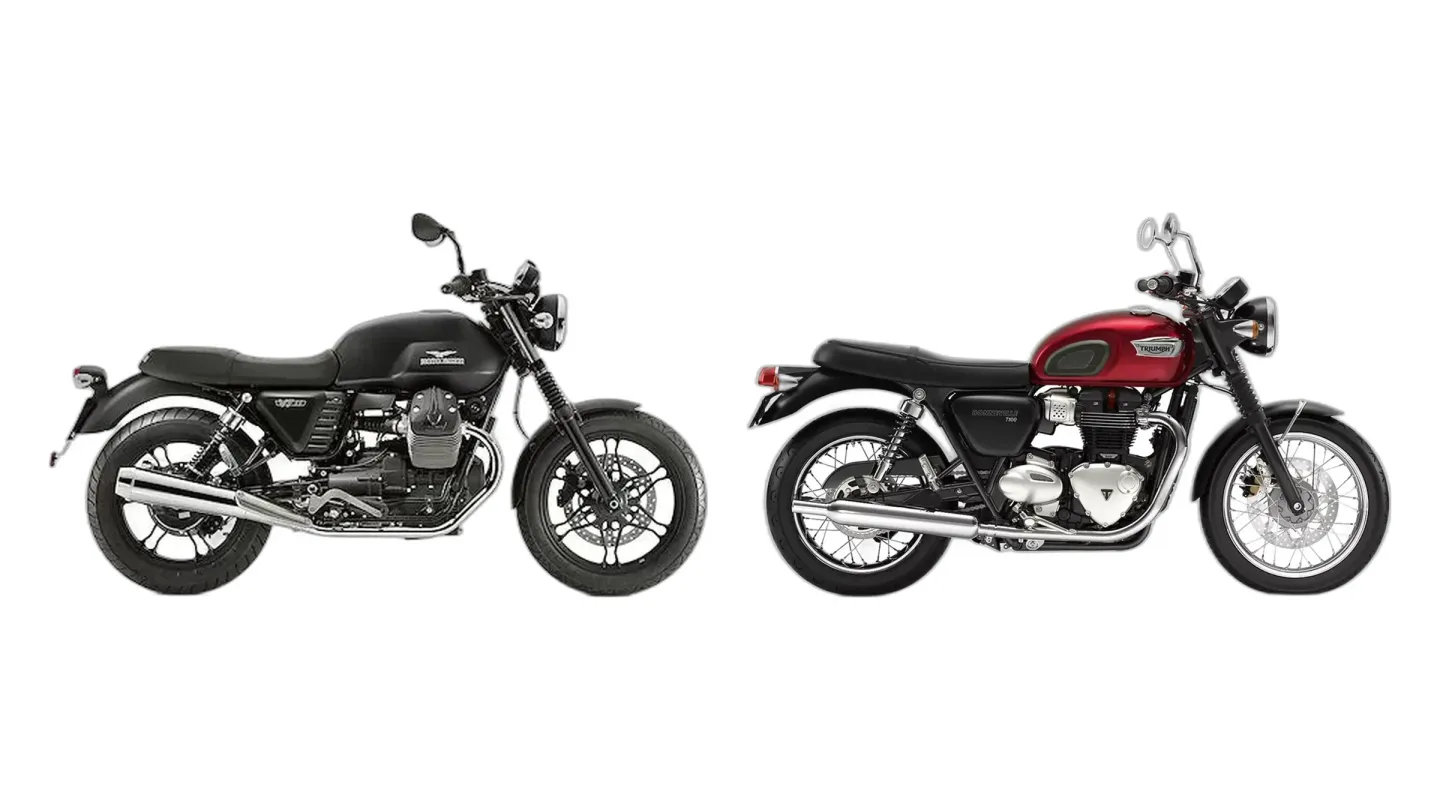
Moto Guzzi V7 II Stone (MY2015) vs Triumph Bonneville T100 (DB01A)
Roll on the Moto Guzzi V7 II Stone's throttle and the transverse V-twin thumps out a soulful bark, but it's soon begging for a downshift to pass. The Triumph Bonneville T100's engine hauls hard from low revs.
So which one do you buy?
The Bonneville T100 has the edge if…
Keeping running costs low
Inches ahead: Bonneville T100
The Bonneville T100 is a touch easier on the wallet to run. Condition still matters more than the model.
Character, looks and sound
A touch ahead: Bonneville T100
For presence, the Bonneville T100 noses ahead. Put it down to more engine character and a better engine note. Taste is personal, so don't let a small gap decide for you.
Daily commuting & city riding
Slight edge: Bonneville T100
Your daily ride leans slightly toward the Bonneville T100. Fit and price can easily outweigh that.
Which one's the smarter buy
Depends what you want it for
The V7 II Stone costs less, but that doesn't make it the better buy for everyone. Which one is the smarter spend depends entirely on what you want it for.
What makes each one tick
V7 II Stone
The V7 II Stone's air-cooled V-twin hangs across the frame in plain view and answers with a torquey shove. Corner entry's easy-going, since the simple tubular-steel frame tips the bike into a bend without fuss. On rougher roads the soft fork and preload-only shocks don't keep control, and the chassis wallows. The shaft drive surges with speed.
Bonneville T100
The Bonneville T100 steers light and carries its weight low, which keeps it settled through the curves of the Blue Ridge Parkway. Bumps don't upset its stable manners. Out of each bend there's plenty of punch from the liquid-cooled parallel twin. The exhaust note settles into a relaxed throb.
The Voice of Experience

What actually separates them
- The Bonneville T100 makes more peak power: 54 hp (40 kW) vs 48 hp (35 kW).
- The Bonneville T100 makes more peak torque: 59 lb-ft (80 Nm) vs 43 lb-ft (58 Nm).
- The Bonneville T100 has the larger engine: 900 cc vs 744 cc.
Which one for the way you ride
Comfortable long-distance riding
Both fall short
Hours in the saddle won't flatter either of these. They're happier on shorter runs.
They come out level on twisty roads. The better-kept used example is the smarter money.
Who each one is built for
What's good, and what you'll live with
V7 II Stone
What owners say
Strengths
- Characterful transverse V-twin engine
- Genuine Italian retro styling
Trade-offs
- Lackluster power for its displacement
- Soft, underdamped suspension
Bonneville T100
What owners say
Strengths
- Classic British roadster styling
- Torquey and charismatic parallel-twin engine
What they cost used
Both bikes priced used at the same age: 7 years old.
- V7 II Stone
- about $3,400
- Bonneville T100
- about $6,800
At seven years old, the Moto Guzzi V7 II Stone sits around $3,400 while the Triumph Bonneville T100 runs about $6,800. That's a $3,400 gap in the V7 II Stone's favor. These are estimates from the used market, not live listings.
What they share
- Seat height
- 31.1 in (790 mm)
- Fork
- Telescopic
- Front tire
- 100/90-18
Where the spec sheets split
| V7 II Stone | Bonneville T100 | |
|---|---|---|
| Displacement | 744 cc | 900 cc |
| Engine | 90° V-twin | Parallel twin |
| Cooling | Air-cooled | Liquid-cooled |
| Power | 48 hp (35 kW) | 54 hp (40 kW) |
| Peak power at | 6,200 rpm | 5,900 rpm |
| Torque | 43 lb-ft (58 Nm) | 59 lb-ft (80 Nm) |
| Peak torque at | 2,800 rpm | 3,230 rpm |
| V7 II Stone | Bonneville T100 | |
|---|---|---|
| Fuel capacity | 5.8 US gal (22 L) | 3.8 US gal (14.5 L) |
| V7 II Stone | Bonneville T100 | |
|---|---|---|
| Gearbox | 6-speed | 5-speed |
| Final drive | Shaft | Chain |
| Front brake | 320 mm | 310 mm |
| Rear tire | 130/80-17 | 150/70-17 |
What comes fitted, what costs extra
| V7 II Stone | Bonneville T100 | |
|---|---|---|
| Cruise Control | Not offered | Option |
| USB Charging Port | Not offered | Standard |
| Heated Grips | Not offered | Option |
Head to head, area by area
Both bikes on the same scale, one area at a time.