By NastyNils·
Motorcycle comparison · Naked Bike
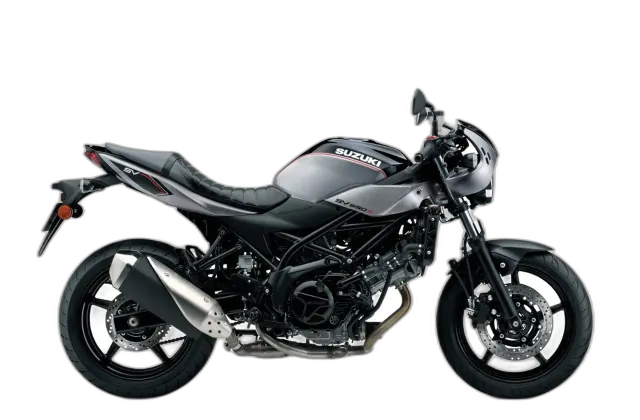
Suzuki SV650X (MY2018) vs Triumph Trident 660 (MY2021)
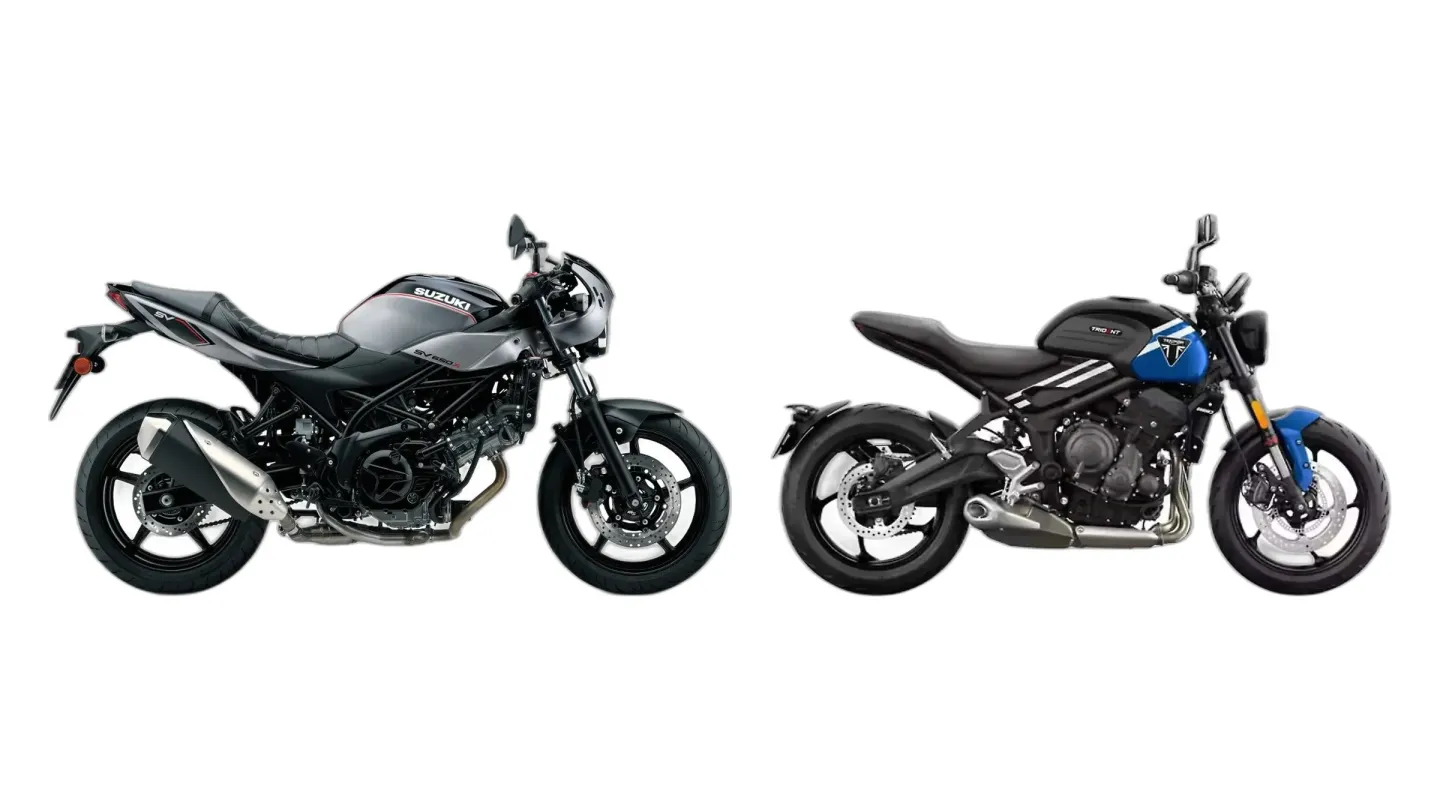
Suzuki SV650X vs Triumph Trident 660: no fairing, no excuses. Here's how to pick.
Roll on the Suzuki SV650X's throttle and the V-twin's already pulling hard from the middle of the revs, thumping with real soul. The Triumph Trident 660's triple sings a note that sticks.
So which one do you buy?
The SV650X has the edge if…
Keeping running costs low
By a nose: SV650X
The SV650X should be a little cheaper to keep on the road. It's a small gap.
The Trident 660 has the edge if…
Daily commuting & city riding
Edges it: Trident 660
For the ride to work, the Trident 660 noses ahead. The reason: easier everyday riding. Don't let that alone make the call.
A confidence-building first motorcycle
Narrow edge: Trident 660
Learning the ropes leans slightly toward the Trident 660. It's down to more comfort.
Sporty riding on twisty roads
A touch ahead: Trident 660
In the twisties, the Trident 660 asks a bit less of you to go quickly. Call it a modest edge.
What makes each one tick
SV650X
On a twisty back road, the SV650X's steel trellis frame drops it into each bend without a surprise and holds the line you picked. The clip-ons fold you forward. Over a sharp bump the budget suspension doesn't soak up the hit, and the rear shock kicks back at a lighter rider most of all. The V-twin's close to unbreakable.
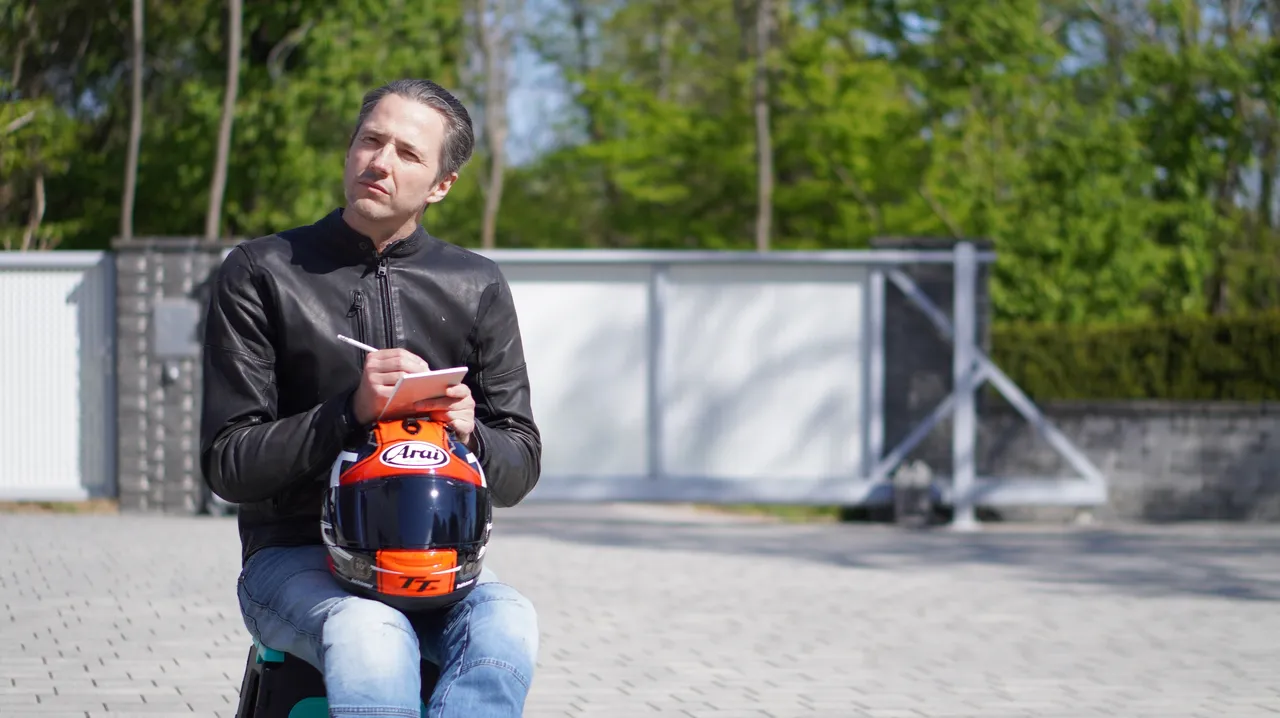
Nils rode the SV650X in Styria in 2018 (NastyNils Testride).
Trident 660
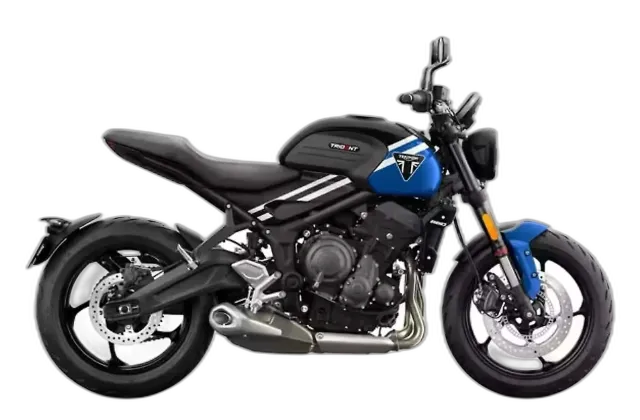
Every ride on the Trident 660 starts with a three-cylinder exhaust that's charismatic without turning loud for show. The brake lever's bite builds evenly, and the front's predictable right up to the limit. Quick downshifts don't unsettle the rear. The seat puts tall riders' knees at an easy angle.
Nils rode the Trident 660 in 2021 (NastyNils Testride).
The Voice of Experience
What actually separates them
- The SV650X has the lower seat: 31.1 in (790 mm) vs 31.7 in (805 mm).
- The Trident 660 has the lower wet weight: 417 lb (189 kg) vs 434 lb (197 kg).
- The Trident 660 makes more peak power: 80 hp (60 kW) vs 73 hp (54 kW).
Which one for the way you ride
Comfortable long-distance riding
Not built for this
Both of these get tiring on a long day. A proper tourer will treat you better on big miles.
Who each one is built for
What's good, and what you'll live with
SV650X
What owners say
Strengths
- Bulletproof and charismatic V-twin engine
- Great value for money
Trade-offs
- Dated dash and lack of modern electronics
- Clip-ons limit long-distance comfort
- Firm ride over bumps
Trident 660
From Nils' own saddle time
Strengths
- Linked Corners Come Naturally
- Torque Everywhere, No Dead Spots
- A Triple Note Worth Hearing
- Friendlier Than It Looks For Tall Riders
- Light Clutch, Precise Controls
Trade-offs
- Unsettled On Broken Pavement
- Preload Is Your Only Adjustment
- Rider Aids Play It Safe
- Seat Softens Under You
What they share
- Cooling
- Liquid-cooled
- Torque
- 47 lb-ft (64 Nm)
- Gearbox
- 6-speed
- Final drive
- Chain
- Front tire
- 120/70-17
Where the spec sheets split
| SV650X | Trident 660 | |
|---|---|---|
| Seat height | 31.1 in (790 mm) | 31.7 in (805 mm) |
| Wet weight | 434 lb (197 kg) | 417 lb (189 kg) |
| SV650X | Trident 660 | |
|---|---|---|
| Displacement | 645 cc | 660 cc |
| Engine | 90° V-twin | Inline-three |
| Power | 73 hp (54 kW) | 80 hp (60 kW) |
| Peak torque at | 6,800 rpm | 6,250 rpm |
| SV650X | Trident 660 | |
|---|---|---|
| Fuel capacity | 3.8 US gal (14.5 L) | 3.7 US gal (14 L) |
| SV650X | Trident 660 | |
|---|---|---|
| Fork | Telescopic | Upside-down (USD) |
| Front brake | 290 mm | 310 mm |
| Rear tire | 160/60-17 | 180/55-17 |
What comes fitted, what costs extra
| SV650X | Trident 660 | |
|---|---|---|
| Traction Control | Not offered | Standard |
| Ride Modes | Not offered | Standard |
| Manually Adjustable Front Suspension | Standard | Not offered |
| Quickshifter | Not offered | Option |
| Slipper Clutch | Not offered | Standard |
| TFT Display | Not offered | Standard |
| Smartphone Connectivity | Not offered | Option |
| USB Charging Port | Not offered | Option |
| LED Headlight | Not offered | Standard |
Head to head, area by area
Both bikes on the same scale, one area at a time.