By NastyNils·
Motorcycle comparison · Naked Bike
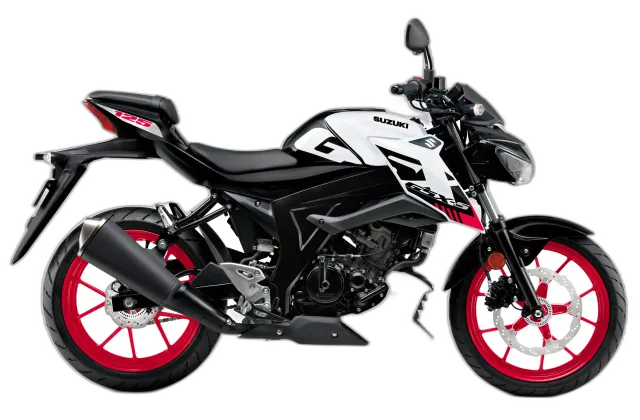
Suzuki GSX-S125 (WDL0) vs KTM 125 Duke (MY2017)
Suzuki GSX-S125 vs KTM 125 Duke: which one's easier to live with every day.
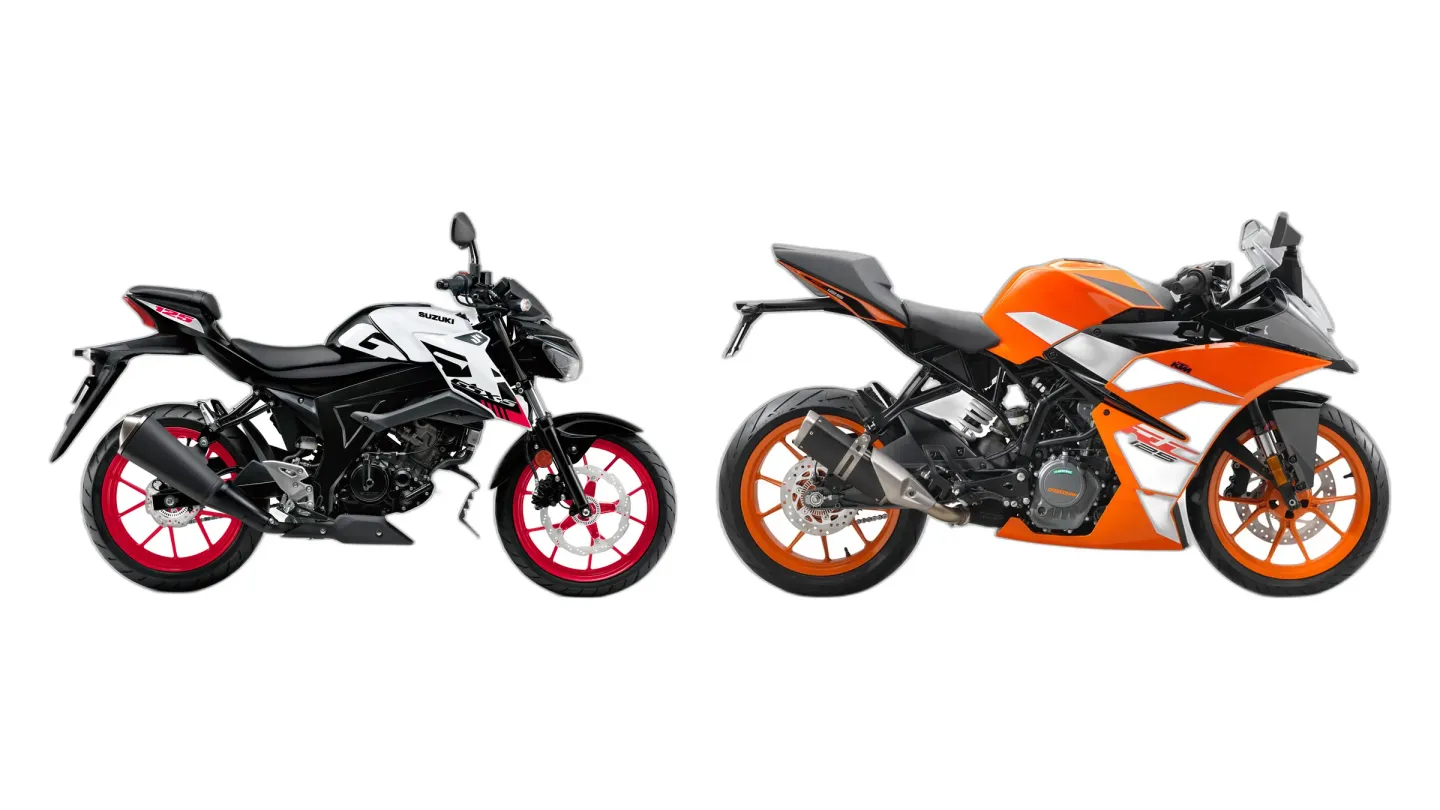
At the mouth of a slow bend, the Suzuki GSX-S125 steers in off a light touch on the bars and it's already pointed at the apex. On the KTM 125 Duke you're perched over the front wheel, supermoto style, as the bars go in. The front tire carries your weight into the turn.
So which one do you buy?
The 125 Duke has the edge if…
Daily commuting & city riding
Nose ahead: 125 Duke
Day in, day out, the 125 Duke nudges ahead in traffic. The difference is easier everyday riding. It isn't a big enough gap to plan around.
Sporty riding on twisty roads
Edges it: 125 Duke
Through a string of corners, the 125 Duke feels a little more eager. The gap is small, so ride both.
A confidence-building first motorcycle
By a nose: 125 Duke
The 125 Duke asks a little less of a rookie. That's a narrow edge, so sit on both before you decide.
What makes each one tick
GSX-S125
Around town, the GSX-S125 flicks through gaps on its wide handlebar, and a deep steering lock swings it around in a tight circle. A bump on a rough back road doesn't set it bouncing, because the firm suspension soaks up the hit and settles. Its clutch barely resists the lever. The single's still pulling hard when it reaches redline.
125 Duke
The Duke's roomy seat and riding position feel lifted off a much bigger machine. From the engine and clutch back, nothing rattles and nothing wobbles. The front-heavy seating plus the sharp chassis makes it feel twitchy next to other nakeds in the class. The throttle doesn't snatch. The single answers the moment it's cracked open, with no abrupt step in the pickup. The clutch lever meters out drive without a lurch.
The Voice of Experience

What actually separates them
- The GSX-S125 has the lower seat: 30.9 in (785 mm) vs 31.5 in (800 mm).
- The 125 Duke makes more peak torque: 9 lb-ft (12 Nm) vs 8 lb-ft (11 Nm).
- The 125 Duke has the larger fuel tank: 3.5 US gal (13.4 L) vs 2.9 US gal (11 L).
Which one for the way you ride
Who each one is built for
What's good, and what you'll live with
GSX-S125
What owners say
Strengths
- Agile, flickable handling
- Comfortable ride quality
- Free-revving, lively engine
125 Duke
Strengths
- Presence Well Above Its Class
- Turns With A Wrist Flick
- Runs Out Of Road First
- Cheap To Feed And Service
- Premium build and big-bike feel
Trade-offs
- Electrical Faults Do Appear
- 15 hp Sets A Hard Ceiling
- Fork Offers No Adjustment
Known problems to check before you buy
GSX-S125
- Corrosion on bodywork/fasteners Some owners have observed corrosion on exposed metal parts, particularly fasteners or unpainted areas, when the bike is not treated with a protective coating.
125 Duke
No confirmed faults on file yet. That's not the same as fault-free.
What they share
- Engine
- Single-cylinder
- Cooling
- Liquid-cooled
- Power
- 15 hp (11 kW)
- Gearbox
- 6-speed
Where the spec sheets split
| GSX-S125 | 125 Duke | |
|---|---|---|
| Seat height | 30.9 in (785 mm) | 31.5 in (800 mm) |
| GSX-S125 | 125 Duke | |
|---|---|---|
| Displacement | 124 cc | 125 cc |
| Torque | 8 lb-ft (11 Nm) | 9 lb-ft (12 Nm) |
| GSX-S125 | 125 Duke | |
|---|---|---|
| Fuel capacity | 2.9 US gal (11 L) | 3.5 US gal (13.4 L) |
| GSX-S125 | 125 Duke | |
|---|---|---|
| Fork | Telescopic | Upside-down (USD) |
| Front tire | 90/80-17 | 110/70-17 |
| Rear tire | 130/70-17 | 150/60-17 |
What comes fitted, what costs extra
| GSX-S125 | 125 Duke | |
|---|---|---|
| Manually Adjustable Rear Suspension | Not offered | Standard |
| Quickshifter | Not offered | Option (from 2024) |
| TFT Display | Not offered | Standard |
Head to head, area by area
Both bikes on the same scale, one area at a time.