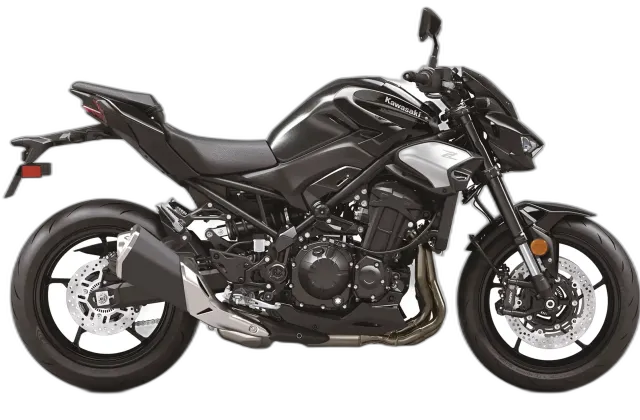
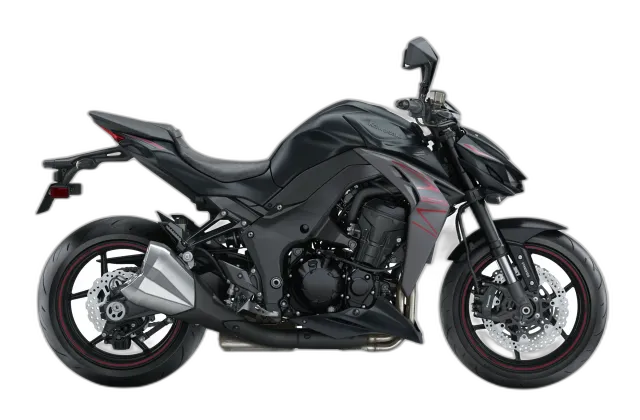
By NastyNils·
Motorcycle comparison · Naked Bike vs Hyper Naked
Kawasaki Z900 ABS (MY2022) vs Z1000 (ZZRT00F)
Kawasaki Z900 ABS vs Z1000: which one to buy, and what actually separates them.
Deep into a long roll-on, the Kawasaki Z900 ABS's four spins up like a turbine and doesn't step. The Kawasaki Z1000 pulls with flywheel heft you can feel.
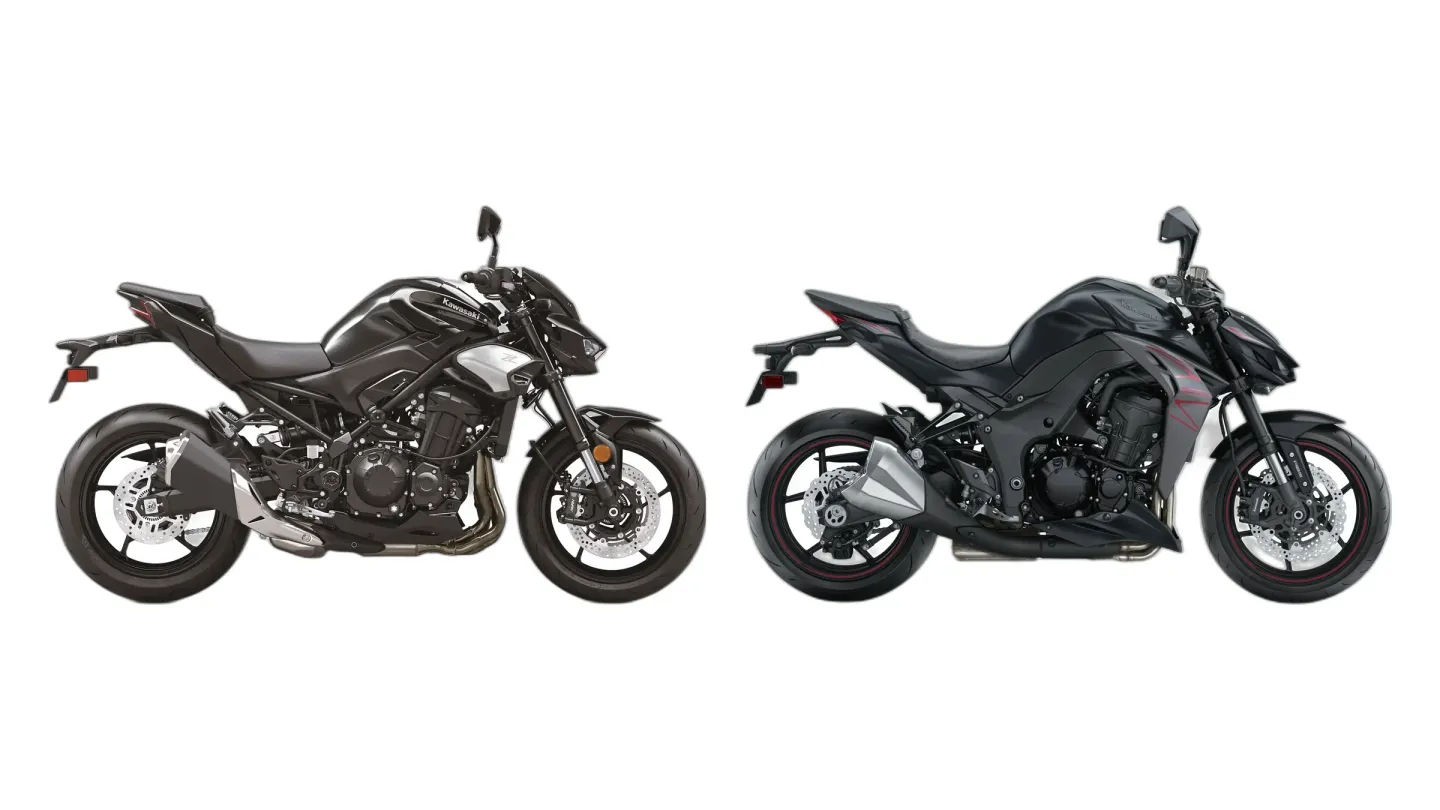
So which one do you buy?
The Z900 ABS has the edge if…
Keeping running costs low
A touch ahead: Z900 ABS
For the money you spend after the purchase, the Z900 ABS nudges ahead. The gap is too small to plan a budget around.
Traveling with luggage
Narrow edge: Z900 ABS
With bags on, the Z900 ABS edges ahead. The gap is small enough that luggage options could flip it.
Daily commuting & city riding
Slight edge: Z900 ABS
For the ride to work, the Z900 ABS noses ahead. Don't let that alone make the call.
What makes each one tick
Z900 ABS
The Z900 settles onto its steel trellis frame through a bend and holds the line it's given. Down low, the throttle's snatchy. It's worst in first gear and on the pickup after a shift. Higher up, there's one even sweep of torque.
Z1000
Eased open, the Z1000's engine builds speed in a measured surge that doesn't hurry. Wide open, it bites hard. Corner entry doesn't take a fight: the bike turns in without pushing back. Even in a hairpin, the chassis holds its shape.
Nils rode the Z1000 in 2014 and 2025 (NastyNils Testride).
The Voice of Experience

What actually separates them
- The Z900 ABS has the lower wet weight: 467 lb (212 kg) vs 487 lb (221 kg).
- The Z1000 makes more peak power: 142 hp (104 kW) vs 125 hp (92 kW).
- The Z1000 makes more peak torque: 82 lb-ft (111 Nm) vs 73 lb-ft (99 Nm).
Which one for the way you ride
Comfortable long-distance riding
Not their thing
Big miles aren't where either one shines. You'll be watching for the next rest stop.
These two run dead level on twisty roads. Sit on both in the showroom and trust what your body says.
Who each one is built for
What's good, and what you'll live with
Z900 ABS
What owners say
Strengths
- Smooth, linear inline-four engine
- Reliability and Japanese build quality
- SE upgrade represents strong value
- Aggressive Sugomi visual presence
Trade-offs
- Missing modern electronics (MY2022–2024)
- STD suspension under-damped for spirited riding
- Snatchy throttle response at low RPM
- OEM Dunlop Sportmax Roadsport 2 tires criticized
- (SE) Öhlins S46 arrives soft from the factory
Z1000
From Nils' own saddle time
Strengths
- Flywheel Mass You Actually Feel
- Linear, Then Genuinely Raw
- Motor Takes Real Mileage
- Composed Through Tight Corners
- Used Values Hold Up
Trade-offs
- Seat Gets Old In Hours
- No Wind Protection At All
- Stock Suspension Runs Firm
- No Traction Control Or Quickshifter
Known problems to check before you buy
Z900 ABS
- STD KYB suspension soft / under-damped under spirited riding The standard suspension lacks sufficient damping, causing wallowing and reduced precision when riding aggressively.
- Stock Dunlop Sportmax Roadsport 2 tires lack wet-weather grip The original-equipment Dunlop tires offer limited grip on wet pavement and can feel slippery in the rain, which leads some owners to replace them early with better-performing rubber.
- Snatchy on/off throttle response at low RPM Abrupt fuel cut-on results in jerky behavior when transitioning from closed to open throttle in first and second gear.
- OEM final-drive chain shows wear at lower mileage than expected The original chain often needs replacement between 9,300–12,000 mi (15,000–20,000 km) due to accelerated stretch and rust.
- Mirror blur and mild handlebar vibration at certain RPM bands Vibrations around 4,000–6,000 rpm can blur the mirrors and cause hand numbness on longer rides.
- Bluetooth pairing failures with Rideology app on iOS; isolated TFT Bluetooth chip failures Owners using iPhones have had trouble pairing the bike with the Kawasaki Rideology smartphone app. The cause was how the app handled short pairing PIN codes. Kawasaki later released a software update that fixed this, so affected bikes should get the latest app and instrument-cluster software. In rare cases, the Bluetooth module inside the TFT instrument cluster has failed and the dealer had to replace the cluster.
Z1000
No confirmed faults on file yet. That's not the same as fault-free.
What they share
- Engine
- Inline-four
- Cooling
- Liquid-cooled
- Fuel capacity
- 4.5 US gal (17 L)
- Gearbox
- 6-speed
- Final drive
- Chain
- Front tire
- 120/70-17
Where the spec sheets split
| Z900 ABS | Z1000 | |
|---|---|---|
| Seat height | 32.3 in (820 mm) | 32.1 in (815 mm) |
| Wet weight | 467 lb (212 kg) | 487 lb (221 kg) |
| Z900 ABS | Z1000 | |
|---|---|---|
| Displacement | 948 cc | 1043 cc |
| Power | 125 hp (92 kW) | 142 hp (104 kW) |
| Peak power at | 9,500 rpm | 10,000 rpm |
| Torque | 73 lb-ft (99 Nm) | 82 lb-ft (111 Nm) |
| Peak torque at | 7,700 rpm | 7,300 rpm |
| Top speed | 149 mph (240 km/h) | 147 mph (237 km/h) |
| Z900 ABS | Z1000 | |
|---|---|---|
| Rear tire | 180/55-17 | 190/55-17 |
| Wheelbase | 57.3 in (1455 mm) | 56.5 in (1435 mm) |
What comes fitted, what costs extra
| Z900 ABS | Z1000 | |
|---|---|---|
| Cornering ABS | Standard | Not offered |
| Traction Control | Standard | Not offered |
| Ride Modes | Standard | Not offered |
| Cruise Control | Standard | Not offered |
| TFT Display | Standard | Not offered |
| Smartphone Connectivity | Standard | Not offered |
| USB Charging Port | Option | Not offered |
| LED Headlight | Standard | Standard (from 2017) |
Head to head, area by area
Both bikes on the same scale, one area at a time.