By NastyNils·
Motorcycle comparison · Naked Bike
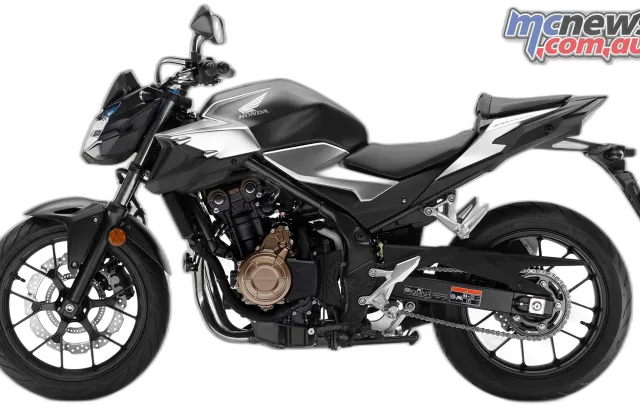
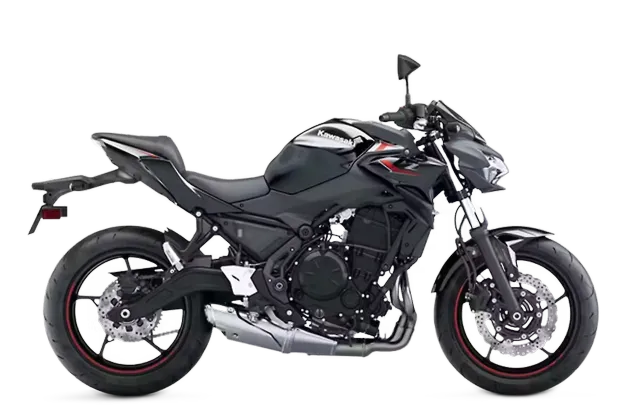
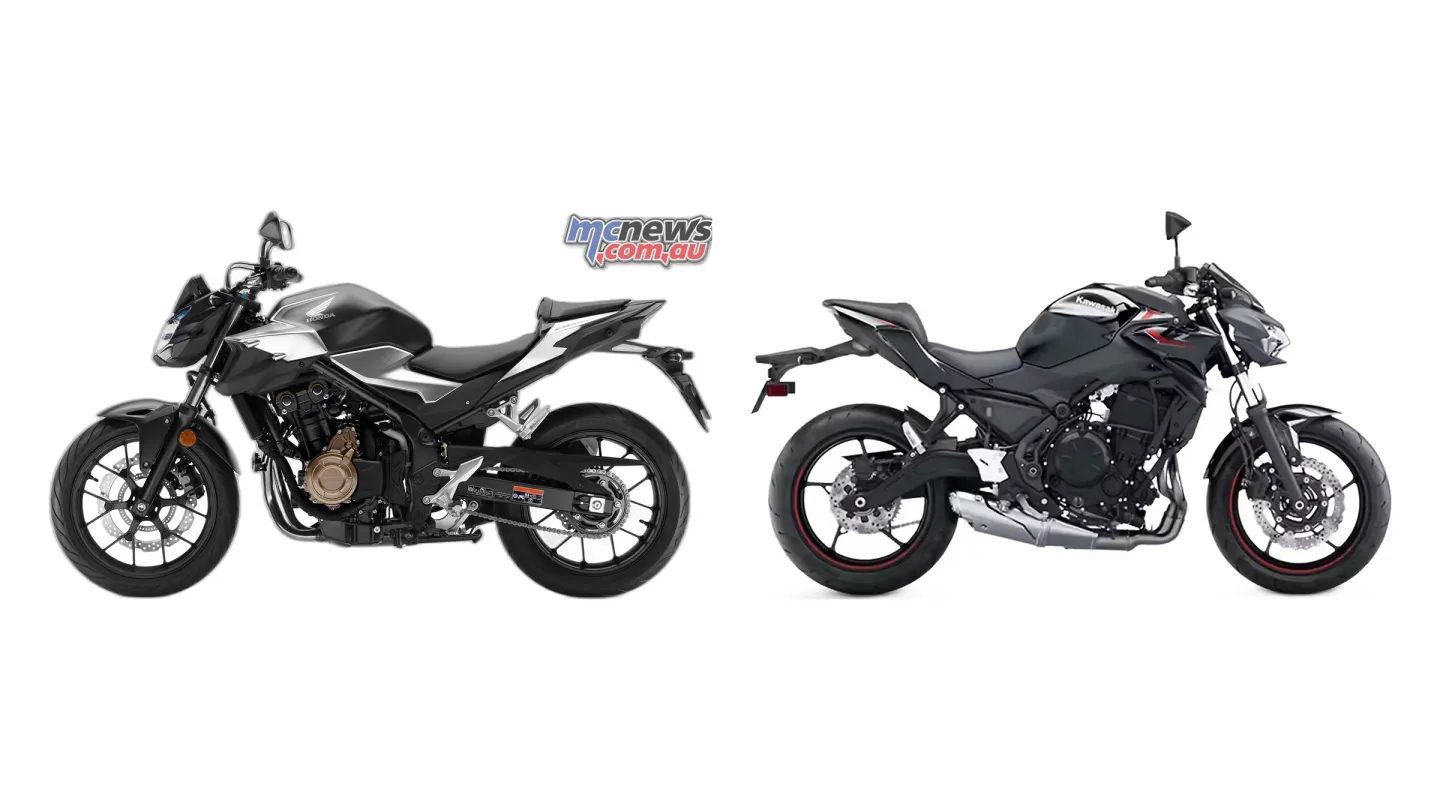
Honda CB500F (PC63) vs Kawasaki Z650 (MY2017)
Honda CB500F vs Kawasaki Z650: which one to buy, and what actually separates them.
You'll roll the Honda CB500F's throttle open and the engine spins up smoothly, but it doesn't raise its voice. The Kawasaki Z650 shoves forward from low revs.
So which one do you buy?
The CB500F has the edge if…
Traveling with luggage
By a nose: CB500F
The CB500F feels a little more at home with bags on. The difference is a better reliability record. It's a fine margin, so test both loaded if you can.
A confidence-building first motorcycle
Nose ahead: CB500F
Learning the ropes leans slightly toward the CB500F. Your own comfort on it should come first.
Daily commuting & city riding
Small edge: CB500F
The CB500F makes slightly more sense as a commuter. Credit simpler maintenance and lower running costs. Don't read much into a gap this small.
The Z650 has the edge if…
Sporty riding on twisty roads
Narrow edge: Z650
In the twisties, the Z650 asks a bit less of you to go quickly. Call it a modest edge.
Which one's the smarter buy
Money won't decide it
The better buy depends on what you want it for. Neither is the clear better buy for the money.
What makes each one tick
CB500F
A low seat and a slim midsection let the CB500F settle under you before it's even rolling. The bar steers light and neutral, and the bike never does anything you didn't see coming. The throttle wakes an even-firing twin that's polite through the middle and thin up top. Pushed hard, the chassis holds its line.
Z650
Light weight shapes the Z650 from the sidestand on, with 412 lb (187 kg) wet to move around. The soft fork can't keep up with hard riding. It dives deep under braking. Its twin's pull carries it through stop-and-go traffic.
The Voice of Experience

What actually separates them
- The Z650 makes more peak power: 68 hp (50 kW) vs 48 hp (35 kW).
- The Z650 makes more peak torque: 48 lb-ft (66 Nm) vs 32 lb-ft (43 Nm).
- The Z650 has the larger engine: 649 cc vs 471 cc.
Which one for the way you ride
Comfortable long-distance riding
Not their thing
Both of these get tiring on a long day. A proper tourer will treat you better on big miles.
Who each one is built for
What's good, and what you'll live with
CB500F
What owners say
Strengths
- Light, neutral handling with predictable behavior
- Build quality above price point
Trade-offs
- Bland engine character
- Limited fun factor for experienced riders
- Limited highway/touring capability
- Hard, uncomfortable seat
- Single front brake disc (2019–2021 only)
Z650
What owners say
Strengths
- Beginner-friendly and A2-compliant
- Excellent value for money
- Strong low- and mid-range torque
Trade-offs
- Soft, underdamped stock suspension
- Brakes lack initial bite
- No wind protection
- OEM tires offer weak cold grip
- Poor passenger accommodation
Known problems to check before you buy
CB500F
- Underdamped/undersized front suspension Conventional front fork too soft for riders over a certain weight. Excessive dive under braking, underdamped over rough surfaces. Harsh on short-travel bumps, soft on larger undulations. The 2022 Showa SFF-BP USD fork improved front-end feel significantly, though the rear shock remains criticized for wallowing under hard acceleration across all model years.
- Snatchy/jerky throttle response at low speed Abrupt on/off throttle response at low speeds, most noticeable in the lowest gears in stop-and-go traffic. Linked to the fuel injection mapping at small throttle openings, the transition from closed to slightly open throttle is sharp, so the bike lurches or jerks when the rider rolls on or off the throttle gently. Excess free play in the throttle cable or a slack drive chain makes the effect more pronounced.
- Vibration through handlebars and footpegs at sustained highway speed Noticeable vibration comes through the footpegs at sustained highway cruising speed, and through the handlebars at higher engine speeds. On longer rides it can leave the rider's hands numb. The mirrors blur in the upper-middle rev range, which makes following traffic hard to judge. The vibration comes from the parallel twin's firing and balance characteristics and is strongest at steady highway speeds, where the engine stays in its most vibration-prone rev band.
- OEM battery weakness and flat battery after inactivity OEM battery (YTZ8V) reported to go flat after periods of inactivity (1–2 weeks). ABS-equipped models may have a small parasitic drain through the ABS module (reported as approximately 4 mA with ignition off, exceeding 0.34 mA specification). Particularly problematic with infrequent riding patterns during winter months.
- Surface corrosion on metal fasteners and components Surface rust on headlight mount bolts, bolt holes, and subframe drain areas. Corrosion observed under triple clamps. Most prominent with year-round use in wet or salty climates. Anti-corrosion treatment on fasteners from Thai production is below Japanese production standards. Not structural but progressive if untreated.
- Thin paint finish prone to scratching Paint finish scratches easily from normal contact (bags, covers, tank pads). Some reports of paint flaking, occasionally requiring warranty replacement. Tank paint particularly susceptible. Attributed to paint process quality at the Thai production facility.
Z650
- Handlebar Control and Ignition Switch Failure Handlebar control (switch) no longer functions; ignition switch won't turn or operates intermittently.
- ABS Sensor Error / Intermittent ABS Warning Light ABS warning light illuminates intermittently. One owner reported the ABS failed on three separate occasions during active use. ABS sensor ring warpage can cause erratic warning light behavior.
- Throttle Jerkiness at Low RPM On/off jerking when opening the throttle, particularly noticeable in 1st and 2nd gear at low RPM. Harsh, abrupt feeling when cracking open the throttle coming out of engine braking. A known issue with Euro 4 tuning on the Kawasaki 650 platform.
- Premature Rust on OEM Chain The OEM chain rusts quickly, especially after rain riding. Scattered reports of seized chain links. Some owners report needing chain replacement before 12,500 miles.
- Vibration-Induced Loose Fasteners / Mirror Vibrations Various fasteners vibrate loose over time—a characteristic issue of 180° parallel-twin engines. Mirrors become unusable at certain rpm bands due to severe blurring.
- Corrosion and Cracking in the Exhaust System Exhaust manifolds discolor quickly and develop surface rust. Exhaust slip-nut fasteners can corrode and seize, making removal risky due to potential breakage. Isolated reports of cracking in the exhaust system. The exhaust system is one-piece; a crack requires complete replacement.
- Paint Peeling on Engine Housing / Water Pump Cover Engine paint is peeling off, particularly on the water pump housing, following moisture exposure and winter operation. Bare aluminum or corrosion is visible underneath.
- Timing Chain Tensioner Noises / Ticking at Idle Ticking at idle, rattling between 4,000–5,000 RPM while riding. More pronounced when engine is warm. Some dealers consider it normal engine characteristic.
What they cost used
These prices compare a 7-year-old CB500F with a 7-year-old Z650.
- CB500F
- about $4,700
- Z650
- about $6,000
At seven years old, the Honda CB500F sits around $4,700 while the Kawasaki Z650 runs about $6,000. That's a $1,300 gap in the CB500F's favor. These are US market estimates, not live listings.
What they share
- Engine
- Parallel twin
- Cooling
- Liquid-cooled
- Peak torque at
- 6,500 rpm
- Gearbox
- 6-speed
- Final drive
- Chain
- Front tire
- 120/70-17
- Rear tire
- 160/60-17
- Wheelbase
- 55.5 in (1410 mm)
Where the spec sheets split
| CB500F | Z650 | |
|---|---|---|
| Seat height | 30.9 in (785 mm) | 31.1 in (790 mm) |
| Wet weight | 417 lb (189 kg) | 412 lb (187 kg) |
| CB500F | Z650 | |
|---|---|---|
| Displacement | 471 cc | 649 cc |
| Power | 48 hp (35 kW) | 68 hp (50 kW) |
| Peak power at | 8,600 rpm | 8,000 rpm |
| Torque | 32 lb-ft (43 Nm) | 48 lb-ft (66 Nm) |
| Top speed | 114 mph (183 km/h) | 121 mph (194 km/h) |
| CB500F | Z650 | |
|---|---|---|
| Fuel economy | 59 mpg (US) / 4 L/100 km | 53 mpg (US) / 4.4 L/100 km |
| Fuel capacity | 4.5 US gal (17.1 L) | 4.0 US gal (15 L) |
| CB500F | Z650 | |
|---|---|---|
| Valve check interval | 15,907 mi (25,600 km) | 14,913 mi (24,000 km) |
| CB500F | Z650 | |
|---|---|---|
| Fork | Upside-down (USD) | Telescopic |
| Front brake | 296 mm | 300 mm |
What comes fitted, what costs extra
| CB500F | Z650 | |
|---|---|---|
| Quickshifter | Not offered | Option |
| TFT Display | Standard | Not offered |
| USB Charging Port | Not offered | Option |
| LED Headlight | Standard | Not offered |
Head to head, area by area
Both bikes on the same scale, one area at a time.