By NastyNils·
Motorcycle comparison · Naked Bike
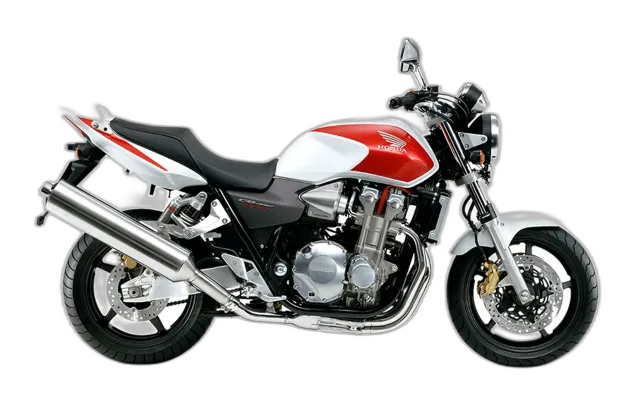
Honda CB 1300 (SC54) vs Yamaha XJR 1300 (RP06)
Honda CB 1300 vs Yamaha XJR 1300: which one's easier to live with every day.
Coming off a slow bend a gear too high, the Honda CB 1300 doesn't flinch and hauls itself out without a shudder. The Yamaha XJR 1300 weaves and wallows through it.
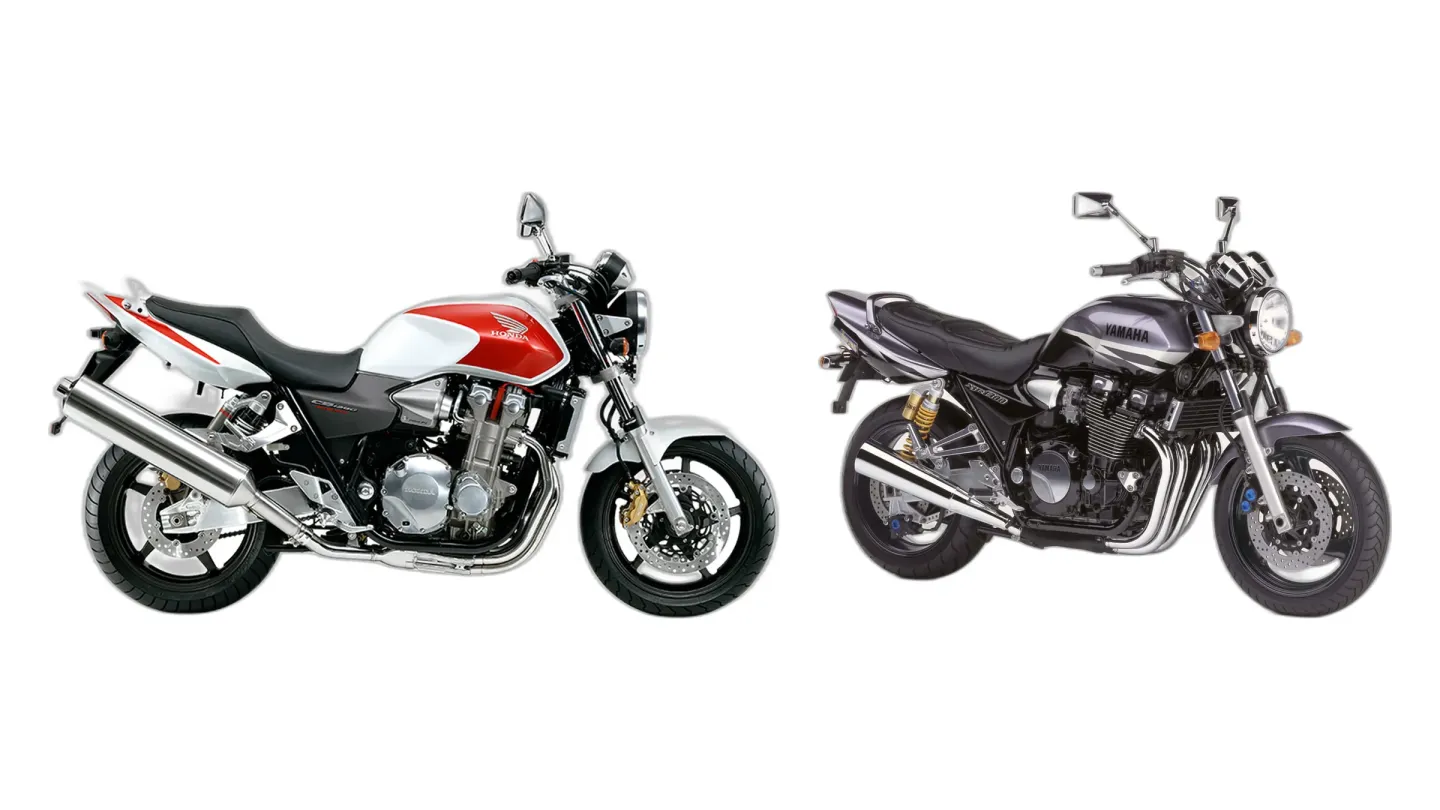
So which one do you buy?
The CB 1300 has the edge if…
Sporty riding on twisty roads
Slight edge: CB 1300
Through a string of corners, the CB 1300 feels a little more eager. That comes from better suspension and stronger brakes. The gap is small, so ride both.
What makes each one tick
CB 1300
The CB 1300's chassis feels solid and doesn't get fussy at an unhurried pace. Corner entry asks for a deliberate push on the bar, since 569 lb (258 kg) won't flick from side to side. Once it's leaned in, the long wheelbase and steel cradle hold it planted on its line. Crosswinds don't shove it off line.
XJR 1300
The XJR 1300's air-cooled four spins smooth with plenty of torque, and it's at ease carrying a passenger over long distances. Factory Öhlins shocks out back take the edge off broken pavement. The air-cooled four keeps pulling.
The Voice of Experience
What actually separates them
- The XJR 1300 has the lower wet weight: 551 lb (250 kg) vs 569 lb (258 kg).
- The CB 1300 makes more peak power: 116 hp (85 kW) vs 99 hp (73 kW).
- The CB 1300 makes more peak torque: 86 lb-ft (117 Nm) vs 80 lb-ft (108 Nm).
Which one for the way you ride
Comfortable long-distance riding
Wrong job for both
For all-day comfort, both fall short. Keep the rides short and you'll get on fine with either.
A confidence-building first motorcycle
Not their thing
Learning on either of these is the hard way. A gentler bike will make you a better rider sooner.
On commuting and trips with luggage, these two are a wash. That's where your budget and your inseam get the final say.
Who each one is built for
What's good, and what you'll live with
CB 1300
What owners say
Strengths
- Silky, torquey inline‑four engine
- Excellent pillion and touring comfort
- Powerful, well‑judged brakes
Trade-offs
- Clunky gearbox action
- High fuel thirst when pushed
XJR 1300
What owners say
Trade-offs
- Soft, wallowing handling
Known problems to check before you buy
CB 1300
- 4th gear selector fork failure Early (2003‑2007) bikes are prone to jumping out of fourth gear under hard acceleration due to a weak selector fork. Honda revised the gearbox internals in the 2008 update; affected units require a gearbox rebuild or replacement.
XJR 1300
No confirmed faults on file yet. That's not the same as fault-free.
What they share
- Engine
- Inline-four
- Fuel capacity
- 5.5 US gal (21 L)
- Fork
- Telescopic
- Front tire
- 120/70-17
- Rear tire
- 180/55-17
Where the spec sheets split
| CB 1300 | XJR 1300 | |
|---|---|---|
| Seat height | 31.1 in (790 mm) | 31.3 in (795 mm) |
| Wet weight | 569 lb (258 kg) | 551 lb (250 kg) |
| CB 1300 | XJR 1300 | |
|---|---|---|
| Displacement | 1284 cc | 1251 cc |
| Cooling | Liquid-cooled | Air-cooled |
| Power | 116 hp (85 kW) | 99 hp (73 kW) |
| Peak power at | 7,500 rpm | 8,000 rpm |
| Torque | 86 lb-ft (117 Nm) | 80 lb-ft (108 Nm) |
| Peak torque at | 5,500 rpm | 6,000 rpm |
| CB 1300 | XJR 1300 | |
|---|---|---|
| Gearbox | 6-speed | 5-speed |
What comes fitted, what costs extra
| CB 1300 | XJR 1300 | |
|---|---|---|
| ABS | Standard (from 2007) | Not offered |
| Slipper Clutch | Standard (from 2018) | Not offered |
Head to head, area by area
Both bikes on the same scale, one area at a time.