By NastyNils·
Motorcycle comparison · Naked Bike
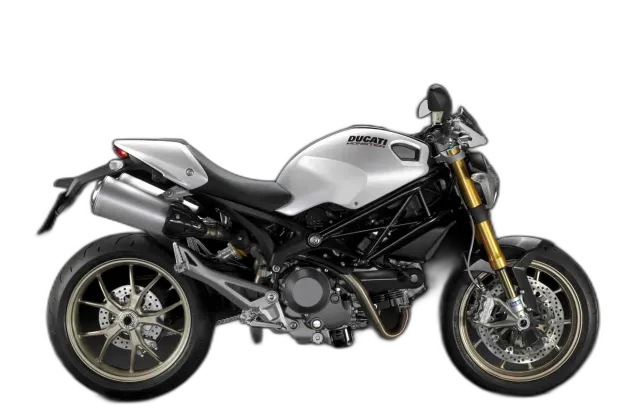
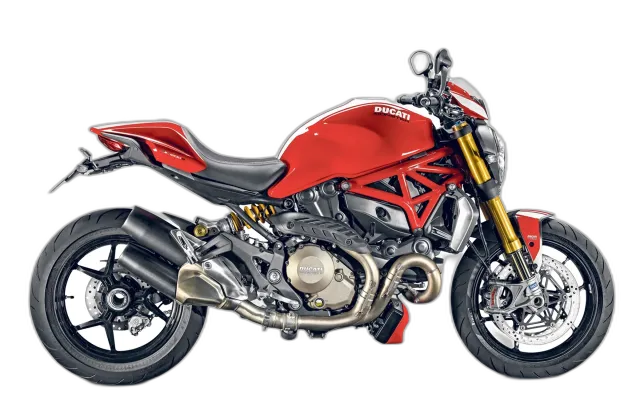
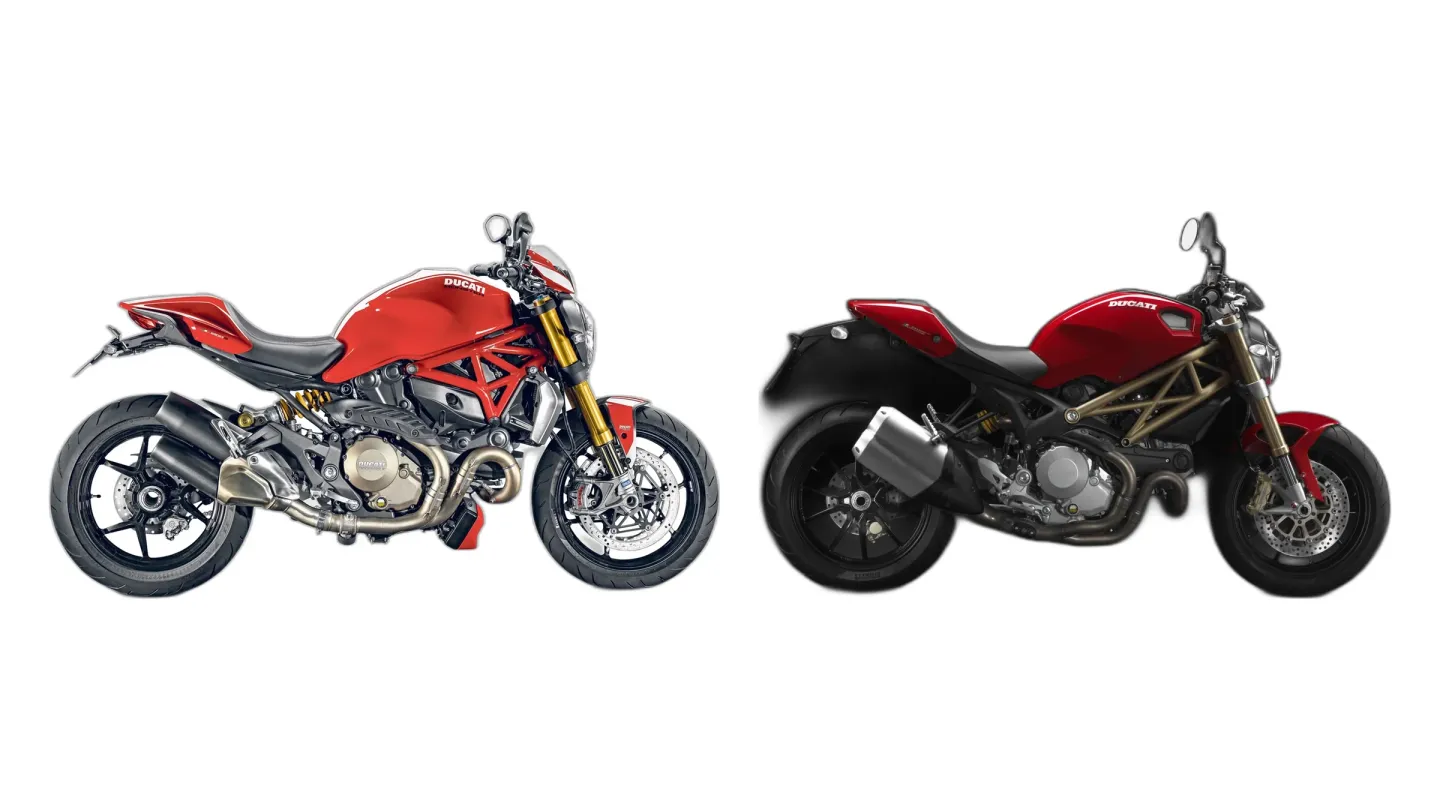
Ducati Monster 1200 (MY2014) vs Monster 1100 Evo (MY2011)
Ducati Monster 1200 vs Monster 1100 Evo: no fairing, no excuses. Here's how to choose.
You'll feel the Ducati Monster 1200 shove hard the instant you open the throttle from low revs. The Ducati Monster 1100 Evo's throttle saves its best for the midrange, where the air-cooled twin's got its thickest grunt. It pulls strongly there, and the exhaust sings.
So which one do you buy?
The Monster 1200 has the edge if…
Sporty riding on twisty roads
Narrow edge: Monster 1200
In the twisties, the Monster 1200 asks a bit less of you to go quickly. The difference is better suspension and harder acceleration. Call it a modest edge.
Daily commuting & city riding
Slight edge: Monster 1200
The Monster 1200 edges it for the daily grind. It's a small gap, not a reason on its own.
Keeping running costs low
Small edge: Monster 1200
For the money you spend after the purchase, the Monster 1200 nudges ahead. The gap is too small to plan a budget around.
What makes each one tick
Monster 1200
Through the wide bar, the Monster 1200 tells you exactly what its front tire's doing. On corner entry, the seat and pegs put weight over the front wheel, and the bike tips in where the bar points it. In a tight switchback, the long wheelbase hunts for exit room the road doesn't have. The exhaust doesn't soften a thing.
Monster 1100 Evo
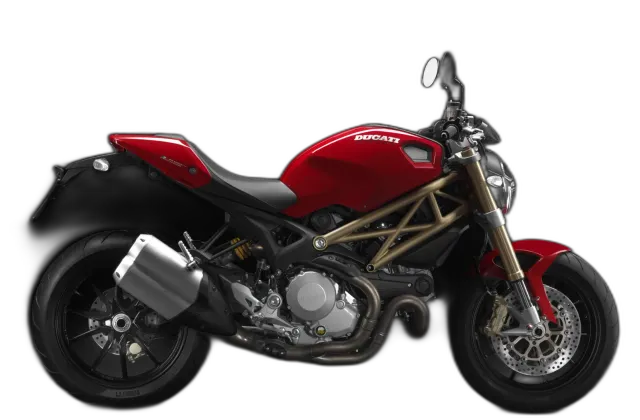
On Texas Hill Country bends, the Monster 1100 Evo's light trellis frame lets it flick from one lean to the next with a small push on the bar. A sharp bump doesn't get smoothed away: the firm suspension passes it straight to the seat. It's tiring over a long day. The front end snaps into the next corner.
Nils rode the Monster 1100 Evo in 2013 (1000PS test report).
The Voice of Experience
What actually separates them
- The Monster 1200 has the lower seat: 30.9 in (785 mm) vs 31.9 in (810 mm).
- The Monster 1100 Evo has the lower wet weight: 414 lb (188 kg) vs 461 lb (209 kg).
- The Monster 1200 makes more peak power: 135 hp (99 kW) vs 100 hp (74 kW).
Which one for the way you ride
Comfortable long-distance riding
Wrong job for both
For all-day comfort, both fall short. Keep the rides short and you'll get on fine with either.
A confidence-building first motorcycle
Not built for this
Learning on either of these is the hard way. A gentler bike will make you a better rider sooner.
Who each one is built for
What's good, and what you'll live with
Monster 1200
Strengths
- Brakes bite hard, easy to modulate
- Low-end shove beats the spec
- Front-end feedback, precise and constant
- At home in city traffic
- Confidence holds on wet roads
Trade-offs
- No storage, no weather cover
- Long wheelbase hates tight switchbacks
- Wind punishes taller riders
- Cluster looks good, reads poorly
- Abrupt fueling and throttle response (2014–2016)
Monster 1100 Evo
What owners say
Strengths
- Head‑turning Italian style
- Torque‑rich, characterful engine
Trade-offs
- Limited long‑distance comfort
Known problems to check before you buy
Monster 1200
- Rear brake performance loss — hose heat damage and air permeation Recall 21V315000 The rear brake hose layout near the exhaust manifold leads to heat damage and gradual air permeation into the rear hydraulic system, reducing rear brake effectiveness over time. Owners report the rear brake feels soft, requires bleeding repeatedly, and in some cases fails entirely. Two NHTSA recall campaigns (21V-315 and 21V-335) and the parallel Ducati internal campaigns CR215 / CR217 ultimately addressed the cause via reinforced replacement hoses. Pre-recall bikes that have not been to a dealer continue to exhibit the symptom.
- Jerky throttle, surge at low RPM (pre-facelift only) MY2014–2016 Monster 1200 and 1200 S exhibit jerky on/off throttle transitions and a stutter or surge at steady ~4,800 rpm. Some bikes are reported to enter limp mode after aggressive throttle action. Root causes flagged in community discussion include lean Euro 3 mapping, twist-grip electronics, and throttle-position-sensor (TPS) issues. Common fixes are an ECU flash, RapidBike EVO add-on module, dyno tune, or replacement of the throttle body assembly. The 2017 facelift's revised electronics, IMU, and updated mapping materially improved the issue; post-facelift bikes do not exhibit this behavior to the same degree.
- High-current stator-to-R/R connector burn-out The high-current connector between the stator and the regulator/rectifier is prone to corrosion, heat damage, and ultimately melt-down. Symptoms include voltage that fails to climb above approximately 12.6 V at 4,000 rpm, a visibly burned connector, and eventual battery or electronics damage. This is a documented Ducati family issue that pre-dates the Monster 1200 and is confirmed for it. The permanent fix is to solder the wires direct or replace with a marine-grade waterproof connector.
- Hydraulic clutch slave cylinder leak The stock hydraulic clutch slave cylinder leaks at the weep hole (DOT brake fluid) or through the pushrod O-rings (engine oil). The condition is widely reported across the Ducati hydraulic-clutch range and is confirmed for the Monster 1200. Workarounds include replacing the pushrod O-rings or upgrading to an aftermarket slave cylinder (e.g., Oberon).
- Internal rust formation in the fuel tank Multiple owners — including some on relatively new 1200 S bikes — report internal tank rust forming in patches around overflow and vent fittings. Suspected cause is dissimilar-metal corrosion accelerated by E10 fuel water separation when the bike is stored with low fuel. Ducati's response has been inconsistent across dealerships.
- Fuel pump harness break / fuel level sensor failure The fuel pump red wire breaks inside the harness potting; ethanol can corrode wire insulation and cause intermittent shorts; the fuel-level sensor fails. Symptom: the bike will not start after a ride (no pump prime), then starts again after 20–30 minutes of cool-down. Replacement harness is a low-cost Ducati part. The fuel-level sensor part was reportedly revised on the 2019 1200 S.
- Rear cylinder heat in stop-and-go traffic The Testastretta 11° rear cylinder is positioned directly under the rider's right thigh, and the rear exhaust header amplifies the heat. In stop-and-go traffic in warm weather, the heat is described as uncomfortable to painful. Once the bike is moving, the heat dissipates. This is a design-inherent characteristic of the rear-cylinder-forward L-twin layout, not a defect. Owner workarounds include ceramic-coated headers, heat shields, and protective riding gear.
- Oil pressure sensor seal leak The oil pressure sensor switch develops a weep at the seal between the metal body and the plastic switch portion. The drip leaves engine oil on the engine cases. This is a common Ducati family issue, confirmed for the Monster 1200. The fix is inexpensive (sensor or O-ring replacement).
- Rough running and stalling at low ambient temperatures The bike starts rough, RPM hunts, and the engine stalls when ambient temperature is below approximately 64 °F (18 °C). Causes flagged in community discussion include tight exhaust valve clearances, EVAP canister blockage, and ECU mapping. A common workaround is leaving the ignition on for 30 seconds before cranking to allow the fuel pump to prime and sensors to initialize. The issue is typically resolved after the next valve adjustment service.
- Shared rider/pillion peg bracket — cramped layout (pre-facelift) Pre-2017 Monster 1200 / 1200 S uses a shared rider/pillion peg bracket and a tight pillion seat. Reports describe a cramped pillion experience and limited rider footroom (riders often "on toes" rather than flat on the pegs). Ducati addressed this with the 2017 facelift, which introduced separate rider and pillion peg brackets.
- Side stand interlock switch contamination and failure The side stand cut-out switch becomes contaminated with chain lubricant and grit and fails. The failure mode is either preventing the bike from starting, or failing to cut the engine when the stand is down with the bike in gear (loss of safety interlock). This is a long-standing Ducati family issue dating back roughly two decades and is confirmed for the Monster 1200.
Monster 1100 Evo
No confirmed faults on file yet. That's not the same as fault-free.
What they share
- Gearbox
- 6-speed
- Final drive
- Chain
- Front tire
- 120/70-17
Where the spec sheets split
| Monster 1200 | Monster 1100 Evo | |
|---|---|---|
| Seat height | 30.9 in (785 mm) | 31.9 in (810 mm) |
| Wet weight | 461 lb (209 kg) | 414 lb (188 kg) |
| Monster 1200 | Monster 1100 Evo | |
|---|---|---|
| Displacement | 1198 cc | 1078 cc |
| Engine | 90° V-twin | L-twin |
| Cooling | Liquid-cooled | Air/oil-cooled |
| Power | 135 hp (99 kW) | 100 hp (74 kW) |
| Peak power at | 8,750 rpm | 7,500 rpm |
| Torque | 87 lb-ft (118 Nm) | 76 lb-ft (103 Nm) |
| Peak torque at | 7,250 rpm | 6,000 rpm |
| Top speed | 155 mph (250 km/h) | 130 mph (209 km/h) |
| Monster 1200 | Monster 1100 Evo | |
|---|---|---|
| Fuel economy | 36 mpg (US) / 6.5 L/100 km | 34 mpg (US) / 6.89 L/100 km |
| Fuel capacity | 4.6 US gal (17.5 L) | 3.6 US gal (13.5 L) |
| Monster 1200 | Monster 1100 Evo | |
|---|---|---|
| Rear tire | 190/55-17 | 180/55-17 |
What comes fitted, what costs extra
| Monster 1200 | Monster 1100 Evo | |
|---|---|---|
| Ride Modes | Standard | Not offered |
| Quickshifter | Option (from 2017) | Not offered |
| Slipper Clutch | Standard | Not offered |
| TFT Display | Standard | Not offered |
Head to head, area by area
Both bikes on the same scale, one area at a time.