By NastyNils·
Motorcycle comparison · Electric Off-Road
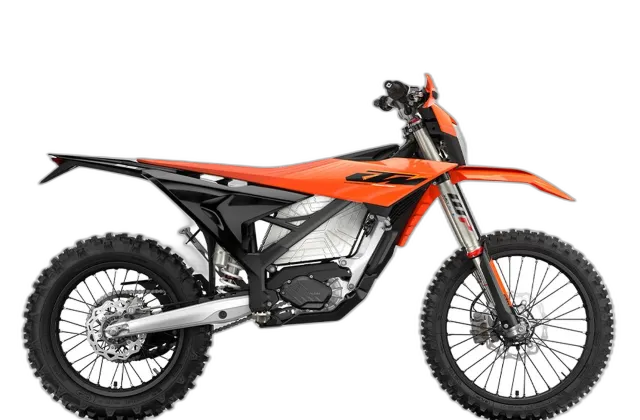
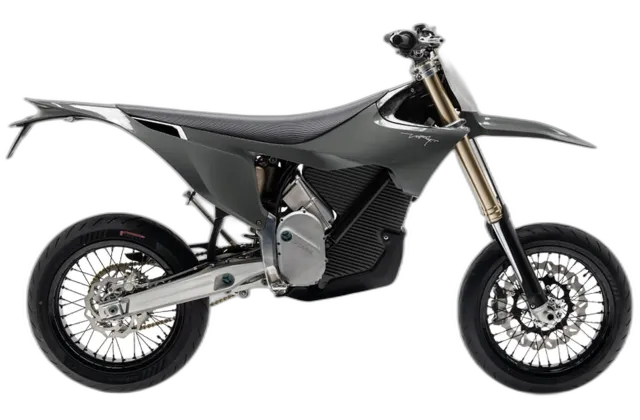
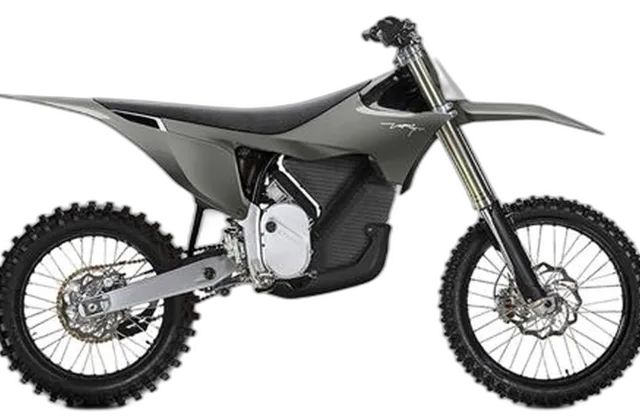
Stark Future VARG MX (MY2023) vs KTM Freeride E-XC (MY2023)
Stark Future VARG MX vs KTM Freeride E-XC: which one belongs in your truck bed?
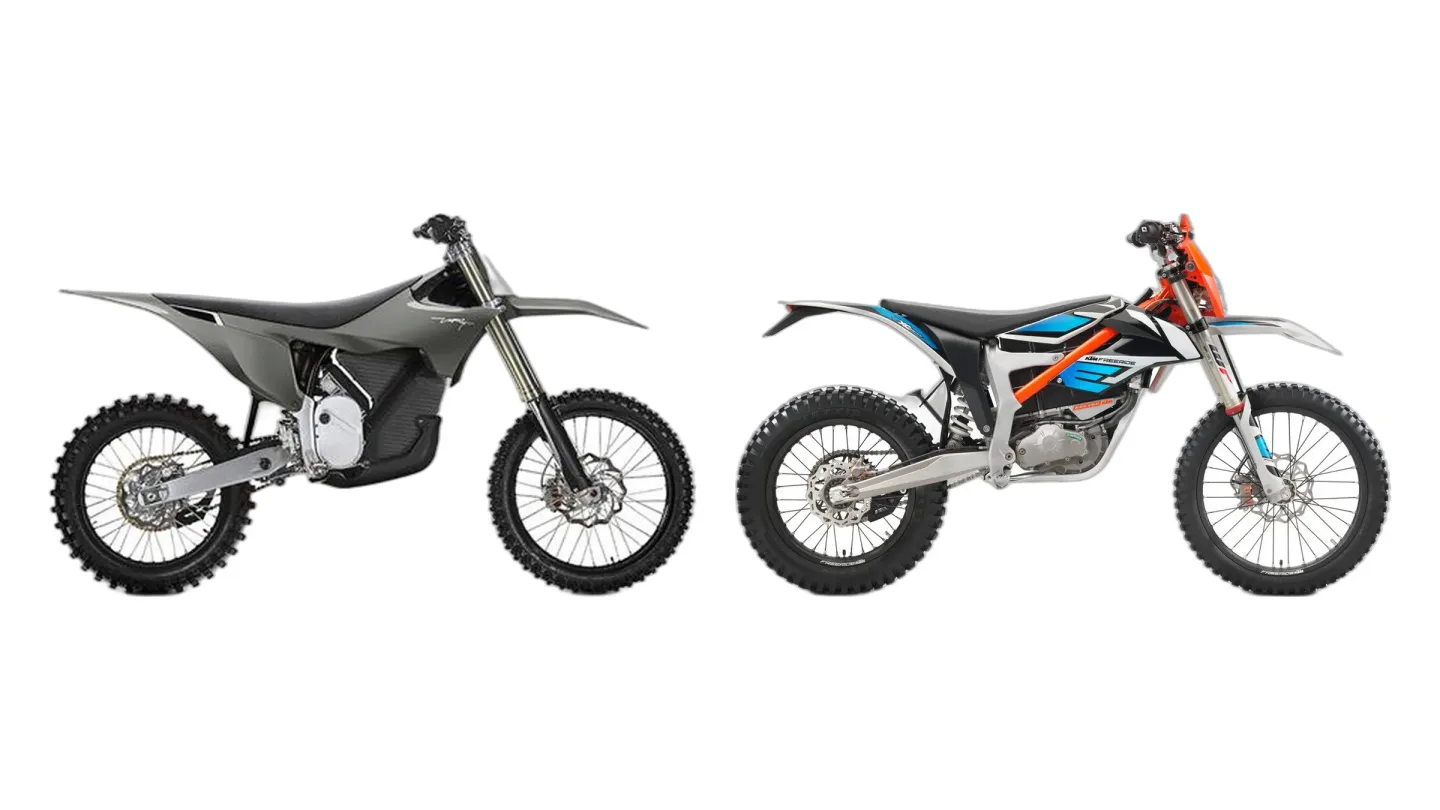
You'll feel the Stark Future VARG MX snap forward the instant you crack its throttle out of a tight trail turn. The KTM Freeride E-XC's quick steering tucks it inside the turn.
So which one do you buy?
The VARG MX has the edge if…
Real off-road capability
Small edge: VARG MX
In the dirt, the VARG MX edges ahead. Not enough to decide it alone.
Which one's the smarter buy
Money won't decide it
The VARG MX costs more, but the Freeride E-XC is the cheaper used option. Neither is the clear better buy for the money. Your choice depends on what you want it for.
What makes each one tick
VARG MX
The VARG MX hurls itself at every obstacle on a motocross track with explosive acceleration, and its chassis holds its balance through the hit. There's 80 hp (60 kW) behind a throttle that answers crisply and pulls evenly as you roll it on. A softer map from the bar-mounted phone reins that pull in for twisty singletrack, while the full map won't hold anything back in deep sand. Only chain slap and tire hiss break the quiet.
Freeride E-XC
The Freeride E-XC darts through slow, twisting sections on a steep head angle and a compact frame, and its weight doesn't show. Its power modes stretch the torquey motor from a mellow trainer to something with real bite. There's barely a sound as the brake lever hauls it down. The narrow chassis threads through gaps.
The Voice of Experience

What actually separates them
- The Freeride E-XC has the lower seat: 35.8 in (910 mm) vs 37.8 in (960 mm).
- The VARG MX makes more peak power: 80 hp (60 kW) vs 24 hp (18 kW).
- The VARG MX makes more peak torque: 59 lb-ft (80 Nm) vs 31 lb-ft (42 Nm).
Which one for the way you ride
Who each one is built for
What's good, and what you'll live with
VARG MX
What owners say
Strengths
- Explosive yet tunable power delivery
Trade-offs
- Early production reliability concerns
Freeride E-XC
What owners say
Strengths
- Nimble handling on trails
Known problems to check before you buy
VARG MX
- Powertrain failure Motor or inverter unit failures causing shutdown or loss of power.
- Water pump failure Water pump failures reported on early units, risking overheating.
- Software and connectivity glitches Intermittent phone app and Bluetooth connectivity issues.
Freeride E-XC
- 12V battery drain and boot-up issues The 12V auxiliary battery can drain quickly, causing boot-up failures and requiring a jump-start or replacement.
What they cost used
These prices compare a 3-year-old VARG MX with a 3-year-old Freeride E-XC.
- VARG MX
- about $9,700
- Freeride E-XC
- about $6,900
At three years old, the Stark Future VARG MX sits around $9,700 while the KTM Freeride E-XC lands near $6,900. That's a $2,800 gap in the KTM's favor. These are US market estimates, not live listings.
What they share
- Engine
- Electric
- Cooling
- Liquid-cooled
- Gearbox
- 1-speed
- Front tire
- 80/100-21
Where the spec sheets split
| VARG MX | Freeride E-XC | |
|---|---|---|
| Seat height | 37.8 in (960 mm) | 35.8 in (910 mm) |
| VARG MX | Freeride E-XC | |
|---|---|---|
| Power | 80 hp (60 kW) | 24 hp (18 kW) |
| Torque | 59 lb-ft (80 Nm) | 31 lb-ft (42 Nm) |
| VARG MX | Freeride E-XC | |
|---|---|---|
| Rear tire | 110/90-19 | 120/90-18 |
| Ground clearance | 14.8 in (375 mm) | 13.4 in (340 mm) |
| Front travel | 12.2 in (310 mm) | 9.8 in (250 mm) |
| Rear travel | 12.2 in (310 mm) | 10.2 in (260 mm) |
Head to head, area by area
Both bikes on the same scale, one area at a time.