By NastyNils·
Motorcycle comparison · Cruiser
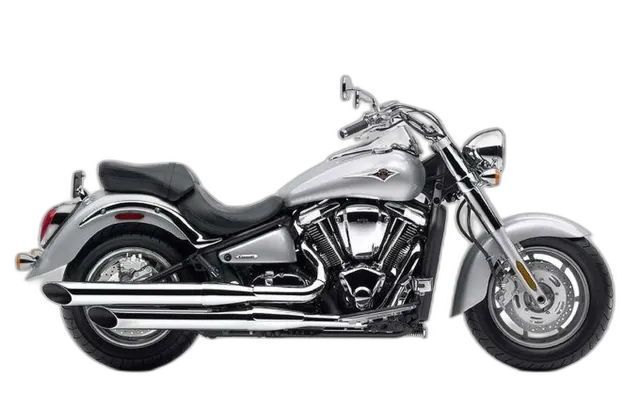
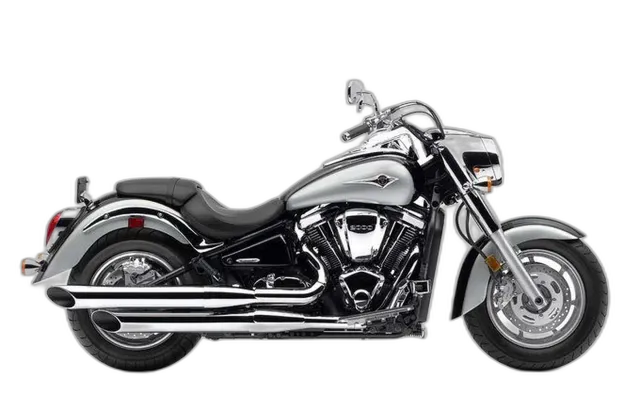
Kawasaki VN 2000 Classic (VN2000-MY2004) vs VN 2000 (VN2000-MY2005)
Tip the Kawasaki VN 2000 Classic into a long sweeper and it's the chromed nacelle and huge rear tire that turn heads at the apex. The 2005 Kawasaki VN 2000 doesn't fight you on the way into that open arc. Even hairpins don't stay scary for long.
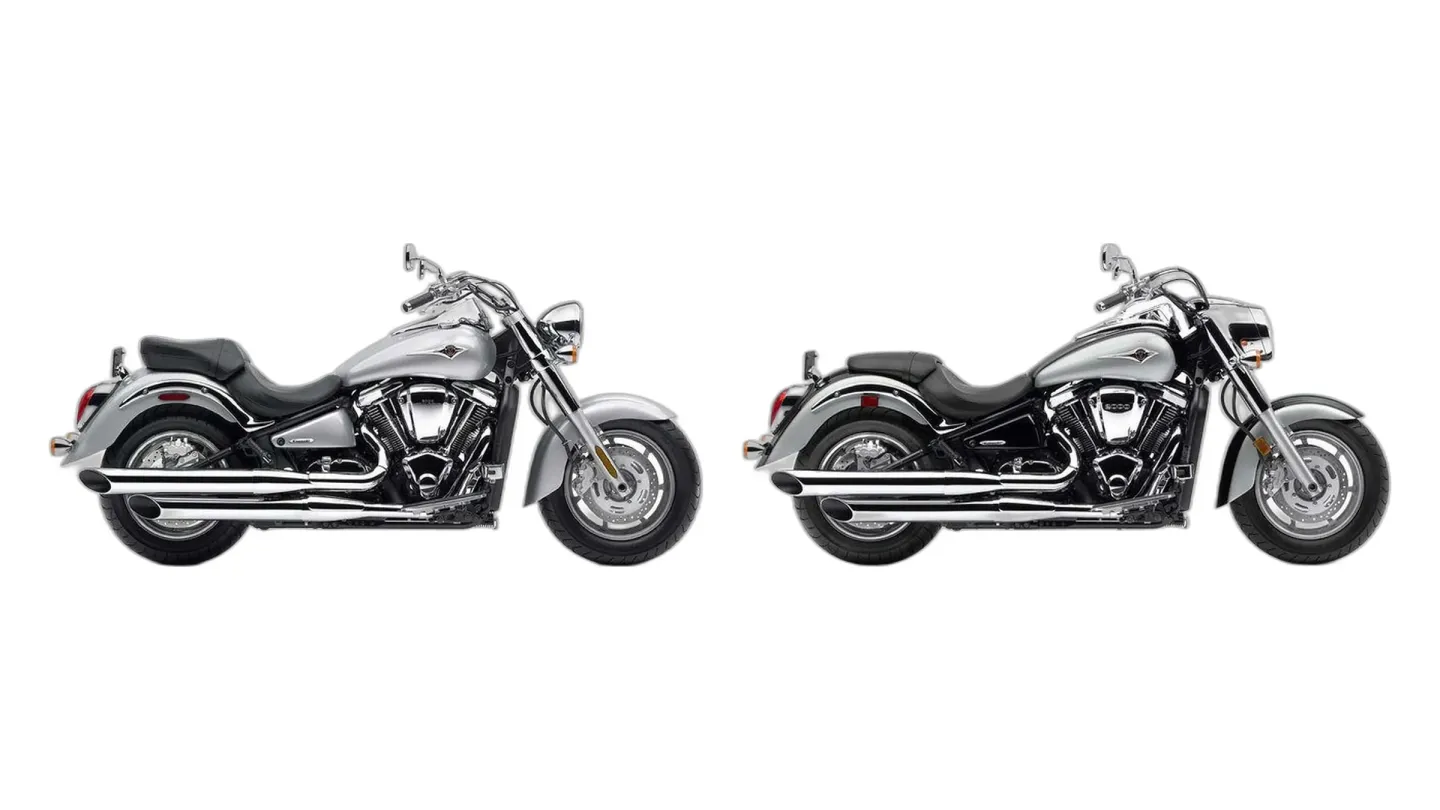
So which one do you buy?
The 2005 VN 2000 has the edge if…
Character, looks and sound
Slight edge: 2005 VN 2000
The 2005 VN 2000 has a bit more presence and character. Most of that is a purer look and more engine character. This one still comes down to taste.
What makes each one tick
VN 2000 Classic
There's a hard shove from the Classic's V-twin right above idle, and the cylinders pulse and clank like factory machinery the whole way. The suspension doesn't soak up a bump: it passes every crack in the pavement straight into the seat. High speed suits the chassis. At triple digits, the front end stays put.
Nils rode the VN 2000 Classic in Austria in 2004 (NastyNils Testride).
2005 VN 2000
The 2005 VN 2000 doesn't treat any throttle input as small, since even a slight twist of the grip gets something enormous moving. Into a tight bend, it's a light trail of rear brake that keeps all that weight on its line. Rough throttle mid-corner isn't forgiven. Every pushrod on those cylinders is working a valve.
The Voice of Experience

What actually separates them
- The VN 2000 Classic has the lower wet weight: 814 lb (369 kg) vs 838 lb (380 kg).
- The 2005 VN 2000 makes more peak power: 116 hp (85 kW) vs 103 hp (76 kW).
- The 2005 VN 2000 makes more peak torque: 141 lb-ft (191 Nm) vs 131 lb-ft (177 Nm).
Which one for the way you ride
Daily commuting & city riding
Both fall short
Commuting isn't the strong suit of either bike. If it's your main use, that matters more than which of these wins.
Comfortable long-distance riding
Not their thing
Hours in the saddle won't flatter either of these. They're happier on shorter runs.
Sporty riding on twisty roads
Neither one fits
Twisty roads aren't where either one shines. Ride them for the scenery, not the corners.
Count running costs as a draw. The deal on the table and the condition of the bike matter more here.
Who each one is built for
What's good, and what you'll live with
VN 2000 Classic
What owners say
Strengths
- Epic road presence
- Massive, relentless torque
- Strong, industrial engine feel
Trade-offs
- Stiff, underdamped suspension
- Uncomfortable stock seat
- Short sidestand (2004 models)
2005 VN 2000
Strengths
- Startup Is An Event
- Real Pushrod V-Twin
- The Radiator Disappears
- Rock-Steady At Speed
- A Magnet In Every Lot
Trade-offs
- Not A Twisties Weapon
- Wide At Walking Pace
- Thirsty For Oil
- No ABS Fitted
- Extremely heavy at low speed
Known problems to check before you buy
VN 2000 Classic
- Excessive oil consumption Some engines consume noticeable amounts of oil between scheduled service intervals, requiring owners to monitor oil levels regularly and top up between fluid changes.
- Clutch cable breakage The clutch cable can fray and snap without warning, leaving the rider stranded. A spare cable is recommended for long trips.
- Noisy hydraulic lifters Some engines exhibit a prominent ticking from the valve train, attributed to hydraulic lash adjusters. Usually benign but can be disconcerting.
2005 VN 2000
- Rear belt pulley bearing failure (single‑bearing hub) Early production models feature a single-bearing rear belt pulley hub that is prone to premature wear and failure under engine torque, causing excessive pulley wobble, drive belt tracking issues, or potentially locking the rear wheel.
- Drive pulley and output shaft spline stripping On early models (2004–2005), the splines on the drive pulley and transmission output shaft can wear or strip, leading to failure. Kawasaki issued a fix from 2006 onwards.
- Excessive oil consumption Many VN2000 engines consume up to half a quart of oil every 1,000 miles despite normal compression and clean spark plug readings. The cause is not widely agreed upon, but regular top‑ups are required.
- Hydraulic lifter noise (HLA ticking) Some owners report a ticking noise from the hydraulic lifters. Often considered normal but can be annoying.
What they share
- Seat height
- 26.8 in (680 mm)
- Displacement
- 2053 cc
- Engine
- 52° V-twin
- Cooling
- Liquid-cooled
- Fuel capacity
- 5.5 US gal (21 L)
- Gearbox
- 5-speed
- Final drive
- Belt
- Front brake
- 300 mm
- Front tire
- 150/80-16
- Rear tire
- 200/60-16
Where the spec sheets split
| VN 2000 Classic | 2005 VN 2000 | |
|---|---|---|
| Wet weight | 814 lb (369 kg) | 838 lb (380 kg) |
| VN 2000 Classic | 2005 VN 2000 | |
|---|---|---|
| Power | 103 hp (76 kW) | 116 hp (85 kW) |
| Peak power at | 4,800 rpm | 5,000 rpm |
| Torque | 131 lb-ft (177 Nm) | 141 lb-ft (191 Nm) |
| Peak torque at | 3,350 rpm | 3,000 rpm |
| Top speed | 115 mph (185 km/h) | 120 mph (193 km/h) |
| VN 2000 Classic | 2005 VN 2000 | |
|---|---|---|
| Fuel economy | 43 mpg (US) / 5.5 L/100 km | 35 mpg (US) / 6.72 L/100 km |
Head to head, area by area
Both bikes on the same scale, one area at a time.