By NastyNils·
Motorcycle comparison · Adventure vs Sport Tourer
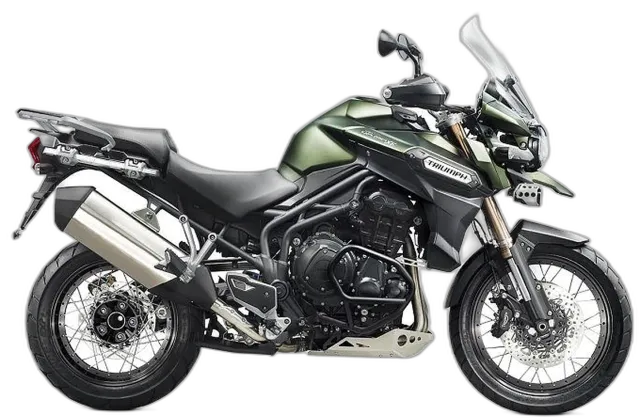
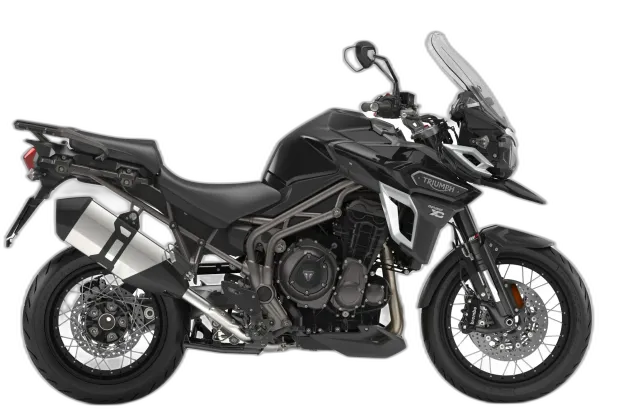
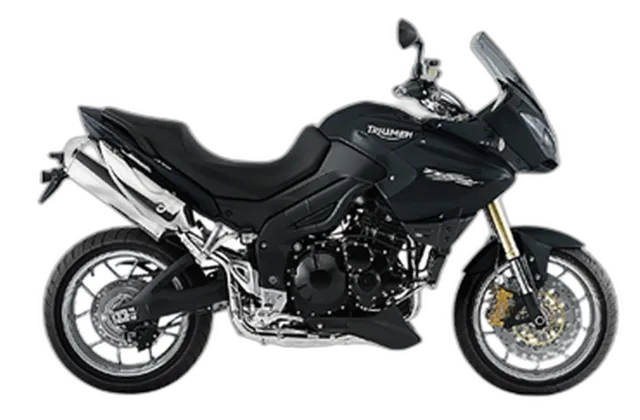
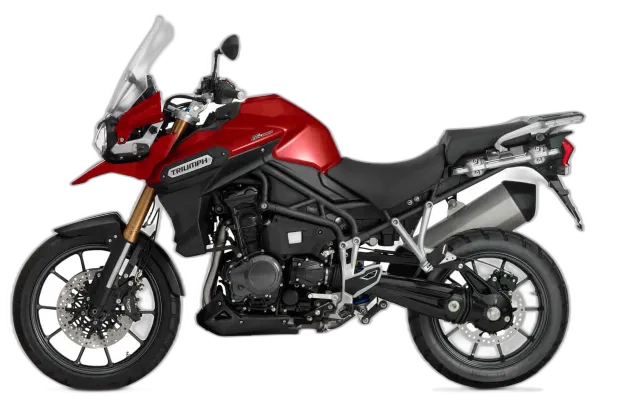
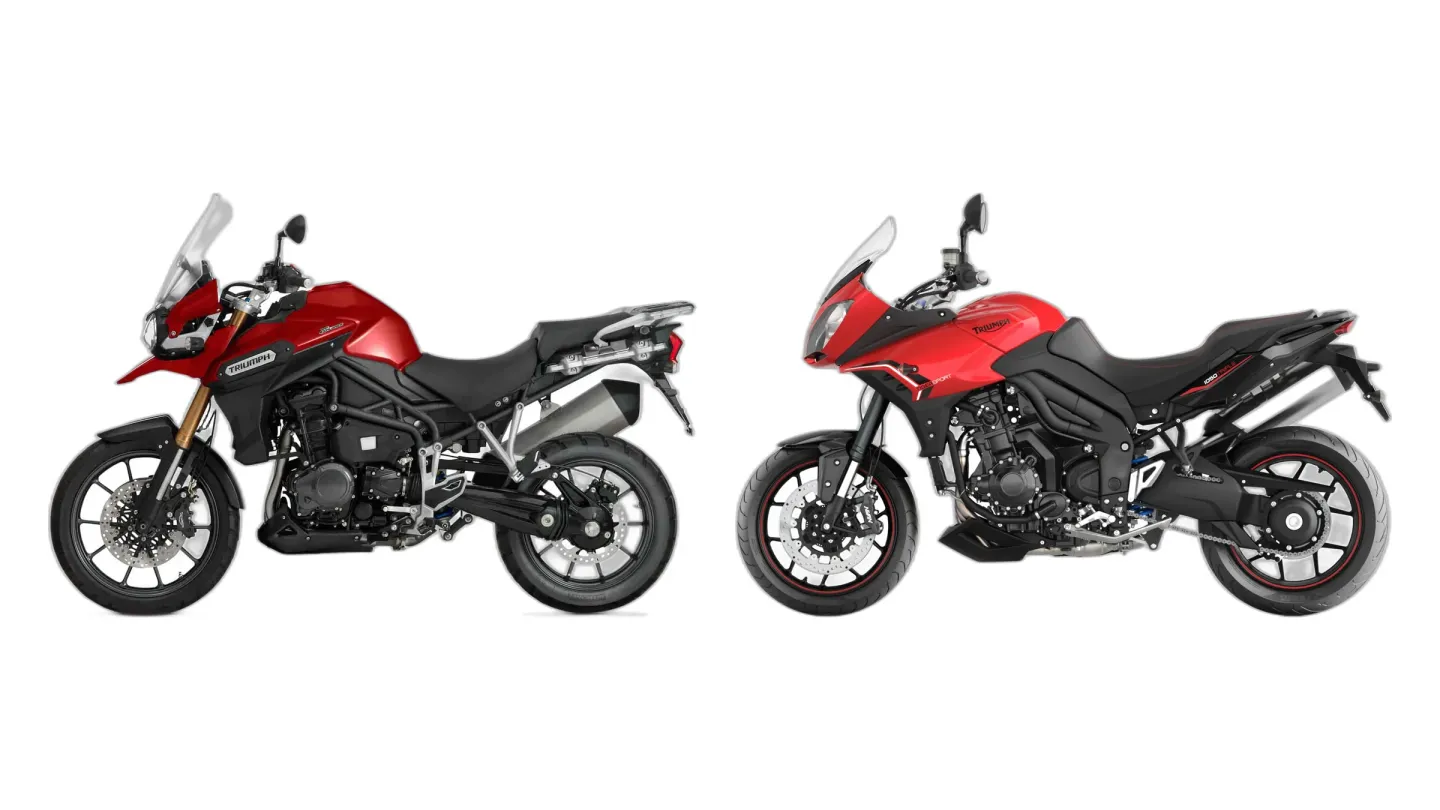
Triumph Tiger Explorer (V13VG) vs Tiger Sport 1050 (G7475)
Triumph Tiger Explorer vs Tiger Sport 1050: long days, loaded bags, one choice to make.
You'll feel an early Triumph Tiger Explorer stumble and surge at low-speed throttle. The Triumph Tiger Sport 1050 pulls cleanly from down low, and there's usable shove everywhere. Up high, it's a hungry rush to redline.
So which one do you buy?
The Tiger Explorer has the edge if…
Sporty riding on twisty roads
Small edge: Tiger Explorer
In the twisties, the Tiger Explorer asks a bit less of you to go quickly. The reason: better suspension. Call it a modest edge.
Traveling with luggage
A touch ahead: Tiger Explorer
Loaded for the road, the Tiger Explorer comes out a touch ahead. Credit more comfort on long stints. Don't read too much into a gap this narrow.
Comfortable long-distance riding
Edges it: Tiger Explorer
The Tiger Explorer should leave you a bit fresher after a long day. Should, not will: the margin is small.
The Tiger Sport 1050 has the edge if…
Daily commuting & city riding
Inches ahead: Tiger Sport 1050
Day in, day out, the Tiger Sport 1050 nudges ahead in traffic. It isn't a big enough gap to plan around.
Which one's the smarter buy
Apples and oranges
The Tiger Explorer and Tiger Sport 1050 sit in different classes, so neither is the clear better buy for the money. You're weighing an adventure setup against a sport tourer, not a price tag.
What makes each one tick
Tiger Explorer
The Tiger Explorer settles in for a long day on the Blue Ridge Parkway, with a roomy reach to the bars and a seat that's padded for hour after hour. Every squeeze of the brake lever has 571 lb (259 kg) of bike to bring to a stop. Off pavement, it's top-heavy. The triple's exhaust howls a tune of its own.
Nils rode the Tiger Explorer in 2012 and 2013 (1000PS test reports).
Tiger Sport 1050
The Tiger Sport 1050 sits you upright behind a wide bar, and its firmer suspension keeps the chassis steady through fast bends. Corner entry comes quick off its sharp steering geometry. The gearbox doesn't like hurried shifts. The nose tucks in and holds its line.
Nils rode the Tiger Sport 1050 in 2014 (1000PS test report).
The Voice of Experience

What actually separates them
- The Tiger Sport 1050 has the lower wet weight: 518 lb (235 kg) vs 571 lb (259 kg).
- The Tiger Explorer makes more peak power: 135 hp (101 kW) vs 123 hp (92 kW).
- The Tiger Explorer makes more peak torque: 89 lb-ft (121 Nm) vs 77 lb-ft (104 Nm).
Which one for the way you ride
A confidence-building first motorcycle
Not their thing
For a brand-new rider, both are the wrong place to start. Learn the basics on a smaller bike first.
Who each one is built for
What's good, and what you'll live with
Tiger Explorer
What owners say
Strengths
- Excellent long-distance comfort
Trade-offs
- First-generation teething issues
- Heavy weight hampers off-road ability
Tiger Sport 1050
What owners say
Strengths
- Torquey and smooth inline-three engine
- Comfortable and commanding riding position
Known problems to check before you buy
Tiger Explorer
- Premature cylinder head issues (certain VINs) Early production models can suffer from premature valve guide and valvetrain wear in the cylinder head, leading to excessive mechanical ticking noise and potential loss of compression.
- ECU recall Recall 14V009000 Recall to update engine control unit software to address running issues.
- Low-speed engine surging and stumbling Some owners experience erratic throttle response and power surging at low rpm, particularly with early ECU maps.
Tiger Sport 1050
No confirmed faults on file yet. That's not the same as fault-free.
What they cost used
Both bikes priced used at the same age: 11 years old.
- Tiger Explorer
- about $9,000
- Tiger Sport 1050
- about $7,600
At 11 years old, the Tiger Explorer sits around $9,000 while the Tiger Sport 1050 lands near $7,600. That's a $1,400 gap in the Sport's favor. These are US market estimates, not live listings.
What they share
- Engine
- Inline-three
- Cooling
- Liquid-cooled
- Fuel capacity
- 5.3 US gal (20 L)
- Gearbox
- 6-speed
- Fork
- Upside-down (USD)
Where the spec sheets split
| Tiger Explorer | Tiger Sport 1050 | |
|---|---|---|
| Seat height | 33.0 in (837 mm) | 32.7 in (830 mm) |
| Wet weight | 571 lb (259 kg) | 518 lb (235 kg) |
| Tiger Explorer | Tiger Sport 1050 | |
|---|---|---|
| Displacement | 1215 cc | 1050 cc |
| Power | 135 hp (101 kW) | 123 hp (92 kW) |
| Torque | 89 lb-ft (121 Nm) | 77 lb-ft (104 Nm) |
| Tiger Explorer | Tiger Sport 1050 | |
|---|---|---|
| Fuel economy | 35 mpg (US) / 6.7 L/100 km | 36 mpg (US) / 6.6 L/100 km |
| Tiger Explorer | Tiger Sport 1050 | |
|---|---|---|
| Final drive | Shaft | Chain |
| Front brake | 305 mm | 320 mm |
| Front tire | 110/80-19 | 120/70-17 |
| Rear tire | 150/70-17 | 180/55-17 |
| Ground clearance | 5.9 in (150 mm) | 6.1 in (155 mm) |
| Front travel | 7.5 in (190 mm) | 5.5 in (140 mm) |
| Rear travel | 7.6 in (194 mm) | 6.1 in (155 mm) |
What comes fitted, what costs extra
| Tiger Explorer | Tiger Sport 1050 | |
|---|---|---|
| Traction Control | Standard | Not offered |
| Cruise Control | Standard | Not offered |
| Tire Pressure Monitoring (TPMS) | Option | Not offered |
| Adjustable Seat Height | Standard | Not offered |
Head to head, area by area
Both bikes on the same scale, one area at a time.