By NastyNils· ·
Motorcycle comparison · Adventure
BMW R 1250 GS (K50) vs R 1300 GS (KA1)
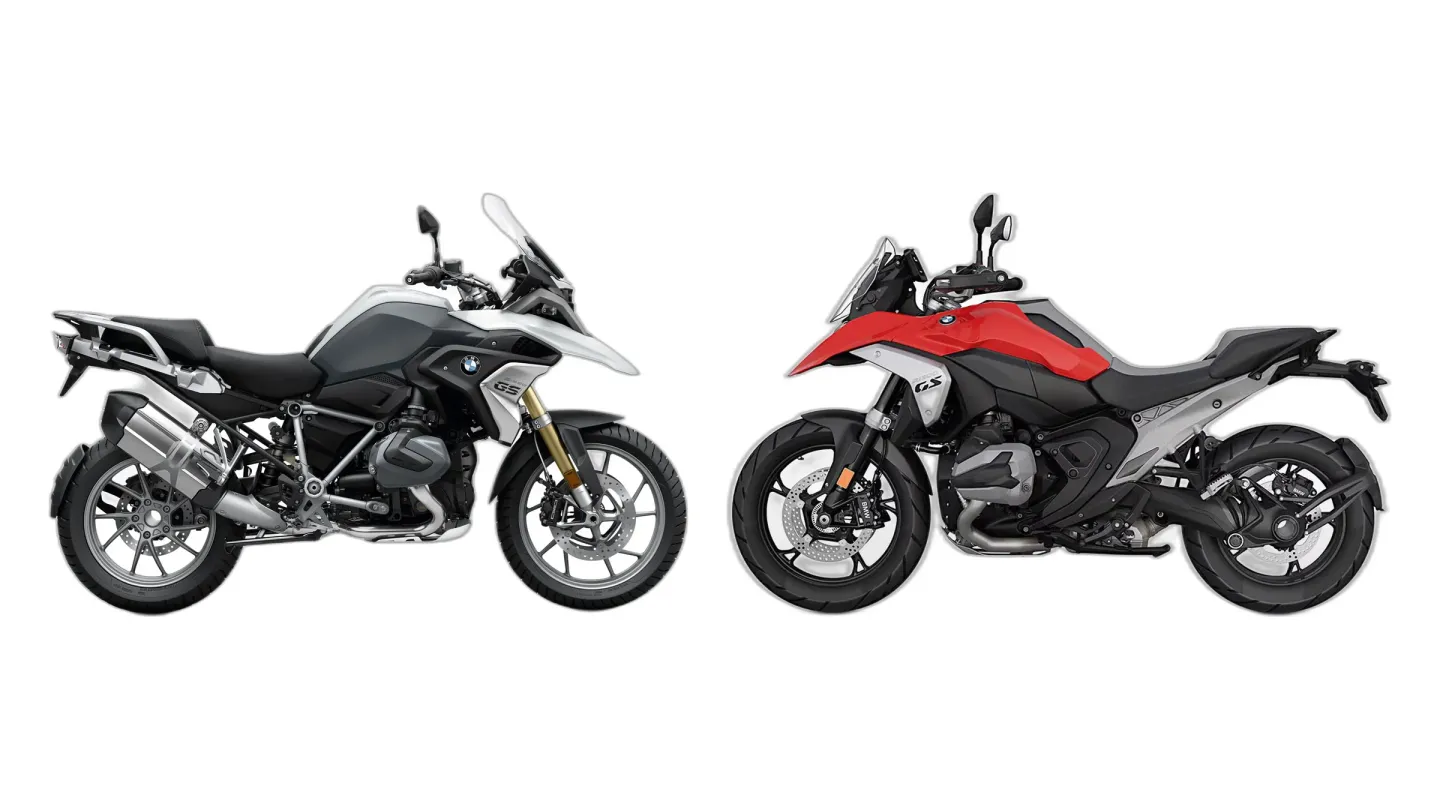
BMW R 1250 GS vs R 1300 GS: which one you'd rather spend the big miles on.
Push the BMW R 1250 GS hard down a steep run of bends, and its brakes bite and won't flinch at speed. The BMW R 1300 GS squirms with tire grip to spare.
So which one do you buy?
The R 1250 GS has the edge if…
Comfortable long-distance riding
Edges it: R 1250 GS
The R 1250 GS is slightly easier to live with on a long day. It's down to more range per tank and better wind protection.
The R 1300 GS has the edge if…
Real off-road capability
A touch ahead: R 1300 GS
For dirt roads and trails, the R 1300 GS makes slightly more sense. The difference is modest at best.
Which one's the smarter buy
Nothing in it on value
At these used prices, neither bike is the clear better buy for the money. The R 1250 GS and R 1300 GS sit close enough that the price gap won't decide the choice.
What makes each one tick
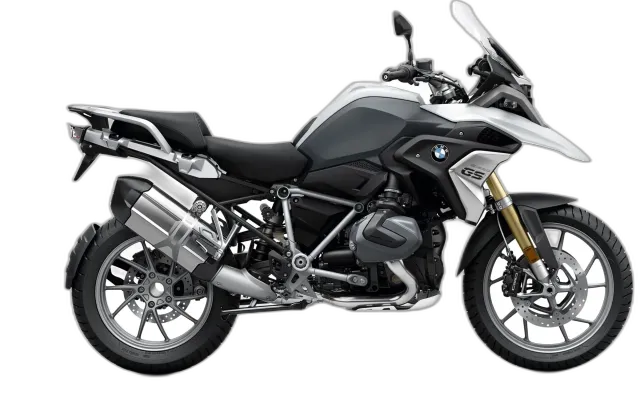
R 1250 GS
The R 1250 GS carries its boxer's crank low in the frame, and once it's rolling the whole bike settles onto its wheels. Across motorway, mountain passes, and tight switchbacks alike, the stability systems keep things predictable. When the electronic suspension adjustment dampers start to go soft on a high-mileage bike, OEM replacement is priced in a way that sends most owners straight to the aftermarket. With healthy dampers, a broken patch of wet switchback doesn't unsettle the chassis. Fatigue barely creeps in. Every switch sits right where you reach.
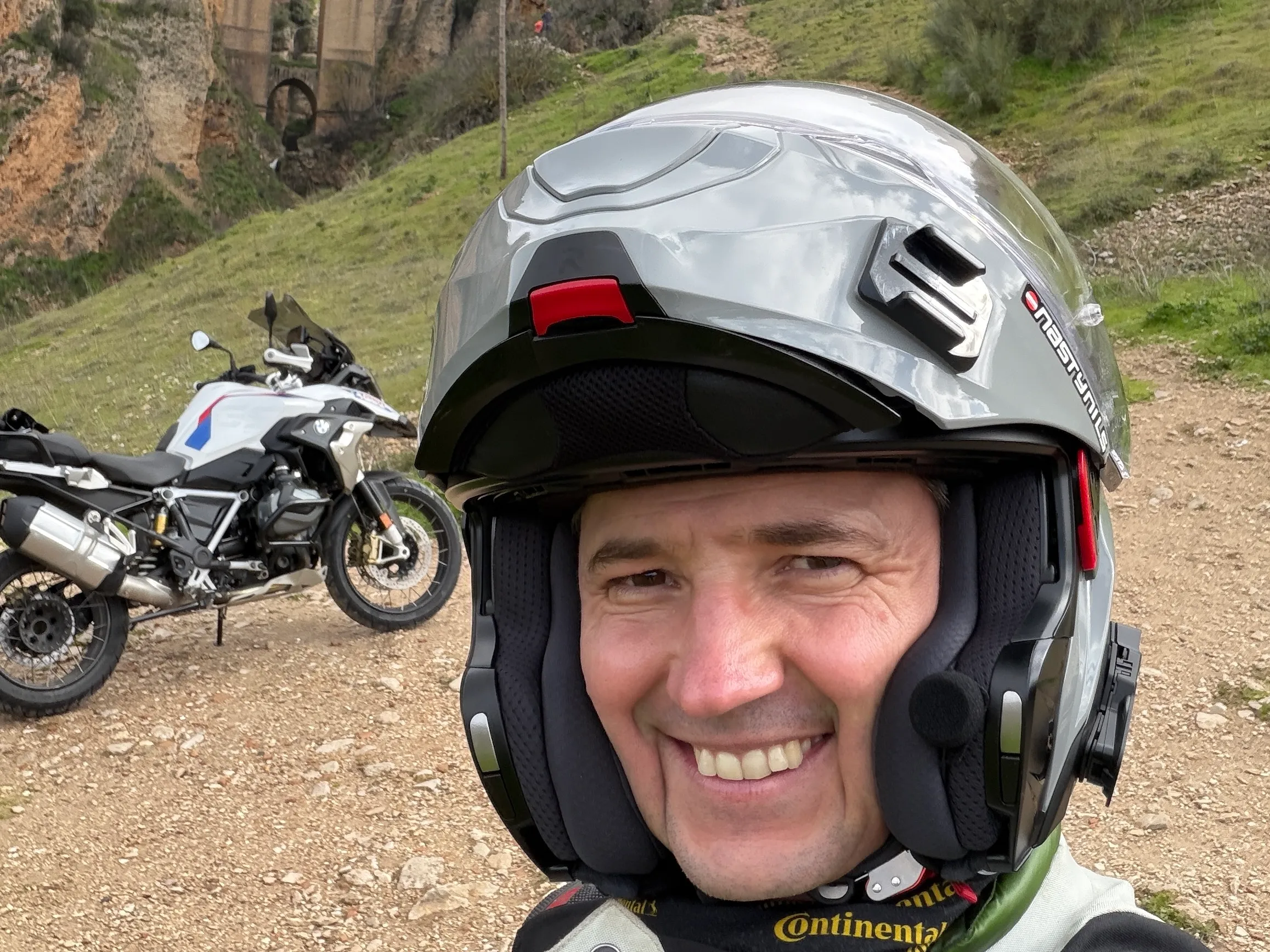
Nils rode the R 1250 GS in 2019, in Andalusia and Spain in 2021, in Austria and the Pyrenees in 2022, and in Andalusia in 2026 (NastyNils Testride).
R 1300 GS
The R 1300 GS drops into a turn off a light nudge on the bar, and its chassis gets busy as the pace climbs. The rubber has more grip than the bike can actually deploy when ridden hard. At walking pace in dirt, the bike reads the ground beneath you directly. In Dynamic, the front wheel goes light and floats once you've got the throttle wide open on a corner exit. It mostly holds its line. Up top, there's more pull than any boxer before it.
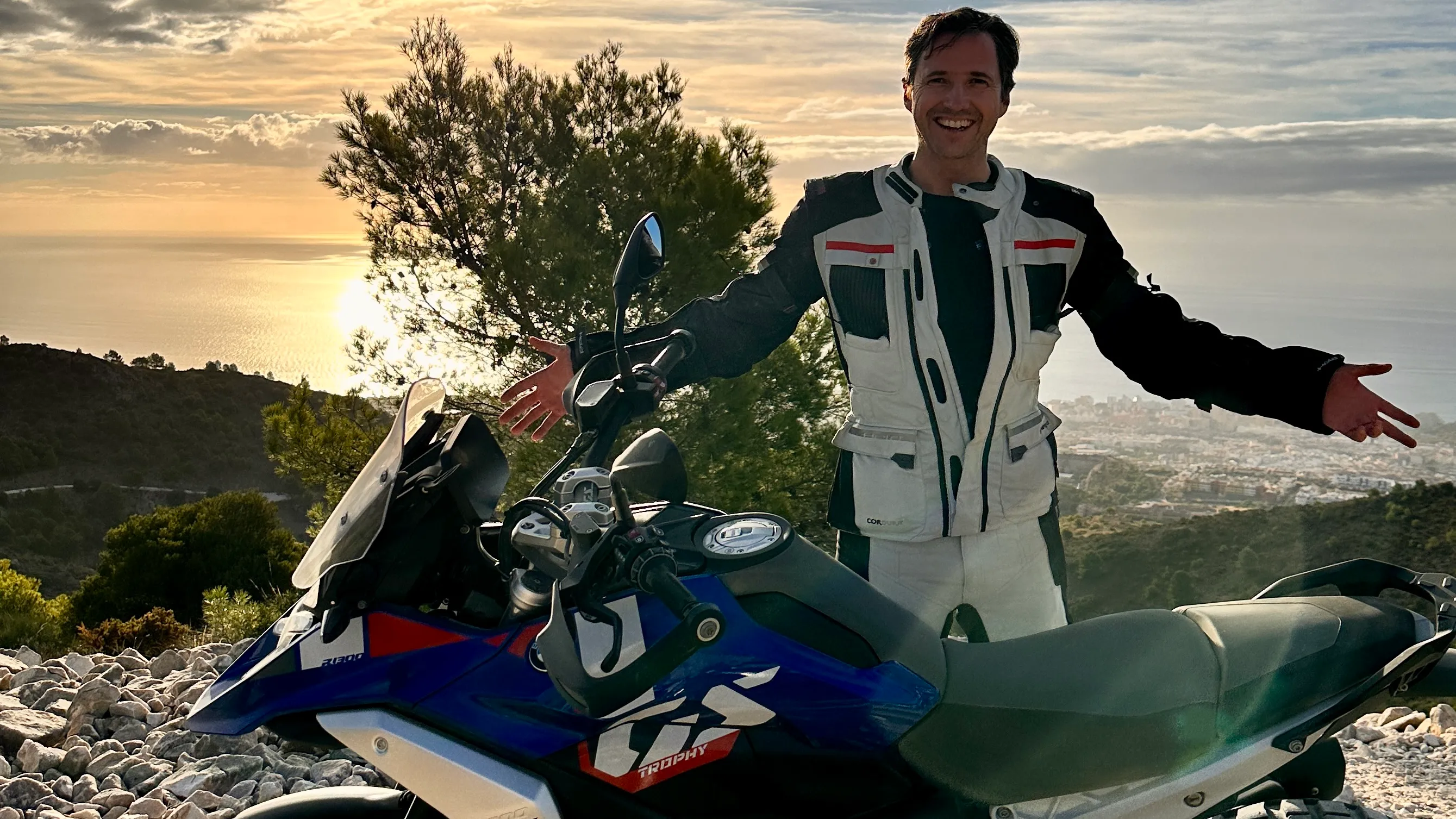
Nils rode the R 1300 GS in 2023, in Austria, Portugal, and the Bavarian Forest in 2024, and in Andalusia and the Canary Islands in 2026 (NastyNils Testride).
The Voice of Experience

What actually separates them
- The R 1300 GS has the lower wet weight: 522 lb (237 kg) vs 549 lb (249 kg).
- The R 1300 GS makes more peak power: 145 hp (107 kW) vs 136 hp (100 kW).
- The R 1250 GS has the larger fuel tank: 5.3 US gal (20 L) vs 5.0 US gal (19 L).
Which one for the way you ride
Nothing splits them on commuting, twisty roads, and running costs. Ride both back to back and the decision usually makes itself.
Who each one is built for
What's good, and what you'll live with
R 1250 GS
Strengths
- Boxer torque from the bottom
- All-day touring comfort
- Light steering, full luggage
- An engine that just lasts
- Brakes that outlast belief
Trade-offs
- Driveshaft corrosion is real
- Notchy, imprecise gearbox
- Weight kills off-road nerve
- Convenience electronics wear out
- Mass at standstill and during low-speed manoeuvres
R 1300 GS
Strengths
- Loaded Weight Simply Vanishes
- Brutal, Immediate Low-End Pull
- Built To Take A Beating
- Punches Above Its Size Off-Road
- Tunable Fit For Any Rider
Trade-offs
- Throttle Too Sharp Two-Up
- Wet-Descent ABS Goes Numb
- Arrows On Screen, No Map
- Lumpy, Buzzy At Low Revs
- Option pricing climbs steeply
Known problems to check before you buy
R 1250 GS
- Gearbox input shaft overload risk under repeated rapid speed differentials Recall 23V011000 Under specific operating conditions, repeated rapid speed differentials between engine and final drive can overload the gearbox input shaft, leading to shaft damage or breakage and possible rear-wheel lock-up. BMW issued a worldwide ECU software update (drivetrain protection software) in January 2023. The KBA mandated remedy completion by December 2023 in Germany under threat of operating ban.
- Front brake caliper inner seal incompatibility — fluid weeping while parked Recall 20V476000 Inner seal/seal-groove incompatibility on certain front brake calipers can cause brake fluid to weep while the motorcycle is parked. Reduced reservoir level over time impairs braking performance. Fails FMVSS 122. Affects motorcycles produced 13 September 2018 – 13 March 2020 (NHTSA campaign 20V476000).
- Paralever joint pin material non-conformance — risk of contact with rear wheel spokes (NHTSA Recall 20V-165) Recall 20V165000 Material non-conformance on the Paralever joint pin on a small batch of bikes produced 31 October 2019 – 30 January 2020 (R 1250 GS / GSA / R nineT family). The defective component could contact rear-wheel spokes — potential loss of control. Approximately 440 units affected across DK, IE, UK, IT.
- Condensation in Paralever swingarm corrodes drive shaft splines Condensation collects in the hollow Paralever swingarm and corrodes the drive shaft and U-joint splines, eventually impairing power transfer. BMW issued voluntary worldwide Service Action 0033130000 covering ~440,000 R 1200 / R 1250 GS bikes. Production fix from October 2021 onward; later units carry two vent valves.
- Steady-throttle surge in the 2,500–3,000 rpm cruising window Steady-throttle surging in the 2,500–3,000 rpm window, characteristic of Euro-spec lean fuelling for emissions compliance. Some dealers advise against cruising in that range. Aftermarket fuelling modules (BoosterPlug, AF-Xied) are commonly used to mitigate. The MY2021 Euro 5 recalibration changed fuelling but did not fully eliminate the complaint pattern.
- TFT blank screen, "white box" artifact, Connectivity App pairing failures Reports of the TFT display going blank at startup, displaying a "white box" artifact, or failing to pair reliably with the BMW Motorrad Connected app via Bluetooth. Often correlated with weak/aging battery; usually resolved by software update or battery replacement.
- Audible left-cylinder ticking — undersized cam chain tensioner Audible ticking or rattle from the left cylinder, especially once warmed up. Caused by an undersized left-side cam chain tensioner allowing slack in the cam chain. BMW released an updated tensioner part (P/N 11317108586) with revised internal dimension. Some bikes show the noise as early as 930 mi (1,500 km). Not confirmed to compromise engine longevity, but persistent and a very common owner complaint.
- Exhaust servo-actuated flap valve seizes / fails The servo-actuated exhaust flap (in the collector / front pipe area, present for noise-emissions homologation) seizes or fails, sometimes as early as 4,700–8,000 mi. Triggers warning lights. The bike runs without performance impact if a flap-eliminator module is fitted. Replacement of front pipes has been done under warranty in multiple cases.
- Brake fluid reservoir cap labelling non-compliance Recall 20V166000 The brake fluid reservoir cap may not clearly state the required brake fluid type — risk of incorrect fluid being added during top-up. Replacement label/cap issued.
- Tire pressure / vehicle label adhesion non-compliance (FMVSS 120) Recall 20V495000 Tire pressure / vehicle labels may not remain affixed to the bike, contrary to FMVSS 120 compliance. Replacement labels issued.
R 1300 GS
- Adaptive ride height failure The adaptive ride height system malfunctions and triggers warning messages on the display. This can leave the suspension stuck in its lower setting and compromise high-speed stability.
- Recall 24V557000: ELECTRICAL SYSTEM:STARTER ASSEMBLY:RELAY Recall 24V557000 BMW of North America, LLC (BMW) is recalling certain 2024 R 1300 GS motorcycles. The housing for the starter motor relay may have been manufactured incorrectly, which can result in a damaged relay that can overheat.
- Recall 25V480000: COMMUNICATION: AUTO CRASH NOTIFICATION Recall 25V480000 BMW of North America, LLC (BMW) is recalling certain 2025 F 900 GS, F 800 GS, R 1300 GS Adventure, R 1300 GS, S 1000 RR, S 1000 R, and K 1600 GT vehicles equipped with the optional emergency call system. The emergency call system (eCall) may have been deactivated due to a software programming error.
What they cost used
These prices compare a 2-year-old R 1250 GS with a 2-year-old R 1300 GS.
- R 1250 GS
- about $16,800
- R 1300 GS
- about $18,400
What they share
- Seat height
- 33.5 in (850 mm)
- Engine
- Flat-twin (boxer)
- Cooling
- Air/liquid-cooled
- Gearbox
- 6-speed
- Final drive
- Shaft
- Front tire
- 120/70-19
- Rear tire
- 170/60-17
- Front travel
- 7.5 in (190 mm)
- Rear travel
- 7.9 in (200 mm)
Where the spec sheets split
| R 1250 GS | R 1300 GS | |
|---|---|---|
| Wet weight | 549 lb (249 kg) | 522 lb (237 kg) |
| R 1250 GS | R 1300 GS | |
|---|---|---|
| Displacement | 1254 cc | 1300 cc |
| Power | 136 hp (100 kW) | 145 hp (107 kW) |
| Torque | 105 lb-ft (143 Nm) | 110 lb-ft (149 Nm) |
| R 1250 GS | R 1300 GS | |
|---|---|---|
| Fuel economy | 50 mpg (US) / 4.75 L/100 km | 49 mpg (US) / 4.8 L/100 km |
| Fuel capacity | 5.3 US gal (20 L) | 5.0 US gal (19 L) |
| R 1250 GS | R 1300 GS | |
|---|---|---|
| Front brake | 305 mm | 310 mm |
| Wheelbase | 59.6 in (1514 mm) | 59.8 in (1518 mm) |
What comes fitted, what costs extra
| R 1250 GS | R 1300 GS | |
|---|---|---|
| Steering Damper | Not offered | Standard |
Head to head, area by area
Both bikes on the same scale, one area at a time.