
·

Ducati Panigale V4 (MY2018-SP) — Supersport
Ducati Press

2021 · Supersport · A variant of the Panigale V4

Panigale V4 SP (MY2018-SP)

Differences between the standard Panigale V4 and the SP

5 / 5 NastyNils Rating · against its class

The Track-Bred Italian Jewel

The Machine's Character

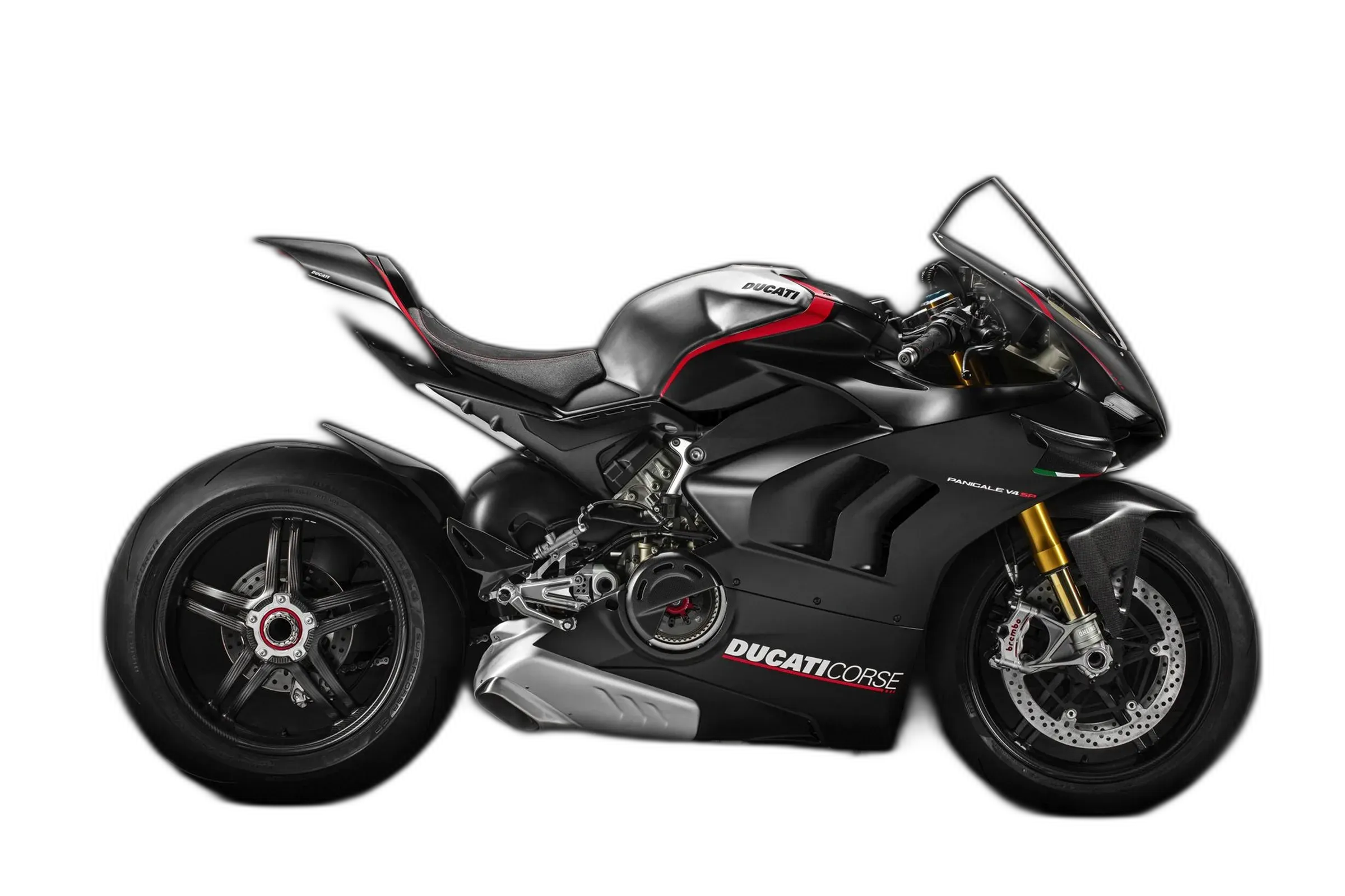
The Panigale V4 SP is Ducati's V4 superbike in its most focused trim. At its core sits a liquid-cooled 1103 cc V4 rated at 214 hp at 13,000 rpm and 91 lb-ft at 10,000 rpm. It weighs 428 lb (194 kg) wet. Those are serious numbers for a road-legal machine. The rider-aid suite covers cornering ABS, traction control, wheelie control, launch control, Ducati Slide Control (DSC) and ride modes. The SP keeps the standard Panigale V4's equipment, up-and-down quickshifter and steering damper included, and adds electronically controlled suspension. And it looks the part from every angle. Pure Ducati!

On paper, this hardware is built for the track first and fast roads second. Its strongest traits are lean clearance and suspension adjustability, the chassis is plainly sporty, and the listed top speed is 186 mph (299 km/h). Taken together, the spec points to an experienced rider who knows what to do with an adjustable, premium chassis. That rider treats the electronics as a tool for going faster, not as a crutch. Ducati promises emotion paired with modern control, and the SP's equipment list delivers on that: big performance with a full safety net underneath. It's a specialist's machine. Proudly so.

Hard Numbers

Spec sheets don't ride bikes, but they set the baseline.

Show full specs & equipment Hide specs & equipment
Key specifications
Power 214 hp (157 kW) @ 13,000 rpm
Torque 91 lb-ft (124 Nm) @ 10,000 rpm
Displacement 1103 cc
Engine V4
Cooling Liquid-cooled
Gearbox 6-speed
Final drive Chain
Fork Upside-down (USD)
Front brake 330 mm
Front tire 120/70-17
Rear tire 200/60-17
Wheelbase 57.8 in (1469 mm)
Seat height 32.9 in (835 mm)
Wet weight 428 lb (194 kg)
Fuel capacity 4.2 gal (16 L)
Top speed 186 mph (299 km/h)

Equipment check

Chassis

  • Steering Damper Standard

Connectivity

  • TFT Display Standard
  • Smartphone Connectivity Optional

Drivetrain

  • Quickshifter Standard
  • Slipper Clutch Standard

Lighting

  • LED Headlight Standard

Safety

  • ABS Standard
  • Cornering ABS Standard
  • Traction Control Standard
  • Ride Modes Standard
  • Wheelie Control Standard
  • Launch Control Standard

Signature Tech

The named systems that set this bike apart — and what each one does for you.

Rider aids

  • Ducati Slide Control (DSC) Standard
    • Lean sensitive traction
    • Selectable ride modes

What the Panigale V4 SP Adds — Differences vs the Standard Panigale V4

The Panigale V4 SP (MY2018-SP) builds on the standard Panigale V4: the upgraded hardware, the key spec changes and where its character shifts. The full ride, specs, scoring and verdict are all right here on this page.

Premium hardware the SP brings

  • Suspension Electronic Suspension Electronically controlled suspension — the standard does without it.

Hard spec differences

SpecStandard Panigale V4SPΔ
Wet weight 437 lb 428 lb -9 lb

How the SP shifts the character

Where the SP does more
  • More suspension adjustment to dial in
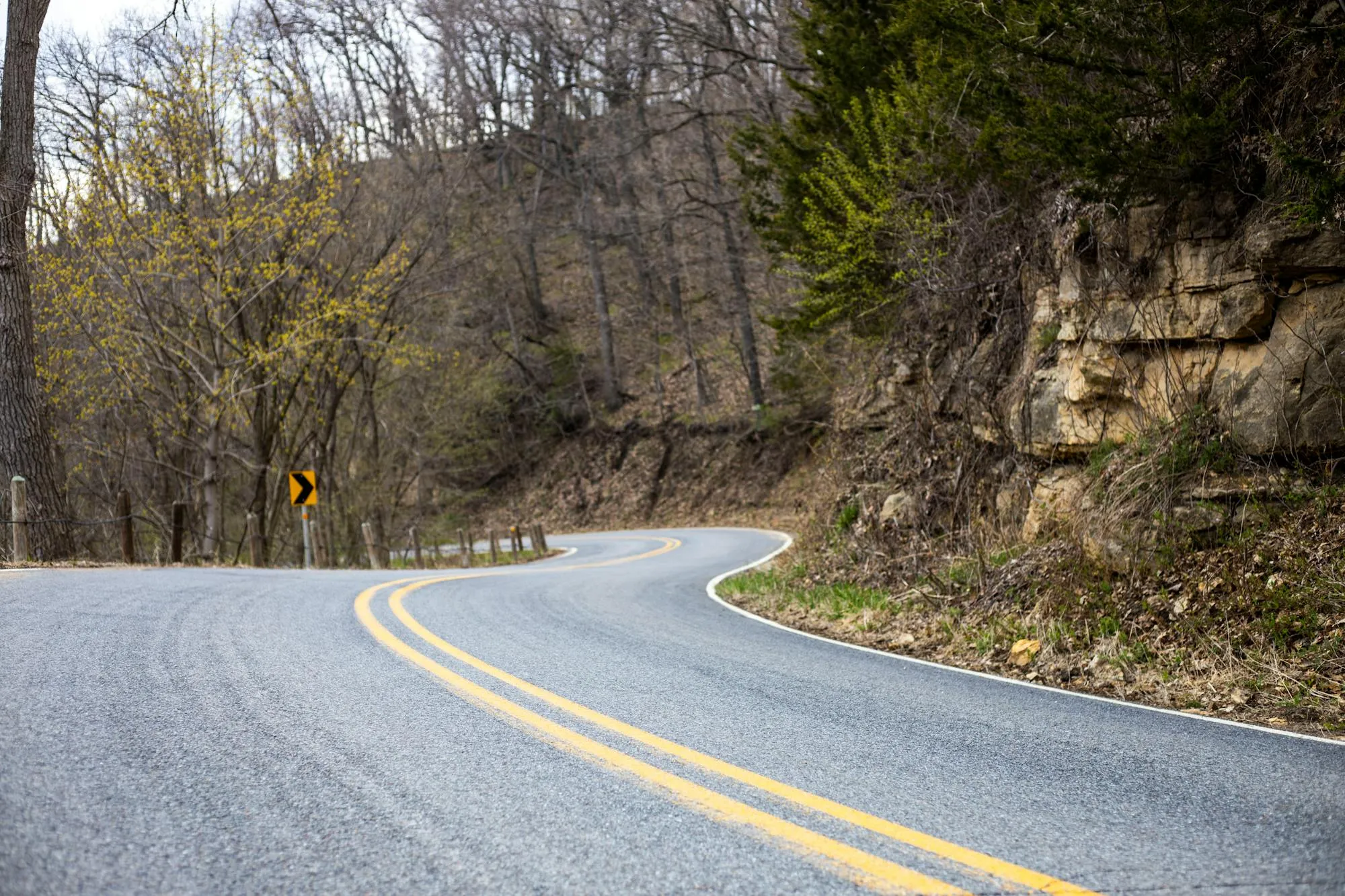
A winding two-lane asphalt road in the Appalachian mountains, photographed in dry daylight. Yellow double-center line markings guide through a series of tight left-hand curves. Dense deciduous and evergreen forest flanks both sides; a rock cut is visible on the right. The road surface and geometry suggest a technical, high-traffic riding corridor popular with motorcyclists.
Chris Flaten / Pexels

The Truth on the Street

I've spent years listening to the people who own and ride this bike: in the paddock, at club nights, in owner chats, and in the emails and messages that land in my inbox. For the Panigale V4, the picture is consistent. Riders praise the chassis, the engine and the brakes, and they complain about comfort, heat, range and the big valve service.

A chassis that flatters you

The loudest praise goes to the handling. Riders consistently describe the bike as incredibly agile, with instant direction changes, and they credit the electronically adjustable Öhlins suspension and the light forged wheels for it. What comes up again and again is the stability: owners say it flatters even less experienced riders. Many also point to the counter-rotating crankshaft, which they connect with faster turn-in and less front-wheel lift under acceleration. The Brembo Stylema brakes get similar treatment: huge stopping power and a lot of feel at the lever, on track and on the road. The rider aids are described as seamless. Cornering ABS, traction control and wheelie control step in only when needed, and riders say there are no harsh cut-ins. Confidence everywhere!

The V4 owners keep praising

The engine is the other big talking point. Riders describe explosive top-end power paired with a linear, manageable delivery and a wide usable rev range. Those who know the big twin that came before it regularly say the V4 is easier to ride at the limit. Then there's the noise: the induction roar and the dry-clutch rattle get mentioned almost every time. Owners also like that the cams are chain-driven, so the timing-belt service of older Ducatis is gone. One caution runs through the reports. At full power the throttle demands your full attention, and Race mode in particular wants deliberate inputs. Stay awake!

Wrists, heat and fuel stops

The complaints are just as consistent. The riding position leads the list: low clip-ons and high pegs suit the track, but owners report aching wrists and knees on longer road rides and call extended trips fatiguing. Heat follows close behind. Riders say slow summer traffic gets uncomfortable fast, and there are widespread reports of leg discomfort and even skin burns when the bike stands still. The rear cylinder deactivation software is said to reduce the problem without eliminating it. Range is a recurring gripe too: the 4.2 gal (16 L) tank empties quickly, especially when you ride hard. And while the belts are gone, owners flag the desmodromic valve check at about 14,900 miles (24,000 km) as a labor-intensive service. Owners call it by design.

Known issues

  • Rear wheel shaft recall (NHTSA 25V570)

    chassis rare Recall

    A potential rear wheel shaft failure could lead to loss of control, prompting a recall covering 2021 models. Ducati replaced the shaft with a strengthened version free of charge.

  • Rear-cylinder thermal load — leg/thigh heat at standstill

    cooling common

    The rear cylinder bank sits directly beneath the rider's seat, so at a standstill in traffic, at stop lights, or at idle, hot air vents through the seat area and outward onto the rider's inner thighs and calves. Riders report significant discomfort on hot days or in prolonged low-speed running, and in extreme cases skin blistering. Ducati addressed it with a rear-cylinder deactivation strategy that shuts the rear bank down when the bike is stationary and in neutral or with the clutch pulled once coolant temperature is high, delivered as a dealer software update early in the production run and fitted as standard for later model years. It reduces the heat load but does not eliminate it.

The Expert Benchmark

Where this Ducati Panigale V4 pulls ahead of — or falls behind — its rivals on the numbers, and the typical bike in its class on character.

What kind of bike this is — character vs. the class

This bike Class average

The shape of the Ducati Panigale V4 — numbers and character vs. the average Supersport

Head-to-head: Ducati Panigale V4 vs. its rivals

The Handshake Score

Forget spec-sheet bragging. Here's who the Panigale V4 is actually built for.

A scenic view of Angeles Crest Highway winding through rugged Southern California canyon terrain. Rocky mountainsides with golden earth tones frame the asphalt road with tight sweeping curves. Double yellow center line visible, sparse vegetation along the shoulders, clear blue sky with white clouds. Daylight, dry conditions. Iconic location for canyon-road enthusiasts.
Josh Sorenson / Pexels

Best motorcycle for Laguna Seca?

This is your best fit here: 214 hp, electronic suspension and a full set of rider aids, from launch control to slide control, all aimed squarely at the track days you live for.

Made for WeatherTech Raceway Laguna Seca · Barber Motorsports Park · Circuit of The Americas
Best motorcycle for Angeles Crest?

A strong match for your canyon weekends: sporty chassis, generous lean clearance. Just know the rear cylinder sends heat onto your thighs at stop lights, and that counts in the traffic between canyons.

Made for Angeles Crest Highway · Coronado Trail Scenic Byway · Big Sur Coast Highway

Best motorcycle for Tail of the Dragon?

A good fit if you ride Tail of the Dragon for precision over speed: the adjustable suspension lets you set it up for the road. Know it's a 214 hp track-first machine, a lot of bike for tight curves.

Made for Tail of the Dragon · Back of the Dragon · Blue Ridge Parkway

What's new versus the previous generation

If you're cross-shopping the older generation, here's what changed.

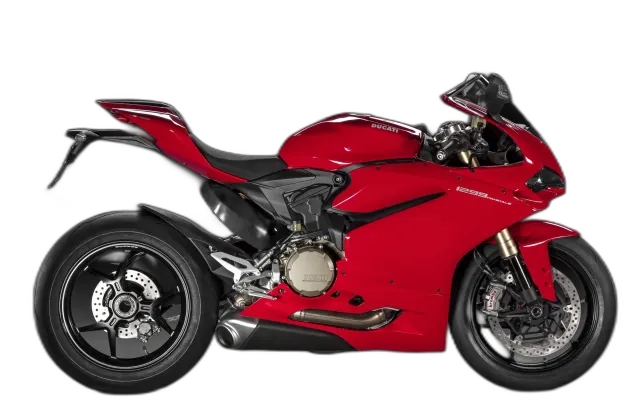
Ducati 1299 Panigale (MY2015)

Previous generation · 2015–2016

Ducati 1299 Panigale (MY2015)

Two Cylinders, Two Hundred Horses

Compare to the previous model →

Alternatives to the Ducati Panigale V4

If this one isn't quite the fit, these are the bikes worth riding back-to-back against it.

Any price note compares both bikes at the same age — the youngest age both have on the used market — against this Ducati Panigale V4. “cheaper/pricier” is what that bike costs second-hand, not how worn it is.