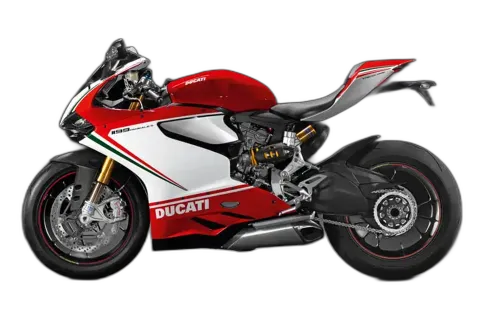
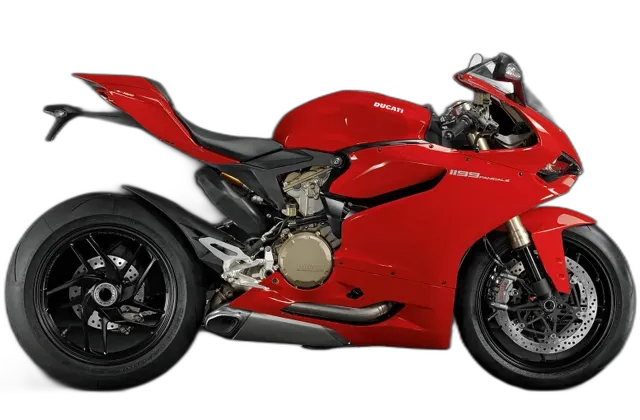
Ducati 1199 Panigale (H8-S) — Supersport
NastyNils / Ducati Press

2012–2014 · Supersport · A variant of the 1199 Panigale

1199 Panigale S (H8-S)

Differences between the standard 1199 Panigale and the S

Beauty That Bites Back

The Machine's Character

The 1199 Panigale rewrote what a Ducati superbike feels like. The aluminum monocoque chassis throws out the traditional frame, the 1198cc L-twin spins to 195 hp up high, and the whole package carries ABS, traction control, ride modes, and Ducati Ride-by-Wire Power Modes while still tipping the scales at 414 lb wet. That weight figure matters. Packing a full rider-aid suite and coming in this light is a genuine engineering feat. In a class that prizes precision and effortless pace, the Panigale leads with razor-sharp steering and a top-end rush that defines its whole personality.

On the right road or a track day, it rewards a rider who lives in the upper half of the rev range. Down low the L-twin gives up almost all of its grunt, so tight, slow corners feel flat and the throttle wants managing. Wind it out and it comes alive. This is a bike for experienced riders chasing apex precision, not an easy daily companion. The honest caveat is setup. The chassis demands serious suspension work to perform, and the rear shock fought every tester. Budget time, expertise, and consumables before you chase its best.

Hard Numbers

Spec sheets don't ride bikes, but they set the baseline.

Show full specs & equipment Hide specs & equipment
Key specifications
Power 195 hp (143 kW) @ 10,750 rpm
Torque 97 lb-ft (132 Nm) @ 9,000 rpm
Displacement 1198 cc
Engine L-twin
Bore × stroke 112 × 60.8 mm
Compression 12.5:1
Cooling Liquid-cooled
Fuel system Fuel injection
Gearbox 6-speed
Final drive Chain
Frame Aluminum monocoque
Fork Upside-down (USD)
Front brake 330 mm
Rear brake 245 mm
Front tire 120/70 ZR17
Rear tire 200/55 ZR17
Wheelbase 56.6 in (1437 mm)
Seat height 32.5 in (825 mm)
Wet weight 414 lb (188 kg)
Fuel capacity 4.5 gal (17 L)
Top speed 177 mph (285 km/h)

Equipment check

Chassis

  • Front Suspension Adjustable Standard
  • Rear Suspension Adjustable Standard
  • Steering Damper Standard

Connectivity

  • TFT Display Standard

Drivetrain

  • Quickshifter Standard
  • Slipper Clutch Standard

Safety

  • ABS Standard
  • Traction Control Standard
  • Ride Modes Ducati Ride-by-Wire Power Modes Selectable ride modesRefined throttle response Standard

The Voice of Experience

Portrait of NastyNils

The test ride

Push it off the side stand and the lightness registers in your wrists before you've thrown a leg over. Fire it up and the exhaust note hits sharper and rawer than you expect, alive and aggressive once the revs climb. Settle in and the riding position is compact and committed, clearly built for pace rather than miles. The fork is the standout. It keeps a constant conversation flowing to your hands from the second you tip into a corner, so you trust the front and lean on it harder. The TFT cockpit makes everything else at this level feel a generation behind, and the left-bar controls fall under your thumb logically even through thick gloves. The quickshifter snicks cleanly too, which you appreciate, because the high-revving motor has you forever stirring the gearbox.

What the 1199 Panigale S Adds — Differences vs the Standard 1199 Panigale

The 1199 Panigale S (H8-S) builds on the standard 1199 Panigale: the upgraded hardware, the key spec changes and where its character shifts. The full ride, specs, scoring and verdict are all right here on this page.

How the S shifts the character

Where the S does more
  • A richer, more connected tech suite
  • More suspension adjustment to dial in

Rated point by point — where it earns its keep

My own 0–100 score for this bike against the class, area by area — the marker on each bar is the class average.

What stays with me is how little effort it takes to place this bike. I aim it, it goes, and the front keeps feeding me information the whole way through a corner, so I lean on it without second-guessing. The narrow build and genuinely low weight make that trust easy to earn, and the front suspension is the standout piece for reading the surface beneath me. Then the rear undoes some of that goodwill. None of us could get the shock working cleanly on road or circuit, and once I'd strung together enough hard laps the grip back there started slipping away. Corner exits turned into real work, the bike got nervous through bumpy drive zones, and while the electronics papered over the worst of it, no system invents traction that the tire has already given up.

Hauling this bike down is a genuine high point. I grabbed a fistful again and again and the stoppers answered with the same hard, predictable bite every time, whether the ABS was switched in or left out of the equation. That consistency is what lets me trust the front deep into a corner. The proof, for me, was the fast guys in our test group, the ones who pick every detail apart, climbing off without a single word of complaint about the brakes.

If capability includes the sheer statement a bike makes sitting still, this one operates in its own bracket. There's no amount of aftermarket money you can throw at a rival to land anywhere close to how the Panigale looks and carries itself. I've watched people try. The presence is baked in at the design level and simply can't be copied, and in this segment that counts for more than most riders care to admit.

Spin it up and the note is sharper and angrier than the engine it replaced, with less of that deep rolling bottom-end pulse, though it's still alive once the revs are stacked high. The trade is real low-down character. Below the middle of the range it goes flat, missing the heavy torque you expect from this layout, so slow corners feel lifeless and the throttle wants careful management. Get it singing near the top and the whole story flips. Up there it's sorted, eager, and obviously built for circuit work.

My one real flag on the ownership side is how quickly it eats tires when you ride it the way it clearly wants to be ridden. On track this thing chewed through rubber faster than anything else we ran, and that's a recurring cost rather than a one-time hit. It doesn't point to anything fragile in the machine itself, but if you use it hard you'll want to build regular fresh rubber into your budget from the start.

Comfort here is less about plushness and more about how cleanly everything works when you're suited up and busy. The gearbox is a clear move on from the previous generation, which matters because this motor has you rowing through the ratios constantly on road and track alike. The instrument layout is the other part I rate highly. It reads clean and modern in a way that makes rival cockpits look a step behind, and the switchgear groups together sensibly enough that I never once fumbled for a control with gloves on.

Living with this bike means accepting that it does not arrive ready to perform straight out of the crate. Dialing in a chassis that actually works takes serious hours and expertise, and nothing lets you skip that step. How tough is the job? Ducati's own factory technicians couldn't get it sorted properly at the original press launch. My advice is to treat suspension tuning as a season-opening project and put real work in early. Turn up cold and you'll be leaving lap time on the table for no reason.

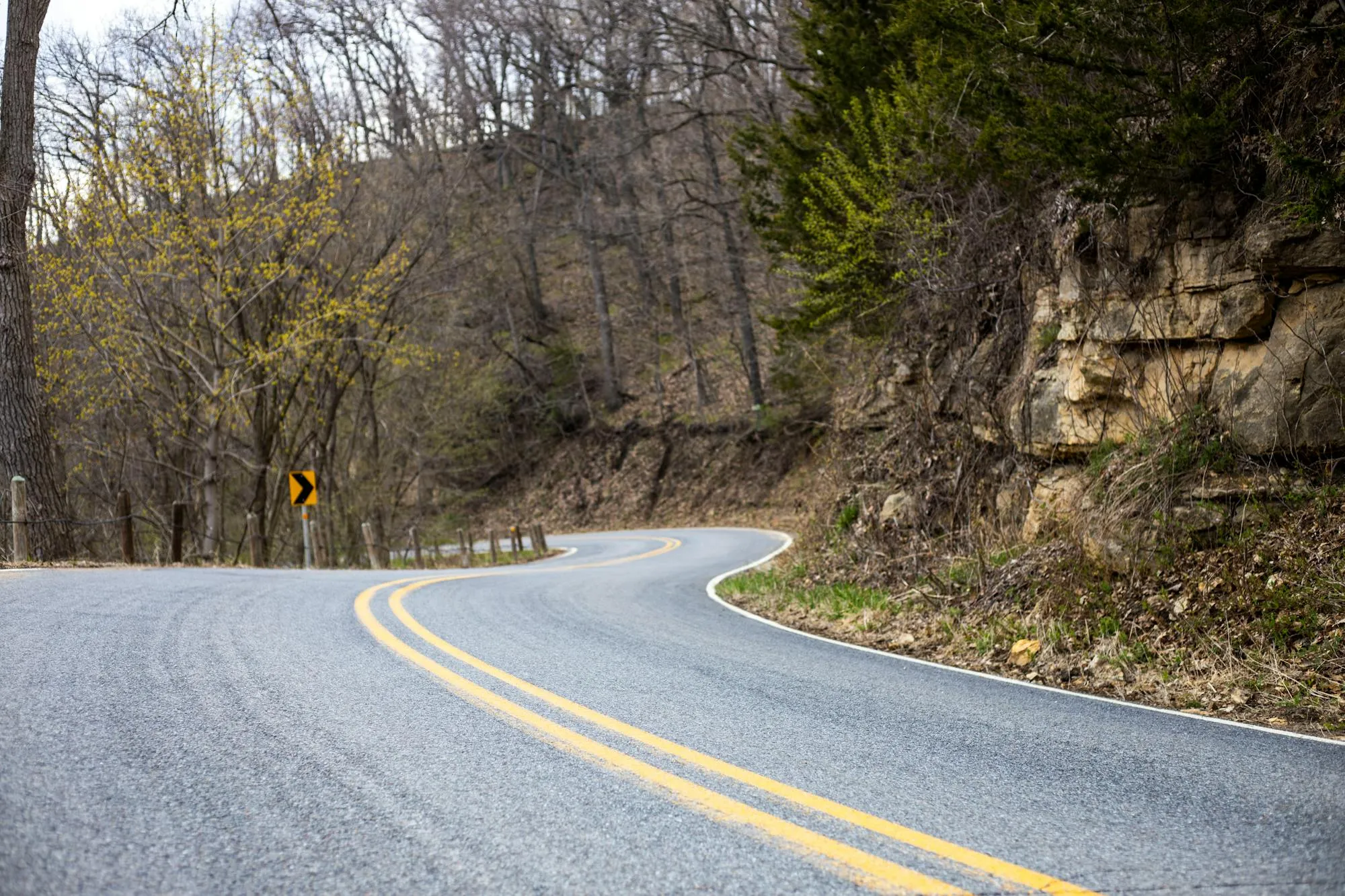
A winding two-lane asphalt road in the Appalachian mountains, photographed in dry daylight. Yellow double-center line markings guide through a series of tight left-hand curves. Dense deciduous and evergreen forest flanks both sides; a rock cut is visible on the right. The road surface and geometry suggest a technical, high-traffic riding corridor popular with motorcyclists.
Chris Flaten / Pexels

The Truth on the Street

I've spent years sifting through what riders actually say about this bike: the YouTube comments, the long forum threads, the conversations in the paddock, and the emails and messages that land in my inbox. Pulled together, the picture for the 1199 Panigale is consistent. Riders love how special it feels to own and how much of it they can tailor to their own pace, but a recurring set of liveability gripes follows it around, led by the heat.

Where the praise concentrates

The praise that comes up most often isn't really about outright speed. It's about how much of the bike riders feel they can shape to themselves. Owners consistently single out the breadth of the electronics, the ride-by-wire throttle, the riding modes, and the traction control, for letting them set the bike anywhere from manageable to genuinely aggressive depending on the day. A recurring theme is that those rider aids translate into real-world confidence rather than just a line on a spec sheet. Alongside that, riders keep returning to the sense that they own something special. The materials, the finish, and the attention to detail get mentioned again and again, and for most of them that premium feel is a big part of why the bike holds its place in the garage.

Where the heat gets to you

The most consistent complaint has nothing to do with how the bike performs and everything to do with sitting still on it. Riders report serious heat coming off the engine and the underseat exhaust, and it's worst exactly where you'd least want it, crawling through stop-and-go traffic. That same low-speed environment draws the other recurring gripe: the tight riding position and general manners make slow urban work unpleasant. The message from owners is steady. This is a machine that feels at home when it's moving and far less so when it isn't, and anyone using it around town tends to mention the heat first.

The smaller ownership niggles

Past the big-ticket items, a handful of smaller frustrations surface regularly. Several owners note the limited range from the 4.5-gallon (17-liter) tank, something that bites soonest at track pace, where the fuel disappears quickly. A few mention the dash fogging up in humid or wet weather, which riders generally file as a cosmetic annoyance rather than a real fault. The paint draws comment too: the fairing finish chips easily from stone strikes, so some owners reach for protective film to keep it looking right. None of these read as dealbreakers in the community's telling, but they come up often enough to be worth flagging.

Known issues

  • Swingarm linkage screw incorrect specification (recall)

    chassisrareRecall

    An incorrect screw used to retain the swingarm to the rear suspension linkage could lead to catastrophic suspension collapse.

  • Front brake master cylinder reservoir hose interference (recall)

    brakesrareRecall

    The front brake master cylinder reservoir hose may rub against the threading end of the reservoir retaining screw, potentially causing a leak and front brake failure.

  • Exhaust butterfly valve cable cover melting (recall)

    exhaustrareRecall

    Excess heat from the catalytic converter can cause the bowden cable cover to melt or burn, posing a potential fire hazard.

  • Steering damper Uniball bearing may slip out (recall)

    chassisrareRecall

    An incorrect assembly tolerance could allow the Uniball bearing on the Öhlins steering damper rod eyelet to slip out of its seat, potentially detaching the damper.

  • Steering damper mounting screws loosening (recall)

    chassisrareRecall

    Insufficient threadlocking compound on the steering damper mounting screws may cause them to fall out, leading to damper detachment.

  • Swingarm shaft pivots loosening (recall)

    chassisrareRecall

    The right and left swingarm shaft pivots can loosen from the swingarm, risking loss of control.

  • Left handlebar switch power connection interruption (recall)

    electricsoccasionalRecall

    The left handlebar switch may intermittently lose power due to a poor connection, affecting turn signals and other controls.

  • Hot start problems due to charcoal canister

    fuel systemoccasional

    The evaporative emissions charcoal canister may become saturated with fuel, causing a vapor lock and difficult hot starts. Removing the canister is a common owner modification.

  • High oil consumption

    engineoccasional

    Some owners report higher-than-expected oil consumption, possibly linked to break-in method. Using mineral oil instead of full synthetic has been suggested as a mitigation.

  • Clutch fluid bleeding issue

    drivetrainoccasional

    The hydraulic clutch system may require frequent bleeding to maintain proper feel and disengagement, a trait carried over from earlier Ducati models. Using high-boiling-point fluid and regular bleeding at the master cylinder is a common workaround.

  • Loose fairing fasteners

    bodyworkoccasional

    Some owners report that fairing bolts and fasteners may loosen over time, requiring periodic tightening.

  • Gear shifter bolt loosening

    drivetrainrare

    The main gear shifter mounting bolt can loosen, potentially leading to difficult shifting. It is recommended to check and tighten this bolt regularly.

  • Quick shifter misses gears on upshift

    electricsoccasional

    Some riders experience missed shifts or false neutrals when using the Ducati Quick Shift, especially under partial throttle or at lower rpm.

  • Excessive engine heat during slow riding

    enginecommon

    The high-performance engine and under‑seat exhaust routing generate significant heat, making the bike uncomfortable in stop‑and‑go traffic or at low speeds.

  • Right side heat shield bolt loosening

    exhaustoccasional

    The bolt securing the right side heat shield tends to loosen due to vibration and heat cycles. Frequent retightening or an oversize bolt with threadlocker is recommended.

  • Instrument cluster misting

    electricsoccasional

    Moisture can accumulate behind the TFT display lens, causing fogging. The misting generally clears after the bike warms up but may be a cosmetic annoyance.

  • Hard starting when hot

    fuel systemoccasional

    The emissions charcoal canister can fill with fuel, causing vapor lock and extended cranking when the engine is warm. Removal resolves the issue.

  • Clutch master cylinder fluid contamination

    drivetraincommon

    The clutch fluid turns dark quickly, requiring frequent bleeding to maintain feel. A known Brembo characteristic.

  • Intermittent gear position sensor

    engineoccasional

    The gear position sensor can fail, disabling the quick shifter and causing fueling errors.

  • Instrument cluster fogging

    bodyworkoccasional

    Humidity can cause fogging inside the TFT display. Typically clears on its own but can be persistent in damp climates.

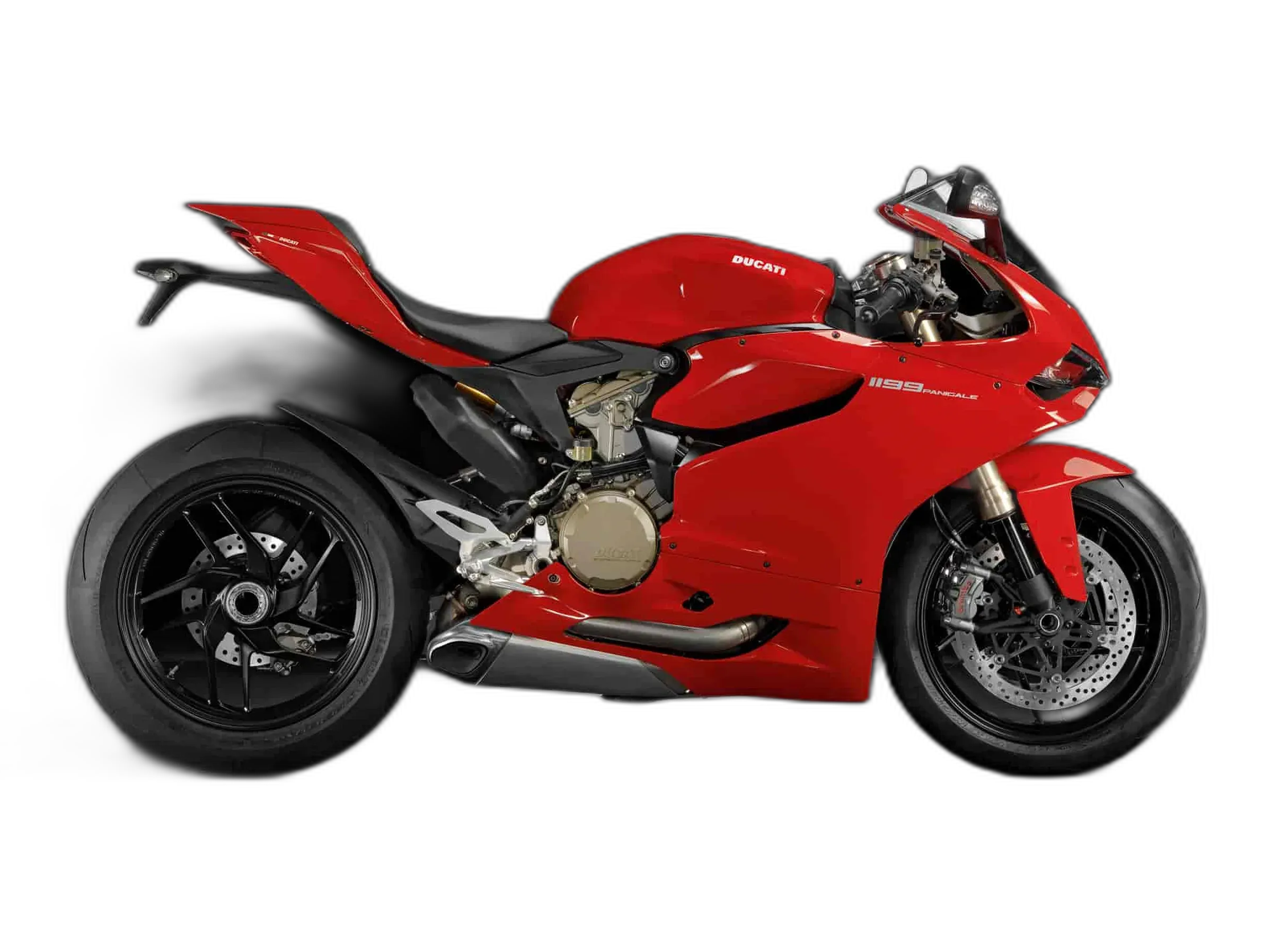
The Expert Benchmark

Where this Ducati 1199 Panigale pulls ahead of — or falls behind — its rivals on the numbers, and the typical bike in its class on character.

What kind of bike this is — character vs. the class

This bike Class average

The shape of the Ducati 1199 Panigale — numbers and character vs. the average Supersport

Head-to-head: Ducati 1199 Panigale vs. its rivals

The Handshake Score

Forget spec-sheet bragging. Here's who the 1199 Panigale is actually built for.

A scenic view of Angeles Crest Highway winding through rugged Southern California canyon terrain. Rocky mountainsides with golden earth tones frame the asphalt road with tight sweeping curves. Double yellow center line visible, sparse vegetation along the shoulders, clear blue sky with white clouds. Daylight, dry conditions. Iconic location for canyon-road enthusiasts.
Josh Sorenson / Pexels

Best motorcycle for Angeles Crest?

On fast, flowing canyon roads it's brilliant, sharp, and stable. Just know the flat low-end and snatchy throttle make tight, slow corners more work than fun, so it rewards an experienced hand.

Made for Angeles Crest Highway · Coronado Trail / US 191 · Highway 1 / Big Sur

Best motorcycle for Laguna Seca?

This is your bike on a closed circuit. The high-revving motor, sharp turn-in, and strong brakes reward apex precision, but plan on serious suspension setup and a tire budget before it gives its best.

Made for Barber Motorsports Park · WeatherTech Raceway Laguna Seca · Circuit of the Americas

Best motorcycle for Tail of the Dragon?

Tight, low-speed East Coast twisties expose its weakest side. The engine goes flat down low and the throttle needs managing. Skilled riders can make it sing, but slow corners aren't where it shines brightest.

Made for Back of the Dragon · Blue Ridge Parkway · Cherohala Skyway

Alternatives to the Ducati 1199 Panigale

If this one isn't quite the fit, these are the bikes worth riding back-to-back against it.

Any price note compares both bikes at the same age — the youngest age both have on the used market — against this Ducati 1199 Panigale. “cheaper/pricier” is what that bike costs second-hand, not how worn it is.