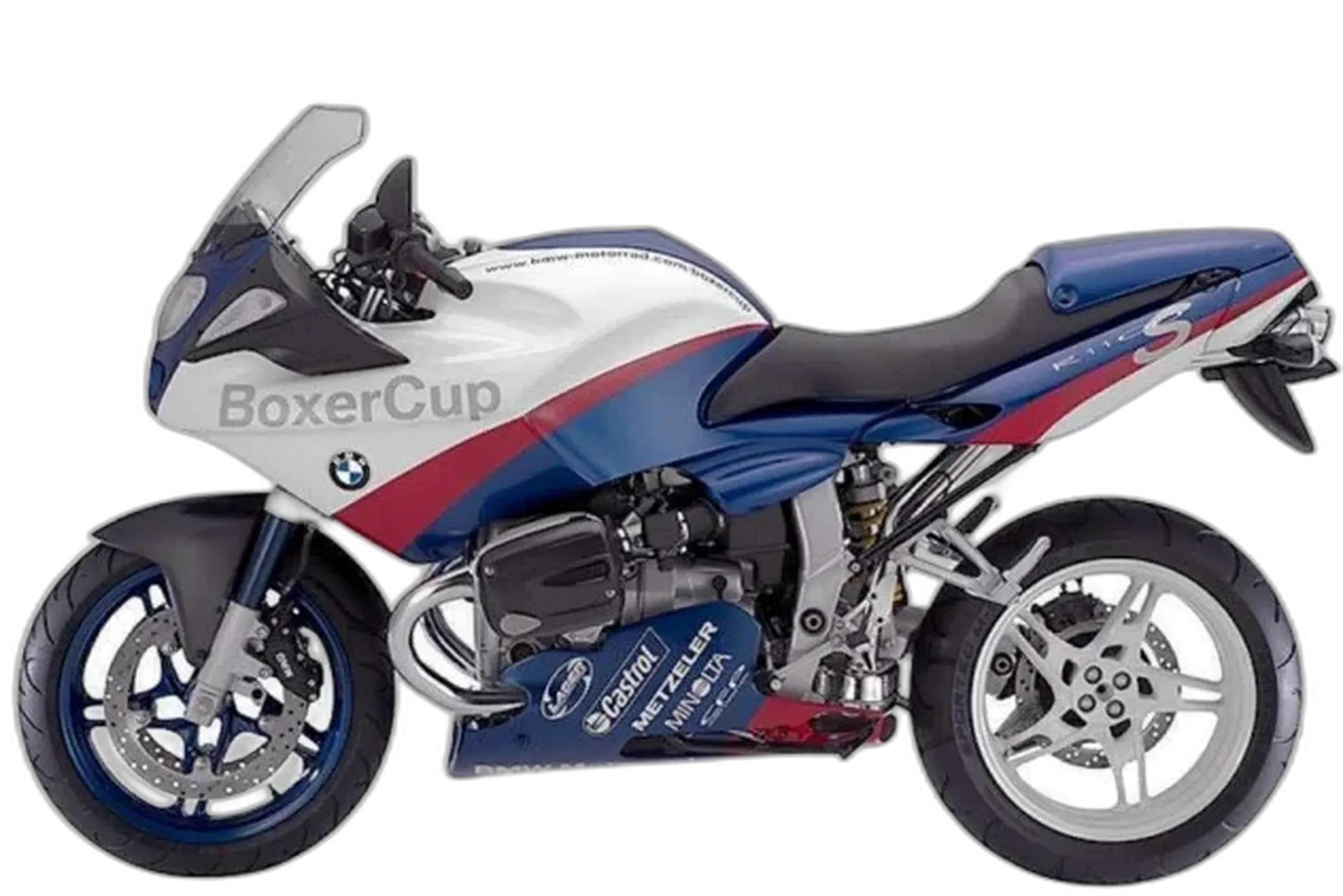
BMW R 1100 S Boxercup Replika (MY2003) — Supersport
BMW press archive

2003–2005 · Supersport · Buyer's Guide

R 1100 S Boxercup Replika (MY2003)

Race Livery, Boxer Soul

The Machine's Character

The Boxer Cup Replika takes BMW's air/oil-cooled sport twin and dresses it in the paint and hardware of the company's own one-make race series. Underneath sits 1085 cc of flat twin making 98 hp and 72 lb-ft, fed through a six-speed box and a shaft final drive on BMW Paralever. Telelever carries the front end. The Replika spec adds a Laser exhaust, a carbon-fiber belly pan and sport suspension, with adjustable damping at both ends and a steering damper as standard. It is a sportbike written in BMW's own language: torque low down, stability everywhere, nothing shouted.

On the road it behaves the way the score sheet suggests. High-speed stability is the standout, lean clearance is generous for a boxer, and the low-end pull lets you ride a twisty road a gear high and still drive out clean. Build quality and long-term reliability are the reason so many of these are still working for a living. The honest caveat: 505 lb wet and a 33.9-inch seat make it awkward at walking pace, ABS is the only electronic aid on board, and the iABS servo can intrude when you brake hard on a bumpy corner. Buy it for the engineering, not for chasing lap times.

Hard Numbers

Spec sheets don't ride bikes, but they set the baseline.

Show full specs & equipment Hide specs & equipment
Key specifications
Power 98 hp (72 kW) @ 7,500 rpm
Torque 72 lb-ft (98 Nm) @ 5,750 rpm
Displacement 1085 cc
Engine Flat-twin (boxer)
Cooling Air/oil-cooled
Gearbox 6-speed
Final drive Shaft
Fork Telelever
Front brake 320 mm
Front tire 120/70-17
Rear tire 180/55-17
Wheelbase 58.2 in (1478 mm)
Seat height 33.9 in (860 mm)
Wet weight 505 lb (229 kg)
Fuel capacity 4.8 gal (18 L)
Top speed 141 mph (227 km/h)
Fuel economy 40 mpg (US)

Equipment check

Chassis

  • Front Suspension Adjustable Standard
  • Rear Suspension Adjustable Standard
  • Steering Damper Standard

Safety

  • ABS Standard

Signature Tech

The named systems that set this bike apart — and what each one does for you.

Drivetrain

  • BMW Paralever Standard
    • Acceleration stability
    • Brake dive control
    • High speed stability
    • Reduced unsprung rotating mass

The Voice of Experience

Portrait of NastyNils

The test ride

Hit the starter and the whole bike rolls on its side for a moment, the way a big boxer always does. At idle it thrums up through the pegs and the tank, more texture than buzz, and it never smooths itself into silence. The riding position puts real weight on your wrists at a stoplight, and that 33.9-inch seat means you think about where you plant your boots. Above 50 mph the wind pressure balances the lean on your hands and the bike settles into itself. What your body registers most is width: the cylinders sit out in the airstream, warming your shins in traffic, and you learn to place your feet around them. The shaft takes up drive with no chain slack, no snatch. After a long day of back roads, the parts of you that usually ache are still fine.

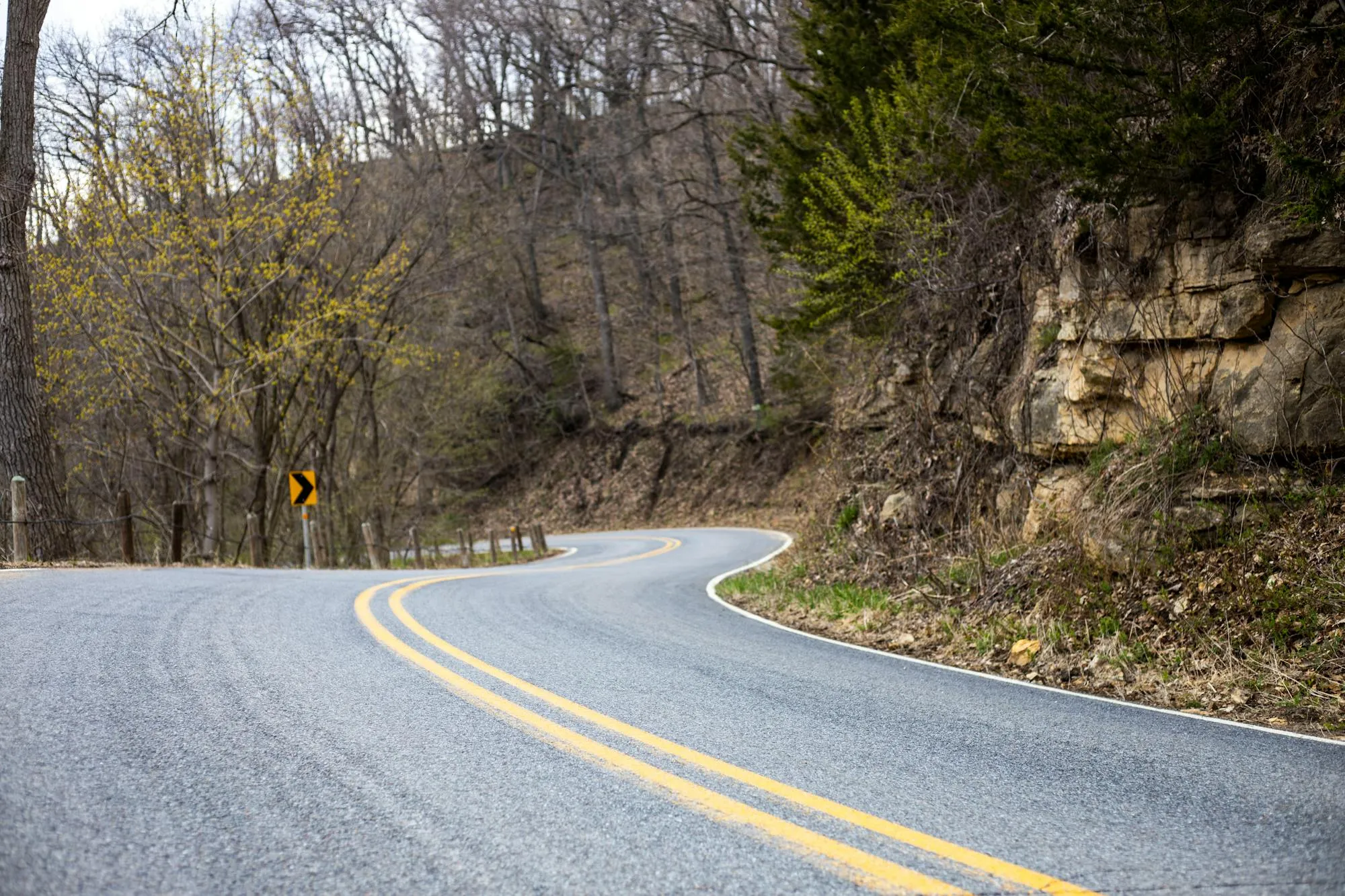
A winding two-lane asphalt road in the Appalachian mountains, photographed in dry daylight. Yellow double-center line markings guide through a series of tight left-hand curves. Dense deciduous and evergreen forest flanks both sides; a rock cut is visible on the right. The road surface and geometry suggest a technical, high-traffic riding corridor popular with motorcyclists.
Chris Flaten / Pexels

The Truth on the Street

None of what follows is my own riding impression. It comes from two decades of listening: riders talking in parking lots after a run, club nights, conversations at events, and the notes people send me once a bike has been in their garage long enough to tell the truth. On the Boxercup Replika those accounts settle into a clear shape. The praise sits on how the bike holds up and how it covers distance, and the criticism collects on the sport side of the job.

What owners keep coming back to

Longevity dominates. Riders with big miles on the clock describe engines, gearboxes and final drives that keep working long past the point they braced for repair bills, and they rate the materials and the finish above what the competition offered at the time. Suspension is the next thing raised. Owners talk about a ride that stays composed on rough pavement and a chassis that stays settled when they brake hard, which is why so many of them use these bikes for sport-touring. The ones covering distance mention a riding position they can sit in for hours and enough weather protection to make that work, with the available luggage turning it into a genuine long-haul machine. Riders coming off chain-driven bikes bring up how much routine maintenance the shaft drive takes off their calendar. And the race-series colors and limited-run status get mentioned about as often as the hardware, together with a character owners say no inline-four ever gave them.

Where the complaints gather

The engine draws the most criticism. Riders describe useful torque but nothing waiting up top, and against current twins and triples they feel underpowered. Weight comes up alongside it: the bike feels substantial to them and slower to change direction than the lighter middleweights they measure it against. The servo-assisted ABS is the other repeated flag, called over-eager when the pace picks up and expensive once a fault appears. Comfort complaints land on the seat, which owners find narrow and tipped forward, and painful after the first hour, so an aftermarket replacement is an early purchase for many. Range gets raised too, roughly 150 miles before reserve at around 40 mpg, with no gauge to read. A few riders mention vibration through the bars and pegs at higher revs on long days.

Known issues

  • Clutch spline wear

    drivetrain rare

    The clutch input shaft splines can wear prematurely on some bikes, leading to clutch drag or failure. Replacement is labour-intensive as it requires separating the gearbox from the engine.

  • Intrusive ABS servo brake activation

    brakes occasional

    The iABS system can engage unexpectedly during hard cornering or bumpy roads, releasing braking pressure and unsettling the bike. Some riders find the servo assistance too aggressive at low speeds, making smooth modulation difficult.

  • Hall effect sensor failure

    electrics occasional

    The Hall sensor (cam position sensor) can fail, typically after years of heat cycling, leading to stalling or no-start conditions. Often traced to the habit of letting the engine warm up on the side stand, which subjects the sensor to concentrated heat.

  • Final drive bearing failure

    drivetrain common

    The large crown bearing in the final drive can wear, causing increased vibration and noise; if ignored, it can lead to oil leaks or complete seizure. Typical occurrence between 30,000–50,000 miles. Replacing the bearing requires special tools and precise shimming.

  • Starter motor failure

    electrics rare

    Starter motors can fail due to their location near the clutch, where they are exposed to heat and ingress of clutch dust; poor quality control also cited.

The Expert Benchmark

Where this BMW R 1100 S Boxercup Replika pulls ahead of — or falls behind — its rivals on the numbers, and the typical bike in its class on character.

What kind of bike this is — character vs. the class

This bike Class average

The shape of the BMW R 1100 S Boxercup Replika — numbers and character vs. the average Supersport

Head-to-head: BMW R 1100 S Boxercup Replika vs. its rivals

The Handshake Score

Forget spec-sheet bragging. Here's who the R 1100 S Boxercup Replika is actually built for.

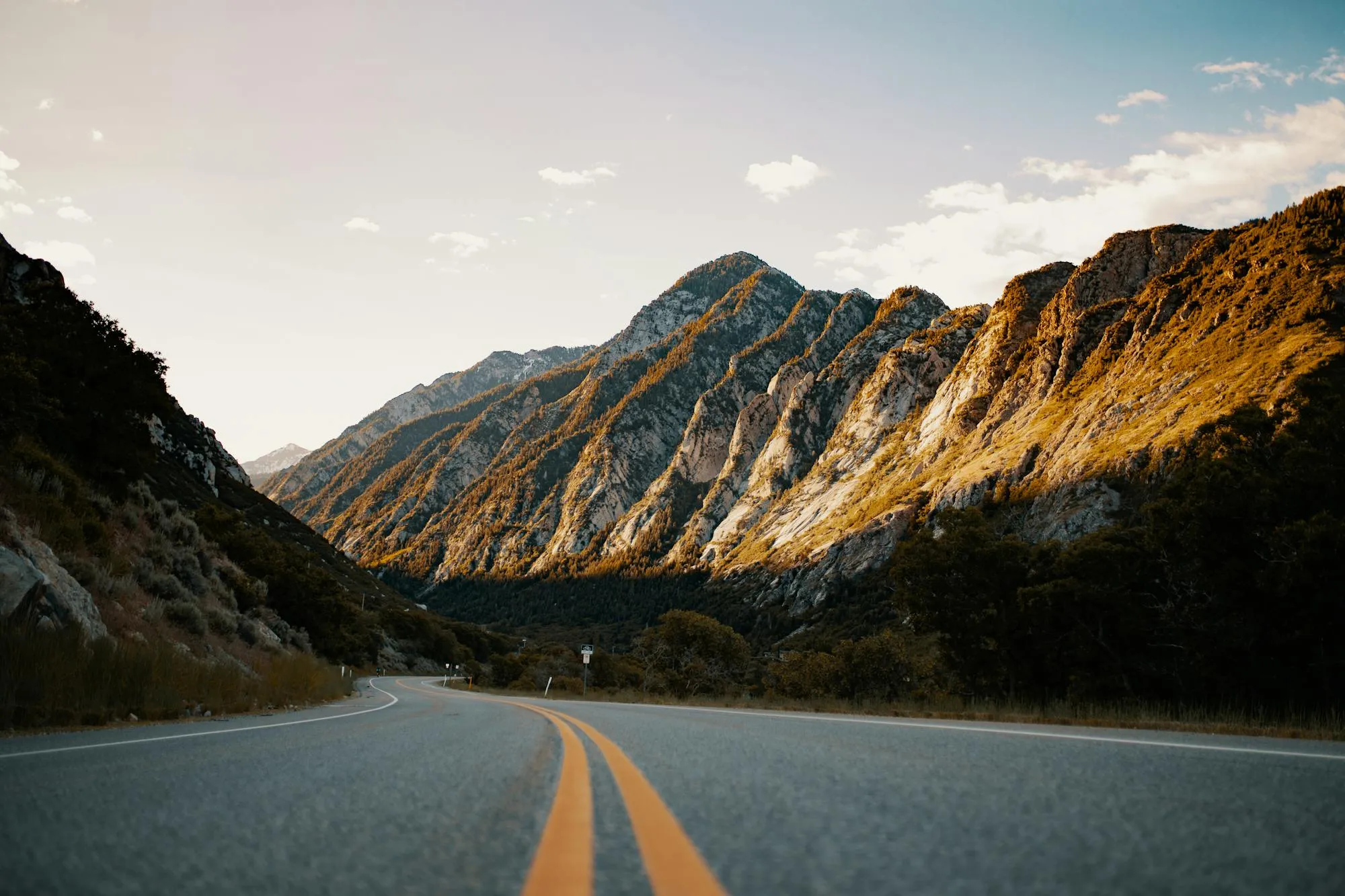
A scenic view of Angeles Crest Highway winding through rugged Southern California canyon terrain. Rocky mountainsides with golden earth tones frame the asphalt road with tight sweeping curves. Double yellow center line visible, sparse vegetation along the shoulders, clear blue sky with white clouds. Daylight, dry conditions. Iconic location for canyon-road enthusiasts.
Josh Sorenson / Pexels

Best motorcycle for Tail of the Dragon?

You can learn a line on this bike and repeat it exactly, because it holds a stable, predictable arc all day. It won't flick between Dragon switchbacks like a light bike, so you carry momentum instead.

Made for Back of the Dragon · Blue Ridge Parkway · Cherohala Skyway
Best motorcycle for Texas Hill Country?

Shaft drive, 40 mpg and a 4.8-gallon tank cover the long, dull miles between the good roads, and the boxer's low-end pull suits the rolling sweepers around the Twisted Sisters.

Made for Austin / Texas Hill Country · Twisted Sisters · Austin / Handbuilt Motorcycle Show

Best motorcycle for Angeles Crest?

The stability and lean clearance let you run a fast, tidy canyon pace with no drama. Accept that 505 lb and 98 hp keep you off the front of the group and it's a genuinely satisfying weapon.

Made for Angeles Crest Highway · Coronado Trail / US 191 · Highway 1 / Big Sur

Alternatives to the BMW R 1100 S Boxercup Replika

If this one isn't quite the fit, these are the bikes worth riding back-to-back against it.