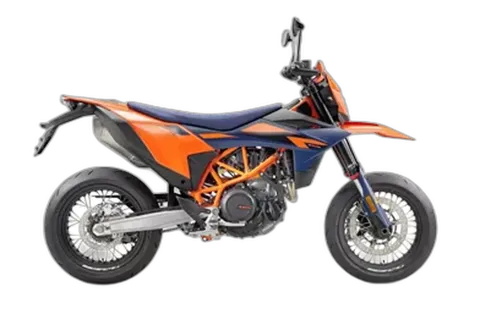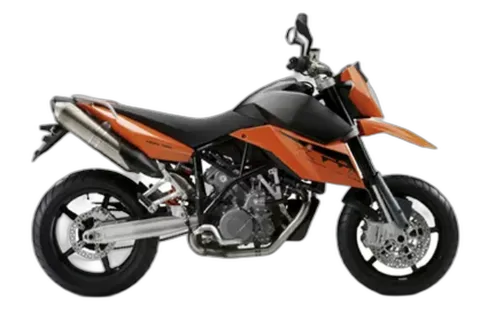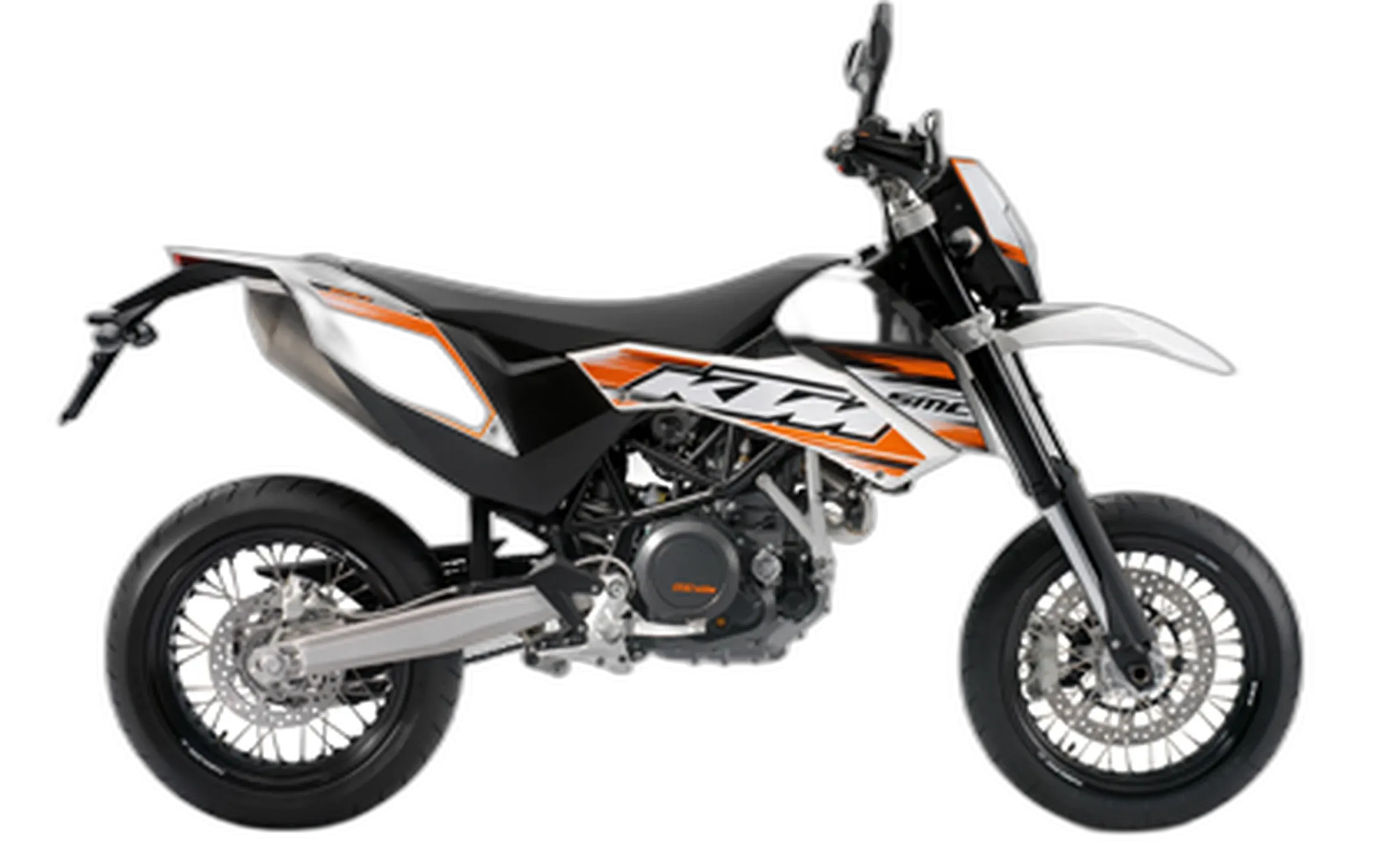

KTM 690 SMC (MY2008) — Supermoto
NastyNils / KTM Press

2008–2011 · Supermoto · Buyer's Guide

690 SMC (MY2008)

The Original Supermoto Riot

The Machine's Character

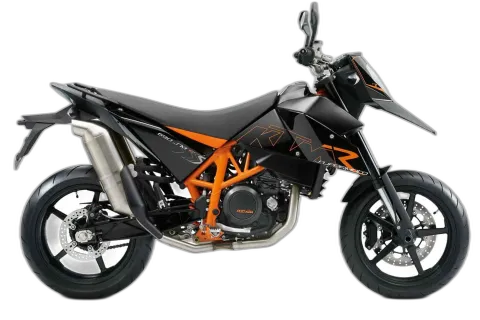
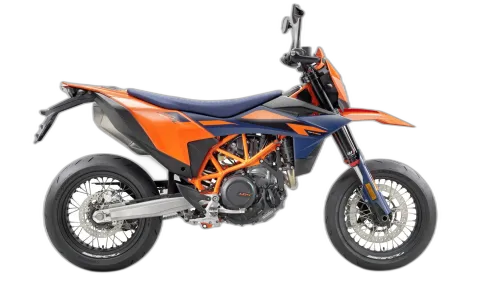
The 690 SMC takes KTM's off-road single and points it straight at the street. A 654cc liquid-cooled single makes 63 hp and 47 lb-ft, and it feeds that grunt into a chassis that barely weighs anything. There are no ride modes, no traction control, nothing electronic sitting between your wrist and the rear tire. What you get instead is a lean-clearance score that tops the scale and handling light enough to flick from one apex to the next on instinct. This is the brand's attack philosophy distilled to its sharpest, simplest form.

On a tight backroad it rewards aggression the way few bikes do, and it asks for a committed, physical rider in return. It is built for short, intense rides rather than long days in the saddle. Ownership takes attention: the rocker arm bearings wear early and want checking at every valve service, the engine can drink oil when ridden hard, and the in-tank fuel filter is worth replacing on schedule. Faulty injectors and loose electrical connections can also bring intermittent starting trouble. Stay on top of that and you have a focused weapon for riders who want motorcycling at its rawest.

Hard Numbers

Spec sheets don't ride bikes, but they set the baseline.

Show full specs & equipment Hide specs & equipment
Key specifications
Power 63 hp (46 kW) @ 7,500 rpm
Torque 47 lb-ft (64 Nm) @ 6,000 rpm
Displacement 654 cc
Engine Single-cylinder
Cooling Liquid-cooled
Gearbox 6-speed
Final drive Chain
Fork Upside-down (USD)
Front tire 120/70-17
Rear tire 160/60-17
Wheelbase 58.3 in (1480 mm)
Seat height 34.4 in (875 mm)
Fuel capacity 3.6 gal (13.5 L)
Top speed 115 mph (185 km/h)
Fuel economy 33 mpg (US)

Equipment check

Chassis

  • Front Suspension Adjustable Standard
  • Rear Suspension Adjustable Standard

Drivetrain

  • Slipper Clutch Standard

The Voice of Experience

Portrait of NastyNils

The test ride

Swing a leg over and the first thing you notice is space. With the fuel moved to the tail, nothing sits between your knees, so the riding position feels genuinely aggressive and your body has room to move once you start pushing. It is tall at 34.4 in, and that height plus the lack of bulk makes the bike feel almost weightless under you as you shift around on it. Thumb the electric start and the single settles without the teeth-rattling vibration you brace for from a big thumper. At pace the airbox sits right in front of your legs, and induction roar fills your space, close and constant. Wind it out toward 115 mph and there is nothing ahead of you, so the air becomes a workout. This is a sensory, physical machine that wants short, hard rides.

Rated point by point — where it earns its keep

My own 0–100 score for this bike against the class, area by area — the marker on each bar is the class average.

The thing I lean on most is how happily it runs a gear tall. Leave it high and the torque hauls the bike through the corner without complaint, which settles the front and keeps the whole thing calm at a pace that ought to feel frantic. Then there's the mass, or the lack of it. When the bends come quick and stack up tight, the bike changes direction almost on thought, no coaxing needed, and that's where the light weight pays off hardest. The long suspension stroke is the other half of it: I can hold real pace across the broken, jumped-up sections without ever backing off my line. The one catch sits right at the top of the scale. On a properly technical track, loading the front hard into the slow hairpins, that long travel tells me less than a short-stroke setup would, and the last sliver of front-end feel goes missing exactly when I'm asking the most of it.

Here the standout is integration. The rear brake, the front, and the anti-hop clutch fold together on the approach so completely that they no longer pull at me as separate controls. It collapses into one action: I shed speed and point the bike in a single move, and the chassis stays planted the whole time. That's what hands me the confidence to attack an entry instead of tiptoeing into it.

This is the part that surprised me most from a single this potent. It fires on the button, it doesn't try to shake itself loose, and the oil-change intervals stay sensible rather than punishing. Lean on it hard for a long, sustained stretch and the low-level unease that hot singles this size used to force on you simply isn't there. The performance is real, and it arrives without ever asking me to babysit the motor.

What sets this bike apart is how it shortens the learning curve. The grunt and the throttle mapping make pulling the front up something you can do on power alone, even if you never figured yourself the type. Same goes for hanging the tail out on entry: the anti-hop clutch and the way the throttle answers do enough of the groundwork that a corner slide is on the table long before your skill has caught up. It never turns on you while you work the technique out.

For the job it's built to do, it's genuinely roomy. With the fuel carried elsewhere, nothing is wedged against your legs, so the aggressive crouch never traps you and you can throw your weight around as you push. Ask it to cover distance and the picture sours fast. There's no shield against the air, so any long highway pull turns into a slog, and the induction noise sitting right up by your seat grinds on you the longer you stay out. It rewards short and hard, never long and steady.

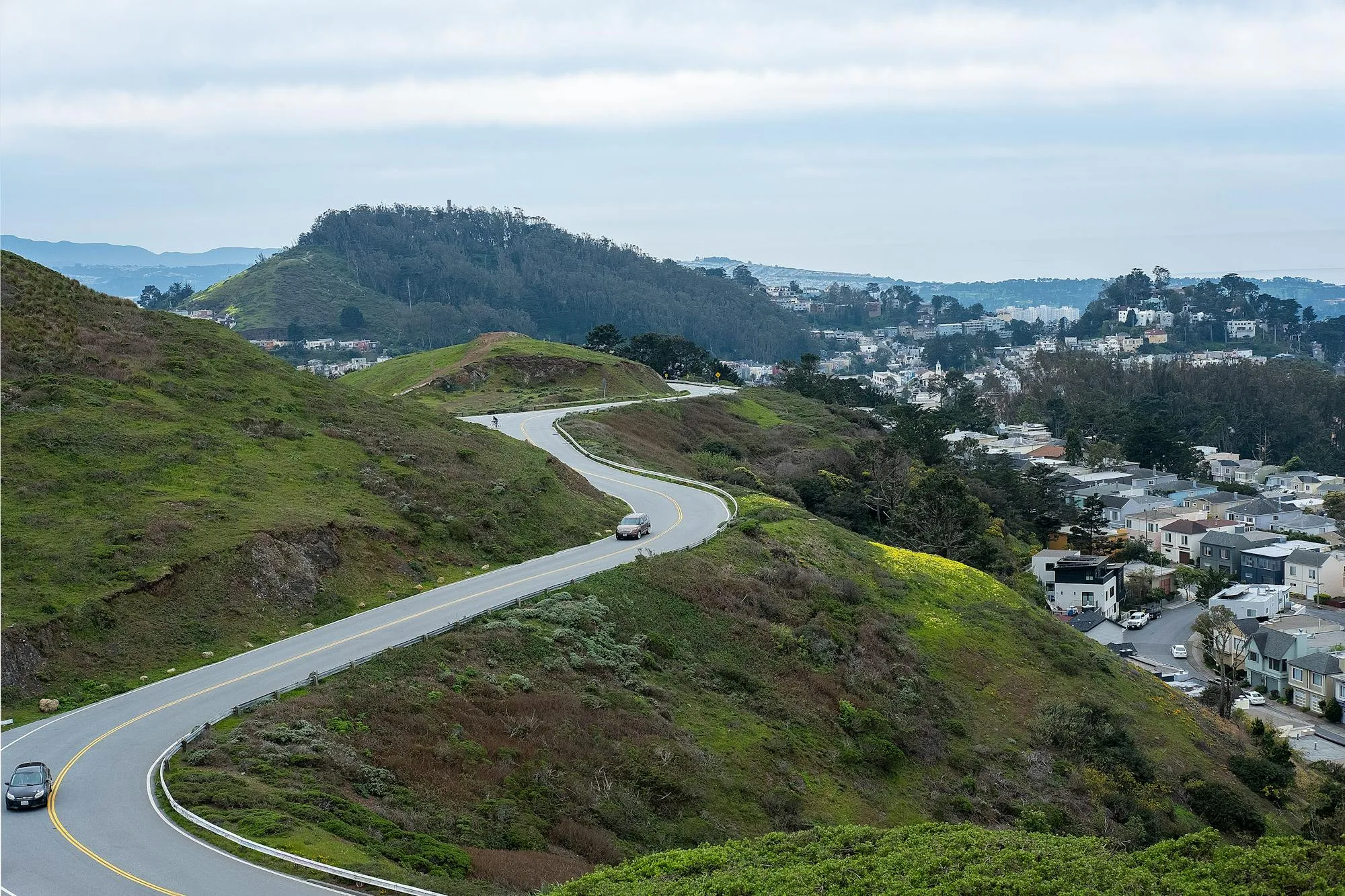
Aerial view of a winding asphalt road traversing rolling green hills in the Bay Area, likely Skyline Boulevard. The road curves through lush grassland with residential development visible in the distance.
David Mcelwee / Pexels

The Truth on the Trail

Over the years I've kept a running tally of what 690 SMC owners actually tell me, pieced together from drawn-out online discussions, talk in the pits, conversations with people who live with one, and the notes that land in my inbox. The picture stays remarkably steady. Riders fall hard for this bike, and they make their peace with the care it asks of them in return.

What keeps owners hooked

Above all, owners call it the most fun bike they've ever owned, and they keep circling back to its light weight and keen engine. Close behind is the steering. Riders describe it as razor-sharp, with wide bars and an agile chassis that swaps direction the moment you ask, plus suspension that keeps telling you what the front is up to. Many add that the single feels surprisingly civilized for its size, smooth and low on vibration, with a strong, even pull that makes ordinary road riding a real pleasure.

The price of admission

The steady gripe is upkeep. Owners insist the bike lives or dies by its service intervals, with valve checks and oil changes that can't slip, and some report the rocker arms wearing. A fair number also flag the limited range, only about 90 miles before a fuel stop at around 33 mpg. A few mention an abrupt, on/off throttle low in the rev range that makes smooth riding through traffic harder than they'd like.

Known issues

  • Rocker arm bearing failure

    enginecommon

    The rocker arm bearings are prone to premature wear and failure, often as early as 3,000 mi (4,800 km). Replacement is recommended at each valve check.

  • Fuel pump/filter clogging

    fuel systemcommon

    The in-tank fuel filter can clog, causing fuel pump starvation, hard starting, and stalling. Regular replacement is advised.

  • Injector and electrical gremlins

    electricsoccasional

    Faulty injectors and electrical connection issues can lead to intermittent starting problems, rough running, and warning lights.

  • High oil consumption

    enginecommon

    Many owners report that the engine burns oil, especially when ridden hard. Frequent oil level checks are essential to avoid damage.

The Expert Benchmark

Where this KTM 690 SMC pulls ahead of — or falls behind — its rivals on the numbers, and the typical bike in its class on character.

What kind of bike this is — character vs. the class

This bike Class average

Head-to-head: KTM 690 SMC vs. its rivals

The 'Should I Buy It?' Score

Forget spec-sheet bragging. Here's who the 690 SMC is actually built for.

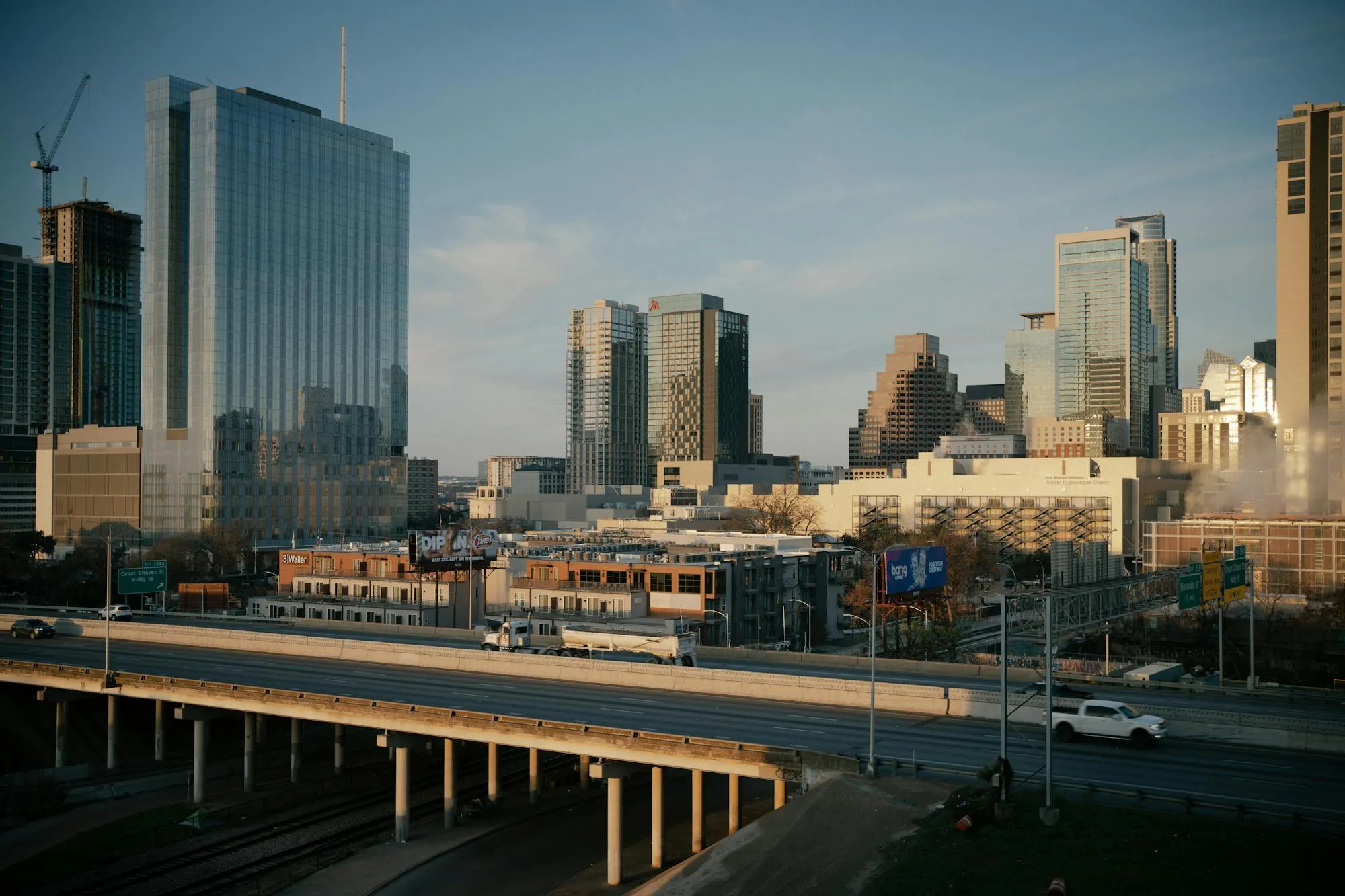
Aerial photograph of downtown Austin, Texas, showing modern high-rise buildings against a clear blue sky. Urban infrastructure, highways, and parking structures visible in the foreground.
Thomas Balabaud / Pexels

Best motorcycle for Angeles Crest?

For the tight, technical canyon work you live for, this is a scalpel that flicks and holds a line with almost no effort. The freeway slog to get there, with no wind protection and a small tank, is the price of admission.

Made for Angeles Crest Highway · Coronado Trail / US 191 · Highway 1 / Big Sur
Best motorcycle for Tail of the Dragon?

Skill over speed is exactly this bike's language. On the Dragon's hairpins it rewards clean technique and lets you find corner-entry slides at your own pace. The long ride in from the city is where it punishes you.

Made for Back of the Dragon · Blue Ridge Parkway · Cherohala Skyway

Best motorcycle for Texas Hill Country?

The sporty Hill Country loops will light you up, and nothing's more fun than banging through the Twisted Sisters. But the roadtrip side of your weekends fights this bike: no wind protection and a 3.6 gal tank make the highway miles a chore.

Made for Austin / Texas Hill Country · Twisted Sisters · Austin / Handbuilt Motorcycle Show

Alternatives to the KTM 690 SMC

If this one isn't quite the fit, these are the bikes worth riding back-to-back against it.

Any price note compares both bikes at the same age — the youngest age both have on the used market — against this KTM 690 SMC. “cheaper/pricier” is what that bike costs second-hand, not how worn it is.