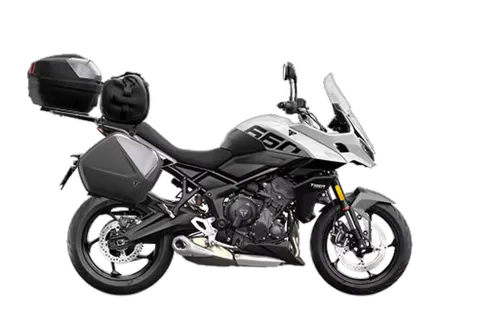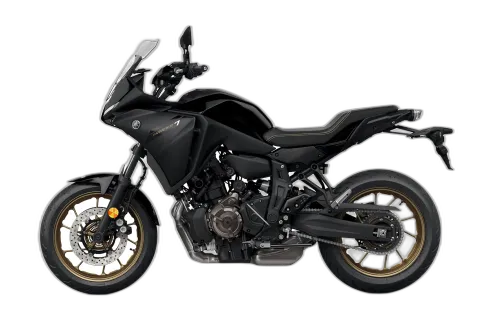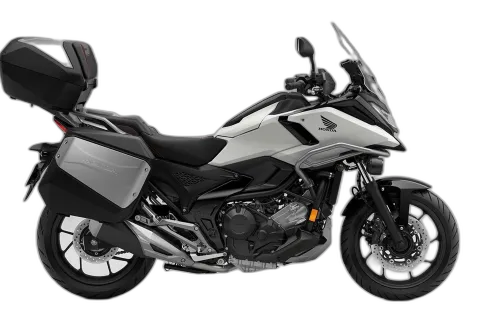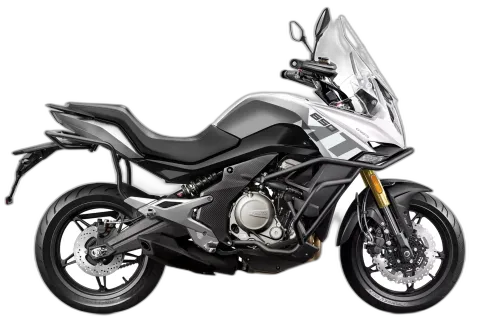

Kawasaki Versys 650 (LE F) — Sport Tourer
Kawasaki Press

2022 · Sport Tourer · Buyer's Guide

Versys 650 (LE F)

3.5 / 5 NastyNils Rating · against its class

Miles Without Drama

The Machine's Character

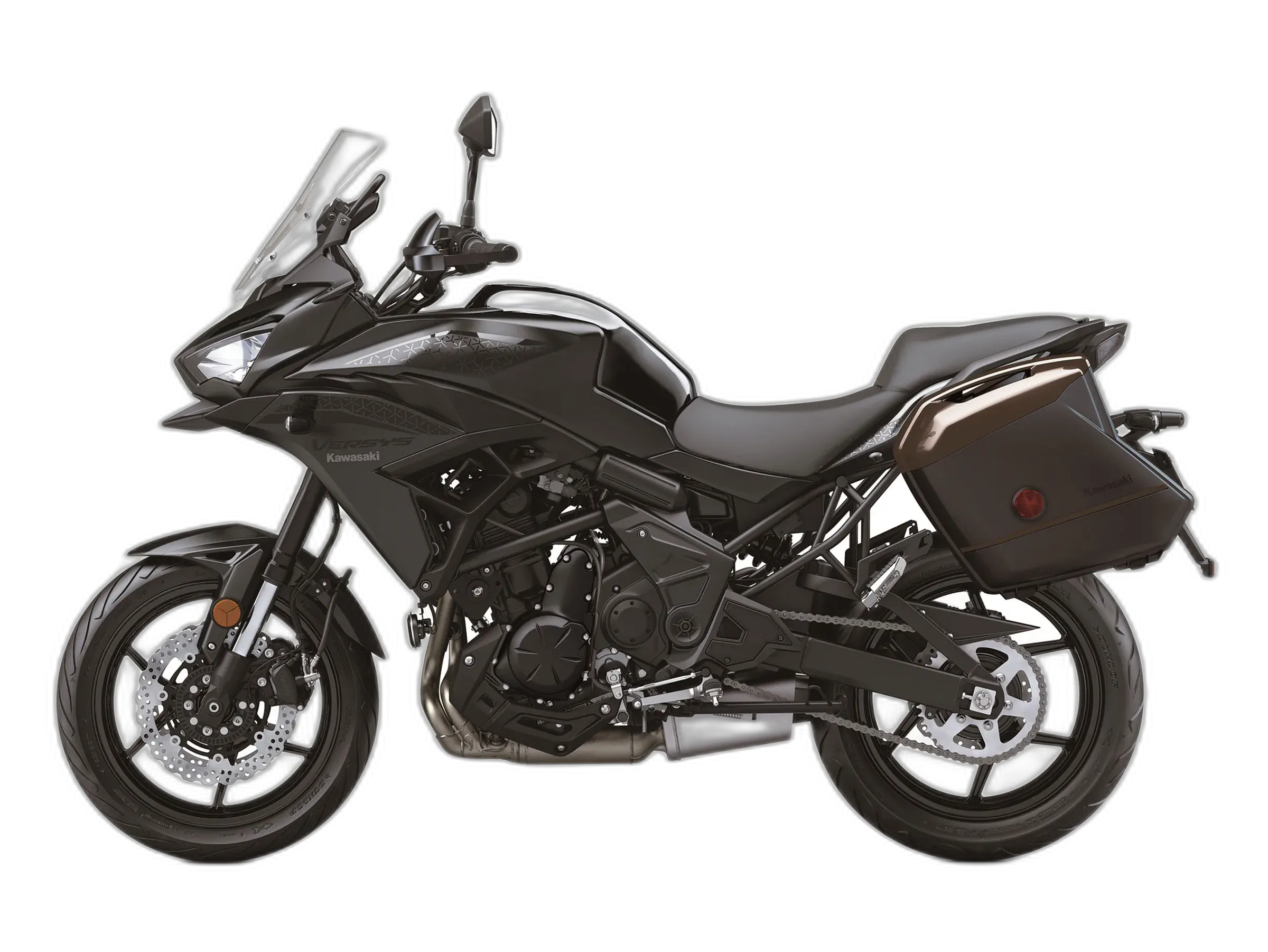
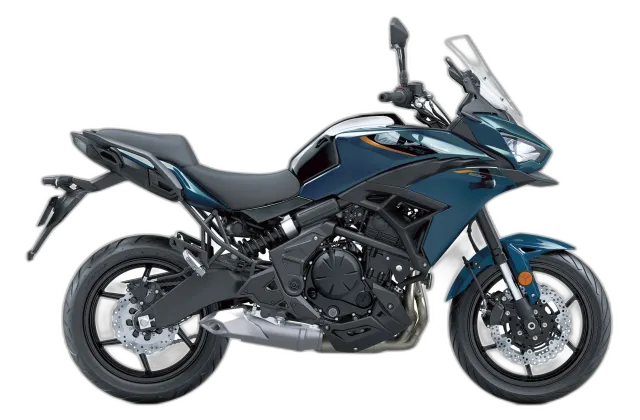
The Versys 650 is Kawasaki's honest answer to a simple question: how much motorcycle do you actually need to cover real miles well? Its liquid-cooled 649 cc parallel twin makes 67 hp at 8,500 rpm and 45 lb-ft at 7,000 rpm. The power comes in smoothly and the engine is happy to rev. It sits in a steel diamond frame on 17-inch wheels front and rear, with long-travel suspension and a 476 lb (216 kg) wet weight. The equipment is sensible rather than showy: ABS, traction control, a slipper clutch, a color TFT dash with smartphone connectivity, an LED headlight and an adjustable windscreen. This is the light, affordable end of the sport-touring class, and it doesn't pretend otherwise.

On the road it asks very little of you. Handling is accessible, it stays calm at highway speed, and it has more lean clearance than most riders will ever use. Running costs are low and reliability is a real strength, which is exactly what Kawasaki buyers pay for. It suits the rider who wants one bike for the commute, the weekend loop and the occasional multi-day trip, and doesn't want to pay for power they'll never use. The caveat is plain. 67 hp is modest for a sport tourer. With a passenger and full luggage it runs out of reserves sooner than a bigger machine would.

Hard Numbers

Spec sheets don't ride bikes, but they set the baseline.

Show full specs & equipment Hide specs & equipment
Key specifications
Power 67 hp (49 kW) @ 8,500 rpm
Torque 45 lb-ft (61 Nm) @ 7,000 rpm
Displacement 649 cc
Engine Parallel twin
Cooling Liquid-cooled
Gearbox 6-speed
Final drive Chain
Fork Telescopic
Front brake 300 mm
Front tire 120/70-17
Rear tire 160/60-17
Wheelbase 55.7 in (1415 mm)
Seat height 33.3 in (845 mm)
Wet weight 476 lb (216 kg)
Fuel capacity 5.5 gal (21 L)
Fuel economy 52 mpg (US)

Equipment check

Chassis

  • Front Suspension Adjustable Standard
  • Rear Suspension Adjustable Standard

Comfort

  • Heated Grips Optional
  • Adjustable Windscreen Standard
  • Luggage System Optional

Connectivity

  • TFT Display Standard
  • Smartphone Connectivity Standard

Drivetrain

  • Slipper Clutch Standard

Lighting

  • LED Headlight Standard

Safety

  • ABS Standard
  • Traction Control Standard
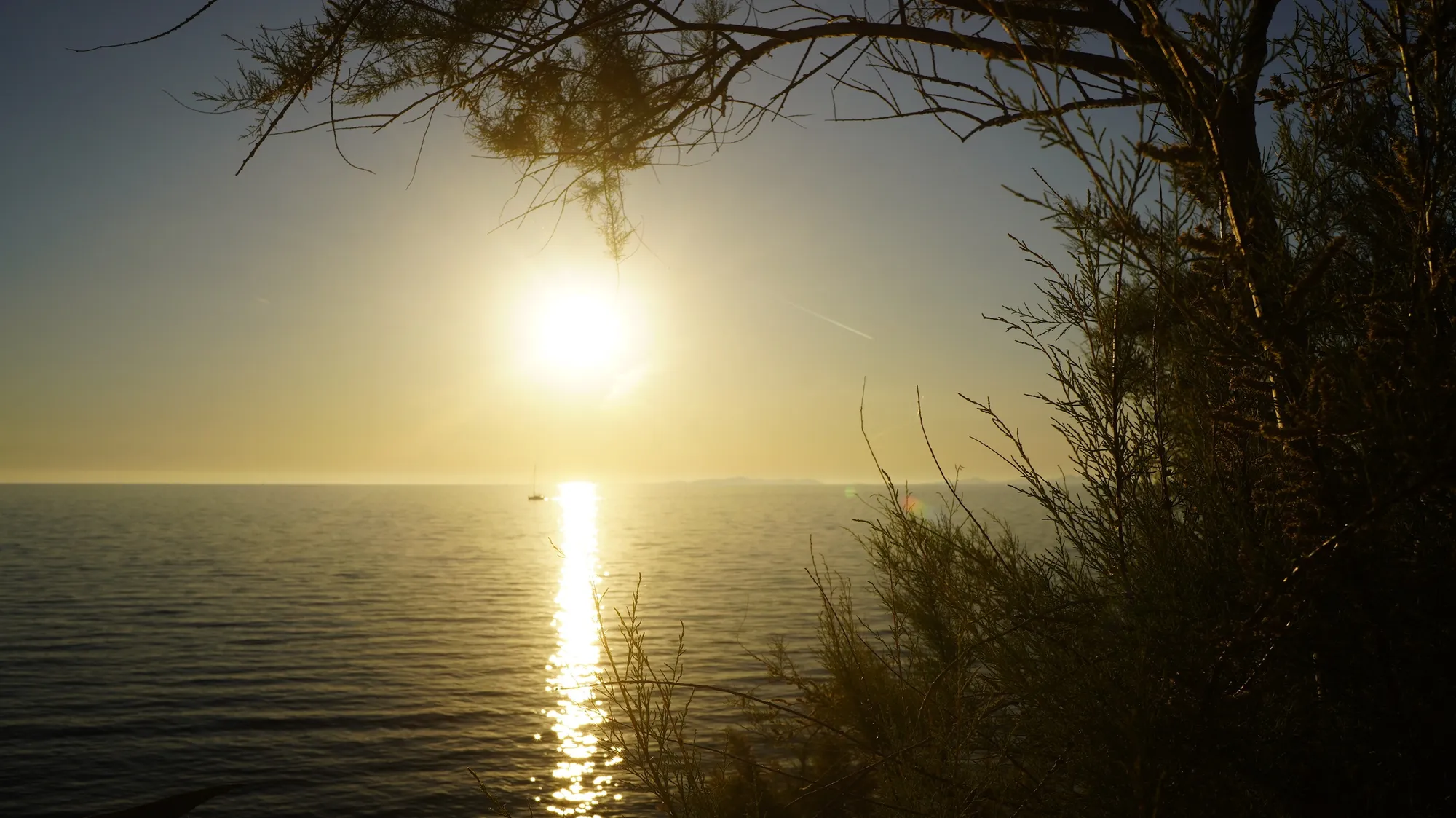
Sunset over the Adriatic Sea near Primosten, Croatia. Golden hour light bathes calm water in warm tones, with a small sailboat on the distant horizon. Rocky vegetation frames the right foreground. Clear skies and gentle conditions.

The Truth on the Street

Over the years I've heard plenty about this bike: in the paddock, at club nights, in long chats with owners, and in the messages riders send me after a season or a few thousand miles on one. For this generation of the Versys 650 the picture is consistent. Owners talk about comfort and versatility far more than anything else, and the complaints that come up are specific rather than fundamental.

Comfort that lasts all day

Riders consistently put comfort at the top of the list. The wide bar and compliant suspension come up again and again, and owners use the bike for long commutes and proper tours without grumbling about the riding position. The fairing gets praise of its own. People who ride a lot of highway miles say the wind deflection is what keeps them fresh at the end of the day. The seat is the exception. Some owners find the stock seat too soft or short on support after several hours, and it's one of the first parts they replace.

One bike for every job

Owners describe a bike that handles everything they ask of it with composure, from city commuting to weekend trips with a passenger. They credit the torquey engine and the generous fuel range. Riders also report plenty of high-mileage examples and talk about how little maintenance they need. In corners, owners call it flickable and say it builds confidence despite its size. Riders coming off the previous model call the new color dash a real step up from the old analog unit.

Where owners want more

The most common gripe is about character rather than reliability. Some riders say the engine lacks the punch and excitement of more modern rival twins and feels a little agricultural at high revs. The rest are one-off complaints. One owner points out that traction control goes back to its most intrusive setting every time the ignition is switched off, so it has to be changed at the start of every ride. Another mentions the missing rear mudguard, which leaves spray and dirt on the tail section and on the passenger.

Known issues

  • Regulator/rectifier concerns

    electrics occasional

    The OEM shunt-type regulator/rectifier is considered a weak link by the community, potentially leading to charging system instability. Upgrading to a series-type unit is a recommended fix.

  • Weak footpeg mount plates

    chassis rare

    The mounting plates for the rider footpegs have been reported to bend or break in a slide, potentially leaving the rider without a peg.

  • Stator failure at high mileage

    electrics common

    The alternator stator can burn out at higher mileage. The windings overheat and break down, so the charging output drops. The first sign is usually a battery that slowly goes flat and struggles to start the bike. If the rider keeps going, the charging system can fail completely and leave the bike stranded.

  • Fragile front turn signals

    bodywork occasional

    The OEM front turn signals protrude and easily break in a tip-over or drop, often cracking the surrounding fairing. Many owners replace them with flush-mounted or low-profile alternatives.

The Expert Benchmark

Where this Kawasaki Versys 650 pulls ahead of — or falls behind — its rivals on the numbers, and the typical bike in its class on character.

What kind of bike this is — character vs. the class

This bike Class average

The shape of the Kawasaki Versys 650 — numbers and character vs. the average Sport Tourer

Head-to-head: Kawasaki Versys 650 vs. its rivals

The Long-Haul Verdict

Forget spec-sheet bragging. Here's who the Versys 650 is actually built for.

Aerial view of a winding asphalt road cutting through volcanic terrain on La Gomera, Canary Islands. The road curves through sparse green vegetation with rocky volcanic peaks visible in the background and a settled valley to the left. Clear lane markings, dry climate, partly cloudy sky.

Best motorcycle for Highway 1?

For 200 to 400 mile days on the Blue Ridge or Highway 1, this is a relaxed, easy partner. It won't overwhelm you with power, but it's stable, frugal and happy to keep going.

Made for Black Hills · Blue Ridge Parkway · Cherohala Skyway
Best touring motorcycle for long distance?

Solo, it'll carry you to Going-to-the-Sun and back without complaint. Loaded two-up over Beartooth, 67 hp hauling 476 lb (216 kg) wet plus two riders is asking a lot, so be honest about how you tour.

Made for Beartooth Highway · Blue Ridge Parkway · Going-to-the-Sun Road

Best motorcycle for Tail of the Dragon?

On the Dragon or Cherohala it's light-handed, forgiving and has clearance to spare, which makes it a good bike for polishing your technique. If you're chasing outright pace, you'll want something sharper.

Made for Back of the Dragon · Blue Ridge Parkway · Cherohala Skyway
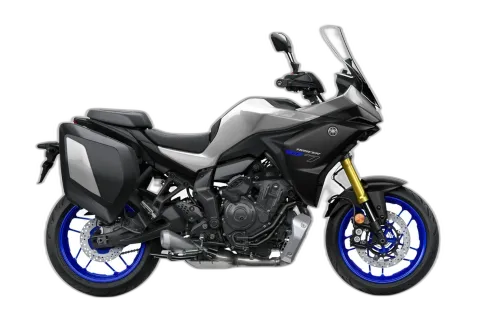
What's new versus the previous generation

If you're cross-shopping the older generation, here's what changed.

Kawasaki Versys 650 (LE 650 E)

Previous generation · 2015–2021

Kawasaki Versys 650 (LE 650 E)

Accessible Miles, Honest Price

Compare to the previous model →