

Honda NC750X (RH 09-DCT) — Sport Tourer
Honda Press

2021–2024 · Sport Tourer · A variant of the NC750X

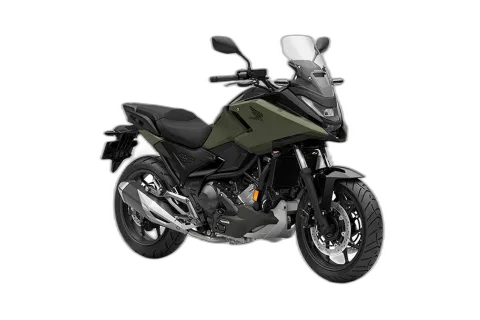
NC750X DCT (RH 09-DCT)

Differences between the standard NC750X and the DCT

3.5 / 5 NastyNils Rating · against its class

The Effortless Daily Hauler

The Machine's Character

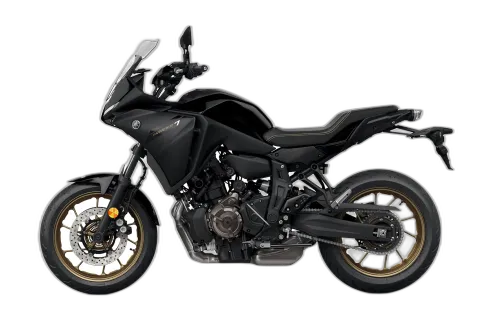
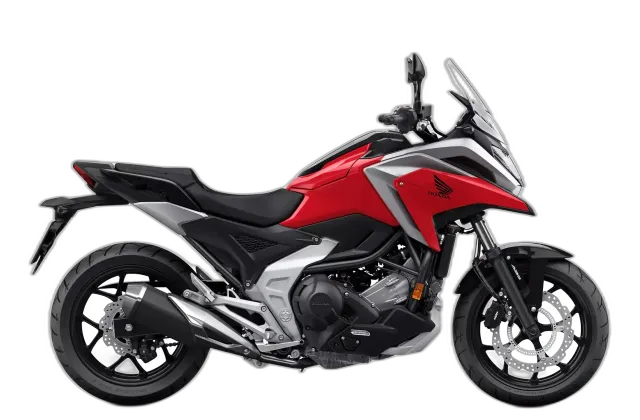
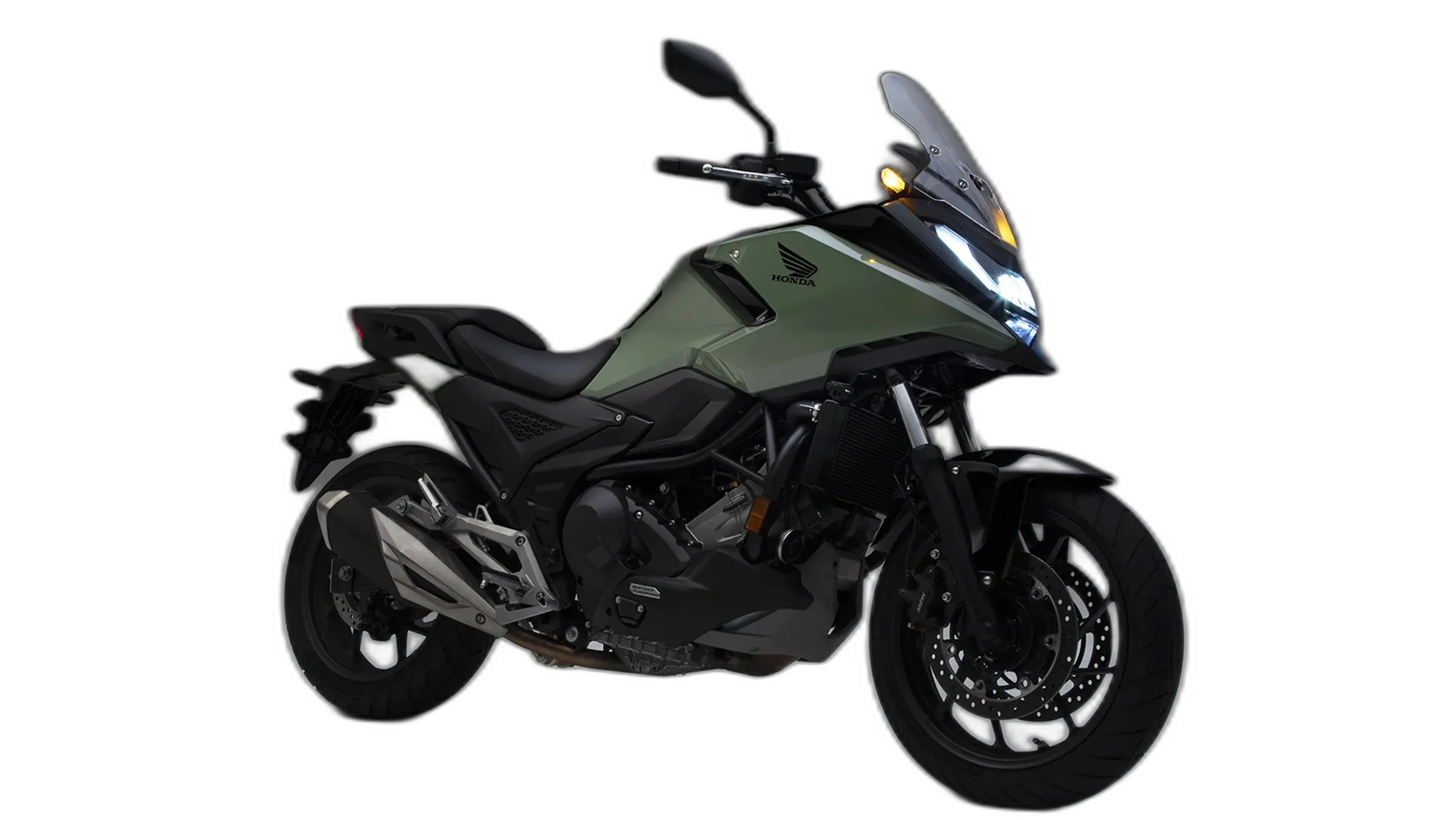
The NC750X DCT is built around a 745 cc parallel twin making 59 hp and 51 lb-ft, with the torque peak arriving down at 4,750 rpm. That is a deliberately low-revving, work-first character rather than a numbers chase. A steel tube frame, 17-inch wheels and a very low center of gravity give it road manners that flatter whoever is sitting on it. What this trim adds is Honda's third-generation DCT, building on the standard bike's ABS, traction control and ride modes. Add a front storage compartment that swallows a full-face helmet and you have a sport-tourer built like a tool.

It rides the way a good tool works, which is a compliment here. Nothing about it asks for skill you don't have, and nothing wears out in a hurry. Reliability and engine life are among its strongest traits, and running costs stay low with 67 mpg from a 3.7 gal (14.1 L) tank. It suits riders who cover real distance on real roads and want the bike to disappear underneath them. The honest caveat is output. At 59 hp and 493 lb (224 kg) wet, it never feels fast, and two-up with luggage over a long pass you will notice that.

Hard Numbers

Spec sheets don't ride bikes, but they set the baseline.

Show full specs & equipment Hide specs & equipment
Key specifications
Power 59 hp (43 kW) @ 6,750 rpm
Torque 51 lb-ft (69 Nm) @ 4,750 rpm
Displacement 745 cc
Engine Parallel twin
Cooling Liquid-cooled
Gearbox 6-speed
Final drive Chain
Front tire 120/70-17
Rear tire 160/60-17
Seat height 31.5 in (800 mm)
Wet weight 493 lb (224 kg)
Fuel capacity 3.7 gal (14.1 L)
Fuel economy 67 mpg (US)

Equipment check

Chassis

  • Rear Suspension Adjustable Standard

Comfort

  • Heated Grips Optional
  • Luggage System Optional

Connectivity

  • USB Charging Port Optional

Safety

  • ABS Standard
  • Traction Control Standard
  • Ride Modes Standard

Signature Tech

The named systems that set this bike apart — and what each one does for you.

Drivetrain

  • Honda DCT (3rd generation) Optional
    • Clutchless riding
    • Automatic gear selection
    • Seamless power shifts
    • Selectable ride modes

What the NC750X DCT Adds — Differences vs the Standard NC750X

The NC750X DCT (RH 09-DCT) builds on the standard NC750X: the upgraded hardware, the key spec changes and where its character shifts. The full ride, specs, scoring and verdict are all right here on this page.

Equipment the DCT adds vs the standard NC750X

Now standard
Automatic Shift (DCT / ASA / AMT)

Hard spec differences

SpecStandard NC750XDCTΔ
Wet weight 472 lb 493 lb +21 lb
Sunset over the Adriatic Sea near Primosten, Croatia. Golden hour light bathes calm water in warm tones, with a small sailboat on the distant horizon. Rocky vegetation frames the right foreground. Clear skies and gentle conditions.

The Truth on the Street

Over the years I've collected NC750X talk wherever riders gather: paddock conversations, parking-lot chats with owners, club nights, and the steady run of emails and messages people send me directly once they've lived with one. Pooled together, the pattern is unusually consistent. Owners describe this bike in terms of what it lets them get done, and the handful of complaints that surface are the same ones nearly every time.

Why the top box stays off

The storage up front is what owners bring up first, usually with a grin. It takes the friction out of daily riding: nothing to strap down, no box bolted on the back, no repacking before every trip. Plenty of riders say every motorcycle should have one. The other thing they volunteer without prompting is how seldom they end up at a gas station. Two hundred miles between fill-ups comes up again and again, and among commuters that number does a lot of the talking.

How the long days actually go

Riders who cover distance describe the same kind of day: upright, unhurried, and free of anything that nags at them. The suspension gets called plush and the engine smooth, and motorway stints of 130 miles at a stretch come up as routine rather than an achievement. Owners running the automatic point to fatigue specifically, saying they get off at the end less worn down than they expected. Newer and returning riders mention the low seat, which takes the tension out of stops and slow traffic.

Where the complaints always land

The engine is where criticism concentrates. It's tuned for torque, and riders say it runs out of breath above 6,500 rpm, so anyone chasing hard acceleration tends to call it flat. That one comes up far too often to write off as a minority view. The automatic gearbox draws its own recurring note: in the standard setting the shift logic can feel hesitant or reach for a higher gear earlier than riders want, and many describe needing time to trust it, or taking over manually when the road gets interesting. Taller owners bring up the screen, which throws air at shoulder height and creates roar at speed. Swapping it is a common fix.

Known issues

  • Front tire inner ply-cord defect (recall KS4, 2024 models)

    chassis rare Recall

    On certain 2024 NC750X motorcycles produced between February 4 and August 1, 2024, the front tire (Dunlop, supplied by Sumitomo) was manufactured with a defect that can cause the inner ply-cord to loosen and unravel over time, leading to potential loss of handling and control. Honda issued recall KS4 (NHTSA 25V-435). Dealers replace the front tire free of charge.

  • Intermittent stalling due to FI-ECU programming defect (recall KN0)

    fuel system occasional Recall

    Improper fuel injection control mapping on early 2021 DCT models caused insufficient fuelling when stopping or accelerating from a stop, leading to engine stalling. Affected units produced from March 18 to August 30, 2021. Honda issued safety recall KN0 in the US (NHTSA 21V-901) to reprogram the FI-ECU and DCT-ECU.

The Expert Benchmark

Where this Honda NC750X pulls ahead of — or falls behind — its rivals on the numbers, and the typical bike in its class on character.

What kind of bike this is — character vs. the class

This bike Class average

The shape of the Honda NC750X — numbers and character vs. the average Sport Tourer

Head-to-head: Honda NC750X vs. its rivals

The Long-Haul Verdict

Forget spec-sheet bragging. Here's who the NC750X is actually built for.

Aerial view of a winding asphalt road cutting through volcanic terrain on La Gomera, Canary Islands. The road curves through sparse green vegetation with rocky volcanic peaks visible in the background and a settled valley to the left. Clear lane markings, dry climate, partly cloudy sky.

Best motorcycle for Highway 1?

Day stages on Highway 1 or the Blue Ridge are exactly this bike's beat: comfortable, unflustered, cheap to fuel. Just don't expect it to feel quick when the road finally opens up.

Made for Black Hills · Blue Ridge Parkway · Cherohala Skyway
Best motorcycle for Tail of the Dragon?

For repeating corners around the Dragon and Cherohala, the low center of gravity and honest chassis let you concentrate on your lines. The engine will never be the part that overwhelms you.

Made for Back of the Dragon · Blue Ridge Parkway · Cherohala Skyway
Best touring motorcycle for long distance?

It will carry you across a state on very little fuel, and that ease is real. Loaded two-up over Beartooth, though, 59 hp is the ceiling, and there is no cruise control for the interstate legs.

Made for Beartooth Highway · Blue Ridge Parkway · Going-to-the-Sun Road