Best scooter for NYC?
This is your best fit here. It's light, low and automatic, and it's built for short hops through dense traffic. The 60 mph ceiling suits city streets, and running costs stay small.
Made for New York City · Austin · Los Angeles

2008–2016 · Scooter · Buyer's Guide
City Traffic's Easy Button
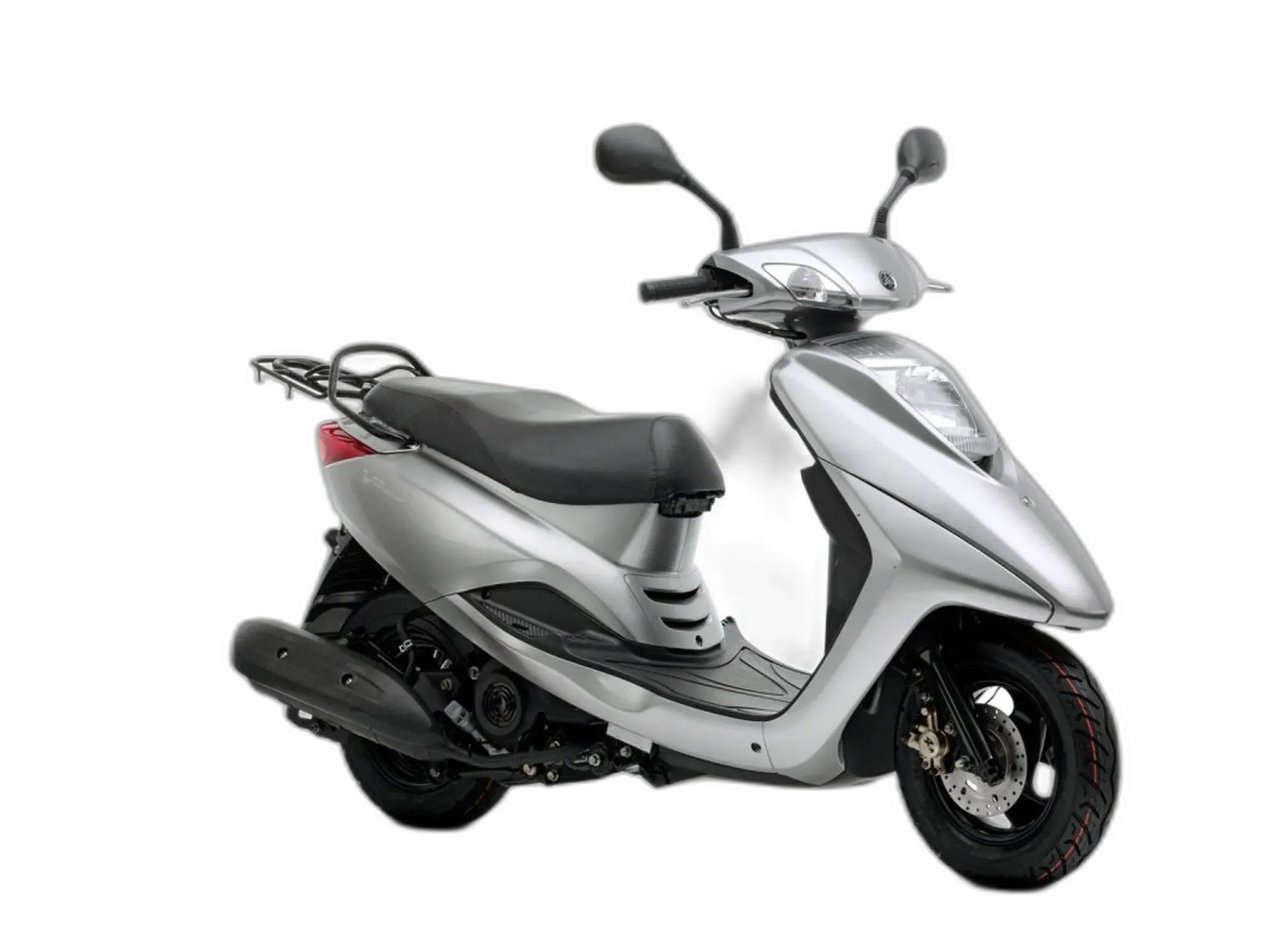
The Vity is Yamaha at its most pragmatic. There's no Dark Side attitude here, and none is intended. You get an air-cooled 125 cc single making 9 hp and 7 lb-ft, an automatic transmission, a steel tube frame and 10-inch wheels at both ends. It weighs 243 lb (110 kg) wet, sits on a 49.2 in (1,250 mm) wheelbase and puts the seat at just 28.7 in (730 mm). Small numbers, and that's the whole point. This generation keeps the equipment list just as bare: no ABS, no ride modes, no TFT screen, but a center stand from the factory. Simple by design.
Everything in this spec sheet points at the city. The low seat and light weight put the Vity within easy reach of shorter riders and newcomers. The twist-and-go automatic takes the clutch out of stop-and-go traffic. A 60 mph (97 km/h) top speed sets the limit: city streets and suburban roads, not the interstate. Fuel economy is listed at 64 mpg, the tank holds 1.5 gal (5.5 L), and a simple air-cooled single keeps running costs low. That's the real reason to buy one. If you want cheap, easy, everyday transport, the hardware lines up with that. Honest transport!
Spec sheets don't ride bikes, but they set the baseline.
| Power | 9 hp (6.6 kW) @ 7,500 rpm |
|---|---|
| Torque | 7 lb-ft (9 Nm) @ 6,000 rpm |
| Displacement | 125 cc |
| Engine | Single-cylinder |
| Cooling | Air-cooled |
| Fork | Telescopic |
| Front brake | 153 mm |
| Front tire | 100/90-10 |
| Rear tire | 100/90-10 |
| Wheelbase | 49.2 in (1250 mm) |
| Seat height | 28.7 in (730 mm) |
| Wet weight | 243 lb (110 kg) |
| Fuel capacity | 1.5 gal (5.5 L) |
| Top speed | 60 mph (97 km/h) |
| Fuel economy | 64 mpg (US) |

For years I've listened to what riders tell me about their bikes: in the paddock, at club nights, in owner chats, and in the emails and messages that land in my inbox. With the Vity the pattern is clear. Owners talk about money first, and the complaints come from individual voices, not a chorus.
Value is the point riders come back to most often. The Vity was one of the cheapest scooters you could buy when it launched, used examples are still very affordable, and owners consistently name that as its strongest suit. Behind it come three things they report regularly: low fuel consumption in normal riding, an engine with few complex parts that keeps going, and a scooter that novices find easy to wheel around. Little money, little trouble.
The gripes are scattered, not widespread. Some owners miss modern conveniences: there's no LED lighting, no digital instrumentation, no USB charging, and even the glove box doesn't lock. A few describe basic suspension and steering that turns vague at speed, which costs them confidence in corners. Others call the acceleration leisurely and highway riding a strain. And some find the conservative bodywork old-fashioned next to newer rivals. No surprises there.
Engine overheating in city traffic
Some owners report the engine becoming excessively hot during prolonged low-speed riding or in heavy traffic, attributed to restricted airflow and low oil levels.
Intermittent starting and stalling problems
Some owners have experienced difficulty starting, particularly when cold, requiring multiple attempts and throttle openings. In a few cases the engine stalls after a few minutes of riding. Possible causes include a weak battery, failing fuel pump, or loose wiring.
Where this Yamaha Vity pulls ahead of — or falls behind — its rivals on the numbers, and the typical bike in its class on character.
Power
Torque
Displacement
Wet weight
Top speed
Seat height
Forget spec-sheet bragging. Here's who the Vity is actually built for.

This is your best fit here. It's light, low and automatic, and it's built for short hops through dense traffic. The 60 mph ceiling suits city streets, and running costs stay small.
Made for New York City · Austin · Los Angeles
It covers the city half of your week cheaply and easily. Weekend ridge roads are another story: 9 hp and a 60 mph top speed make it a partial fit at best.
Made for San Francisco Bay Area · Skyline Boulevard · Big Sur Coast Highway
If this one isn't quite the fit, these are the bikes worth riding back-to-back against it.