·

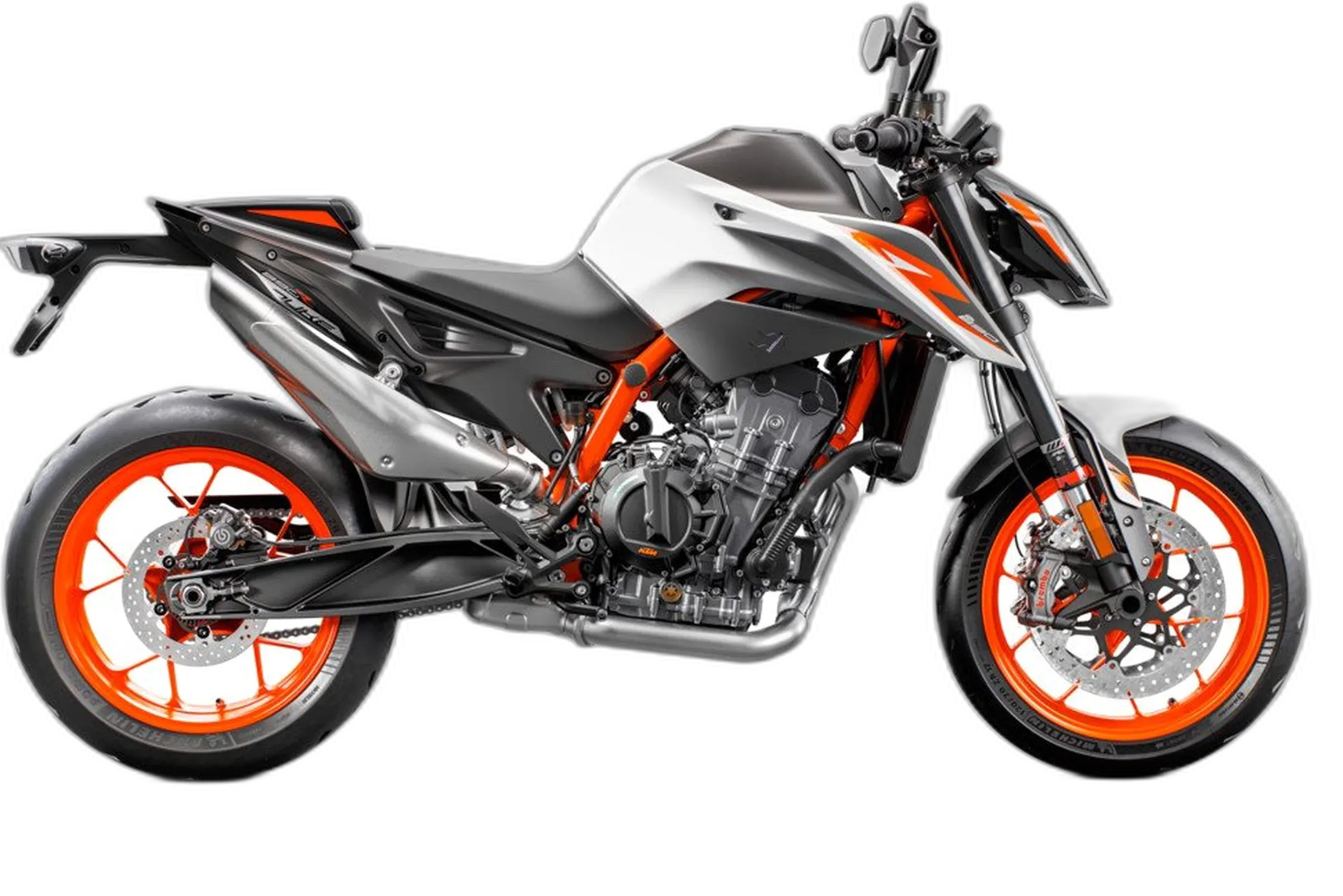
KTM 890 Duke R (MY2020) — Naked Bike
NastyNils / KTM press archive

2020–2024 · Naked Bike · Buyer's Guide

890 Duke R (MY2020)

Sharp Enough To Draw Blood

The Machine's Character

The 890 Duke R takes KTM's LC8c parallel twin out to 889 cc, and the result feels like a different engine, not a bored-out one. The 285-degree firing order hands it a V-twin pulse instead of the usual parallel-twin drone, and a heavier crank loads the bottom of the rev range with honest pull. You get 121 hp and 73 lb-ft wrapped in a steel trellis frame, with a 6D IMU running traction and anti-wheelie as separate functions. In the middleweight naked class it sits firmly on the sporting edge, built around superbike-grade brakes and a chassis with one clear agenda.

This one commits to sporty riders and does not apologize for it. The saddle is firm, the chassis is stiff, and the suspension favors precision over plushness, so long days on rough pavement ask something of you. It was built for a rider who wants to feel the road, not be insulated from it. Ownership comes with homework too: the LC8c platform has a history of intake cam wear, the WP fork seals can weep early, and the quickshifter can stiffen under load. For someone chasing intensity over harmony, that trade reads as fair.

Hard Numbers

Spec sheets don't ride bikes, but they set the baseline.

Show full specs & equipment Hide specs & equipment
Key specifications
Power 121 hp (89 kW) @ 9,250 rpm
Torque 73 lb-ft (99 Nm) @ 7,750 rpm
Displacement 889 cc
Engine Parallel twin
Bore × stroke 90.7 × 68.8 mm
Compression 13.5:1
Cooling Liquid-cooled
Gearbox 6-speed
Final drive Chain
Frame Steel trellis
Fork Upside-down (USD)
Front brake 320 mm
Rear brake 240 mm
Front tire 120/70 ZR17 58W — Michelin Power Cup 2
Rear tire 180/55 ZR17 73W — Michelin Power Cup 2
Wheelbase 58.3 in (1482 mm)
Seat height 32.8 in (834 mm)
Fuel capacity 3.7 gal (14 L)
Top speed 153 mph (246 km/h)
Fuel economy 50 mpg (US)

Equipment check

Chassis

  • Front Suspension Adjustable Standard
  • Rear Suspension Adjustable Standard

Connectivity

  • TFT Display Standard
  • Smartphone Connectivity Optional

Drivetrain

  • Quickshifter Optional
  • Slipper Clutch Standard

Lighting

  • LED Headlight Standard

Safety

  • ABS Standard
  • Traction Control Standard
  • Ride Modes KTM Ride-by-Wire (Street/Track/Rain Maps) Selectable ride modesRefined throttle response Standard

The Voice of Experience

Portrait of NastyNils

The test ride

Thumb the starter and the uneven firing gives the twin a lumpy, almost V-twin voice that never settles into a flat hum. The riding position tips you forward more than most nakeds, and there's a reason for it: at speed the wind pulls your chest off the bars and the posture stops feeling aggressive. Sustained highway pace puts a steady buzz through the grips, noticeable if your hands run sensitive. Grab the front brake hard and you feel the deceleration land in your upper body, the kind of load you brace against. Roll on in the low gears and the nose lifts with attitude, first without asking, second with enthusiasm. Even at the end of a straight the missing fairing never pins you back, so you arrive at the next marker with something in reserve.

Rated point by point — where it earns its keep

My own 0–100 score for this bike against the class, area by area — the marker on each bar is the class average.

What stays with me about this chassis is how little it argues. Point it into a corner and the front goes exactly where I pointed it, stable and tight even as I lean harder, with none of the vague float that creeps into so many middleweights as the pace builds. The direction changes are the headline. One input tips it over and the bike has committed before I've finished thinking the corner through, with a sharpness that keeps catching me out on something this physically compact. The flip side is a real temper. It's switched on under me and echoes whatever my hands do, so I keep the inside arm deliberately soft on the way in. Tense up at the bars and every small tremor bounces straight back as a nervous shimmy; settle down and that very same sensitivity becomes the best thing about the bike. Get the touch right and it's addictive, arrive stiff and the whole rhythm comes apart, and the cure never changes, which is to loosen my hold and let the chassis do its job. There's no hiding a clumsy input here. It demands that I ride properly, and when I do it hands back a level of feel and accuracy through the front I'll happily chase all day. That bargain is the entire appeal.

Where this bike truly earns its keep is the relaxed track day, and I've run enough of them on it to be certain. The accuracy that makes it fun on the road turns into a genuine edge between the corners, good enough to keep me running with bikes a class or two above that really should clear off and leave a middleweight behind. It was never meant to be an outright race tool, and once the pace pushes past brisk highway speeds the faired sportbikes and the larger Super Duke use their aerodynamics and top end to reel themselves back in front. That's a fair trade, because chasing them down a long straight was never the job. The electronics are a big part of why I trust it this far. On a damp morning it keeps a quiet margin in hand for me, and once things dry out an ordinary rider never trips over a limit the ECU has set, so I'm tuning the aids to match the grip and my mood instead of fighting around them. I can run the traction and the wheelie control as separate jobs, which on a middleweight is properly serious kit. Best of all, it never grinds me down over a session, and every time I climb off I'm already scheming about what a fully faired version of this exact engine and chassis would be capable of.

Pull hard on the front and the stop lands square in my upper body, the kind of load I'm used to meeting only on race machinery, and I have to brace through it to keep everything settled. None of it feels crude, though. The lever doles the power out with enough feel that I can genuinely lean on it, and the ABS keeps a real panic stop tidy without getting in the way. Light bike, ferocious stoppers: in a mixed field on a track day I make up absurd amounts of ground in every braking zone.

Everything good about this engine lives in the midrange, and that's the band I ride almost exclusively. Open it up down low and there's a deep, muscular surge that hooks up the rear and pushes me back in the saddle on the way out of a corner. What gets me is how grown-up it feels next to the smaller twin. It reads like a wholly different motor with serious weight behind it and a planted authority to everything I ask of it, not the jumpy, buzzy urgency the little engine always carried. The needle sweeps round quickly the moment I crack it, and on a tight layout there's enough honest pull through the middle to handle the short straights without me reaching for the top. The ceiling is the catch. Wind it right out and the drive goes flat earlier than its lively character leads you to expect, so anyone hoping to chase high-revving 600s where the road opens up is asking this twin for a favor it won't grant.

This is where the bill comes due for everything sharp about the bike, and I made my peace with it early. The saddle is hard and offers nowhere to hide, and the riding position pitches me forward into something that's exactly right for attacking a road and clearly never meant for covering big daily miles in one go. KTM made that call deliberately, and you feel the intent in it. The suspension tells the same story in its own way. The moment the surface gets broken up I can feel that the linkage was dialed for a racetrack and not for the cracked back roads I commute on, so anything rough lands harder than a mainstream naked would let it. Then there's the constant fine vibration that builds through the bars once I hold a highway cruise. It never turns harsh, but it doesn't quit either, and sensitive hands will pick it up, so I'd put it on the checklist before signing anything. The surprise is that the open road suits it best of all. That forward reach I just griped about pays off at speed, lifting my torso clear of the blast and putting my mass over the nose where the chassis wants it, and even at the end of a long straight the missing bodywork never shoves me into the tail or forces a crouch. The discomfort is real and it's chosen, the price of a bike that would rather talk to the road than wrap me up.

In all my time on the bike, exactly one thing misbehaved, and I'd rather put it on the record than pretend the machine was flawless. Deep into a hard run the quickshifter began demanding noticeably more pressure underfoot on the downshifts than it ever had before, turning stiff and balky instead of clicking cleanly down. Nothing let go and nothing felt risky. It simply shed its smoothness, so it goes on the list for the next dealer visit rather than anything that keeps me up at night.

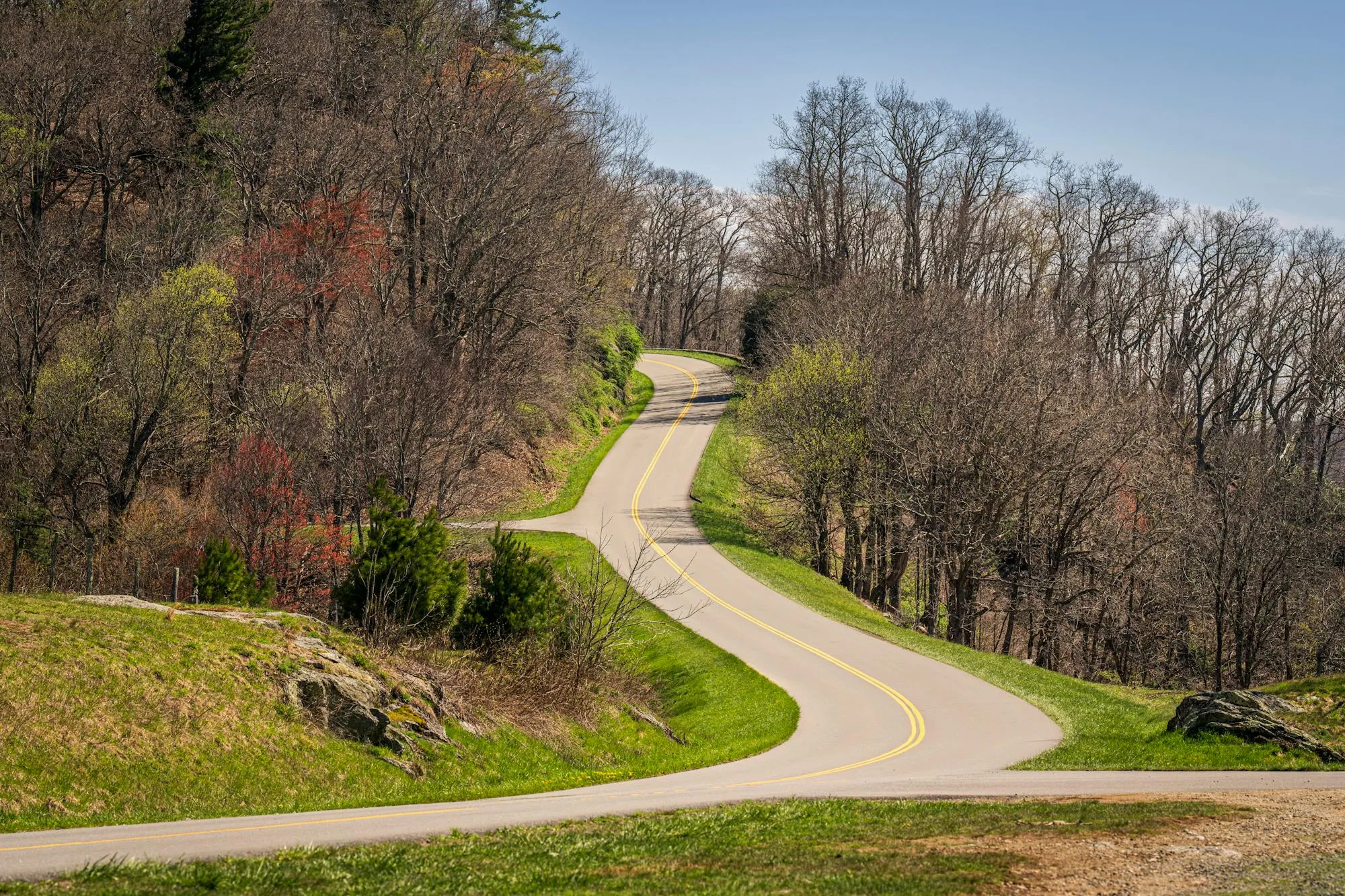
A winding asphalt road descending through the Appalachian Mountains, likely the famous Tail of the Dragon section in Tennessee and North Carolina. Multiple technical right-hand and left-hand curves are visible in this aerial perspective, surrounded by deciduous forest in spring foliage. Clear sunny conditions, well-maintained asphalt with yellow center lines marking the curves. No motorcycle or rider visible in the frame.
Mark Stebnicki / Pexels

The Truth on the Street

What follows isn't a test I rode. It's the consensus I've assembled over years of listening: the comment sections under my videos, the forum threads I keep up with, talk with owners at track days, and the messages riders send me directly once they've lived with the bike. For the 890 Duke R, the chatter settles into a clear split. Deep respect for how it rides runs straight into steady frustration with what it asks you to give up.

The praise rides up front

The admiration almost always starts with how it steers. Riders rank it among the sharpest middleweights they've ridden, quick into a bend yet calm once it's committed, and several insist it feels lighter than its weight lets on. The engine earns nearly the same affection for its broad, muscular pull from low revs and the character that keeps them reaching for the throttle. Then the talk turns to what the money buys. The brakes, the fully adjustable suspension, the lean-aware electronics, and the sticky rubber all show up for less than that hardware usually costs, and owners single out the stopping power as the standout. The suspension keeps its own following, called the best some have owned and praised for working well right from delivery. Under all of it sits feeling: people report staying smitten long after the novelty fades, as content carving a canyon as they are lapping a track day.

Comfort runs out as the day goes

The complaints arrive once the miles stack up or the pace drops to a crawl. The firm seat draws more grumbles than anything else, and the owners who fit the optional one don't agree on whether it helps. Add the committed forward stance and no wind protection, and many call two hours about their ceiling, with the small 3.7-gal (14 L) tank holding real-world range close to 155 miles (250 km). Hold a steady highway speed and a faint buzz builds through the bars that sensitive hands keep flagging. Crawl through town and engine and radiator heat settles onto the legs, enough that some owners fit deflector pads to make it livable.

The costs that come after

Two money themes surface too often to leave out. The first is the spending that doesn't stop at purchase: cruise control, a quickshifter, track mode, launch control, and phone connectivity all cost extra, and what nettles owners most is that some of it already sits on the bike, waiting on a dealer to switch it on. The tires gather their own complaints, with grip that's excellent once warm but a narrow temperature window that turns uncertain in the cold or wet, and wear quick enough to finish them near 1,550 miles (2,500 km), which pushes plenty of riders onto road rubber. Finish takes steady criticism too, the switchgear and plastics called cheap beside the premium mechanical parts and quick to mark. And a run of sealing leaks keeps coming up around the countershaft seal, valve cover gasket, and thermostat housing; the individual fixes are cheap, though owners say the repetition wears at their confidence.

Known issues

  • Premature intake camshaft lobe wear (LC8c platform issue)

    engineoccasional

    Accelerated wear on intake cam lobes, attributed by KTM to poor oil feed (pre-2020) and narrow rocker arm followers (pre-2021). KTM added an oil screen (from MY2020) and introduced wider finger followers (from MY2021). KTM officially stated "camshafts used on the LC8c platform have no inherent defect" and declined a recall, handling claims "case-by-case." However, Austrian engineering company Coober GmbH documented excessive wear even on a 2023 890 engine, suggesting the fix may not be fully effective. Primarily reported on 790 Adventure models; confirmed but rarer on 890 Duke R. One documented case of a 15,000-mile Duke 890 R that dropped an intake valve.

  • Intermittent ABS / HCU electronic errors

    electricsoccasional

    Random HCU (Hydraulic Control Unit) or ABS error codes appearing on the dashboard, particularly during break-in period. May clear themselves or require dealer diagnostic reset. Some reports of disconnected ABS sensor codes logged without any physically disconnected sensor.

  • Thermostat housing / coolant system seep

    coolingcommon

    Coolant leak from the thermostat housing or the hose connections at the cylinder head water fitting. Caused by thin OEM jubilee clips, fragile plastic thermostat housing, or improperly sealed hoses. KTM released an updated thermostat housing (0.5 mm thicker base) with shorter bolts. Community fix: replacing OEM clips with wider stainless steel ones or upgrading to Samco silicone hoses.

  • OEM front brake disc warping / pulsing

    brakesoccasional

    Front brake rotors (Galfer OEM discs) warping, causing pulsing/juddering when braking. Some owners report discs warped from factory. Replaced under warranty in many cases. Some owners switch to aftermarket discs (e.g., MetalGear) with better results. The issue concerns the Galfer discs, not the Brembo Stylema calipers themselves.

  • Quickshifter false neutral (especially 5th to 6th gear)

    drivetrainoccasional

    With the optional quickshifter enabled, the gearbox fails to engage the next gear during upshifts, causing the engine to rev freely (false neutral). Most common on the 5→6 shift but also reported on 3→4. Disabling the quickshifter results in smooth, positive shifts with the manual clutch. Potential fixes: dealer recalibration via EC2 diagnostic tool, adjusting shift lever linkage to 90° angle, or installing a Factory Pro Shift Kit. Some units had incorrect shift lever alignment from the factory.

  • Incorrect engine oil from factory (MY2020 batch)

    engineoccasional

    A batch of 2020 KTM 890 Duke R motorcycles left the factory with incorrect engine oil (reportedly 10W-60 instead of the specified 10W-50 Motorex Power Synth 4T). KTM issued Technical Service Bulletin KTB2013 (July 14, 2020) requiring dealers to change oil and filter before customer delivery or before 620-mile (1,000 km) first service. Reimbursement only if performed before/during first service.

  • WP APEX fork seal premature failure

    suspensionoccasional

    Fork seals on the WP APEX 43 mm USD forks leaking prematurely. Community reports suggest KTM/WP switched to red seals that are less durable than the previous black seals. KTM policy: leaks under 1,000 miles are treated as a defect (warranty); over 1,000 miles is considered wear and tear.

  • Countershaft sprocket seal oil seep

    drivetraincommon

    Oil leaks from behind the front sprocket cover on the left side, originating from the countershaft (output shaft) seal. Ranges from minor seeping to significant dripping that can reach the rear tire. Some owners report 5 replacement seals in under 4,000 km. KTM revised the seal design and introduced a spacer in later replacement parts.

  • Repeated MAP sensor failure

    electricsoccasional

    At least one documented case of a 2022 890 Duke R experiencing MAP sensor failure three times in three years. Symptoms: MTC error, TC and ABS warning lights active, error code cannot be cleared. Bike continues to run normally. Dealer unable to identify root cause. Possibly an isolated case or wiring/connector issue rather than sensor defect.

  • TFT instrument cluster moisture ingress

    electricsoccasional

    Condensation forms inside the TFT display, particularly on cold mornings or after temperature changes. KTM acknowledges the cluster is a "vented unit" (not sealed) and recognizes a manufacturing defect but only replaces units above a certain threshold of moisture accumulation. The day/night sensor can malfunction, staying in dark mode excessively. In rare cases, the display loses power entirely.

  • Valve cover gasket oil weep

    enginevery common

    Slow oil seepage from the valve cover gasket, particularly at the "half moon" sections. Occurs especially during hot conditions or after spirited riding. Estimated ~75% of 790/890 owners experience this to some degree per community reports. KTM revised the gasket (new part number) and recommends ThreeBond 1211 sealant. Typically covered under warranty. Parts are inexpensive and repair is straightforward.

The Expert Benchmark

Where this KTM 890 Duke R pulls ahead of — or falls behind — its rivals on the numbers, and the typical bike in its class on character.

What kind of bike this is — character vs. the class

This bike Class average

The shape of the KTM 890 Duke R — numbers and character vs. the average Naked Bike

Head-to-head: KTM 890 Duke R vs. its rivals

The 'Should I Buy It?' Score

Forget spec-sheet bragging. Here's who the 890 Duke R is actually built for.

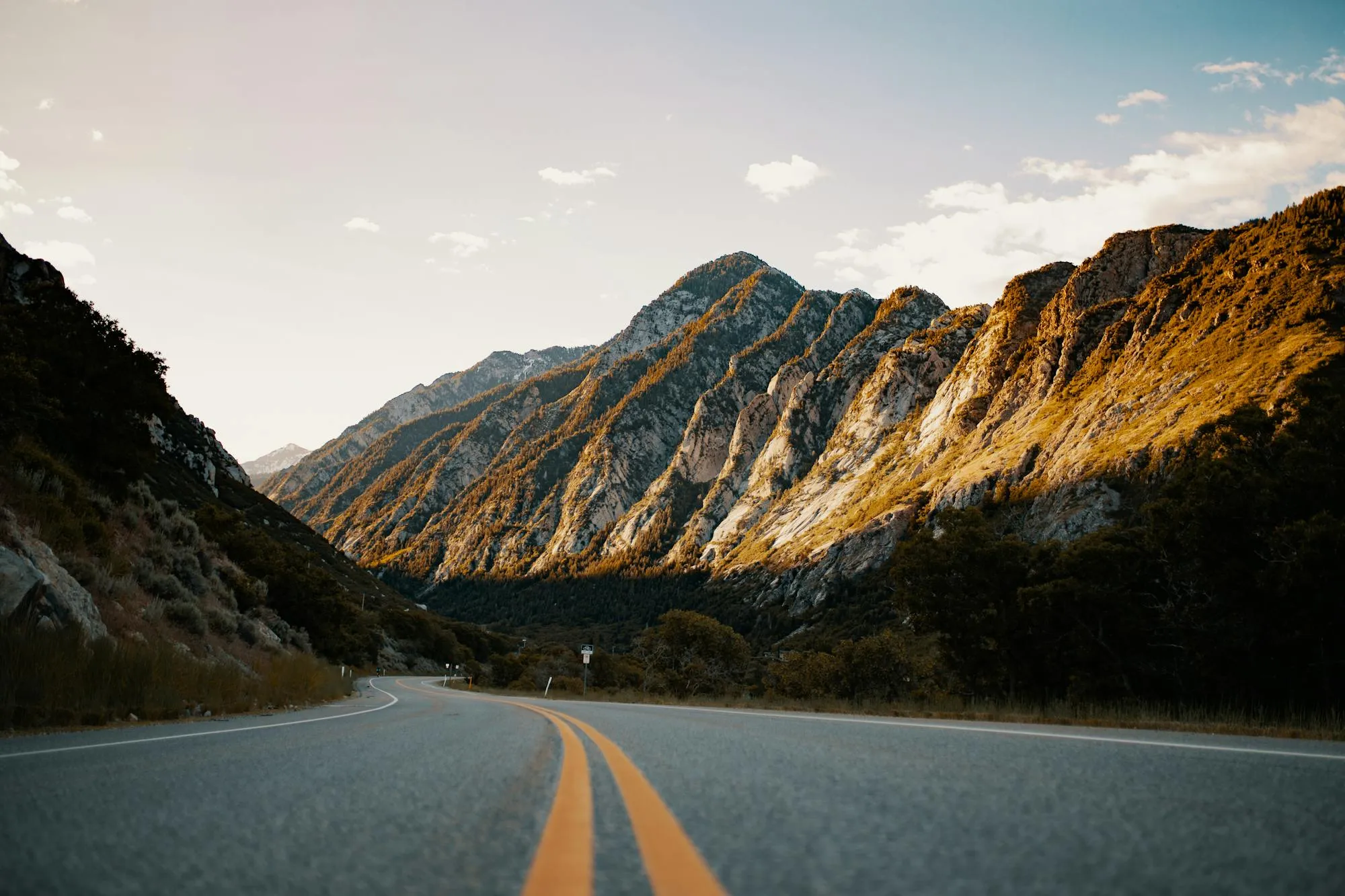
A scenic view of Angeles Crest Highway winding through rugged Southern California canyon terrain. Rocky mountainsides with golden earth tones frame the asphalt road with tight sweeping curves. Double yellow center line visible, sparse vegetation along the shoulders, clear blue sky with white clouds. Daylight, dry conditions. No motorcycle or rider visible. Iconic location for canyon-road enthusiasts.
Josh Sorenson / Pexels

Best motorcycle for Angeles Crest?

If your weekends are Angeles Crest and tight canyon passes, this bike was built for exactly that. Sharp turn-in and strong brakes reward precision, just don't expect a plush commute home.

Made for Angeles Crest Highway · Coronado Trail / US 191 · Highway 1 / Big Sur

Best motorcycle for Bay Area?

Skyline and the ridge roads play to its strengths: light, modern, photogenic, happy in the twisties. The firm sport setup is the price you pay for that sharpness around town.

Made for Bay Area Ridge Roads · San Francisco / Bay Area · Skyline Boulevard / Alice's Restaurant

Best motorcycle for Tail of the Dragon?

For skill-first riders working the Dragon and Cherohala, the precise chassis is a teacher. It wants loose, disciplined hands and pays you back in feel, not raw speed.

Made for Back of the Dragon · Blue Ridge Parkway · Cherohala Skyway

Alternatives to the KTM 890 Duke R

If this one isn't quite the fit, these are the bikes worth riding back-to-back against it.

Any price note compares both bikes at the same age — the youngest age both have on the used market — against this KTM 890 Duke R. “cheaper/pricier” is what that bike costs second-hand, not how worn it is.