
Ducati Monster (MY2023-SP) — Naked Bike
Ducati press archive

2023 · Naked Bike · A variant of the Monster

Monster SP (MY2023-SP)

Differences between the standard Monster and the SP

4 / 5 NastyNils Rating · against its class

Öhlins Edge, Street Soul

The Machine's Character

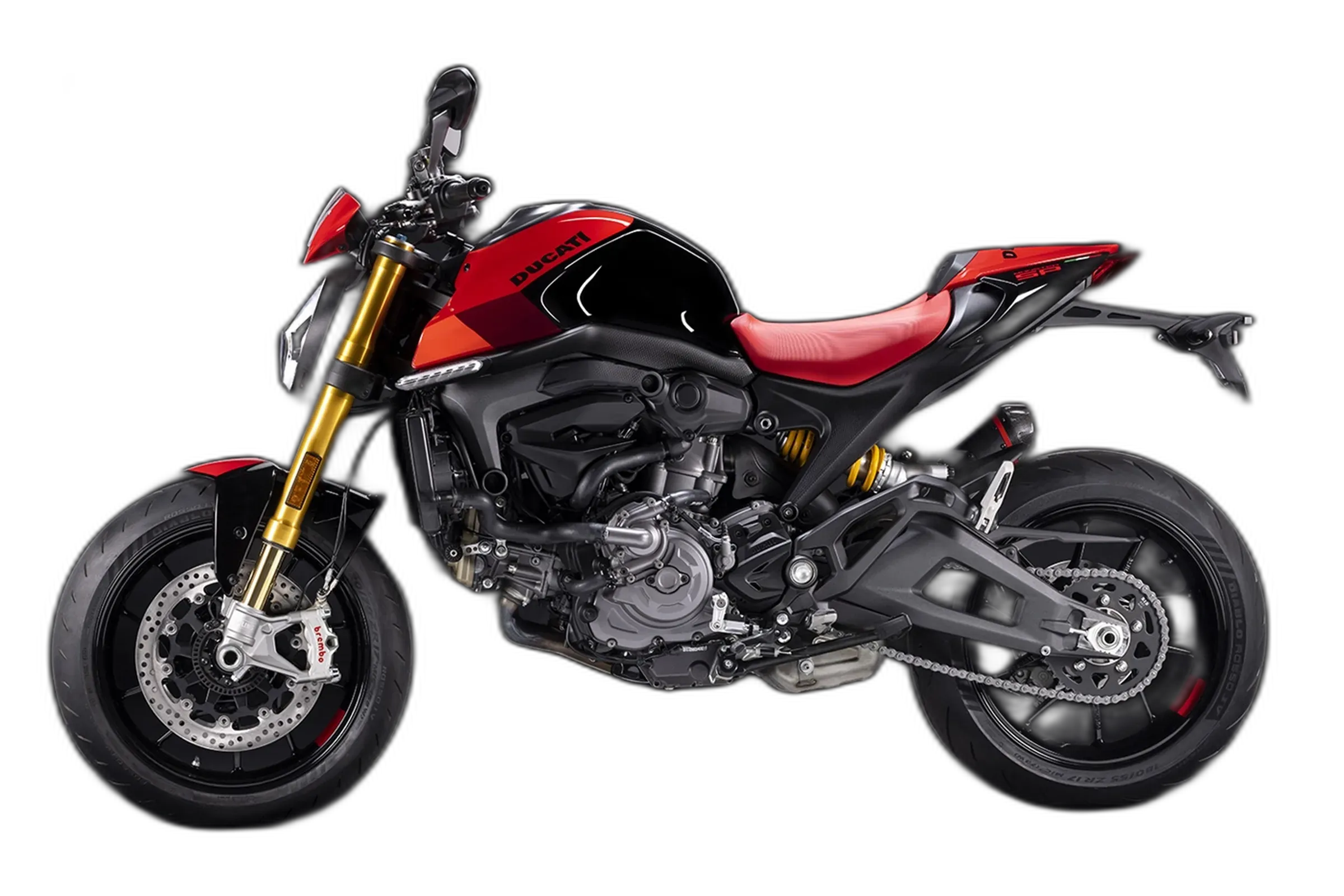
The Monster SP is the 937 platform with the serious chassis parts bolted on. Ducati positions it as the most performance-focused Monster trim, and the hardware backs that up: a fully adjustable Öhlins NIX30 fork, an Öhlins STX 36 shock, Brembo Stylema calipers and a steering damper. The 937 cc 90° V-twin makes 111 hp at 9,250 rpm and 69 lb-ft at 6,500 rpm, and it has just 410 lb (186 kg) of wet weight to move. Cornering ABS, traction control, Ducati Wheelie Control, Ducati Power Launch and ride modes come standard, as does the up/down Ducati Quick Shift. That's a lot of bike in a compact package.

On paper, this is a naked built for twisty roads first and everything else second. Peak torque arrives at 6,500 rpm, well below the power peak, which points to an engine with its muscle in the midrange. Ducati frames the Termignoni slip-on and lithium battery as a coordinated weight-saving package, and the SP ships with a firm, sport-biased suspension base setup. Both ends are adjustable, so you can tune it to your weight and your roads. The 33.1 in (840 mm) seat and 3.7 gal (14 L) tank tell you the priorities: an experienced rider, a good back road, a few hours. Focused by design.

Hard Numbers

Spec sheets don't ride bikes, but they set the baseline.

Show full specs & equipment Hide specs & equipment
Key specifications
Power 111 hp (82 kW) @ 9,250 rpm
Torque 69 lb-ft (93 Nm) @ 6,500 rpm
Displacement 937 cc
Engine 90° V-twin
Cooling Liquid-cooled
Gearbox 6-speed
Final drive Chain
Fork Upside-down (USD)
Front tire 120/70-17
Rear tire 180/55-17
Wheelbase 57.9 in (1470 mm)
Seat height 33.1 in (840 mm)
Wet weight 410 lb (186 kg)
Fuel capacity 3.7 gal (14 L)
Fuel economy 45 mpg (US)

Equipment check

Chassis

  • Front Suspension Adjustable Öhlins NIX30 Damping tuning to stylePrecise front end feedback Standard
  • Rear Suspension Adjustable Standard

Connectivity

  • TFT Display Standard
  • Smartphone Connectivity Optional

Drivetrain

  • Quickshifter Ducati Quick Shift (DQS) Up/Down Clutchless ridingFull throttle upshift Standard
  • Slipper Clutch Standard

Lighting

  • LED Headlight Standard

Safety

  • ABS Standard
  • Traction Control Standard
  • Ride Modes Ducati Ride-by-Wire Power Modes Selectable ride modesRefined throttle response Standard

Signature Tech

The named systems that set this bike apart — and what each one does for you.

Braking

  • Brembo Stylema Caliper Standard
    • Stronger consistent braking
    • Brake fade resistance
    • Firm brake lever feel
    • Agile weight reduction

Rider aids

  • Ducati Power Launch (DPL) Standard
    • Consistent launches
    • Controlled wheelie prevention
    • Lean sensitive traction
  • Ducati Wheelie Control (DWC) Standard
    • Controlled wheelie prevention
    • Consistent launches

What the Monster SP Adds — Differences vs the Standard Monster

The Monster SP (MY2023-SP) builds on the standard Monster: the upgraded hardware, the key spec changes and where its character shifts. The full ride, specs, scoring and verdict are all right here on this page.

Premium hardware the SP brings

  • Suspension Front Suspension Adjustable Fully adjustable forks to dial in preload and damping, where the standard front end is preset.
  • Transmission Quickshifter Down An up-and-down quickshifter for clutchless downshifts; the standard blips on upshifts only.
  • Chassis Steering Damper A factory steering damper to settle the bars under hard drive — the standard goes without.

Hard spec differences

SpecStandard MonsterSPΔ
Seat height 32.3 in 33.1 in +0.8 in

How the SP shifts the character

Where the SP does more
  • More suspension adjustment to dial in
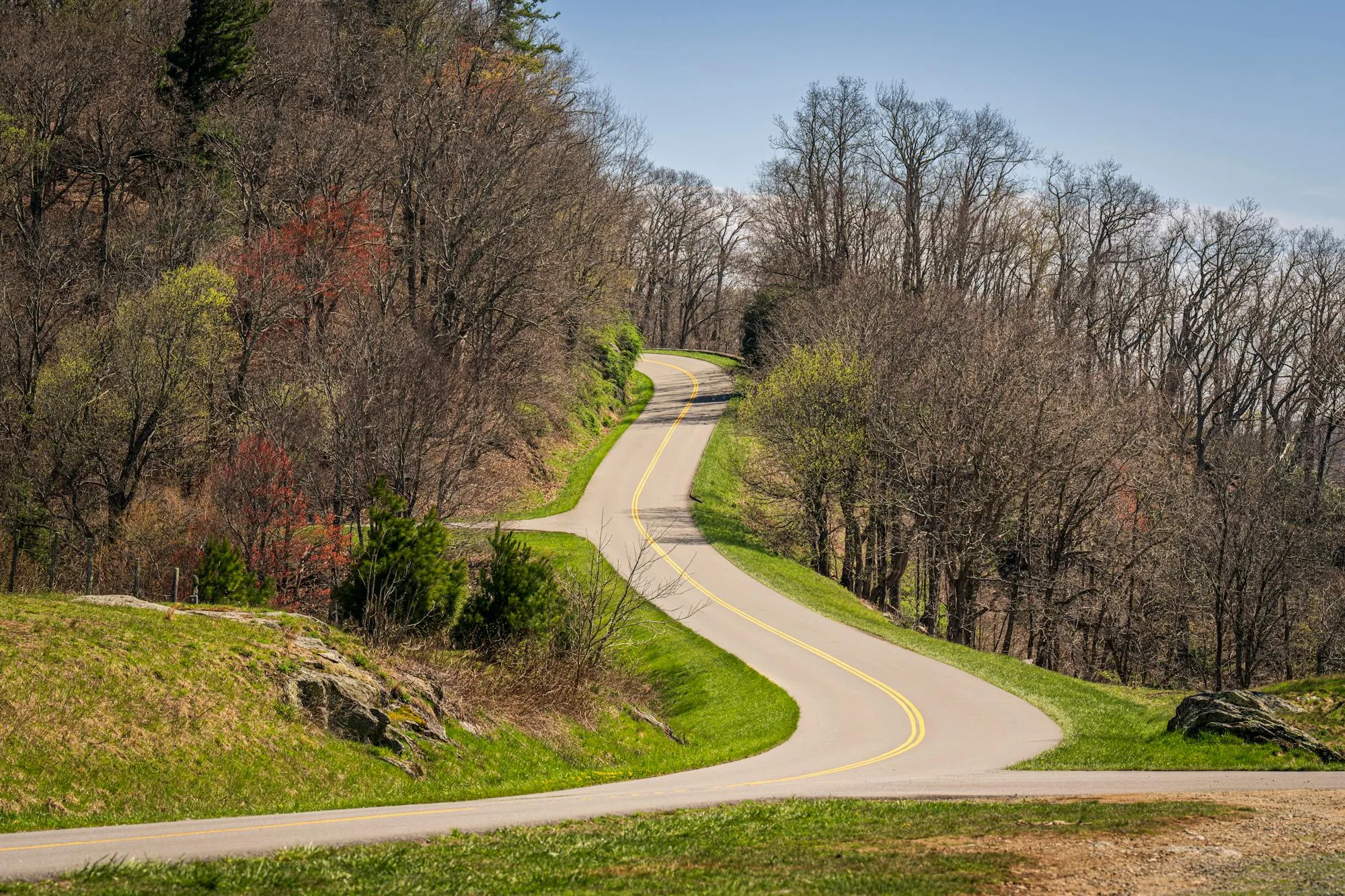
A winding asphalt road descending through the Appalachian Mountains, likely the famous Tail of the Dragon section in Tennessee and North Carolina. Multiple technical right-hand and left-hand curves are visible in this aerial perspective, surrounded by deciduous forest in spring foliage. Clear sunny conditions, well-maintained asphalt with yellow center lines marking the curves.
Mark Stebnicki / Pexels

The Truth on the Street

I've been listening to riders for more than two decades: in paddocks, at club nights, in owner chats and in the messages that land in my inbox every week. On this Monster the chatter splits cleanly in two. Riders praise how easily it rides and how well it's put together, and they grumble about equipment, range and a quickshifter that doesn't always cooperate.

A small bike that rides smaller

The most consistent praise is about how little effort this bike asks of you. Riders describe low-effort steering, a narrow waist and U-turns that come easily, and many say it feels lighter on the move than it does standing still. The compact footprint and short tail come up just as often: owners say it slips through city traffic and is easy to maneuver at walking pace. The engine gets the same kind of approval. Riders talk about torque that arrives in long, rolling pulses, about a twin that's as happy chugging through town as it is revved out, and about a bike that stays engaging at legal speeds. On the SP, the taller stance and Öhlins fork are regularly described as giving it supermoto-style agility and accurate steering. The electronics are reported as unobtrusive in normal riding and supportive when you need them. Easy company!

Brakes, dash and finish earn respect

Ask owners what feels expensive and three things come back again and again. The first is the front brake: riders consistently put the Brembo Stylema setup at the top of the class for bite, modulation and consistency. The second is the 4.3 in TFT dash, which gets steady praise for its clear layout and for switchgear you can navigate without thinking about it. The third is the finish. Owners point to thick paint, well-machined cycle parts and very little cheap plastic, and they say the bike feels more premium than its mass-market rivals. For many of them, that fit, finish and the name on the tank are part of what they paid for. It shows.

Where the grumbling starts

The loudest recurring complaint is equipment. Cruise control isn't available at all, and long-distance owners often call that the single biggest omission. There's no keyless system either, and navigation, heated grips and tire pressure monitoring aren't standard. The quickshifter is the next regular topic: owners report occasional false neutrals and missed shifts at low rpm, a few had sensors replaced under warranty, and most say it settles down after roughly 600 to 1,200 miles (1,000 to 2,000 km). Owners of the standard bike call its fork soft and point out that it has no damping adjustment, so the keen ones either upgrade the internals or move up to the SP. Distance draws its own criticism. The seat is fine for short rides, but riders say the foam runs out of support after about two hours, on the SP saddle too. Range is around 115 miles (185 km) to the fuel light, with roughly 40 miles (64 km) of reserve after that. Then there's the money: the SP costs about $2,900 more than the Plus, and plenty of riders say that gap is hard to justify on the road, where the steering and front-end feel are the only differences they call unmistakable. Tough math.

Known issues

  • Engine heat at rider's thighs in low-speed traffic

    cooling very common

    The liquid-cooled L-twin produces noticeable thigh heat in city traffic and at stoplights. Lean factory mapping for emission compliance compounds the effect. Owners and reviewers describe it as a near-universal characteristic of the platform rather than an isolated defect. Factory heat-shield accessories partially address it.

  • Jerky DQS downshifts at partial throttle

    drivetrain common

    The bidirectional DQS shifts cleanly on upshifts but downshifts feel jerky and dwell long if the throttle is not fully rolled off, especially in 5th and 6th gear. Workarounds include rolling fully off-throttle for clutchless downshifts, lowering the gear-shift peg, and learning the system's specific timing. Some isolated cases have traced to actual hardware failure of the QS sensor, but the dominant pattern is calibration character, not failure.

  • OEM mirror vibration, limited rear visibility

    bodywork common

    Stock mirror stems transmit engine vibration into the mirror housing, blurring the rearward image at certain rpm bands. Field width is also limited by the stem geometry. Bar-end mirror replacements are a near-universal aftermarket fix; a non-recall service-campaign reinforcement of the mirror stems has been referenced anecdotally on owner forums but is not confirmed via a Ducati primary document.

  • Stock SP Öhlins setup is firm; sport-biased base settings

    suspension common

    The Öhlins NIX30 fork and STX 36 shock are fully adjustable, but the SP ships with a firm sport-biased base setup that is consistently described as harsh on broken pavement. Owners — especially lighter riders — report that fork/shock spring rate or preload changes are sometimes needed in addition to clicker adjustment. The Standard/Plus has the parallel issue of insufficient adjustability rather than firm tuning; on the SP, the adjustment range is there, but stock settings need work.

  • Bidirectional DQS occasionally fails to engage cleanly

    drivetrain occasional

    The quickshifter can be inconsistent, sometimes failing to engage or producing jerky shifts, especially at low rpm.

  • Front brake judder/rotor glazing at low speed

    brakes occasional

    Low-speed braking can induce pulsation or glazing of the front rotors, causing vibration through the lever.

  • Exhaust header surface corrosion within first year

    exhaust occasional

    The exhaust headers develop surface rust or corrosion, particularly in humid climates, despite low mileage.

The Expert Benchmark

Where this Ducati Monster pulls ahead of — or falls behind — its rivals on the numbers, and the typical bike in its class on character.

What kind of bike this is — character vs. the class

This bike Class average

The shape of the Ducati Monster — numbers and character vs. the average Naked Bike

Head-to-head: Ducati Monster vs. its rivals

The 'Should I Buy It?' Score

Forget spec-sheet bragging. Here's who the Monster is actually built for.

A scenic view of Angeles Crest Highway winding through rugged Southern California canyon terrain. Rocky mountainsides with golden earth tones frame the asphalt road with tight sweeping curves. Double yellow center line visible, sparse vegetation along the shoulders, clear blue sky with white clouds. Daylight, dry conditions. Iconic location for canyon-road enthusiasts.
Josh Sorenson / Pexels

Best motorcycle for Angeles Crest?

You ride hard on weekends and know what good suspension is worth. At 410 lb (186 kg) with 111 hp, Öhlins and Stylema calipers, the SP is built for exactly your roads. A very strong match.

Made for Angeles Crest Highway · Coronado Trail / US 191 · Highway 1 / Big Sur
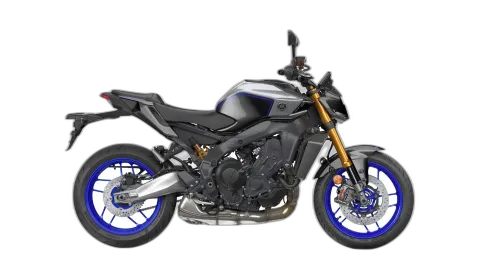
Best motorcycle for Tail of the Dragon?

You chase clean lines, not top speed. A light 937 cc twin with 69 lb-ft, fully adjustable Öhlins and a steering damper is the right toolkit for tight, technical corners. A very strong match.

Made for Tail of the Dragon · Back of the Dragon · Blue Ridge Parkway

Best motorcycle for Bay Area?

It has the looks and the tech for the meet-up, and the ridge roads suit it. For the city commute, expect a firm sport-biased setup and a 33.1 in (840 mm) seat. A good fit, not a perfect one.

Made for Bay Area Ridge Roads · San Francisco / Bay Area · Skyline Boulevard / Alice's Restaurant

Alternatives to the Ducati Monster

If this one isn't quite the fit, these are the bikes worth riding back-to-back against it.