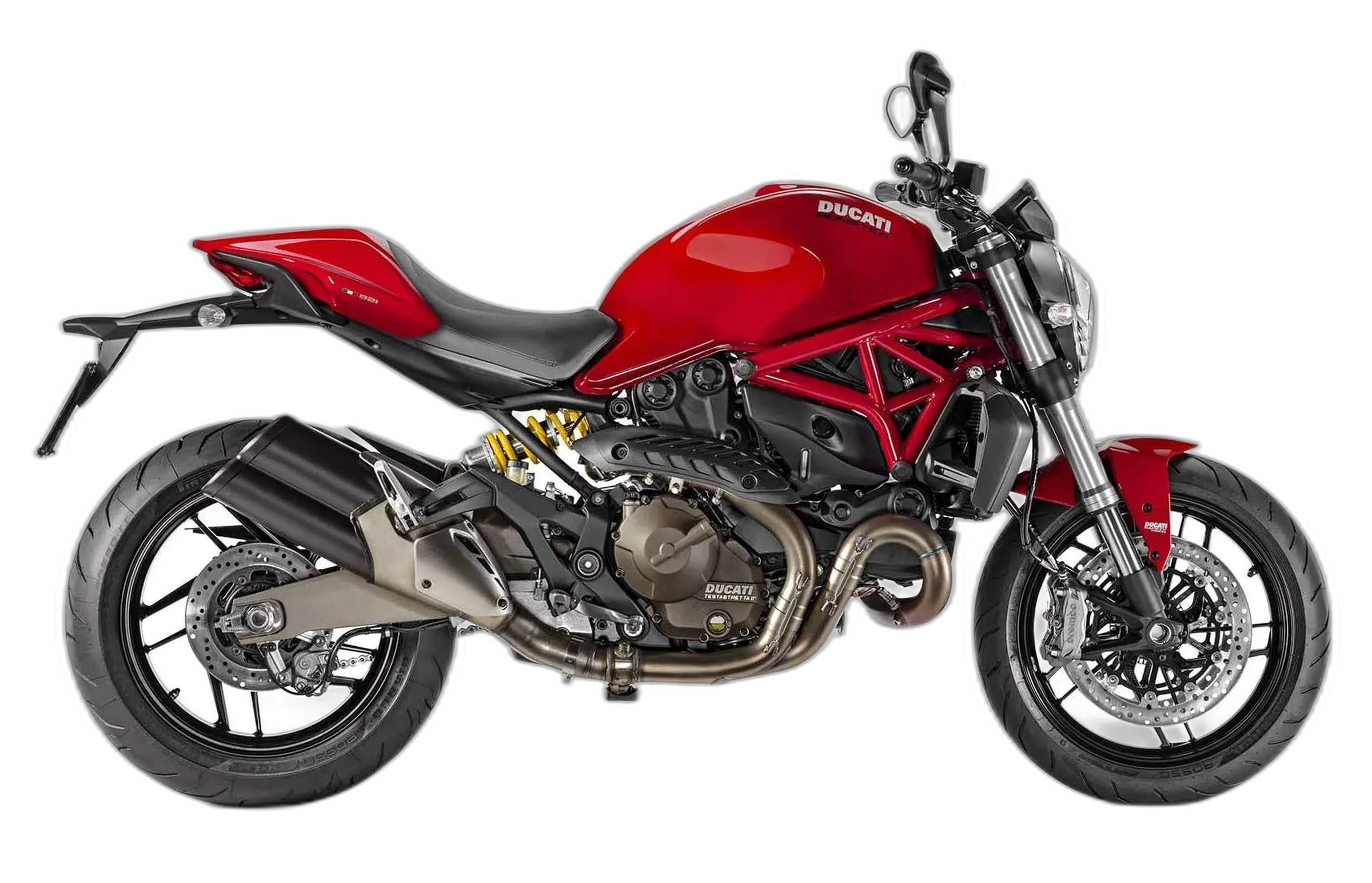


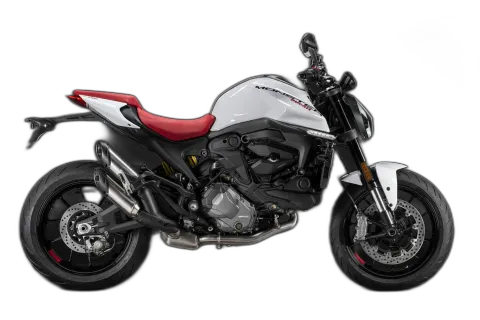
Ducati Monster 821 (MY2014) — Naked Bike
Ducati press archive

2014–2020 · Naked Bike · Buyer's Guide

Monster 821 (MY2014)

Italian Twin With Real Bark

The Machine's Character

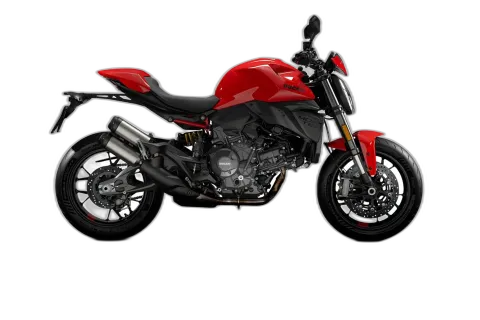
The Monster 821 is Ducati's mid-size naked, and it carries the brand's presence without the usual price in comfort or nerve. The 821 cc Testastretta 11° V-twin makes 109 hp and 63 lb-ft, sits in a steel trellis frame, and moves 453 lb wet. ABS, traction control and ride modes come standard, with Ducati Ride-by-Wire Power Modes shaping how the engine answers, plus a slipper clutch, a TFT display and an adjustable seat height. In a class full of capable middleweights, this one leads with character and has the hardware to stand behind it.

Ridden hard or ridden to work, it stays approachable. The chassis is forgiving, it turns easily at parking speeds, and it never asks for a specialist's hands to go quickly. Aftermarket support is broad, so few of these stay stock for long. The honest part is ownership. These engines can weep oil from the pressure sensor, the filter area or the head studs, and the rear brake hose runs close enough to the exhaust to cook over time. Buy one with service records and take a good look underneath.

Hard Numbers

Spec sheets don't ride bikes, but they set the baseline.

Show full specs & equipment Hide specs & equipment
Key specifications
Power 109 hp (80 kW) @ 9,250 rpm
Torque 63 lb-ft (86 Nm) @ 7,750 rpm
Displacement 821 cc
Engine 90° V-twin
Cooling Liquid-cooled
Gearbox 6-speed
Final drive Chain
Fork Upside-down (USD)
Front brake 320 mm
Front tire 120/70-17
Rear tire 180/60-17
Wheelbase 58.3 in (1480 mm)
Seat height 31.9 in (810 mm)
Wet weight 453 lb (206 kg)
Fuel capacity 4.6 gal (17.5 L)
Top speed 140 mph (225 km/h)
Fuel economy 52 mpg (US)

Equipment check

Chassis

  • Rear Suspension Adjustable Standard

Connectivity

  • TFT Display Standard
  • Smartphone Connectivity Optional

Drivetrain

  • Quickshifter Optional
  • Slipper Clutch Standard

Safety

  • ABS Standard
  • Traction Control Standard
  • Ride Modes Ducati Ride-by-Wire Power Modes Selectable ride modesRefined throttle response Standard

The Voice of Experience

Portrait of NastyNils

The test ride

The first thing that registers is the noise. The stock pipes exit on the right and give a deep, sonorous purr that thickens as the revs build, and none of it sounds manufactured. The 90-degree twin sends a steady pulse through the pegs and the tank, present enough to remind you what you're sitting on, never coarse enough to numb your hands on a long morning. You sit upright and a little forward, 31.9 in to the seat, with bars wide enough to give real leverage. The 453 lb feel heavier pushing the bike around the garage than they do once it's moving. At road speed the wind lands on your chest early, and that is the whole trick of a naked bike: legal highway speeds arrive with more drama than the speedometer suggests.

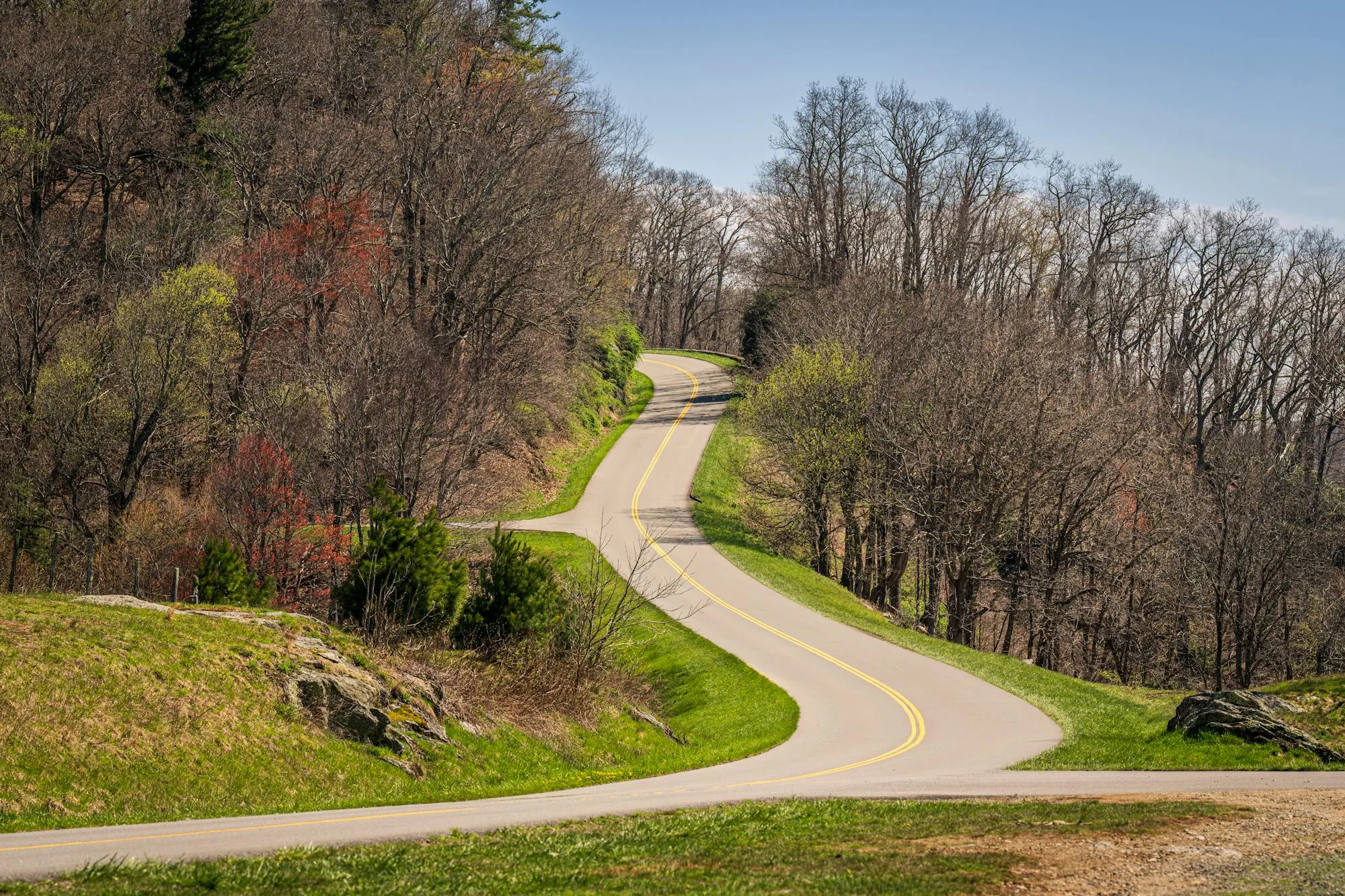
A winding asphalt road descending through the Appalachian Mountains, likely the famous Tail of the Dragon section in Tennessee and North Carolina. Multiple technical right-hand and left-hand curves are visible in this aerial perspective, surrounded by deciduous forest in spring foliage. Clear sunny conditions, well-maintained asphalt with yellow center lines marking the curves.
Mark Stebnicki / Pexels

The Truth on the Street

This section isn't my own riding impression. It's what I've gathered over years of standing around in paddocks, talking with owners at club nights, and reading the mail and messages riders send me about the bikes they actually live with. On the Monster 821 the pattern comes through clearly: the praise lands on how it steers, stops and shifts, and the gripes land on where the bike touches the rider and what it costs to keep serviced.

Light steering, strong front brakes

The strongest thread in owner talk is the way it changes direction. Riders describe steering that goes exactly where it's pointed and stays confident once it's leaned over, and they keep using the word eager about it through a series of corners. Those who know the bigger Monster call this one the lighter, more willing of the two. The front brakes draw nearly as much praise, with strong stopping power and clear feedback at the lever, and ABS that can be set across three levels. The clutch comes up constantly for how little effort the lever asks, and the gearbox gets described as smooth and precise. Plenty of owners also note the power delivery stays manageable, and that the softest of the three riding modes makes the bike workable in town for someone moving up in size.

The heat and the tight spots

The most repeated complaint has nothing to do with how it rides. The pipes run down the right side and put heat into the rider's inner thigh, and in stop-and-go traffic it gets hard to ignore. On the 2014 to 2017 bikes that comes with a companion problem: rider and pillion pegs share a mount, which boxes in foot position, and sliding a foot back can put it against the pipe or the passenger peg. Owners of 2018 and later machines report separated mounts and more room. Passengers fare no better. The seat sits high and cramped with a sharp knee bend, and riders say regular two-up duty isn't what this bike is for. Smaller gripes repeat too: mirrors that are small and blur at speed, and on pre-2018 bikes a headlight owners call too dim for confident night riding. The later design improved it.

The bills that come with it

Ownership talk runs in two directions. Riders regularly point out how far apart the valve checks sit on this generation, 18,000 miles (30,000 km), which matches what they expect from Japanese machinery and is a long way from what older Ducatis demanded. The bills are the other half of it. Owners consistently report dealer servicing well above what comparable Japanese bikes cost, the desmo valve service quoted at roughly $1,300, and major work handed to a Ducati-certified shop rather than a local one. Reliability itself draws few complaints. Riders note the engine had already been working in Ducati's Hypermotard before it arrived here, and no pattern of serious engine failures shows up in their accounts.

Known issues

  • Random warning lights, flashing indicators, starter failure

    electrics occasional

    All warning lights, indicators, and brake light start flashing simultaneously; starter becomes inoperable. Often traced to chassis grounding issue (not properly tightened at factory), faulty stator/rectifier, or battery failure. At least one documented case of improper factory grounding on a 2016 model within the first 37 mi (60 km).

  • Rear brake hose degradation from exhaust heat exposure

    brakes occasional

    The rear brake hose routing exposes it to excessive heat from the exhaust manifold. Over time, heat damages the hose material, causing brake fluid leak or air permeation into the brake system. This can result in reduced rear brake pressure and increased braking distance, up to and including sudden loss of rear brake function.

  • Shift lever knob loosens and detaches during riding

    drivetrain occasional

    Manufacturing defect where the gear shift lever was not assembled to specification. The shift knob can loosen due to vibration and potentially detach completely, leaving the rider unable to shift gears.

  • Oil leaks from pressure sensor, filter area, or cylinder head studs

    engine occasional

    Multiple leak sources reported: oil pressure sensor O-ring failure, cylinder head stud/gasket weeping, oil filter left loose from factory (2014–2015 especially), and layshaft seal leaks. Some bikes left the factory with insufficiently tightened oil filters.

  • Parasitic battery drain during inactivity (2–3 weeks)

    electrics occasional

    The onboard electronics (immobilizer, ABS module, ECU standby) create a parasitic draw that can flatten the battery within 2–3 weeks of inactivity. Ducati recommends a battery tender for any storage period exceeding 3 weeks. OEM battery longevity is reported as 1–2 years for some owners.

  • Sluggish or failing starter motor, particularly when hot

    electrics occasional

    The starter motor becomes sluggish with loud clunking noises, sometimes requiring extended cranking (up to 30 seconds). Hot-start problems are particularly common. Related to undersized wiring from solenoid to starter (Ducati-specific design), increasing internal resistance over time. Some cases resolved by ECU firmware updates or battery replacement.

  • Inaccurate fuel level display, premature low-fuel warning

    fuel system occasional

    The fuel sensor gives inaccurate readings — showing lower fuel levels than actual, or triggering the low-fuel warning with more fuel remaining than intended. The fuel pump assembly is integrated with the sensor (one unit), making replacement expensive.

  • Jerky, snatchy throttle response below approximately 3,500 rpm

    fuel system very common

    The ride-by-wire system produces abrupt, on-off throttle behavior at low engine speeds, making the bike difficult to ride smoothly in slow traffic. Caused by lean fuel mixture (emissions compliance ECU mapping) and closed-loop O2 sensor operation at low throttle openings. Less pronounced in Touring mode than in Sport mode. Common ECU remap/flash resolves the issue.

The Expert Benchmark

Where this Ducati Monster 821 pulls ahead of — or falls behind — its rivals on the numbers, and the typical bike in its class on character.

What kind of bike this is — character vs. the class

This bike Class average

The shape of the Ducati Monster 821 — numbers and character vs. the average Naked Bike

Head-to-head: Ducati Monster 821 vs. its rivals

The 'Should I Buy It?' Score

Forget spec-sheet bragging. Here's who the Monster 821 is actually built for.

A scenic view of Angeles Crest Highway winding through rugged Southern California canyon terrain. Rocky mountainsides with golden earth tones frame the asphalt road with tight sweeping curves. Double yellow center line visible, sparse vegetation along the shoulders, clear blue sky with white clouds. Daylight, dry conditions. Iconic location for canyon-road enthusiasts.
Josh Sorenson / Pexels

Best motorcycle for Angeles Crest?

Angeles Crest weekends are where this bike makes sense: strong drive off the corner, lean angle to spare, and a chassis that stays friendly as the pace climbs. Keep it above 3,500 rpm and it never complains.

Made for Angeles Crest Highway · Coronado Trail / US 191 · Highway 1 / Big Sur
Best motorcycle for Tail of the Dragon?

On the Dragon and Cherohala this suits skill work: light steering, clear feedback, plenty of lean angle. The fixed fork is your only real limit once you start chasing setup.

Made for Back of the Dragon · Blue Ridge Parkway · Cherohala Skyway

Best motorcycle for Texas Hill Country?

Hill Country loops fit it well. A 4.6 gal tank and 52 mpg keep fuel stops sensible, and the upright position works for a full day out. Trust the odometer, not the fuel gauge.

Made for Austin / Texas Hill Country · Twisted Sisters · Austin / Handbuilt Motorcycle Show