

Kawasaki KX450 (MY2019) — Motocross

2019–2023 · Motocross · Buyer's Guide

KX450 (MY2019)

4.5 / 5 NastyNils Rating · against its class

The Coil-Sprung Gate Charger

The Machine's Character

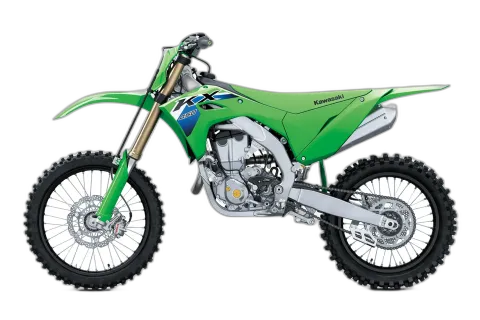
Kawasaki built this KX450 generation as a race tool, and the hardware shows it. A 449 cc liquid-cooled single with fuel injection sits in an aluminum perimeter frame. It makes 57 hp and responds crisply to the throttle. Up front is an upside-down coil-spring fork, and it adjusts just like the shock does, so you set it up with clickers and springs instead of fiddling with air pressure. Kawasaki adds launch control and selectable ride modes. On the start line and when the dirt changes, those are real tools, not gadgets. This is an honest, no-nonsense 450 that gets the basics right and leaves you free to focus on the moto.

At 243 lb (110 kg) wet, it changes direction with less effort than a big single usually needs. The chassis is built to take a beating, and aftermarket support is deep, so a used example is easy to freshen up and make your own. This bike is for the rider who races or trains seriously on a prepared motocross track. The honest caveat is that there's no traction control, so finding drive on slick ground is up to your right wrist. The plastic rear shock preload collar is also fragile. Inspect it on any used bike and treat it gently every time you set sag.

Hard Numbers

Spec sheets don't ride bikes, but they set the baseline.

Show full specs & equipment Hide specs & equipment
Key specifications
Power 57 hp (42 kW)
Displacement 449 cc
Engine Single-cylinder
Cooling Liquid-cooled
Gearbox 5-speed
Final drive Chain
Fork Upside-down (USD)
Front brake 270 mm
Front tire 80/100-21
Rear tire 120/80-19
Wheelbase 58.5 in (1485 mm)
Ground clearance 13.4 in (340 mm)
Front travel 12.0 in (305 mm)
Rear travel 12.1 in (307 mm)
Seat height 37.6 in (955 mm)
Wet weight 243 lb (110 kg)
Fuel capacity 1.6 gal (6.2 L)
Top speed 89 mph (143 km/h)

Equipment check

Chassis

  • Front Suspension Adjustable Standard
  • Rear Suspension Adjustable Standard

Safety

  • Ride Modes Standard
  • Launch Control Standard

The Voice of Experience

Portrait of NastyNils

The test ride

Swing a leg over and the first thing you notice is the height. At 37.6 in (955 mm), the seat leaves shorter riders on tiptoe while they wait for the gate to drop. Fire it up and the single barks with a deep, hard edge that sounds exactly like a 450 should, and the note sharpens as you run up through the five gears. Once you're standing, the bike sits slim and settled between your knees, and your boots find the pegs without thinking. You feel the single's pulse through the bars as a steady, honest beat, not a buzz that numbs your hands. Picking a ride mode or arming launch control becomes second nature within a session. Over a full moto your body stays busy but never feels worn down, and you come off the track thinking about lines, not about the bike.

Wide desert landscape at Ocotillo Wells, California, showing sandy arid terrain with sparse desert scrub in the foreground, a rocky hill to the left, and a distant mountain range along the horizon. Clear blue sky with a thin band of light clouds at mid-height.
Rdne Stock Project / Pexels

The Truth on the Trail

This part of the guide isn't my ride. It's what I've heard from KX450 owners over the years: paddock conversations, club-night chatter at the track, and the emails and messages riders send me directly. For this 2019 to 2023 generation the picture is mostly positive. Riders praise the chassis, the brakes and how little trouble the bike gives, and their complaints are few and centered on the cockpit.

A chassis riders trust in turns

Owners talk most about cornering. Riders describe a bike that pulls hard out of one turn and carves through the next tight one with composure, and some say this gives them the confidence to push harder and gain an edge on the track. Others point to how easily it moves around in tight spots, and they say that holds for newer racers as much as for experienced ones. Owners who follow the engineering credit two things: the frame, which uses the engine as a stressed member, and a swingarm whose stiffness is matched to it. They say the rear wheel finds more traction as a result. The suspension gets similar credit. Riders call it plush, saying it soaks up bumps without fuss and leaves them more in control. On rough, demanding tracks they describe the power delivery as sharp and responsive, and some say it helps them find traction. The seating layout comes up too. The seat is longer and smoother and the tank flatter and lower, and owners like being able to slide forward and move around freely.

Stops hard, starts fast, keeps running

Braking is the other highlight. Owners say the revised setup, with its new front master cylinder and larger rear disc, stops hard at both ends. The controls get quieter praise. Riders call the hydraulic clutch direct and reliable at the lever, and racers like the electric starter for getting going again quickly after a stall in the middle of a moto. Some riders also say the five-speed gearbox is part of what makes open sections feel lively. Away from the track, the reports turn to ownership. Riders say the bike runs reliably enough that they trust it for racing. They describe the materials as strong and the detail work as careful, and the owners reporting on build quality mention no problems. Maintenance gets a thumbs-up as well. Parts are easy to reach and simple to clean, and owners say that saves both time and money on repairs.

Where the cockpit falls short

There are only two complaints, and both involve the handlebar. Some owners find the stock grips short and hard on the hands, and they note that the bar is the older 7/8-inch diameter. The other gripe is about engine maps. There's no switch on the handlebar for changing maps on the fly. Riders say you change them with plug-in couplers instead, and they find that less practical.

Known issues

No widely-reported issues on record.

The Expert Benchmark

Where this Kawasaki KX450 pulls ahead of — or falls behind — its rivals on the numbers, and the typical bike in its class on character.

What kind of bike this is — character vs. the class

This bike Class average

Head-to-head: Kawasaki KX450 vs. its rivals

The 'Should I Buy It?' Score

Forget spec-sheet bragging. Here's who the KX450 is actually built for.

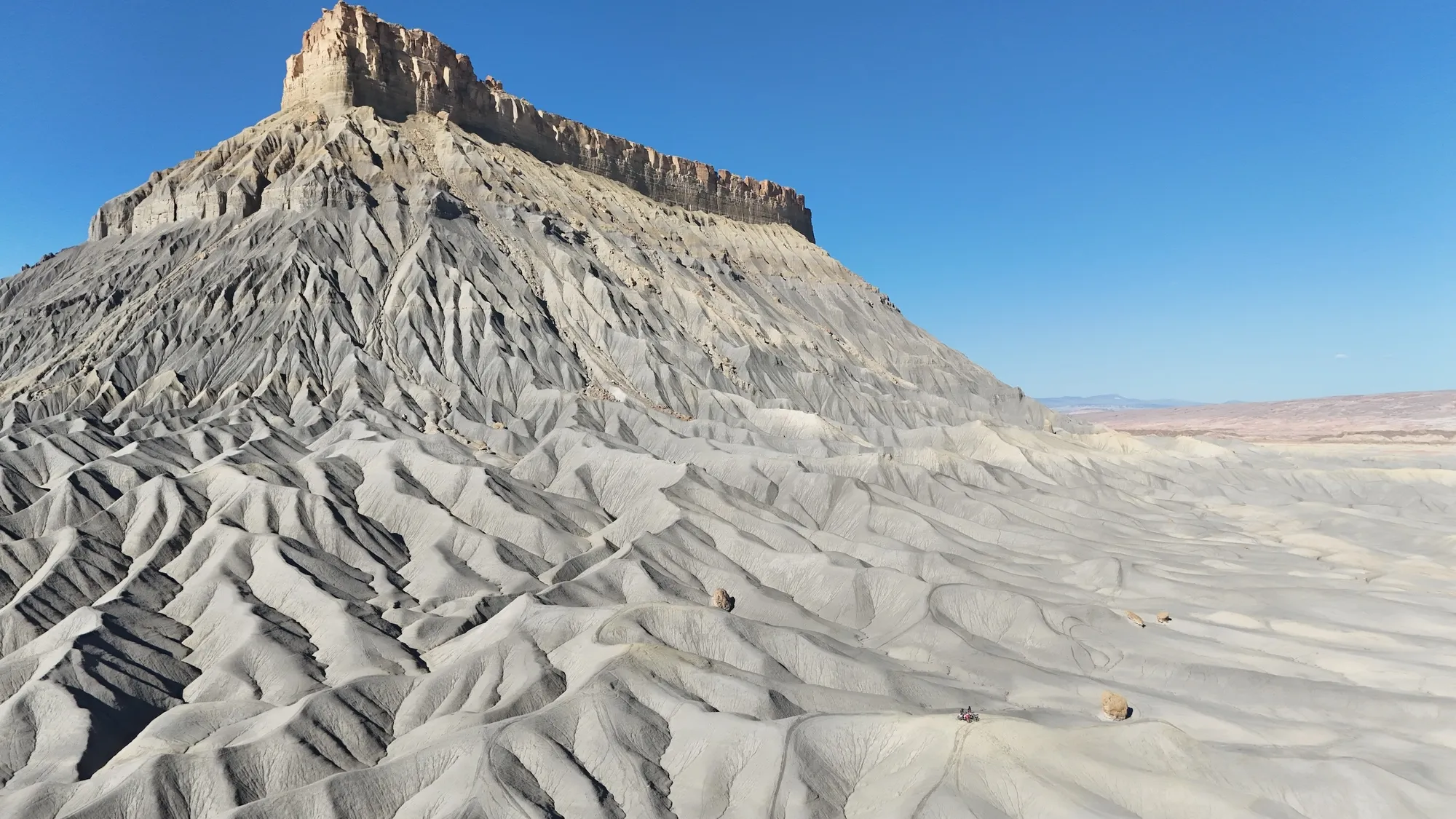
Factory Butte in Utah's high desert badlands, captured in daylight under clear blue sky. The formation's distinctive multi-colored strata and steep erosional gullies dominate the frame. Arid terrain with minimal vegetation stretches across the foreground and background. Typical American Southwest landscape.
NastyNils / Nastynils.com

Best motocross bike for Loretta Lynns?

This is your bike. The adjustable coil suspension, launch control and tough chassis are set up for race weekends and practice days, and the aftermarket support keeps it competitive season after season.

Made for Carnegie State Vehicular Recreation Area · Fox Raceway at Pala · Glen Helen Raceway
Best motorcycle for Moab?

It's light, capable and tough enough for technical rock and sand. But the 1.6 gal tank and motocross focus limit it to shorter loops close to the truck, not long days out in the desert.

Made for Bar M / Kane Creek · Imperial Sand Dunes · Johnson Valley OHV Area

What's new versus the previous generation

If you're cross-shopping the older generation, here's what changed.

Kawasaki KX450F (MY2012)

Previous generation · 2012–2015

Kawasaki KX450F (MY2012)

Launch Control, Race-Ready Chassis

Compare to the previous model →

Alternatives to the Kawasaki KX450

If this one isn't quite the fit, these are the bikes worth riding back-to-back against it.