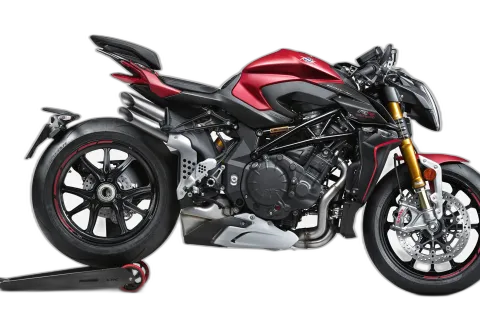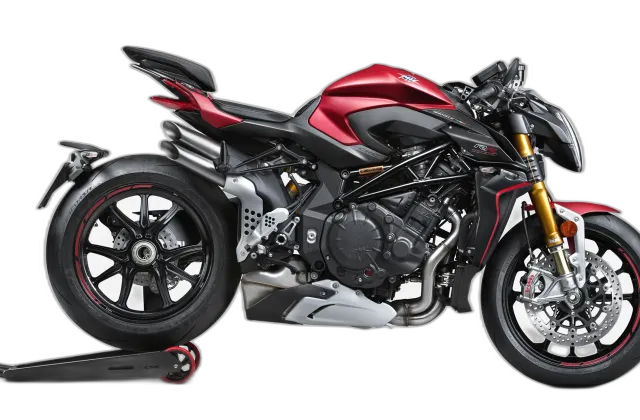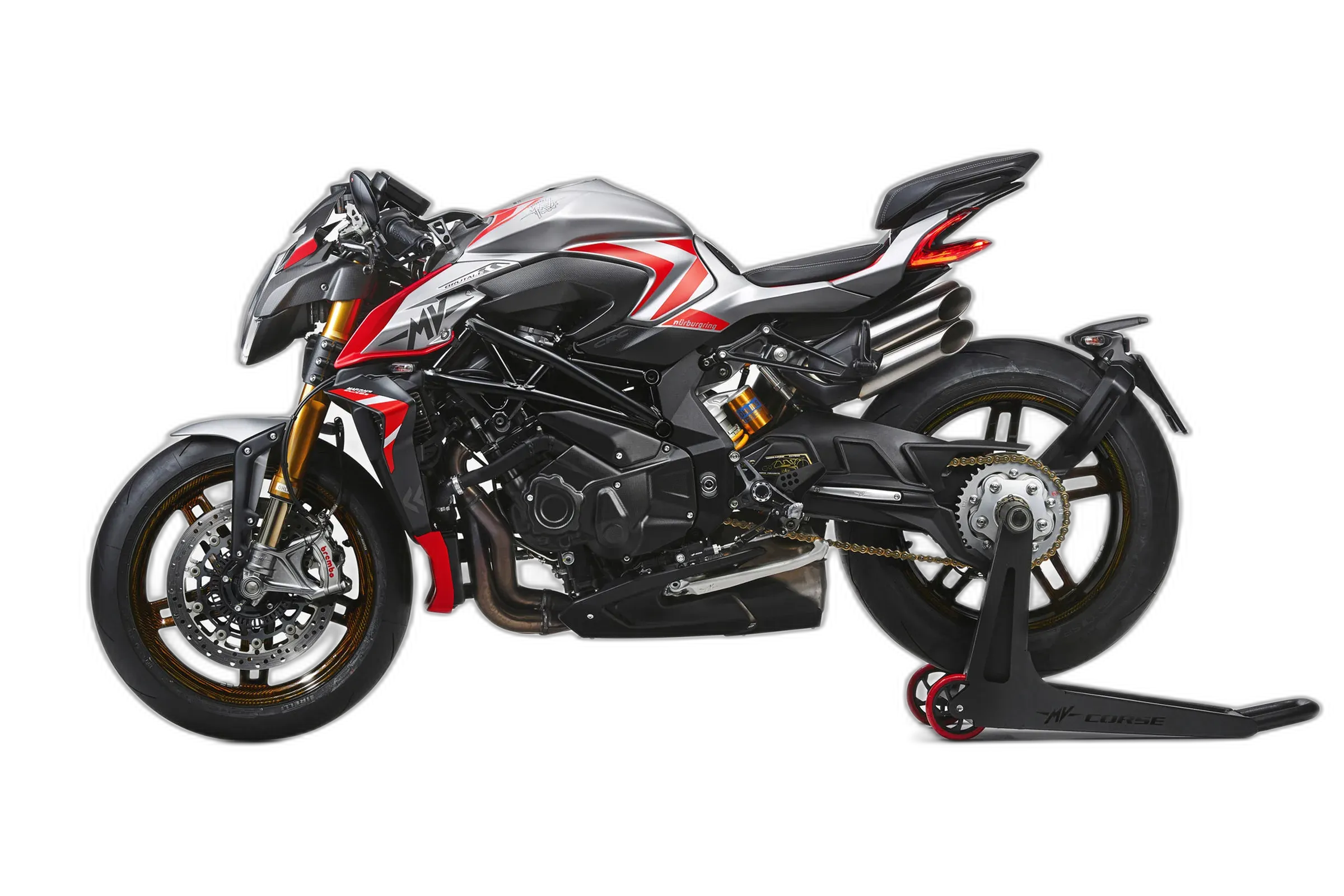

MV Agusta Brutale 1000 (MY2019-RS) — Hyper Naked
MV Agusta Press

2022–2026 · Hyper Naked · A variant of the Brutale 1000

Brutale 1000 RS (MY2019-RS)

Differences between the standard Brutale 1000 and the RS

4.5 / 5 NastyNils Rating · against its class

Italian Fury, Fully Adjustable

The Machine's Character

The Brutale 1000 RS is MV Agusta's hyper-naked, built around a 998 cc inline-four with superbike racing in its bloodline. The numbers tell you where it lives: 208 hp at 13,000 rpm and 86 lb-ft at 11,000 rpm. That's an engine that makes its case high in the rev range. It hangs in a steel trellis frame with fully adjustable suspension front and rear, a steering damper and a 200-section rear tire. Cornering ABS, traction control, wheelie control and ride modes keep watch over it. And then there's the bodywork, which is as much a reason to buy as the engine. Pure MV!

On paper, this is hardware for fast, open back roads and committed riding, not for crawling through town. Peak torque that far up the tach rewards you for keeping the engine spinning, and the documented flat spot around 5,000 rpm underlines the point. At 465 lb (211 kg) wet with a 33.3 in (845 mm) seat and a 4.2 gal (16 L) tank, it's built for intense stretches rather than long days. Cruise control, navigation and an up-and-down quickshifter are standard, so it isn't bare. But it points to an experienced rider who wants intensity over reason and knows how to set up a chassis. Not a beginner's bike.

Hard Numbers

Spec sheets don't ride bikes, but they set the baseline.

Show full specs & equipment Hide specs & equipment
Key specifications
Power 208 hp (153 kW) @ 13,000 rpm
Torque 86 lb-ft (116 Nm) @ 11,000 rpm
Displacement 998 cc
Engine Inline-four
Cooling Liquid-cooled
Gearbox 6-speed
Final drive Chain
Fork Upside-down (USD)
Front tire 120/70-17
Rear tire 200/55-17
Seat height 33.3 in (845 mm)
Wet weight 465 lb (211 kg)
Fuel capacity 4.2 gal (16 L)

Equipment check

Chassis

  • Front Suspension Adjustable Standard
  • Rear Suspension Adjustable Standard
  • Steering Damper Standard
  • Cruise Control Standard

Connectivity

  • Smartphone Connectivity Standard
  • Tire Pressure Monitoring (TPMS) Optional

Drivetrain

  • Quickshifter Standard

Safety

  • ABS Standard
  • Cornering ABS Standard
  • Traction Control Standard
  • Ride Modes Standard
  • Wheelie Control Standard

What the Brutale 1000 RS Adds — Differences vs the Standard Brutale 1000

The Brutale 1000 RS (MY2019-RS) builds on the standard Brutale 1000: the upgraded hardware, the key spec changes and where its character shifts. The full ride, specs, scoring and verdict are all right here on this page.

Hard spec differences

SpecStandard Brutale 1000RSΔ
Wet weight 482 lb 465 lb -17 lb
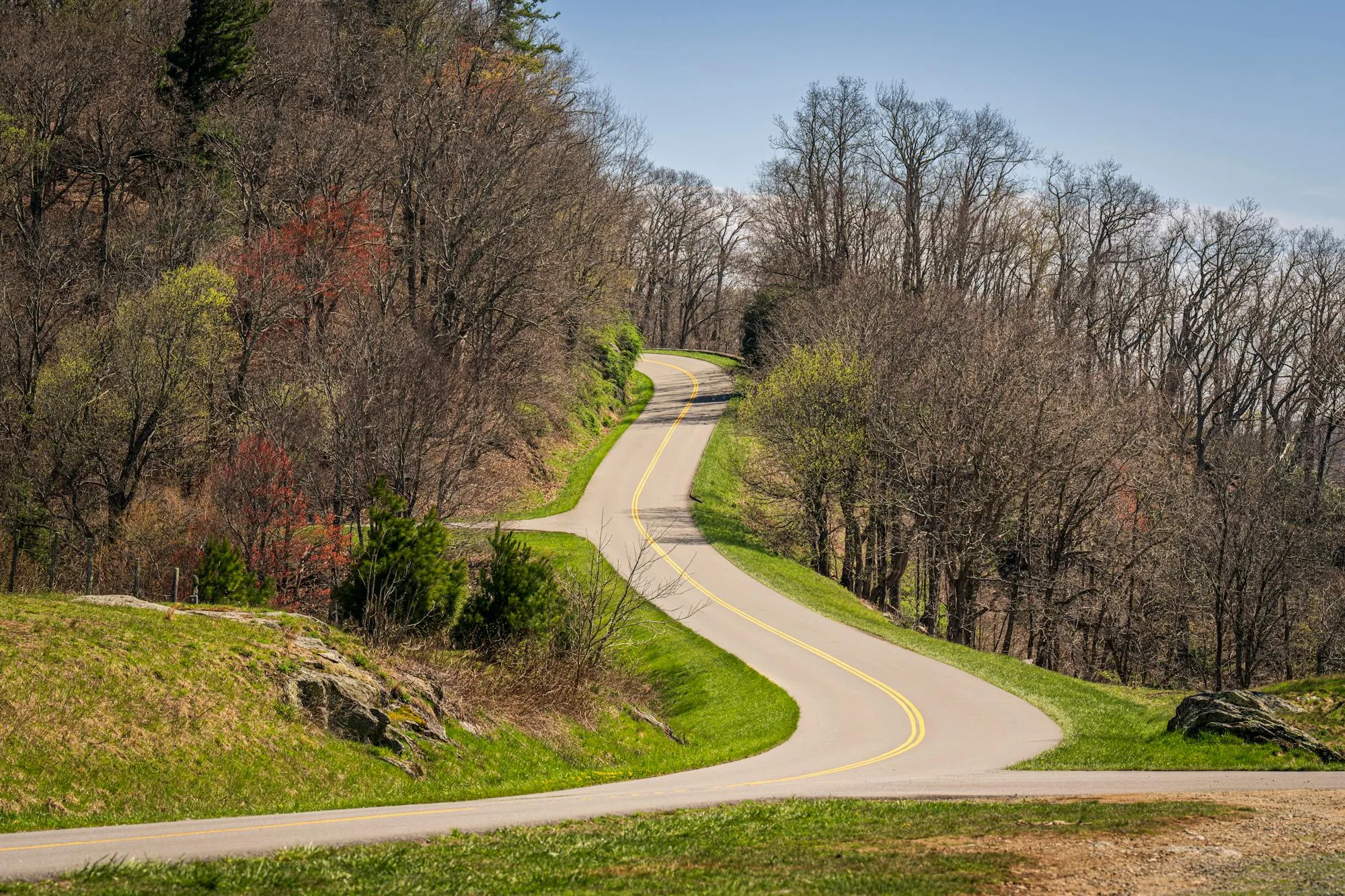
A winding asphalt road descending through the Appalachian Mountains, likely the famous Tail of the Dragon section in Tennessee and North Carolina. Multiple technical right-hand and left-hand curves are visible in this aerial perspective, surrounded by deciduous forest in spring foliage. Clear sunny conditions, well-maintained asphalt with yellow center lines marking the curves.
Mark Stebnicki / Pexels

The Truth on the Street

I've spent years listening to riders: in the paddock, on club nights, in owner chats, and in the emails and messages that land in my inbox. For the Brutale 1000 the picture that comes out of all that talk is unusually consistent. Owners praise what it does at high revs and high speed, and they complain about what it does at low revs and over distance.

High revs, loud voice, long stares

The most repeated line about this bike concerns the upper part of the rev range. Riders describe an engine that starts to pull hard above 8,000 rpm and really comes alive past 10,000 rpm, with a surge that doesn't let up and a racebike feel to it. The sound comes up almost as often: owners call the inline-four's soundtrack intoxicating and put it on a level with any superbike. Just as steady is the talk about the looks. People single out the single-sided swingarm, the headlight and the aggressive lines, and the phrase you hear again and again is rolling art. Exclusivity is part of the appeal for them. Heads turn. Every time!

Composure, brakes and a safety net

When the pace rises, riders consistently report composure through fast corners and high-speed stability they call rock solid. The Pirelli Supercorsa tires get credit for their share of the precision. The brakes come up less often, but the tone is the same: owners say the Brembo Stylema calipers deliver immense stopping power with a progressive feel, enough that you can trail brake deep into a corner. The electronics draw regular praise too. Riders list the riding modes, cornering ABS, wheelie control and launch control, and say the package gives them confidence to use what the bike has. It all adds up to trust at speed. That's the common thread.

Town, bumps and the fuel light

The loudest gripe is comfort. Riders describe a hard seat, stiff suspension and a low riding position that wear you out quickly on anything other than smooth pavement, and some owners say the seat bothered them early on. Right behind it comes the throttle at low revs: a recurring complaint is an abrupt response off a closed throttle and hunting at light openings, which makes smooth progress in town or on damp roads a challenge. Some also find the engine buzzy and unrefined lower down, and say that takes away from everyday use. Fuel range is the other regular topic. Owners report a thirsty engine and a low-fuel light that comes on at around 70 miles (113 km). A few voice concerns about long-term reliability and parts availability, though that's a minority remark. Seventy miles, then the light!

Known issues

  • Poor low-rpm fueling and throttle response

    engine common

    The engine exhibits a pronounced flat spot around 5000 rpm and inconsistent idle/small throttle opening, making low-speed maneuvers jerky and requiring deliberate clutch management.

  • Gear position sensor failure

    electrics occasional

    The gear position sensor can intermittently fail, causing incorrect gear display and potential shifting quirks. The issue is well-documented among owners and often resolved under warranty.

The Expert Benchmark

Where this MV Agusta Brutale 1000 pulls ahead of — or falls behind — its rivals on the numbers, and the typical bike in its class on character.

What kind of bike this is — character vs. the class

This bike Class average

The shape of the MV Agusta Brutale 1000 — numbers and character vs. the average Hyper Naked

Head-to-head: MV Agusta Brutale 1000 vs. its rivals

The Handshake Score

Forget spec-sheet bragging. Here's who the Brutale 1000 is actually built for.

A scenic view of Angeles Crest Highway winding through rugged Southern California canyon terrain. Rocky mountainsides with golden earth tones frame the asphalt road with tight sweeping curves. Double yellow center line visible, sparse vegetation along the shoulders, clear blue sky with white clouds. Daylight, dry conditions. Iconic location for canyon-road enthusiasts.
Josh Sorenson / Pexels

Best motorcycle for Laguna Seca?

The strongest match of the three. Fully adjustable suspension, cornering ABS, traction and wheelie control give you plenty to tune, and 208 hp at 13,000 rpm gives you an engine worth the homework.

Made for WeatherTech Raceway Laguna Seca · Barber Motorsports Park · Circuit of the Americas
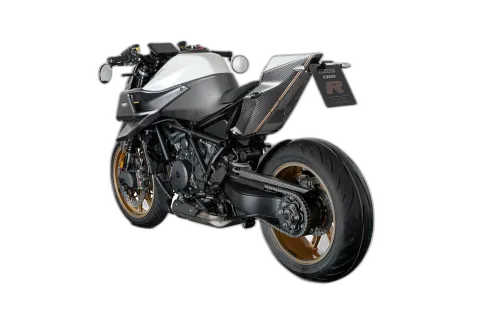
Best motorcycle for Angeles Crest?

A strong fit once the road opens up: sporty chassis, steering damper, top-end power. Getting there through city traffic is the price, since low-rpm fueling is a documented annoyance.

Made for Angeles Crest Highway · Coronado Trail / US 191 · Highway 1 / Big Sur

Best motorcycle for Tail of the Dragon?

A decent fit, not a natural one. The adjustable chassis suits your focus on technique, but an engine that peaks at 11,000 rpm and beyond asks for more room than tight, slow corners give you.

Made for Tail of the Dragon · Back of the Dragon · Blue Ridge Parkway