2002–2008 · Enduro · Buyer's Guide
TE 250 (MY2002)
Featherweight Four-Stroke Trail Weapon
The Machine's Character
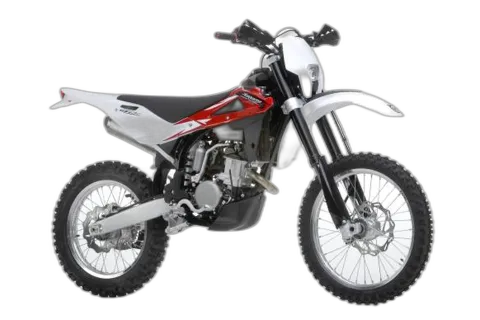
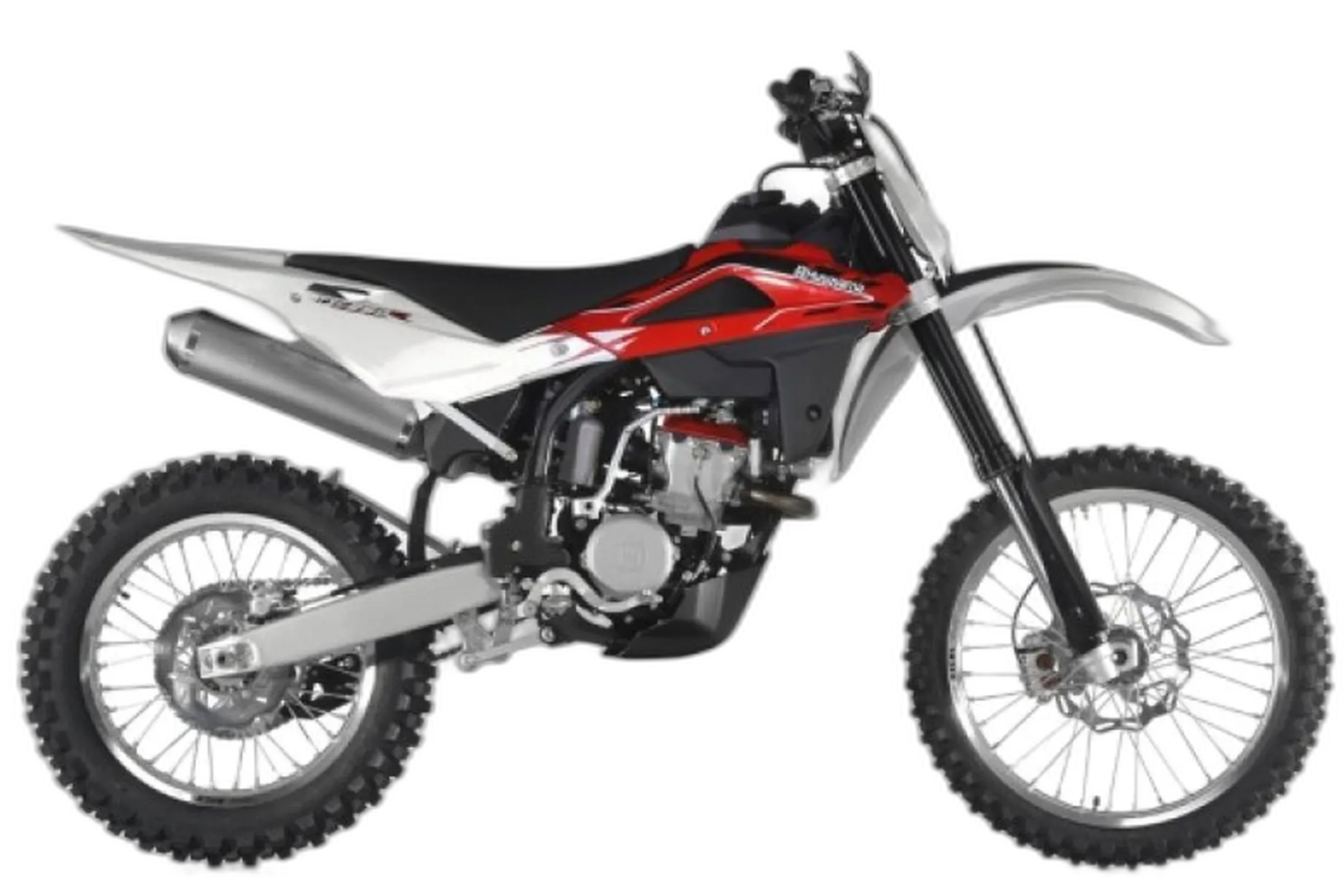
The TE 250 from this generation is a real enduro, not a motocrosser wearing a license plate. At its heart is a 249 cc liquid-cooled single making 43 hp and 21 lb-ft. It drives a 5-speed box and a chain, all hung in a steel-tube frame. What sets it apart is the chassis. You get 11.8 in (300 mm) of travel at both ends, fully adjustable suspension from the factory, 13.9 in (354 mm) of ground clearance and a proper 21/18-inch wheel combination. This is Husqvarna with substance behind the look. The bike is built around rough, technical ground and nothing else.
It stays light on its feet in tight terrain, it takes a beating, and it's simple to work on with a deep aftermarket behind it. It ages like any hard-used dirt bike. Early versions run a carburetor that needs regular cleaning and correct jetting, and those float bowls and lines can leak. Clutches slip under heavy load, fork seals weep after dusty or muddy days, and wiring connectors corrode. Early 2005 bikes had valve trouble, and the injected 2008 bikes can suffer fuel-pump failure. It suits an experienced off-road rider who wrenches. There are no electronic aids, the seat is 37.5 in (952 mm) up, and the tank holds just 2.2 gal (8.5 L).
Hard Numbers
Spec sheets don't ride bikes, but they set the baseline.
Show full specs & equipment Hide specs & equipment
| Power | 43 hp (32 kW) |
|---|---|
| Torque | 21 lb-ft (29 Nm) |
| Displacement | 249 cc |
| Engine | Single-cylinder |
| Cooling | Liquid-cooled |
| Gearbox | 5-speed |
| Final drive | Chain |
| Front brake | 260 mm |
| Front tire | 90/90-21 |
| Rear tire | 140/80-18 |
| Wheelbase | 58.6 in (1489 mm) |
| Ground clearance | 13.9 in (354 mm) |
| Front travel | 11.8 in (300 mm) |
| Rear travel | 11.8 in (300 mm) |
| Seat height | 37.5 in (952 mm) |
| Fuel capacity | 2.2 gal (8.5 L) |
Equipment check
Chassis
- Front Suspension Adjustable Standard
- Rear Suspension Adjustable Standard
Known issues
-
Carburetor fuel leaks
Fuel may leak from the carburetor float bowl or lines, caused by degraded gaskets or stuck float valve. This can lead to fuel pooling under the bike and a fire hazard.
-
Valve failures on 2005 models
Early 2005 TE/TC250s were prone to premature valve wear or failure, leading to top-end noise and power loss. Later models received updated valve materials.
-
Clutch slippage
The stock clutch can slip under heavy load, especially on early carbureted models, often due to worn plates or improper cable adjustment. Upgraded clutch springs are a common fix.
-
Brake fade
During prolonged downhill use or aggressive riding, the front brake can fade, leading to a spongy lever feel and reduced stopping power. Fresh fluid and sintered pads help mitigate the issue.
-
Electrical system gremlins
Owners report intermittent starting issues, dash blackouts, and corroded connectors, often traced to the wiring harness or relays.
-
Carburetor clogging leading to rough idle
The carburetor can become dirty or clogged, causing rough idling, poor fuel efficiency, and hesitation. Regular cleaning and proper jetting are recommended.
-
Fuel pump failure on fuel-injected models
On 2008 models with electronic fuel injection, the in-tank fuel pump may fail intermittently, leading to stalling or no-start conditions. Replacement with an aftermarket pump often resolves the issue.
-
Fork seal leaks
The fork seals can weep or leak, especially after extended use in dusty/muddy conditions, leading to degraded damping.
-
Cracking plastics and loose hardware
Bodywork panels can crack at mounting points, and vibration may cause bolts to loosen, requiring regular re-tightening.
The Numbers Compared
Compare the technical specifications of the Husqvarna TE 250 with other bikes in its class.
Head-to-head: Husqvarna TE 250 vs. its rivals
Power
Torque
Displacement
Seat height
Alternatives to the Husqvarna TE 250
If this one isn't quite the fit, these are the bikes worth riding back-to-back against it.