
Triumph Rocket III (MY2004) — Cruiser
Triumph Press

2004–2008 · Cruiser · Buyer's Guide

Rocket III (MY2004)

3.5 / 5 NastyNils Rating · against its class

Two Thousand CC's Of Intent

The Machine's Character

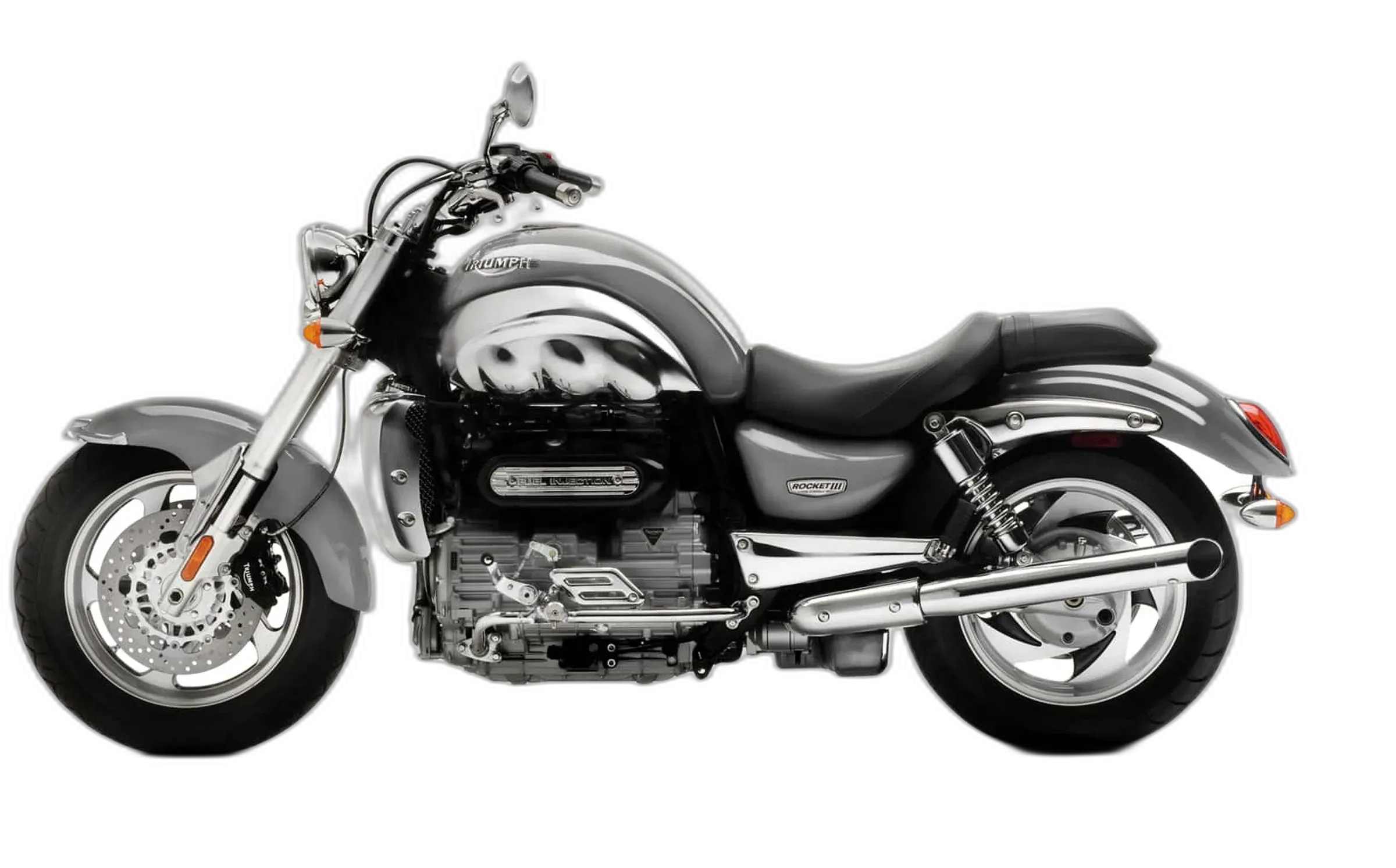
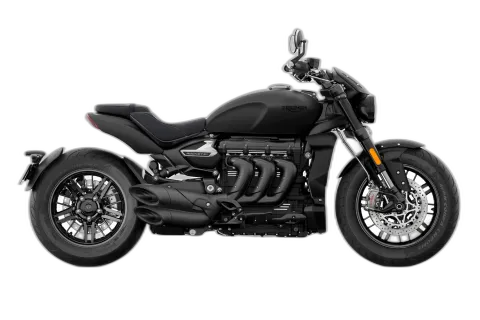
Triumph built the Rocket III around a single idea: a 2294 cc inline-three lying longitudinally in the frame, sending drive to the rear wheel through a shaft. The figures are 140 hp and 147 lb-ft, and the torque peak lands at 2,500 rpm, which tells you most of what you need to know about how it moves through the world. A 240/50-16 rear tire and 705 lb of finished metal give it presence that no cruiser in its class has to explain. This is Triumph trading British restraint for physical scale, and wearing the decision openly.

The mass works for you the moment you are rolling and against you the moment you are not. It suits the rider who covers long, open miles and does not mind being looked at, and it ages well because the build quality was there from the start: the paint, the castings and the finish still read as expensive years later. The honest caveat is what happens at walking pace and at the pump. You get 36 mpg from a 6.6 gal tank, 705 lb to balance in a gas station, and a fork with no adjustment at all. The rear shock takes preload; the front end takes what Triumph gave it.

Hard Numbers

Spec sheets don't ride bikes, but they set the baseline.

Show full specs & equipment Hide specs & equipment
Key specifications
Power 140 hp (104 kW) @ 5,750 rpm
Torque 147 lb-ft (199 Nm) @ 2,500 rpm
Displacement 2294 cc
Engine Inline-three
Cooling Liquid-cooled
Gearbox 5-speed
Final drive Shaft
Fork Telescopic
Front brake 320 mm
Front tire 150/80-17
Rear tire 240/50-16
Seat height 29.1 in (740 mm)
Fuel capacity 6.6 gal (25 L)
Top speed 135 mph (217 km/h)
Fuel economy 36 mpg (US)

Equipment check

Chassis

  • Rear Suspension Adjustable Standard

Comfort

  • Heated Grips Optional
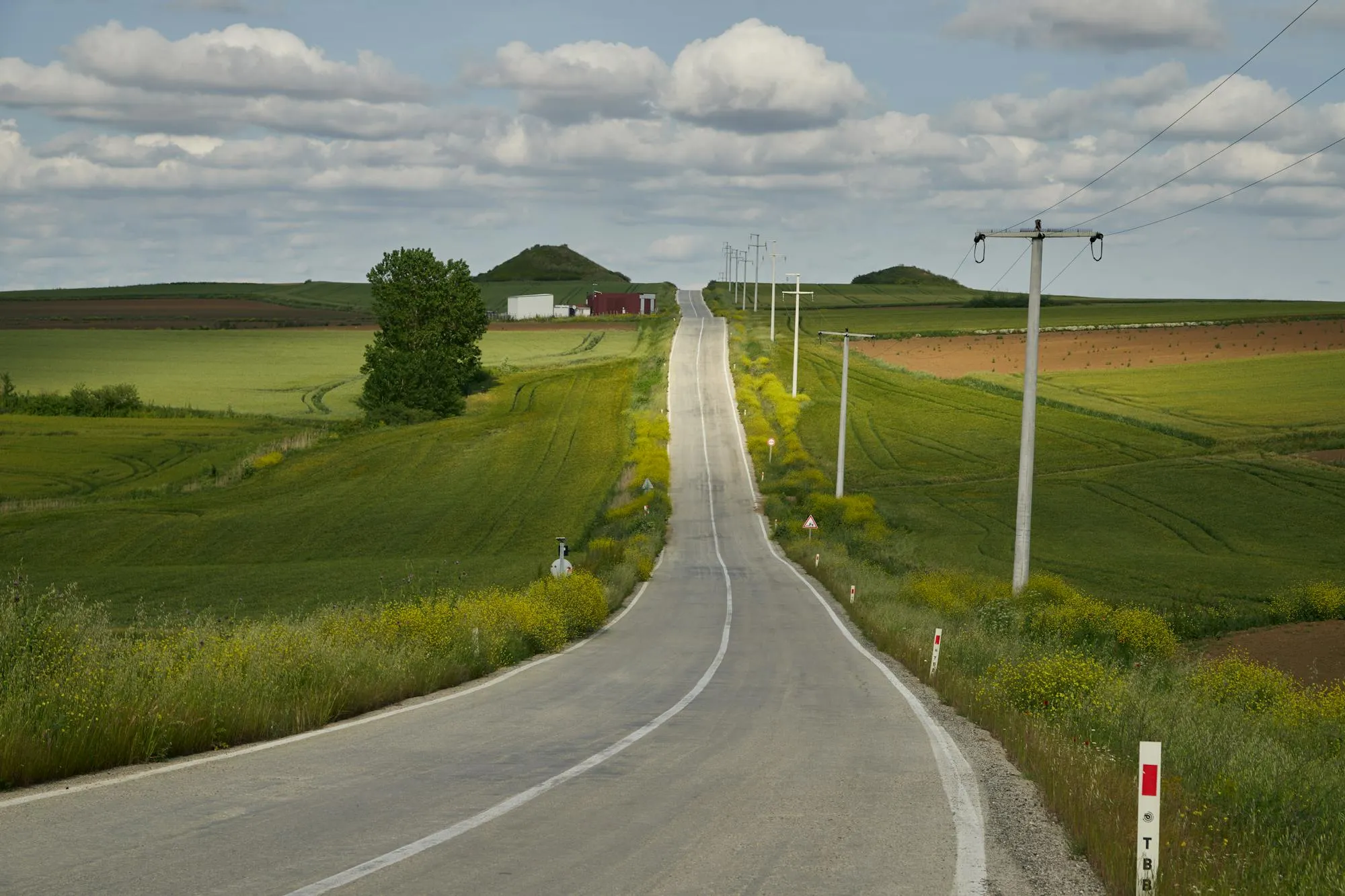
A long, straight paved road stretches toward the horizon through agricultural fields in Vermont. Power lines and a mailbox are visible along the roadside. Lush green vegetation, cumulus clouds, good daylight conditions. The landscape is flat to gently rolling. Asphalt pavement appears to be in good condition. Rural American setting.
Meric Tuna / Pexels

The Truth on the Street

This picture comes from years of listening: paddock talk, owners comparing notes on club nights, and the messages riders send me directly about their bikes. On the first-generation Rocket III, the pattern is clear. Owners praise the pull, the grip and the brakes. They complain about the effort at low speed, a hard rear end and a gearbox that wants attention.

Pull, grip and real stopping power

The engine is what owners bring up first and most often. Riders describe torque that shoves them back in the seat from 2,000 rpm, so passing slower traffic takes almost no planning. Some are surprised by how it corners. They report solid grip and good feedback from the fat tires, and say the Rocket can be hustled through bends harder than most cruisers. Others single out the four-piston front brakes as strong and slow to fade, even with all that mass to stop.

Where owners pay for it

The most common gripe is the effort at low speed. Tight turns and parking-lot moves call for a deliberate hand and firm feet at every stop. Several owners say the twin rear shocks pass sharp hits straight through on broken pavement, and with your feet forward that gets punishing. The five-speed gearbox draws complaints too: shifts need timing, engagement is clunky, and false neutrals come up often.

Known issues

  • Final drive oil seal leak and potential lockup (recall)

    drivetrain occasional Recall

    Early production bikes up to 2005 suffered from an improperly installed oil seal in the final drive unit, causing oil leakage. If undetected, the unit could run dry and seize, locking the rear wheel. Addressed under NHTSA recall 05V-004.

  • Engine stalling when returning to idle (recall)

    fuel system occasional Recall

    Affected 2004-2007 bikes may stall while returning to idle due to incorrect fuel-injection mapping. Covered by NHTSA recall 07V455000; dealers reflash the ECU free of charge.

  • Clutch wear under hard launches

    drivetrain occasional

    Aggressive starts and sustained heavy throttle can quickly overheat and damage the clutch, leading to slippage and early replacement.

The Expert Benchmark

Where this Triumph Rocket III pulls ahead of — or falls behind — its rivals on the numbers, and the typical bike in its class on character.

What kind of bike this is — character vs. the class

This bike Class average

The shape of the Triumph Rocket III — numbers and character vs. the average Cruiser

Head-to-head: Triumph Rocket III vs. its rivals

The 'Should I Buy It?' Score

Forget spec-sheet bragging. Here's who the Rocket III is actually built for.

Aerial view of a winding asphalt road cutting through volcanic terrain on La Gomera, Canary Islands. The road curves through sparse green vegetation with rocky volcanic peaks visible in the background and a settled valley to the left. Clear lane markings, dry climate, partly cloudy sky.

Best cruiser for Sturgis?

Your riding year is rally miles, long straight roads and the slow walk back through the parking row. This has the sound, the scale and the finish for exactly that, and nobody mistakes it for anything else.

Made for Black Hills / Sturgis Rally Hub · A1A — Florida Atlantic Coast · Daytona Main Street / Bike Week
Best retro motorcycle for road trips?

Small towns and historic routes suit it well, and the low seat makes frequent stops easy. Be honest about pace: it wants open sweepers, not a full day of tight mountain switchbacks.

Made for Acadia National Park · Austin / Handbuilt Motorcycle Show · Blue Ridge Parkway

Best touring motorcycle for long distance?

Highway stability and shaft drive are on your side. But 36 mpg from a 6.6 gal tank, no luggage system and no cruise control mean your big days need planning around fuel stops.

Made for Beartooth Highway · Blue Ridge Parkway · Going-to-the-Sun Road