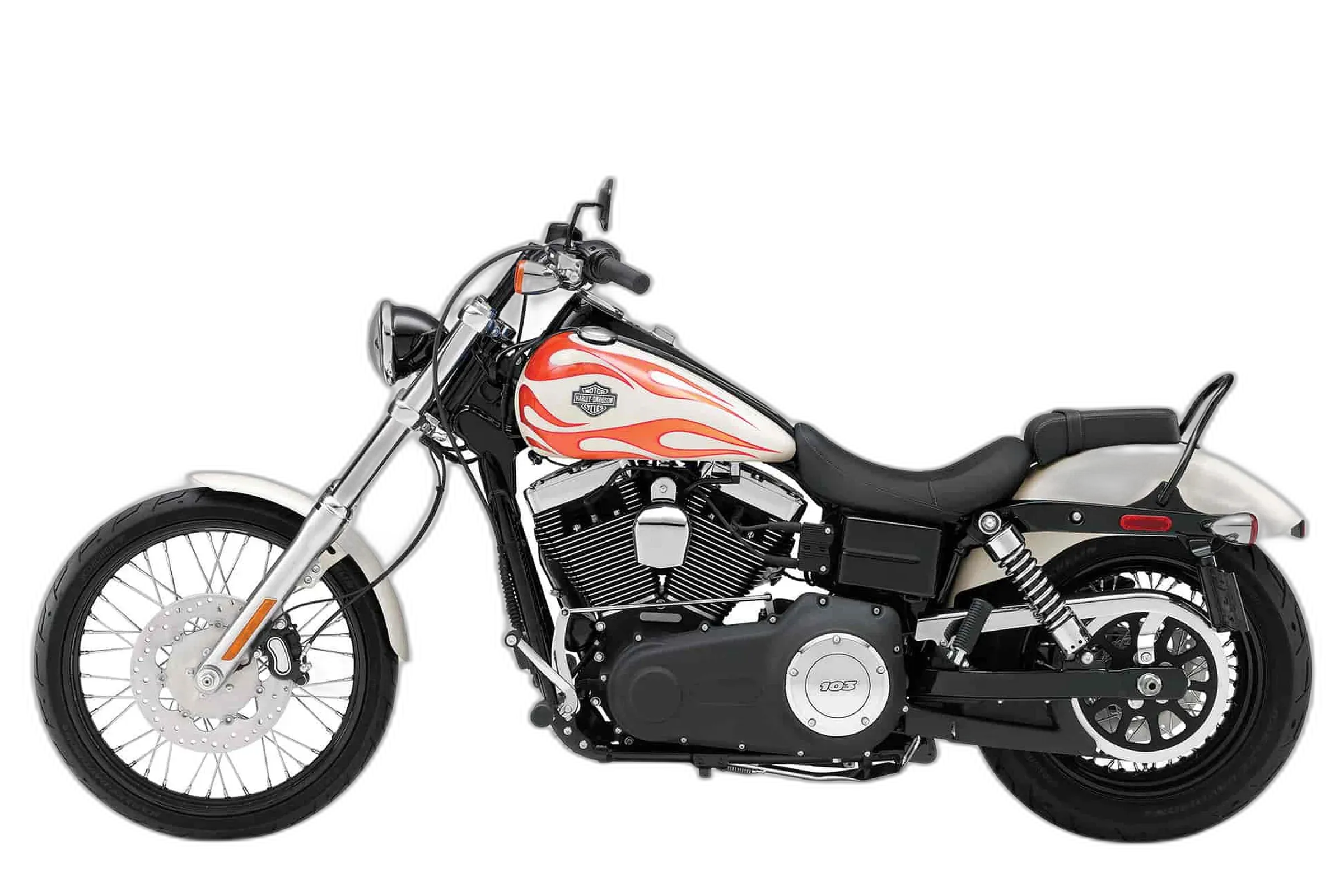

Harley-Davidson Dyna Wide Glide FXDWG (MY2013) — Cruiser
NastyNils / Harley-Davidson Press

2013–2017 · Cruiser · Buyer's Guide

Dyna Wide Glide FXDWG (MY2013)

Factory Chopper, Street Legal

The Machine's Character

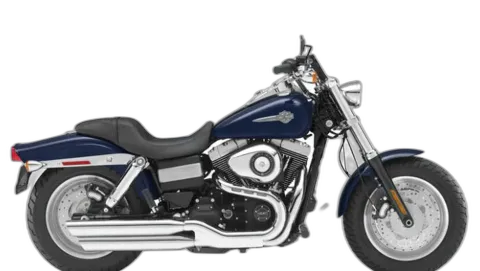
The Wide Glide is what happens when a factory builds a chopper instead of leaving it to a garage. The 1690 cc air-cooled 45° V-twin sits rubber-mounted in the Dyna frame and makes 78 hp with 100 lb-ft behind it, so the whole machine is organized around low-rpm shove rather than revs. A 21-inch front wheel, a raked-out front end, drag bars and forward controls stretch the rider out over a 67.5 in (1714 mm) wheelbase, and a belt runs the drive back to a fat 180-section rear. It is 677 lb (307 kg) of metal, and none of that is accidental.

It rides better than the silhouette suggests. The suspension is soft enough for long days, and the 25.5 in (648 mm) seat lets most riders plant both boots at a stop without thinking about the weight. This is a bike for someone who wants presence first and is happy to keep building on it afterward; the parts support behind this platform is close to bottomless, and plenty of these bikes have never worn a stock part past year two. The honest caveat is equipment. ABS is an option rather than standard fitment, there is no traction control and no cruise control, and the fork offers no adjustment at all.

Hard Numbers

Spec sheets don't ride bikes, but they set the baseline.

Show full specs & equipment Hide specs & equipment
Key specifications
Power 78 hp (58 kW)
Torque 100 lb-ft (136 Nm)
Displacement 1690 cc
Engine 45° V-twin
Cooling Air-cooled
Gearbox 6-speed
Final drive Belt
Fork Telescopic
Front brake 300 mm
Front tire 80/90-21
Rear tire 180/60-17
Wheelbase 67.5 in (1714 mm)
Seat height 25.5 in (648 mm)
Wet weight 677 lb (307 kg)
Fuel capacity 4.7 gal (17.8 L)

Equipment check

Chassis

  • Rear Suspension Adjustable Standard

Safety

  • ABS Optional

The Voice of Experience

Portrait of NastyNils

The test ride

You feel the engine before you hear it. A heavy shake at idle settles into a steady pulse once the rubber mounts take over, and the sound underneath is the real article, deep and uneven, still good company after eight hours. Your hands sit wide and low on the drag bars with your boots out front, so the posture asks you to stretch rather than curl up. It takes about ten minutes to stop noticing. The 21-inch front wheel makes the bar move slowly and deliberately in your hands, which is character rather than a complaint. Cruising a two-lane at 65 mph, the vibration settles into a hum through the pegs and grips at a level that reads as alive instead of tiring. Stop for fuel and the finish still holds up when you crouch down and look at it closely.

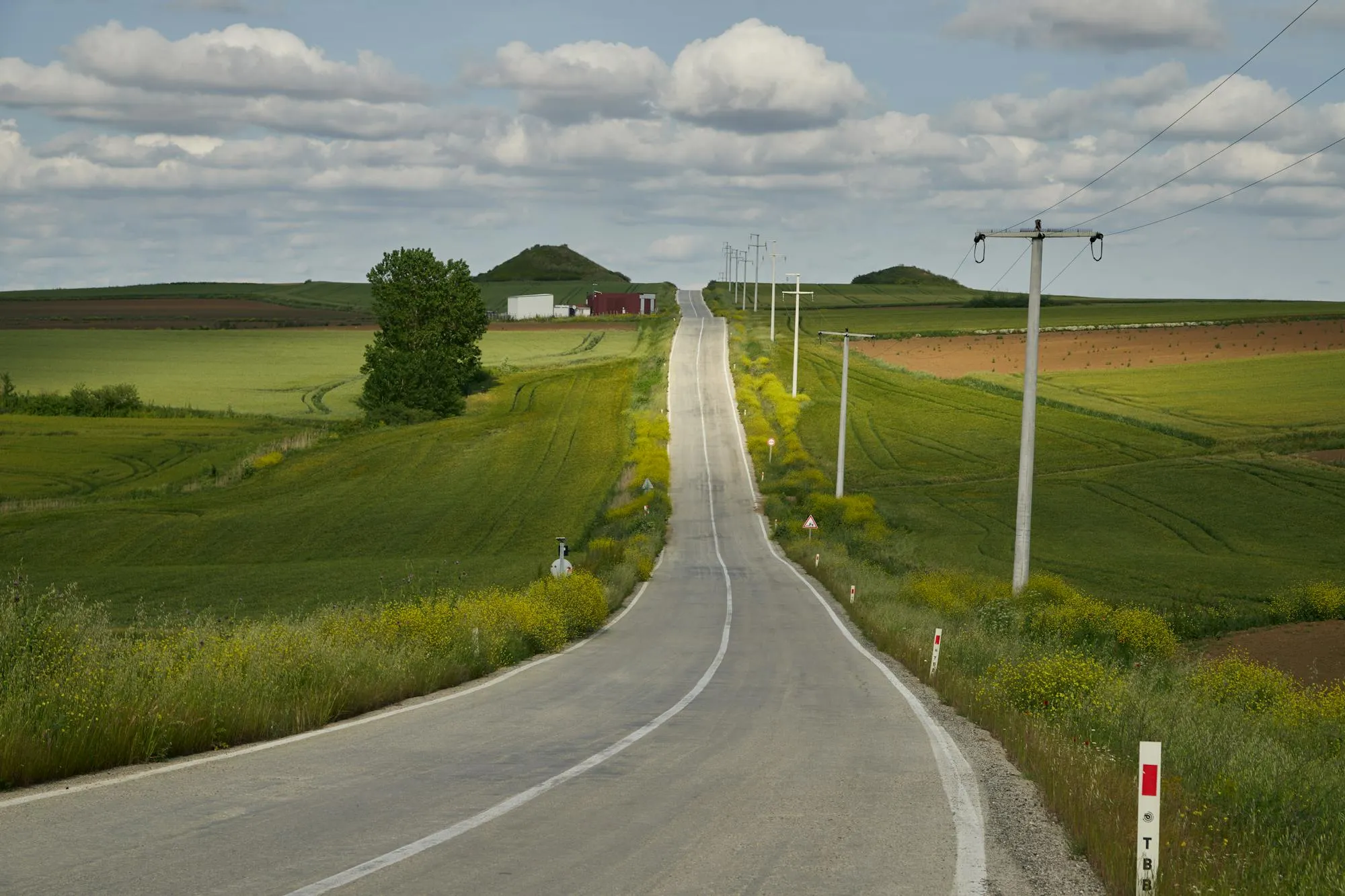
A long, straight paved road stretches toward the horizon through agricultural fields in Vermont. Power lines and a mailbox are visible along the roadside. Lush green vegetation, cumulus clouds, good daylight conditions. The landscape is flat to gently rolling. Asphalt pavement appears to be in good condition. Rural American setting.
Meric Tuna / Pexels

The Truth on the Street

What follows isn't a test ride of mine. It's the sum of years of listening: riders I've talked with at events, owners I've cornered in parking lots, the club-night back-and-forth, and the notes people send me straight from their garages. On this Wide Glide the pattern is consistent. The engine and the way the bike carries a rider dominate the conversation, and the gripes that follow are narrow and repeatable.

What Owners Come Back To

Torque is the first thing riders bring up, almost without exception. They describe generous pull from low in the rev range and roll-on that asks nothing of them. Handling is the recurring surprise: long wheelbase, raked front end, and owners still report the bike tracks confidently and feels planted through a corner. Comfort follows close behind, with the soft suspension and the low seat cited as reasons the bike suits riders of very different sizes. Plenty of them simply talk about the stretched profile and the look it carries.

The Short List Of Gripes

The complaints are quieter and specific. Some owners call the rear brake weak and say it demands hard pedal pressure, more so two-up or loaded. Heavier riders mention that soft suspension bottoming on rough pavement. A few report the low exhaust touching down early, which keeps their lean angles conservative. Vibration through bars and pegs at idle and low revs comes up too, mostly from riders logging long days.

Known issues

  • Rear wheel bearings may fail early

    chassisoccasional

    Some owners have reported rear wheel bearing failure as early as 12,500 miles. Replacement with quality bearings and greasing the axle is recommended.

  • Steering head bearings may be inadequately greased

    chassisoccasional

    Factory steering head bearings are sometimes found with insufficient grease, leading to notchy steering or premature wear. Repacking with high-quality grease is a common preventative measure.

  • Brake pedal sticks due to swollen bushing

    brakesoccasional

    The rear brake pedal can become sticky or slow to return due to bushing swelling. Often repaired under warranty; regular lubrication may prevent it.

  • Riser bushings allow excessive handlebar flex

    chassiscommon

    The stock rubber riser bushings are soft and can allow the handlebars to flex or move during hard braking; aftermarket urethane bushings are a common fix.

The Expert Benchmark

Where this Harley-Davidson Dyna Wide Glide FXDWG pulls ahead of — or falls behind — its rivals on the numbers, and the typical bike in its class on character.

What kind of bike this is — character vs. the class

This bike Class average

The shape of the Harley-Davidson Dyna Wide Glide FXDWG — numbers and character vs. the average Cruiser

Head-to-head: Harley-Davidson Dyna Wide Glide FXDWG vs. its rivals

The 'Should I Buy It?' Score

Forget spec-sheet bragging. Here's who the Dyna Wide Glide FXDWG is actually built for.

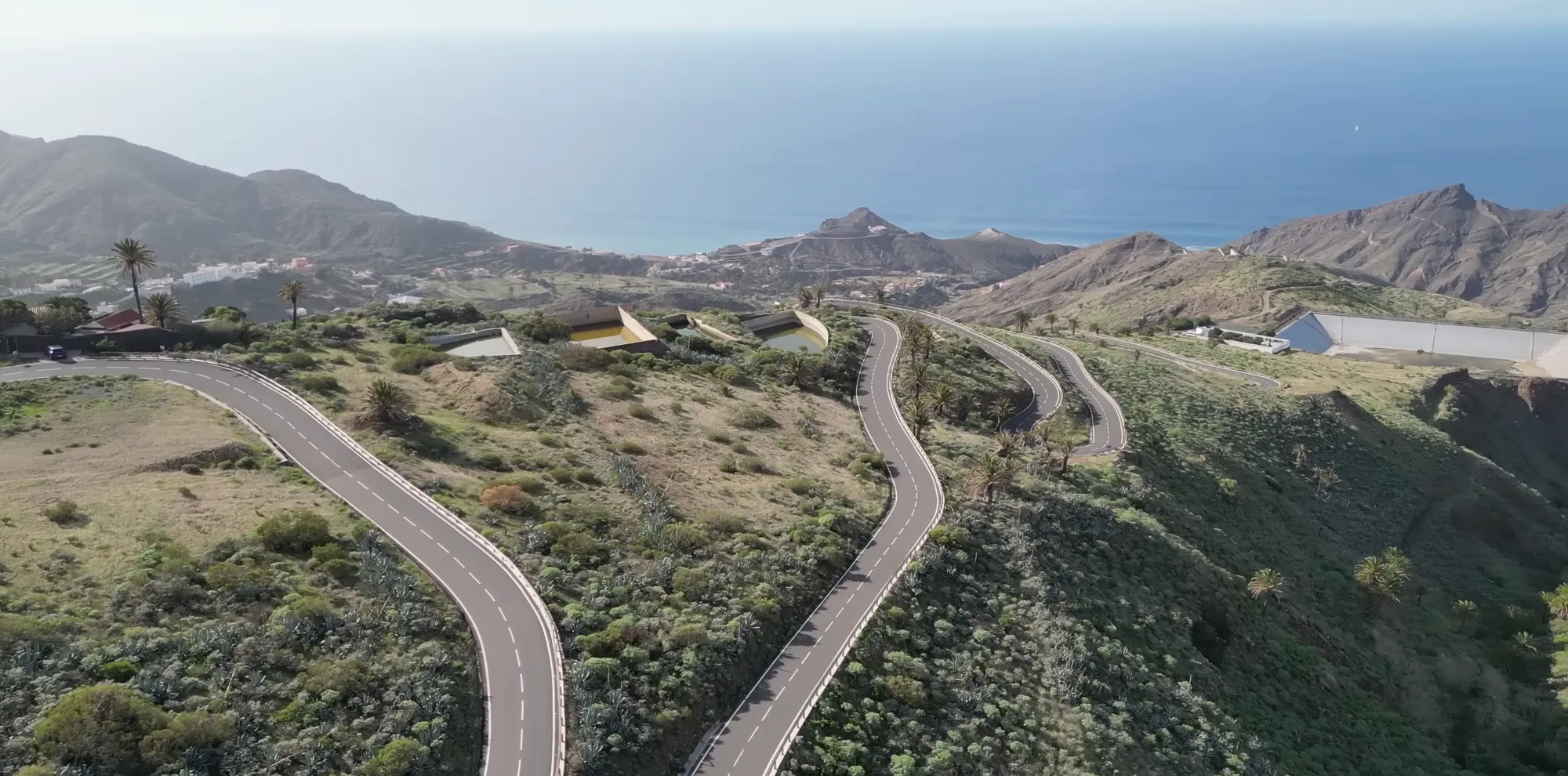
Aerial view of a winding asphalt road cutting through volcanic terrain on La Gomera, Canary Islands. The road curves through sparse green vegetation with rocky volcanic peaks visible in the background and a settled valley to the left. Clear lane markings, dry climate, partly cloudy sky.

Best cruiser for Sturgis?

Sturgis, Daytona, the slow roll down Main Street: this is the exact bike that conversation is about. Sound, stance, and the freedom to make it your own are the whole point of owning it.

Made for A1A — Florida Atlantic Coast · Black Hills / Sturgis Rally Hub · Daytona Main Street / Bike Week
Best retro motorcycle for road trips?

On back roads and through small towns it looks and sounds right, and the low seat keeps easy days easy. Range is modest at 4.7 gal (17.8 L), so plan your fuel stops around the route.

Made for Acadia National Park · Austin / Handbuilt Motorcycle Show · Blue Ridge Parkway

Best touring motorcycle for long distance?

It will cover big distance, but there's no cruise control, no wind protection as standard, and no factory luggage. Solo and unhurried it works. Loaded two-up all day, it asks a lot of you.

Made for Beartooth Highway · Blue Ridge Parkway · Going-to-the-Sun Road

What's new versus the previous generation

If you're cross-shopping the older generation, here's what changed.

Harley-Davidson Dyna Wide Glide FXDWG (FXDWG-MY2010)

Previous generation · 2010–2012

Harley-Davidson Dyna Wide Glide FXDWG (FXDWG-MY2010)

Factory Chopper, No Apologies

Compare to the previous model →

Alternatives to the Harley-Davidson Dyna Wide Glide FXDWG

If this one isn't quite the fit, these are the bikes worth riding back-to-back against it.

Any price note compares both bikes at the same age — the youngest age both have on the used market — against this Harley-Davidson Dyna Wide Glide FXDWG. “cheaper/pricier” is what that bike costs second-hand, not how worn it is.